


A giant pot made about 3,000 years ago during the Iron Age has gone on display at Sharjah Archaeological Museum..
It is so large that archaeologists believe the building in which it was housed may have been constructed around it.
An alternative theory is that the pot was made in the room where it was found.
Either way, they say, it was certainly too large to fit through the door.
Once broken into fragments, the storage jar has been painstakingly reconstructed and shows it would have been 155 centimetres tall and 141cm in a diameter at its widest. Even the rim had a diameter of nearly a metre.
As for what it was used for, experts are still speculating. The jar, though, is evidence of a thriving trade in the region, especially along the incense routes of Southern Arabia and what was then Persia.
Between 600 and 900 BCE
It was found in a large fortified settlement on the Muwailen archaeological site near the University of Sharjah, on the outskirts of the city.
The foundations reveal that it was housed in a columned building about 10 to 12 metres long and built between 600 and 900 BCE.
It was a period of history when the Hanging Gardens of Babylon were under construction in what is now Iraq and when the Chinese invented printing. This was also when the falaj irrigation system was developed.
The Muwailen settlement included numerous houses of mud brick, similar to others discovered in the UAE from this period.
The hall that held held the pot was the largest roofed building in Muwailen, with a number of rooms or annexes.
Ancient majlis
Archaeologists speculate that it was the economic heart of the settlement and either a gathering place for the ruling elite or used to welcome guests ― functioning much as the majlis does today.
Further exploration found that the ceiling of the hall was supported by 20 columns made from date palms and supported by stone bases arranged in rows of four by five.
The remains of two more storage jars have been found set into the floor of the great hall, with more than 30 smaller jars in a style known as bridge-spouted in an adjacent room, possibly used for service.
The latest findings include a ceramic fragment with three letters in Sabean, a South Arabian language that dates from the seventh century BCE and which is the oldest known language in the UAE.
Manal Ataya, director general of Sharjah Museums Authority, invited the public to view the pot at Sharjah Archaeological Museum.
She described it as a “one-of-a-kind artefact” which “best demonstrates the beauty of discovery and the remarkable feat undertaken by dedicated archaeologists and conservators that spent years piecing together numerous fragments without initially knowing what the finished vessel would look like”.
Sharjah Archeological Museum interactive exhibition – in pictures
-
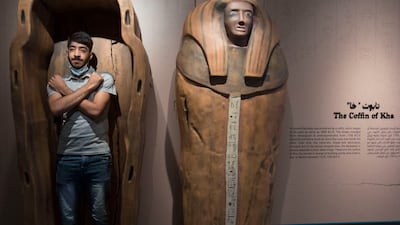
An interactive exhibition at the Sharjah Archeological Museum teaches children about an ancient Egyptian village where hundreds of craftsmen who worked on and decorated Valley of the Kings tombs lived. All Photos: Ruel Pableo/The National -
The focus of the exhibition is the discovery of the 3,400-year-old Deir El Medina village, home to the artisans and craftsmen who built and decorated the royal tombs. -
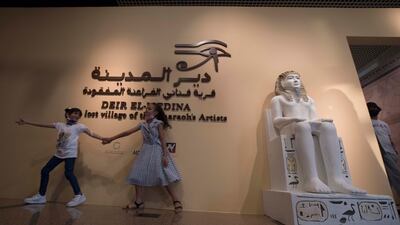
Children at the exhibition. -
The exhibition teaches children about royal tombs, pharaohs and life in ancient Egypt. -
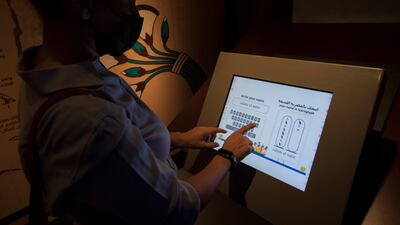
Visitors learn about major archaeological discoveries through workshops, hands-on activities and touchscreen games. -

The exhibition was organised by Sharjah Museums Authority in partnership with the Egyptian Museum in Turin, Italy. -
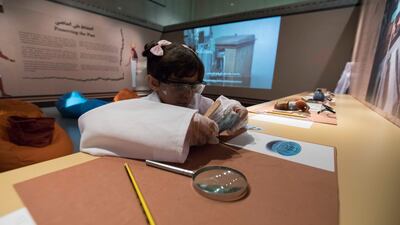
The exhibition tells the story of the builders, artists, and painters who worked on Egypt’s pharaohs’ tombs in 1,500 BC. -
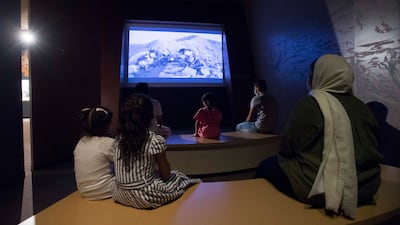
"We are proud to organise this first-of-its-kind children's exhibition. It helps our young audience to explore the rich ancient Egyptian history and learn about archaeology,” said Manal Ataya, director general of SMA. -
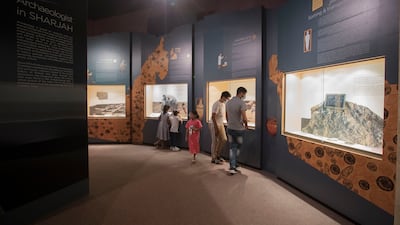
Short movies are played on large screens about the Deir El-Medina village, the excavation missions that led to its discovery, and methods of restoring and preserving artefacts. -

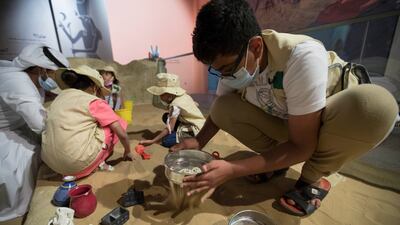
Children use mock-up excavation tools and are introduced to techniques used by archaeologists. -

Christian Greco, director of the Egyptian Museum in Italy, said: "The exhibition allows children and their families to remotely visit one of the most iconic sections of the Egyptian Museum’s collection." -
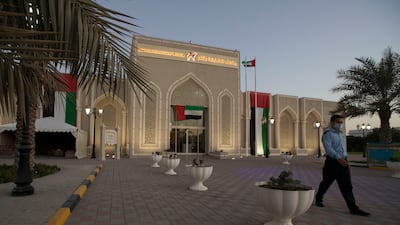
The Sharjah Archeological Museum. -

The exhibition runs until August 31, 2022. -
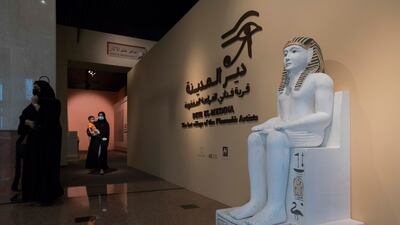
The Sharjah Archeological Museum. -
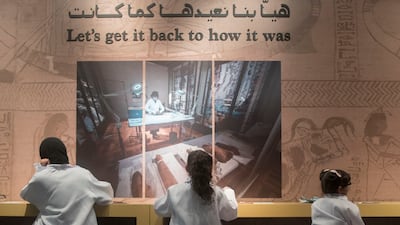
Children learn how to restore objects as part of the exhibition. -
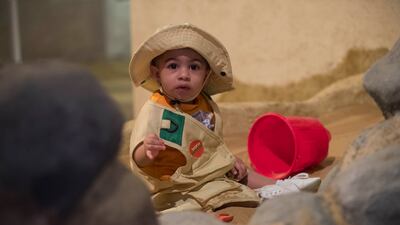
The exhibition helps its young visitors gain an insight into archeology. -
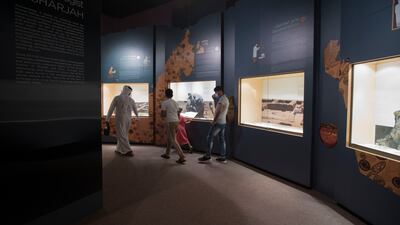
Ancient Egypt is brought to life at the exhibition. -

A child uses a touchscreen to learn about Ancient Egypt. -

Children can enjoy a variety of hands-on activities. -

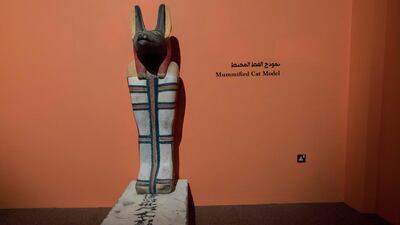
Displays help young viewers learn about Egyptian history. -
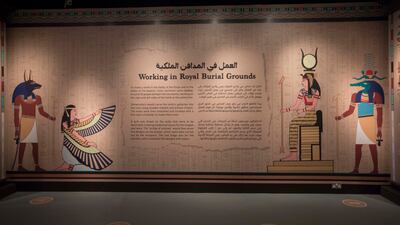
Children can also learn about the history of Ancient Egypt.



