

On a quiet stretch of desert in Abu Dhabi, a pink sandstone temple is rising that will retell ancient stories from Indian scriptures.
Hand-carved archways decorated with intricate sculptures encircle the ground floor of the Hindu temple being constructed in the capital’s Abu Mureikha district.
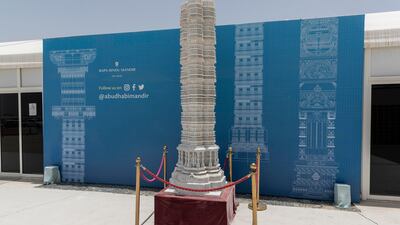
With seven spires to represent each of the UAE’s emirates, the place of worship will be 32 metres tall when it opens in 2024.
The tranquillity is interrupted by the staccato rhythm of artisans using hammers and chisels to give finishing touches to stonework.
Striking symbol of Indian tradition
-
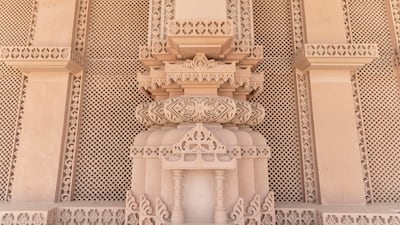
Abu Dhabi's striking Hindu temple features an intricate design years in the making. All photos: Antonie Robertson / The National -
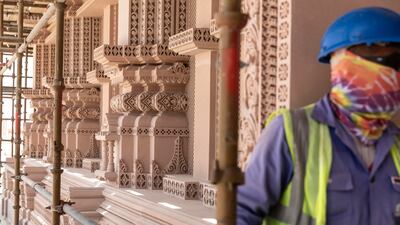
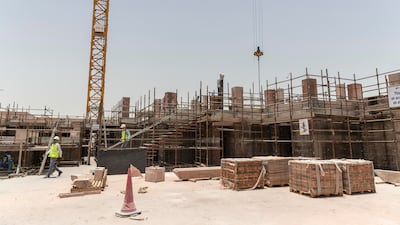
Construction is gathering pace for the place of worship, which is due to open in 2024. -
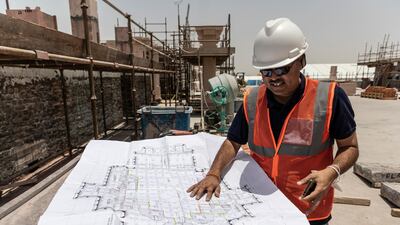
Senior project manager Nishit Raval is helping guide the building work. -
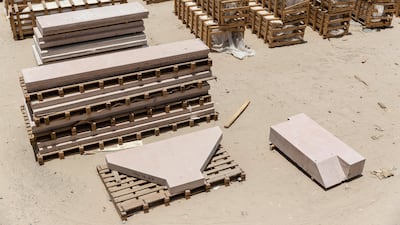
The vast temple is a symbol of inter-faith harmony. -
Community members of all faiths are invited every Sunday to be part of prayers and to add a brick that will be used in the temple's construction. -
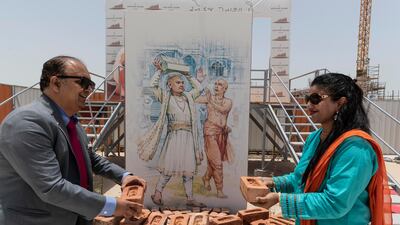
Clay bricks from India have been donated by the Hindu community. Pranav Desai, director of the Baps Hindu Mandir, and Shaily Desai, lead volunteer for Baps Women's Wing, with a stack of donated bricks. -
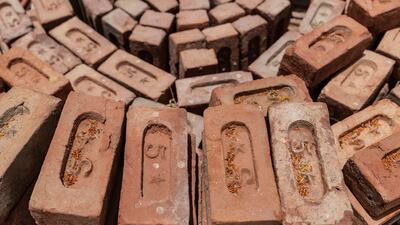
Bricks from India donated by the Hindu community are used in the temple's foundations. -
The spectacular temple will stand 32 metres tall when complete. -
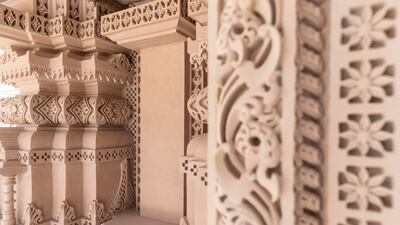
Leaf and flower motifs make up the sculptures. -
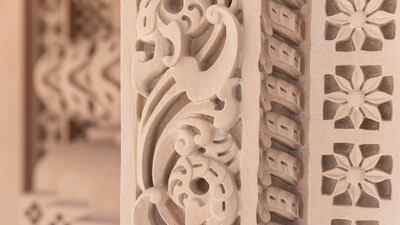
Pink sandstone from India's Rajasthan state has been used to build the temple. -
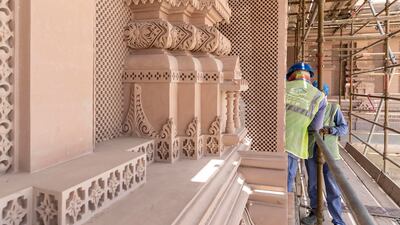
Stone sections are added in layers adding strength to the structure. -
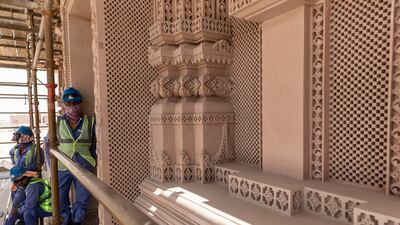
The facade on the ground floor level is almost complete and work moves to the first floor level.


Architects and engineers pore over large floor plans to match columns and carvings sent from India to the exact slot at the temple site.
“When you go to any piece of stone, it will tell you a story,” Nishit Raval, senior project manager of the Baps Hindu Mandir project, told The National.
“There will be stories of each deva [god]. We will have the life of the lord Rama and lessons from the lives of other gods carved into the facade.
“It will also tell the story of the craftsmen – how they put their feelings into the cutting and carving of each sculpture.”
The sculptures feature flower and leaf motifs, with vines and creepers that curve up and across tall door frames.
Work on the ground floor facade is almost complete. Construction will start soon on the first floor with engravings that depict the lives of Hindu gods, along with friezes decorated with musicians, dancers, peacocks, camels, horses and elephants.
More than 1,000 carvings of deities will be added to brackets across the temple’s exterior, with at least 30 planned of the elephant-headed god Ganesha.
The steps leading to the temple will portray teachings from other ancient civilisations, such as the Mayans.
More than 70 craftsmen and specialist builders from India’s western Rajasthan state are at work on the site, which is off the Sheikh Zayed Road from Abu Dhabi to Dubai.
Over the next two years, 170 artisans and bricklayers will use more than 30,000 pieces of stone and millions of handmade clay bricks in the construction.
Pieces of an intricate puzzle

Planners studied the architecture of age-old Hindu temples built without the use of steel, iron or reinforced concrete and have taken on the challenge to replicate this in the UAE.
Stone sections are placed in layers to add strength to the structure.
Granite makes up the sturdy bottom section over which distinctive pink sandstone from Rajasthan is now being added.
Precision is critical to the operation, which begins with cutting the columns to size at a quarry and workshops in India.
Each stone piece is stamped with a specific number and the same code is marked on the carvings that will encircle it.
Packaging for the pieces is also branded with the code before being sent to the UAE from India.
The codes are used to find the correct location for the carvings and columns at the Abu Dhabi site.
“Each stone has its own individual identity and based on its number we can recognise exactly where it will be placed,” Mr Raval said.
“We do this from day one when blocks of rock are brought in from the quarry. Once we give a number, this stays during the cutting, carving, polishing and packing.”
Standing the test of time
Engineers use small stone shafts wedged into the columns to secure them in place.
“We are planning a minimum of 1,000 year lifespan for the temple. The best quality metal will go up to 100 years but after that it starts to deteriorate,” said Mr Raval, who has built four temples in India and the US for the Baps group.
“If we make a conventional building by adding steel it is speedy work but we use natural material like stone for its longevity.
“Angkor Wat in Cambodia, temples, forts and castles in India are among the oldest historical structures and these use blocks of natural stone.
“Whatever we get from nature will last the longest.”
Wooden boxes filled with more than two million handmade clay bricks have been placed behind the stone carvings at the desert construction site in preparation for utility services, water and electricity pipes and air conditioning ducts.
How long do hand carvings take to create?

The patience and artistry of craftsmen in Indian villages brings the stone and marble slabs to life.
Sculpting skills have been passed down through generations and more than 1,500 craftsmen in 20 villages are working on the project.
It can take one sculptor between one to four years to complete the nearly five-metre columns, depending on the intricacy of the work.
“I ask people to imagine the hard work that goes in to this – how two craftsmen might spend the whole year carving the full design detail on to one column,” said Pranav Desai, the temple project director.
“On a computer, if you make a mistake you have an option of control Z and Y to correct it. But imagine doing this sort of carving for a year and when a mistake happens, you have to redo it again.”
Community spirit
People of all faiths are invited every Sunday to be part of prayers and to add a brick that will be used in the construction.
UAE officials, Buddhist monks from Thailand and groups of French citizens are among those to become part of the construction of the UAE’s first traditional Hindu temple.
“This temple is already bringing communities together,” said Shaily Desai, a volunteer.
“Visitors come in to perform the puja [prayer] and say they will visit again with their families. All of them want to feel they are part of building this historic temple.”
Land for the temple was given to the Indian community seven years ago by President Sheikh Mohamed.
The temple site will include a water feature and green spaces. A majlis, library, community centre and amphitheatre will also be built within the compound.

