Men leave the wet grounds of Sheikh Zayed Grand Mosque in Abu Dhabi after a prayer for rain on December 6, 2008. Ryan Carter / The National

Rain prayers held in UAE in response to President Sheikh Khalifa’s call


  • English
  • Arabic

Muslims across the UAE offered prayers for rain on Friday in response to President Sheikh Khalifa’s recent call urging worshippers to take part in prayers.

Sheikh Khalifa had said the prayers, known as Salaat Al Istisqaa, should be performed in all mosques and musallahs across the country on December 18.

He asked people to pray to Allah to bless the land with rain and mercy, in accordance with the Prophet Mohammed’s sunnah, 10 minutes before Friday prayers.

Salaat Al Istisqaa is typically requested in the UAE once every few years and is observed in other Gulf countries as well.

Worshippers in the UAE were told to ask God to send rain, mercy and abundance upon the country and its people.

When rainfall is delayed, the leader of a state must issue an order for the prayer to be performed, according to the sunnah of the Prophet.

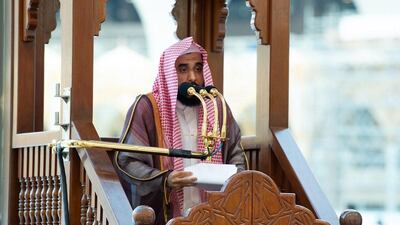
Rain-seeking prayers or Istisqa were performed at the holy mosque of Makkah in Saudi Arabia in November.

King Salman of Saudi Arabia had called for a rain prayer to be performed in January too in the hope of a cooler winter over the Kingdom.

The official prayer is attended by the president or one of his officials.

Rulers, Crown Princes of several emirates and members of the Supreme Council have previously taken part in the prayers.

Cloudy skies and light rainfall have been forecast for the UAE over coastal and northern areas over the next three days.

The temperature would drop due to the north-easterly winds with a few showers likely from Saturday, according to the National Centre of Meteorology.

The lowest temperature recorded on Friday was 6.3°C in Raknak.

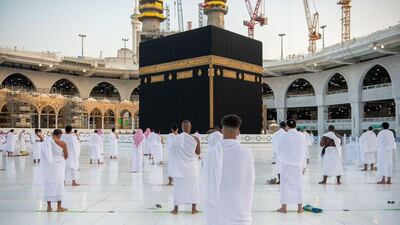
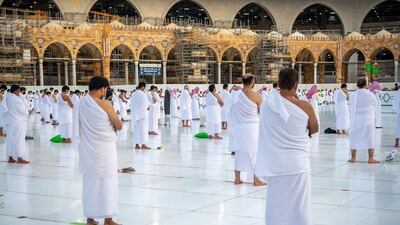
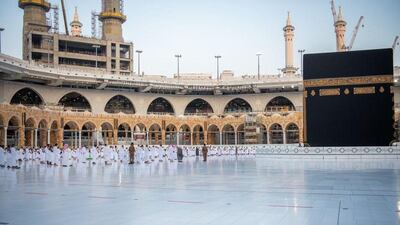
Worshippers pray for rain at the Grand Mosque in Makkah

  • Worshipers perform Istisqaa prayers at the Grand Mosque in Makkah in November, 2020. Courtesy Makkah Province
    Worshipers perform Istisqaa prayers at the Grand Mosque in Makkah in November, 2020. Courtesy Makkah Province
  • The prayer for rain is known as Salaat Al Istisqaa. Courtesy Makkah Province
    The prayer for rain is known as Salaat Al Istisqaa. Courtesy Makkah Province
  • The prayers were requested by Saudi Arabia's King Salman on Tuesday. Courtesy Makkah Province
    The prayers were requested by Saudi Arabia's King Salman on Tuesday. Courtesy Makkah Province
  • The prayer represents a good imitation of the deeds of Prophet Mohammed. Courtesy Makkah Province
    The prayer represents a good imitation of the deeds of Prophet Mohammed. Courtesy Makkah Province
  • At this time of year, leaders in the Arabian Gulf often call on the faithful to conduct prayers across the country when the expected rainfall is delayed. Courtesy Makkah Province
    At this time of year, leaders in the Arabian Gulf often call on the faithful to conduct prayers across the country when the expected rainfall is delayed. Courtesy Makkah Province
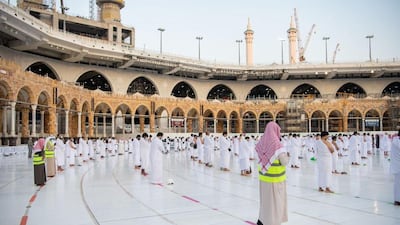
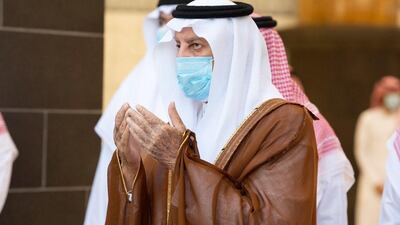
  • Prince Khalid bin Faisal Al Saud, the governor of Makkah Province, joined the prayers at the holy mosque. Courtesy Makkah Province
    Prince Khalid bin Faisal Al Saud, the governor of Makkah Province, joined the prayers at the holy mosque. Courtesy Makkah Province
  • Prince Khalid bin Faisal Al Saud, the governor of Makkah Province, joined the prayers at the holy mosque. Courtesy Makkah Province
    Prince Khalid bin Faisal Al Saud, the governor of Makkah Province, joined the prayers at the holy mosque. Courtesy Makkah Province
  • Rain is decided by God as is evidenced in the Quran. “And it is He who sends down the rain after they had despaired and spreads His mercy. And He is the Protector, the Praiseworthy”. (Ash-Shoura: 28). Courtesy Makkah Province
    Rain is decided by God as is evidenced in the Quran. “And it is He who sends down the rain after they had despaired and spreads His mercy. And He is the Protector, the Praiseworthy”. (Ash-Shoura: 28). Courtesy Makkah Province
The specs
  • Engine: 3.9-litre twin-turbo V8
  • Power: 640hp
  • Torque: 760nm
  • On sale: 2026
  • Price: Not announced yet
The schedule

December 5 - 23: Shooting competition, Al Dhafra Shooting Club

December 9 - 24: Handicrafts competition, from 4pm until 10pm, Heritage Souq

December 11 - 20: Dates competition, from 4pm

December 12 - 20: Sour milk competition

December 13: Falcon beauty competition

December 14 and 20: Saluki races

December 15: Arabian horse races, from 4pm

December 16 - 19: Falconry competition

December 18: Camel milk competition, from 7.30 - 9.30 am

December 20 and 21: Sheep beauty competition, from 10am

December 22: The best herd of 30 camels

Liz%20Truss
%3Cp%3EMinisterial%20experience%3A%20Current%20Foreign%20Secretary.%0D%3Cbr%3E%0DWhat%20did%20she%20do%20before%20politics%3F%20Worked%20as%20an%20economist%20for%20Shell%20and%20Cable%20and%20Wireless%20and%20was%20then%20a%20deputy%20director%20for%20right-of-centre%20think%20tank%20Reform.%0D%3Cbr%3E%0DWhat%20does%20she%20say%20on%20tax%3F%20She%20has%20pledged%20to%20%22start%20cutting%20taxes%20from%20day%20one%22%2C%20reversing%20April's%20rise%20in%20National%20Insurance%20and%20promising%20to%20keep%20%22corporation%20tax%20competitive%22.%3C%2Fp%3E%0A
McIlroy's struggles in 2016/17

European Tour: 6 events, 16 rounds, 5 cuts, 0 wins, 3 top-10s, 4 top-25s, 72,5567 points, ranked 16th

PGA Tour: 8 events, 26 rounds, 6 cuts, 0 wins, 4 top-10s, 5 top-25s, 526 points, ranked 71st

Ten tax points to be aware of in 2026

1. Domestic VAT refund amendments: request your refund within five years

If a business does not apply for the refund on time, they lose their credit.

2. E-invoicing in the UAE

Businesses should continue preparing for the implementation of e-invoicing in the UAE, with 2026 a preparation and transition period ahead of phased mandatory adoption. 

3. More tax audits

Tax authorities are increasingly using data already available across multiple filings to identify audit risks. 

4. More beneficial VAT and excise tax penalty regime

Tax disputes are expected to become more frequent and more structured, with clearer administrative objection and appeal processes. The UAE has adopted a new penalty regime for VAT and excise disputes, which now mirrors the penalty regime for corporate tax.

5. Greater emphasis on statutory audit

There is a greater need for the accuracy of financial statements. The International Financial Reporting Standards standards need to be strictly adhered to and, as a result, the quality of the audits will need to increase.

6. Further transfer pricing enforcement

Transfer pricing enforcement, which refers to the practice of establishing prices for internal transactions between related entities, is expected to broaden in scope. The UAE will shortly open the possibility to negotiate advance pricing agreements, or essentially rulings for transfer pricing purposes. 

7. Limited time periods for audits

Recent amendments also introduce a default five-year limitation period for tax audits and assessments, subject to specific statutory exceptions. While the standard audit and assessment period is five years, this may be extended to up to 15 years in cases involving fraud or tax evasion. 

8. Pillar 2 implementation 

Many multinational groups will begin to feel the practical effect of the Domestic Minimum Top-Up Tax (DMTT), the UAE's implementation of the OECD’s global minimum tax under Pillar 2. While the rules apply for financial years starting on or after January 1, 2025, it is 2026 that marks the transition to an operational phase.

9. Reduced compliance obligations for imported goods and services

Businesses that apply the reverse-charge mechanism for VAT purposes in the UAE may benefit from reduced compliance obligations. 

10. Substance and CbC reporting focus

Tax authorities are expected to continue strengthening the enforcement of economic substance and Country-by-Country (CbC) reporting frameworks. In the UAE, these regimes are increasingly being used as risk-assessment tools, providing tax authorities with a comprehensive view of multinational groups’ global footprints and enabling them to assess whether profits are aligned with real economic activity. 

Contributed by Thomas Vanhee and Hend Rashwan, Aurifer