


The UAE’s key focus for the next decade will be on growing its industrial sector and achieving greater self-sufficiency, said Sheikh Mansour bin Zayed, Deputy Prime Minister and Minister of Presidential Affairs.
On the second day of the World Government Summit, he said the pandemic had shown UAE decision-makers how few sources of food and medicines were produced in the Emirates.
He said the Covid-19 pandemic helped governments to realise the importance of the ability to manufacture products locally.
“We need to know what the key pillars are, which the state will focus on in the coming years, and the industrial sector is key to our country,” Sheikh Mansour said.
“When we entered the pandemic we realised its importance and there was pressure on local industry, with an increase in demands on local production.
“We were a little oblivious to the industrial sector. If we compare our revenue of the industrial sector to our GDP, 10 years ago it was 8 per cent and today the growth is 9 per cent and this is sad and shameful.
“We have to focus more on the industrial sector and support it even more. We have ambitious projects and we must set the priorities.”
Last year, the UAE launched the Operation 300bn strategy in hopes that it would transform the country into an industrial hub by 2031.
The strategy supports spending on local products and local suppliers, as well as promoting investment in research and development and incentivising adoption of advanced technology in the UAE.
-
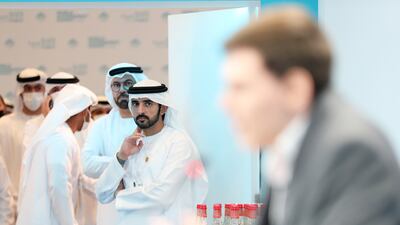
Sheikh Hamdan bin Mohammed, Crown Prince of Dubai, and Mohammed Al Gergawi, Minister of Cabinet Affairs, listen to 'ethical hacker' David Colombo speak at a session at the World Government Summit 2022. Pawan Singh / The National -
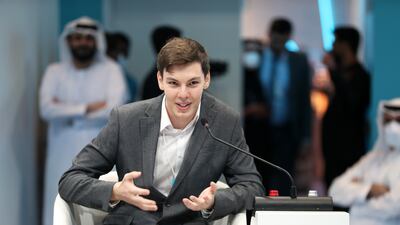
Colombo, founder and chief executive of the Colombo Technology cyber security company, at the summit. Pawan Singh / The National -
Sheikh Mohammed bin Rashid, Vice President and Ruler of Dubai, attends the World Government Summit in Dubai. Photo: Dubai Media Office -
Sheikh Mohammed, Sheikh Hamdan and Sheikh Maktoum bin Mohammed, Deputy Prime Minister, Minister of Finance and Deputy Ruler of Dubai, at the summit. Photo: Dubai Media Office -
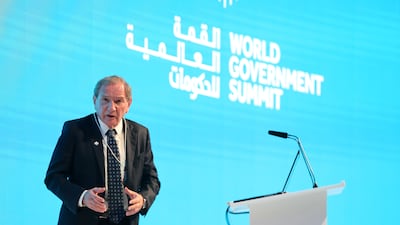
George Friedman, founder and chairman of Geopolitical Futures, at the summit. Pawan Singh / The National -
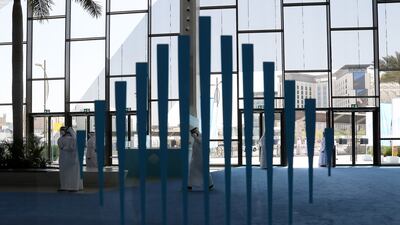
The summit will conclude on Wednesday. Pawan Singh / The National -

A visitor steps on to a self-driving vehicle at the summit. Pawan Singh / The National -
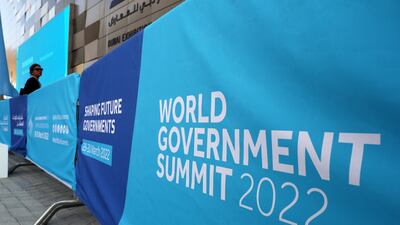
Thousands of delegates and hundreds of speakers are attending the summit. Pawan Singh / The National -
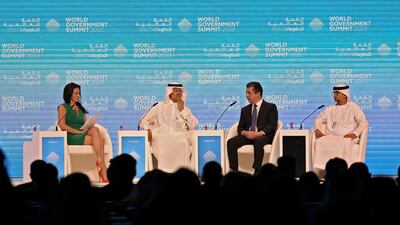
CNBC anchor Hadley Gamble, left, moderates a panel discussion featuring the UAE's Minister of Energy and Infrastructure, Suhail Al Mazrouei, Saudi Arabia's Energy Minister Prince Abdulaziz bin Salman and Iraqi Kurdistan's Prime Minister Masrour Barzani. AFP -

People arrive at the World Government Summit, being held on Tuesday and Wednesday. Pawan Singh / The National -
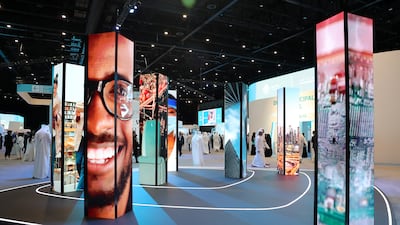
People arrive at the World Government Summit, being held on Tuesday and Wednesday. Pawan Singh / The National -

A poster shows Elon Musk, a speaker at a previous year's event. Pawan Singh / The National -

Delegates at the World Government Summit 2022. Pawan Singh / The National -
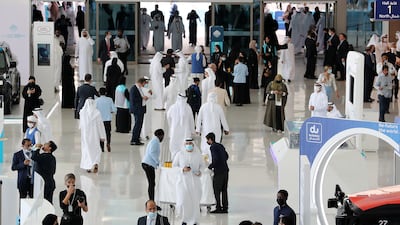
The conference centre at Expo 2020 Dubai. Pawan Singh / The National -
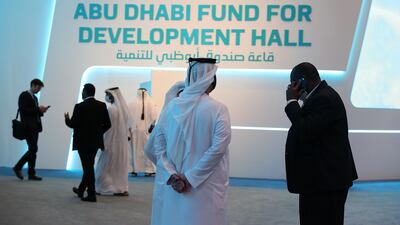
The auditorium is one of the major buildings that will remain in place after the world's fair ends. Pawan Singh / The National


It will focus on expanding sectors including petrochemicals, plastics and metals, and further develop food, water and health care industrial bases.
Sheikh Mansour said the new priorities require “raising the level of education” in the country, and that the “Emirati society must be open to foreign investments”.
“I hope our fellow citizens will participate in the foreign investments that we’ll see in the coming years,” he said.
“There are several priorities for the industrial sector, such as food, pharmaceuticals and the military industry.
“We have partnerships for the food industry with very important countries and they’ve started the knowledge transfer.
“For the pharmaceuticals industry, we have factories and an example of that is the Covid-19 vaccines we made here.”
He said that the "UAE is transparent" and a country that foreign investors “can rely and depend on”.
“No investor will find any legal violations or any surprises that could harm or impact their investment.
“There will be co-operation between the investors and the UAE.
“The laws of the UAE are clear and if they need to be modified or adjusted, they will be. These laws will serve the interests of our country.
“My message for our people is to be positive and know that their leadership is very keen to focus on citizens and their productivity. They can benefit from the industrial sector and this is an opportunity for us to diversify our sectors.”

