



Women are taking up more roles in wildlife conservation and can offer unique skills to prevent illegal trafficking of endangered species, an environmental forum heard at Expo 2020 Dubai.
Wildlife scientists such as primatologists Dame Jane Goodall and Dr Dian Fossey, and elephant expert Dr Cynthia Moss were inspiring more women to take up conservation roles and create all-female anti-poaching units across Africa.
Speaking at the Women’s pavilion on UAE Mother’s Day, conservation leaders said a cultural shift had opened the door for more women to engage in environmental fieldwork.
That included the development of the Black Mambas in South Africa and Team Lioness in Kenya, whose members educate their communities on conservation and stand in the way of poaching gangs, many who are often heavily armed.
“Historically women have been seen as the problem, rather than the solution [in conservation] but that is changing,” said Patricia Awori, director of Pan-African Wildlife Conservation Network, a Kenyan NGO that aims to reduce poaching and wildlife crime.
“There are women who have decided to do something different, like Jane Goodall or Dr Cynthia Moss, who have chosen to learn more about wildlife issues scientifically.
“And there are others living in these areas who also now see a career opportunity.
“When you sit down with women in rural communities to understand their role, many live around wildlife and can judge animal behaviour.
“There is much to learn from women in these communities and it is transforming conservation.”
Despite an international ban on the trade in ivory, about 30,000 African elephants are killed by poachers every year.
Women are playing an increasing role in conservation efforts to protect the species, Ms Awori said.
“Women network together, they know the bush like the back of their hand so they become very effective rangers,” she said.
“They need to have that opportunity, it is not something you would see 20 years ago.
“Having more women rangers is a tremendous advancement and we now have three units of just women across Africa.
“They can see it is a potential career path for them.”
Team Lioness is a project established by the International Fund for Animal Welfare, (IFAW) one of the largest conservation charities in the world.

It was created in 2019 under IFAW’s Operation tenBoma, a wildlife security initiative that safeguards the African elephant and thousands of other species.
Maasai women in Kenya are deeply connected to their communities and land, making them vital proponents of local conservation efforts.
Eight women were chosen to become rangers based on their leadership skills, academic achievements and integrity.
They protect traditional community land surrounding Amboseli National Park and serve as the first line of defence against poaching and retaliatory killing of elephants, lions, giraffes, cheetahs and other wild species.
The project is similar to the Black Mambas Anti-Poaching Unit, founded in 2013 to protect the Olifants West Region of Balule Nature Reserve from poachers.
Women rangers are the voice of the local community, who educate people on the importance of protecting wildlife and ecosystems.
They act as a liaison with communities to build intelligence to counteract poaching and wildlife trafficking.
A team of 23 young rangers and seven environmental monitors are primarily focused on protecting rhinos, targeted for their high-value horn that is traded in illegal Asian markets.
Azzedine Downes, president and chief executive of IFAW, said the projects were empowering women in important conservation areas.
“What we have learnt from Team Lioness is that women are not only physically and mentally able to do these roles but also culturally suitable,” he said.
“We have seen women can defend themselves and their families and also defend wildlife.
“IFAW projects have helped women to step out of the shadows and given them a voice.
“If it means we save more elephants or other species, that has been a fundamental cultural shift in many of these communities in Malawi, Zimbabwe, Kenya and elsewhere.”
Training to stop cheetah trafficking - in pictures
-
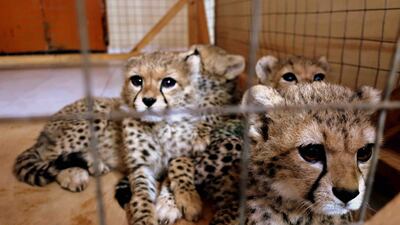
Four cubs confiscated by the Somaliland Ministry of Environment and Rural Development arrive at the CCF Safe House in Hargeisa. Photo: CCF -
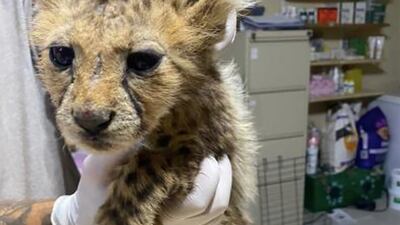
One of 10 cubs rescued by Somaliland Police. Photo: CCF -
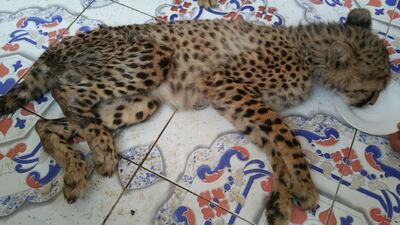
One of the six severely malnourished and dehydrated cubs confiscated from smugglers. The cub was so weak, it could not stand to drink but is now receiving proper veterinary care and nutrition. Photo: CCF -
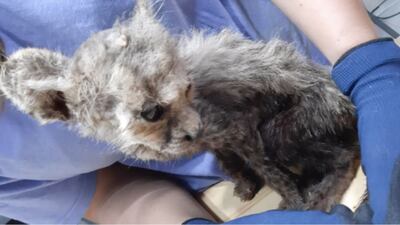
One of the cheetah cubs recovered from smugglers off the coast of Somaliland. Conservations believe the 12 animals were destined from the black market in the Arbian Peninsular. Photo: CCF -
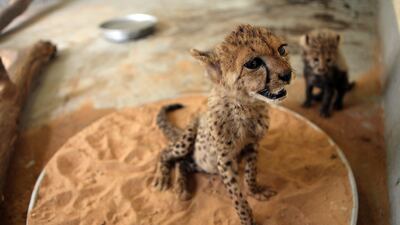
Despite a nationwide ban, exotic animals such as cheetah cubs continue to be sold on social media accounts. Sammy Dallal / The National -
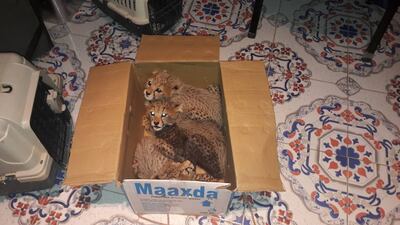
Conservationists in the Horn of Africa claim they are facing a poaching 'epidemic' as demand for cheetahs in the Gulf soars. Photo: CCF -

There are now fewer than 7,500 cheetahs in the wild. Photo: CCF -
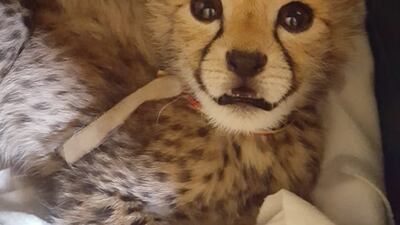
The Cheetah Conservation Fund says it is struggling to keep up with the rehabilitation of the animals as so many are being intercepted. Photo: CCF -
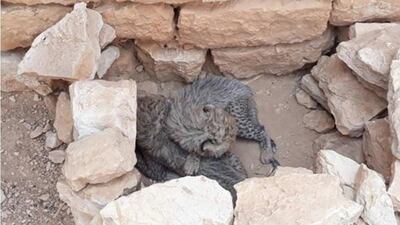
The Cheetah Conservation Fund is the global leader in the research and conservation of the animals. Photo: CCF -

Four cheetah cubs were rescued on the UAE-Saudi Arabia border, with two turned over to Al Ain Zoo by the Ministry of Environment and Climate Change. Reem Mohammed / The National



