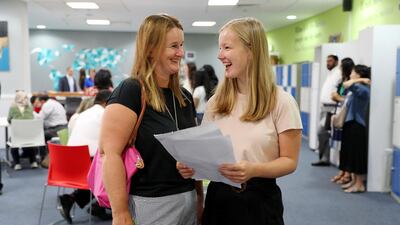
Fiona Cottam, principal at Hartland International School in Dubai, said the school has strict policies in place to tackle cyberbullying. Courtesy: Hartland International School

GCSEs and A-levels 2021: Some British schools in UAE to hold two mock exams for pupils


Anam Rizvi
  • English
  • Arabic

Pupils in some British schools in the UAE will sit two mock exams this year, to prepare them in case board examinations are cancelled in 2021.

Heads of schools said they were working to gather sufficient evidence of pupils’ performance in case final exams were cancelled this academic year.

Every year, pupils in exam classes sit for one set of mock tests under exam conditions.

There is anxiety so it's better to gather evidence of a pupil's attainment over time and it's good practice

The tests give pupils an indication of their current attainment level and are often used for entry into universities as predicted grades.

Last summer, the cancellation of final year exams – including the International Baccalaureate, A-levels, and some Indian School Certificate tests – meant pupils were graded based on mock exams or internal projects.

That led to resentment as many thought they were unfairly represented by their results.

Fiona Cottam, principal of Hartland International School in Dubai, said the school would hold its first set of mock exams in January and the second session in March for all 30 pupils appearing for GCSEs in 2021.

“There is still a lot of uncertainty in the UK about examinations next summer," said Ms Cottam.

“There is anxiety so it's better to gather evidence of a pupil's attainment over time and it's good practice.

“I think it's safeguarding the pupil’s results and ensuring we have all the evidence in place in case exams are cancelled.”

Joseph Hulme, a pupil at Hartland International School, will sit his GCSEs in 2021. He said two sets of mocks will help him in case finals are cancelled due to the Covid-19 pandemic. Courtesy: Hartland International School

Ms Cottam said she was confident exams would be held but wanted to be safe.

She said holding double mock exams would help schools show how much pupils improved over time, while also helping children prepare under exam conditions.

Pupils at the school did not sit in-person exams at the end of last year because of the pandemic.

Ms Cottam said the mock exams would help prepare the children mentally and physically.

Joseph Hulme, a 15-year-old pupil at Hartland International School, will sit for GCSE exams in 2021.

He said two sets of mock exams would help him in case finals were cancelled.

“This will help us gather evidence that may need to be sent to the examination boards to grade us," said Mr Hulme.

"This backs us up if we end up using our mock results."

He said the additional mocks meant extra pressure on pupils, but would be helpful as it will prepare him for the targeted exam.

“The more experience we have with sitting formal examinations, the more prepared we are for the real thing,” said Mr Hulme.

He said the second set of tests would be crucial as these would allow pupils to balance their grades if they underperformed in the first mocks.

Other schools in the emirates have also opted for double exams this year.

Gems Metropole School in Dubai and Cambridge International School in Abu Dhabi will be testing pupils twice ahead of board examinations in May.

Gems Metropole School held its first set of mocks in November and will test GCSE and A-level pupils again in March.

In 2021, 250 pupils at the school will sit GCSE exams while 120 pupils will appear for A-levels.

Nav Iqbal, principal at Gems Metropole School said: “Pupils revise but the best way to prepare them is by simulating the examination experience.

“We want to build exam stamina in pupils after they have had months of distance learning.”

Pupils will get a chance to handle exam anxiety and can discuss strategies and gaps in their learning.

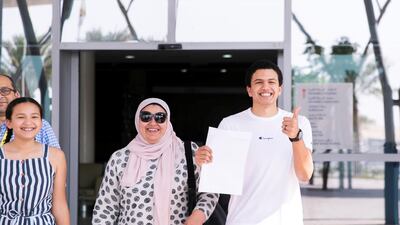
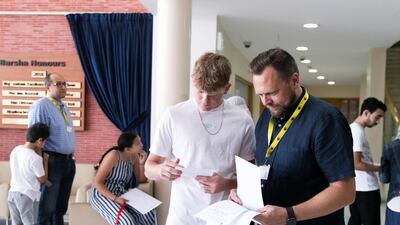
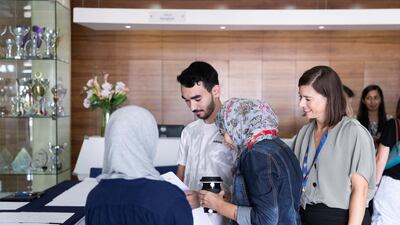
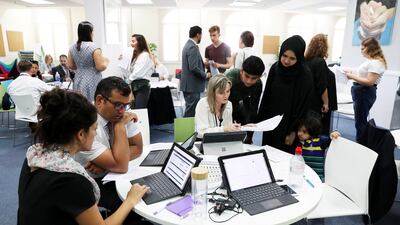
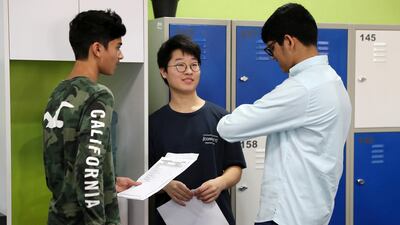
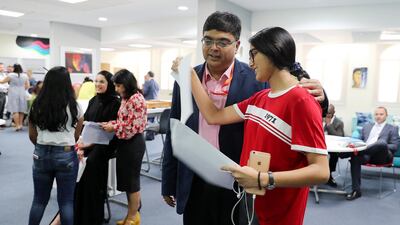
Photos of UAE pupils receiving their GCSE results in August 2020

The%20specs%20
%3Cp%3E%3Cstrong%3EEngine%3A%20%3C%2Fstrong%3E2.0-litre%204cyl%20turbo%0D%3Cbr%3E%3Cstrong%3EPower%3A%20%3C%2Fstrong%3E261hp%20at%205%2C500rpm%0D%3Cbr%3E%3Cstrong%3ETorque%3A%20%3C%2Fstrong%3E400Nm%20at%201%2C750-4%2C000rpm%0D%3Cbr%3E%3Cstrong%3ETransmission%3A%20%3C%2Fstrong%3E7-speed%20dual-clutch%20auto%0D%3Cbr%3E%3Cstrong%3EFuel%20consumption%3A%20%3C%2Fstrong%3E10.5L%2F100km%0D%3Cbr%3E%3Cstrong%3EOn%20sale%3A%20%3C%2Fstrong%3ENow%0D%3Cbr%3E%3Cstrong%3EPrice%3A%20%3C%2Fstrong%3EFrom%20Dh129%2C999%20(VX%20Luxury)%3B%20from%20Dh149%2C999%20(VX%20Black%20Gold)%3C%2Fp%3E%0A
What vitamins do we know are beneficial for living in the UAE

Vitamin D: Highly relevant in the UAE due to limited sun exposure; supports bone health, immunity and mood.Vitamin B12: Important for nerve health and energy production, especially for vegetarians, vegans and individuals with absorption issues.Iron: Useful only when deficiency or anaemia is confirmed; helps reduce fatigue and support immunity.Omega-3 (EPA/DHA): Supports heart health and reduces inflammation, especially for those who consume little fish.

Test

Director: S Sashikanth

Cast: Nayanthara, Siddharth, Meera Jasmine, R Madhavan

Star rating: 2/5

The specs: 2018 Nissan 370Z Nismo

The specs: 2018 Nissan 370Z Nismo
Price, base / as tested: Dh182,178
Engine: 3.7-litre V6
Power: 350hp @ 7,400rpm
Torque: 374Nm @ 5,200rpm
Transmission: Seven-speed automatic
​​​​​​​Fuel consumption, combined: 10.5L / 100km

'Tell the Machine Goodnight' by Katie Williams 
Penguin Randomhouse

Mercer, the investment consulting arm of US services company Marsh & McLennan, expects its wealth division to at least double its assets under management (AUM) in the Middle East as wealth in the region continues to grow despite economic headwinds, a company official said.

Mercer Wealth, which globally has $160 billion in AUM, plans to boost its AUM in the region to $2-$3bn in the next 2-3 years from the present $1bn, said Yasir AbuShaban, a Dubai-based principal with Mercer Wealth.

Within the next two to three years, we are looking at reaching $2 to $3 billion as a conservative estimate and we do see an opportunity to do so,” said Mr AbuShaban.

Mercer does not directly make investments, but allocates clients’ money they have discretion to, to professional asset managers. They also provide advice to clients.

“We have buying power. We can negotiate on their (client’s) behalf with asset managers to provide them lower fees than they otherwise would have to get on their own,” he added.

Mercer Wealth’s clients include sovereign wealth funds, family offices, and insurance companies among others.

From its office in Dubai, Mercer also looks after Africa, India and Turkey, where they also see opportunity for growth.

Wealth creation in Middle East and Africa (MEA) grew 8.5 per cent to $8.1 trillion last year from $7.5tn in 2015, higher than last year’s global average of 6 per cent and the second-highest growth in a region after Asia-Pacific which grew 9.9 per cent, according to consultancy Boston Consulting Group (BCG). In the region, where wealth grew just 1.9 per cent in 2015 compared with 2014, a pickup in oil prices has helped in wealth generation.

BCG is forecasting MEA wealth will rise to $12tn by 2021, growing at an annual average of 8 per cent.

Drivers of wealth generation in the region will be split evenly between new wealth creation and growth of performance of existing assets, according to BCG.

Another general trend in the region is clients’ looking for a comprehensive approach to investing, according to Mr AbuShaban.

“Institutional investors or some of the families are seeing a slowdown in the available capital they have to invest and in that sense they are looking at optimizing the way they manage their portfolios and making sure they are not investing haphazardly and different parts of their investment are working together,” said Mr AbuShaban.

Some clients also have a higher appetite for risk, given the low interest-rate environment that does not provide enough yield for some institutional investors. These clients are keen to invest in illiquid assets, such as private equity and infrastructure.

“What we have seen is a desire for higher returns in what has been a low-return environment specifically in various fixed income or bonds,” he said.

“In this environment, we have seen a de facto increase in the risk that clients are taking in things like illiquid investments, private equity investments, infrastructure and private debt, those kind of investments were higher illiquidity results in incrementally higher returns.”

The Abu Dhabi Investment Authority, one of the largest sovereign wealth funds, said in its 2016 report that has gradually increased its exposure in direct private equity and private credit transactions, mainly in Asian markets and especially in China and India. The authority’s private equity department focused on structured equities owing to “their defensive characteristics.”

Where to buy

Limited-edition art prints of The Sofa Series: Sultani can be acquired from Reem El Mutwalli at www.reemelmutwalli.com

What is a robo-adviser?

Robo-advisers use an online sign-up process to gauge an investor’s risk tolerance by feeding information such as their age, income, saving goals and investment history into an algorithm, which then assigns them an investment portfolio, ranging from more conservative to higher risk ones.

These portfolios are made up of exchange traded funds (ETFs) with exposure to indices such as US and global equities, fixed-income products like bonds, though exposure to real estate, commodity ETFs or gold is also possible.

Investing in ETFs allows robo-advisers to offer fees far lower than traditional investments, such as actively managed mutual funds bought through a bank or broker. Investors can buy ETFs directly via a brokerage, but with robo-advisers they benefit from investment portfolios matched to their risk tolerance as well as being user friendly.

Many robo-advisers charge what are called wrap fees, meaning there are no additional fees such as subscription or withdrawal fees, success fees or fees for rebalancing.

Tamkeen's offering
  • Option 1: 70% in year 1, 50% in year 2, 30% in year 3
  • Option 2: 50% across three years
  • Option 3: 30% across five years