

Abu Dhabi has unveiled one of its largest university scholarship programmes to date, offering 6,000 Emiratis the chance to study in the US and Canada.
The total funding for the project amounts to Dh1.9 billion ($500 million) and will pay for students to attend university until 2028. It is aimed at those who have not previously benefited from overseas funding from the government.
The Khotwa (RizeUp) programme was created by Sheikh Khaled bin Mohamed, member of Abu Dhabi Executive Council and chairman of Abu Dhabi Executive Office.
“This landmark programme is a strategic investment by the Abu Dhabi government to continue nurturing future-ready Emirati bachelor’s degree holders,” said Sara Musallam, Minister of State for Early Education and chairwoman of the Abu Dhabi Department of Education and Knowledge (Adek).
“Khotwa will empower students who have not benefited from our previous scholarships to study at international colleges and universities and graduate as highly competent, effective and productive citizens capable of enriching our national employment pool and playing an active role in driving forward our knowledge-based economy.”
The department aims to enrol 100 students in the first group this year, with numbers set to increase annually to reach a total of 6,000 scholarship beneficiaries by 2028.
Who qualifies for an overseas scholarship?
Pupils at public, private and charter schools across Abu Dhabi with a minimum GPA of 65 per cent in their Grade 12 finals are eligible for the RizeUp programme, providing they score a minimum of 3.0 on the IELTS test.
The same criteria apply to National Service Graduates who do not hold a bachelor’s degree.
Priority will be given to candidates whose families are receiving social support, Abu Dhabi Government Media Office said in a statement.
This will enable a greater number of Emirati students who have not previously received scholarships to study abroad.
Accommodation with families abroad
Candidates joining Khotwa (RizeUp) must commit to a homestay programme during the two-year community college period, wherein students will reside with “local families carefully selected by Adek and reputable homestay organisations across North America”.
Officials did not say which subjects are preferred, but emphasised the importance of “new specialities to improve graduates’ employability, address priority industry needs, and supplement the current and future needs of the UAE economy”.
Shortlisted candidates must attend a five-day boot camp at Adek headquarters in October to assess their readiness for overseas study.
“The boot camp will follow a programme of behavioural interviews and self-assessments, group case studies, role play and situational simulation, and soft skills training,” said Dr Bashaer Almatrooshi, acting executive director of Adek.
“It will be a developmental experience for successful applicants and those who may not qualify this time around.
“Those selected must meet key criteria including a willingness and ability to learn in new settings.”
Successful applicants will leave the UAE for their assigned community college and homestay programme in January 2023.
Officials said that, in addition to having tuition fees and living costs throughout their homestay programme covered, RizeUp enrollees will also receive living allowances and continuous one-on-one advisory support from academic counsellors.
America's top colleges — according to 'US News & World'
-

Princeton University in New Jersey tops the US News Best Colleges list for 2022. Reuters -
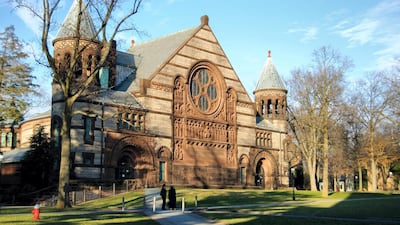
Alexander Hall on the Campus of Princeton University in New Jersey. Alamy -
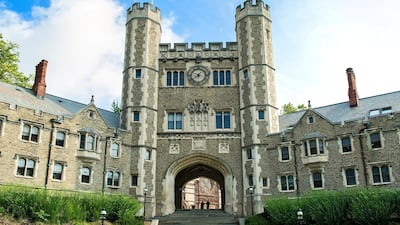
Blair Hall, also on the Princeton campus. Alamy -
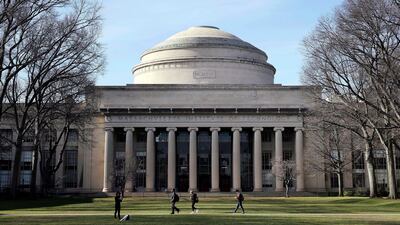
Massachusetts Institute of Technology in Cambridge grabbed the number two spot. AP -
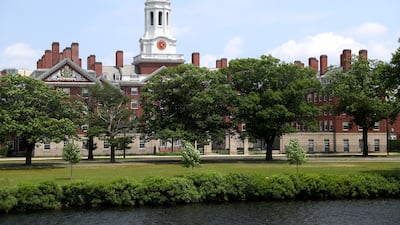
Harvard University in Cambridge, Massachusetts makes the list in joint-third position. Getty Images -
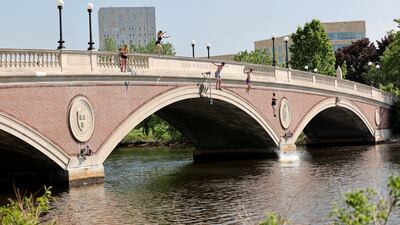
Harvard 2022 graduates jump into the Charles River amid the US heatwave. Reuters -

Stanford University in California also comes in joint-third. Reuters -
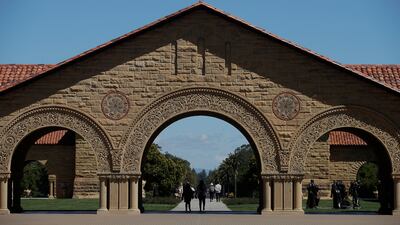
The Stanford University campus. AP -

Yale University in New Haven, Connecticut completes the three-way tie in the rankings. Reuters -
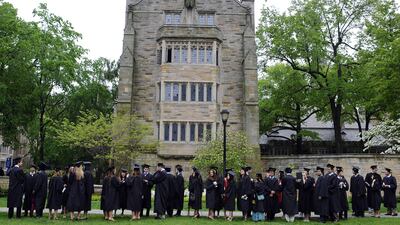
Yale currently boasts 20 billionaire alumni. AP -
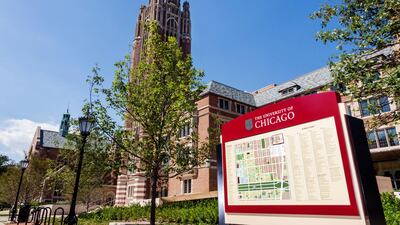
The University of Chicago took sixth position. Getty Images -

The University of Chicago is located in the Illinois city's Hyde Park. Alamy -
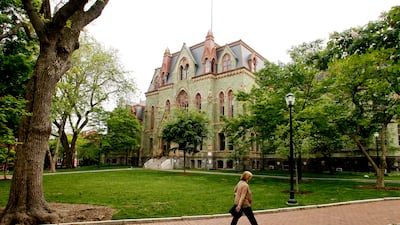
The University of Pennsylvania is a private institution in Philadelphia founded in 1740. EPA -
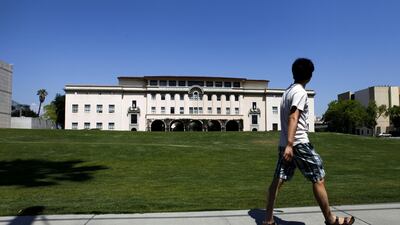
The California Institute of Technology in Pasadena has produced 31 alumni and faculty who have won 32 Nobel Prizes. Bloomberg -
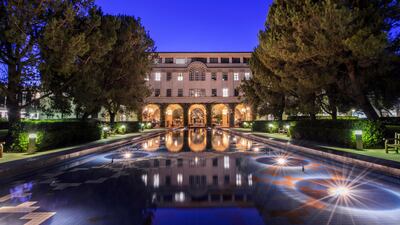
Caltech topped the global rankings for employability. Alamy -
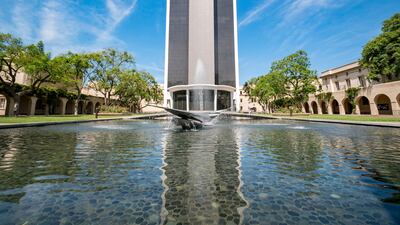
The college is renowned for its engineering and natural science schools. Alamy -
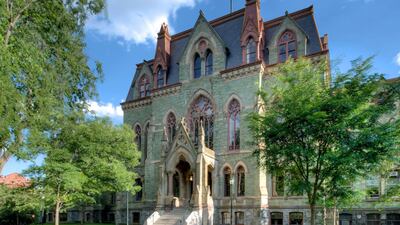
The North façade of College Hall at the University of Pennsylvania in Philadelphia. Photo: US National Register of Historic Places -
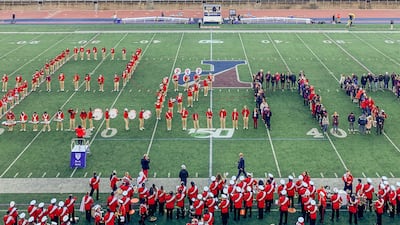
UPenn band members and alumni spell out Penn during their homecoming American football game. -

University Hall at the Northwestern University near Chicago, Illinois.



