

The reactor of the fourth and final unit of the Barakah Nuclear Energy Plant has been successfully started up, the Emirates Nuclear Energy Corporation (ENEC) announced on Friday.
The start-up of Unit 4 at the Barakah Plant is the first time it has produced heat through nuclear fission. The heat is used to create steam, turning a turbine to generate electricity.
In the coming weeks it is expected that Unit 4 will be connected to the national energy grid, entering a testing phase to gradually increase its power output to full capacity.
“The start-up of the fourth unit of the Barakah Nuclear Energy Plant is a significant achievement as we now enter into a new era to deliver the full promise of the Barakah Plant,” said Mohamed Al Hammadi, managing director and chief executive of ENEC.
“In the past five years, the UAE has added more clean electricity per capita than any other nation globally, with 75 per cent coming solely from the Barakah Plant, demonstrating how pivotal nuclear energy is in decarbonising the country’s power sector.
“The knowledge and expertise of our local teams positions us well ahead of the curve, setting the nation on a pioneering course towards sustainable economic and environmental prosperity.
“Our journey reflects a bold vision, coupled with rigorous standards of quality and safety, to effectively deploy civil nuclear energy as a proven, viable solution for tackling energy security and climate change.”

Capacity for clean energy
Commercial operations will begin once testing is complete.
Unit 4 will take the total capacity of the Barakah Plant to 5,600 megawatts of zero-carbon emission electricity to meet 25 per cent of the UAE’s electricity demand, according to a statement from Abu Dhabi Media Office.
Today's announcement comes just months after nations signed a historic accord, at the Cop28 climate change conference in Dubai, to cut back on fossil fuel use.
The Federal Authority for Nuclear Regulation (FANR) issued the first operating licence for Unit 1 at the Barakah Plant in February 2020 and another for Unit 2 in March 2021.
Commercial operations at Unit 1 started in April 2021, and in its first year it prevented the release of more than five million tonnes of carbon emissions by replacing the power that would previously have been generated by fossil fuels.
It was the equivalent of more than “one million cars driven for a year”, the ENEC said.
The Barakah is expected to produce 85 per cent of Abu Dhabi’s clean electricity by 2025, and will be the biggest contributor to reducing the national power sector’s carbon emissions.
Nuclear power is regarded as a clean energy because it does not create the same harmful emissions that fossil fuels like oil and gas do.
Barakah nuclear plant – in pictures
-

Unit three of Abu Dhabi's Barakah Nuclear Energy Plant started commercial operations in February. Photo: Emirates Nuclear Energy Corporation -

The UAE has issued an operating licence for the fourth and final unit of its Barakah Nuclear Energy Plant. FANR -
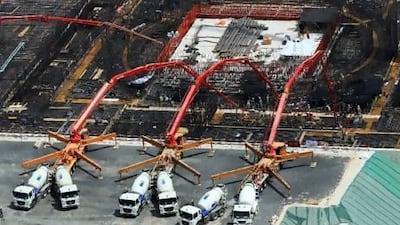
A view of the Barakah nuclear site under construction in 2012. -

Unit 1 being built in 2013 in the Western region of Abu Dhabi. -
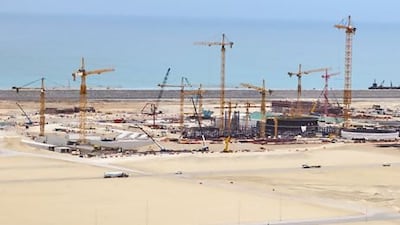
The Emirates Nuclear Energy Corporation selected a Korean consortium in 2013 to build four APR-1400 reactors. Photo: Enec -
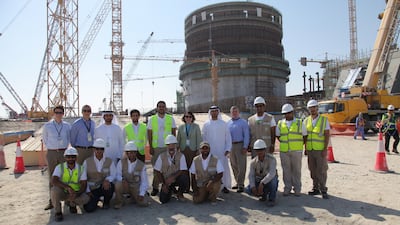
Kristine Svinicki, head of the US Nuclear Regulatory Commission, toured the Barakah site in November 2013. Photo: Enec -
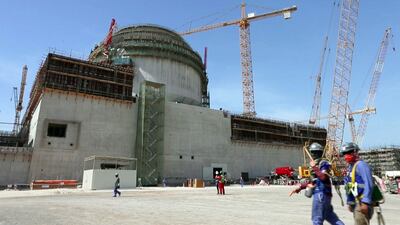
By August 2014, more than 55 per cent of construction at Unit 1 had been completed. Photo: Enec -
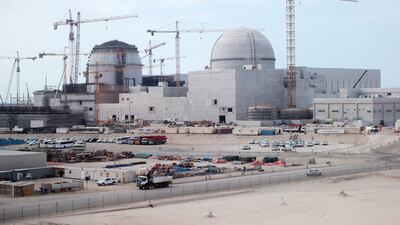
The first nuclear reactor at Barakah in 2016. Christopher Pike / The National -
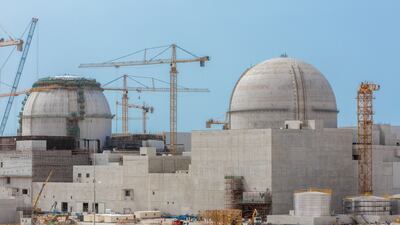
The UAE's nuclear energy programme is based in Barakah in the Western Region of Abu Dhabi. Photo: Enec -
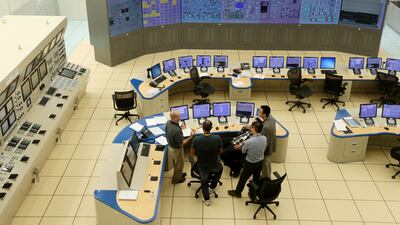
Trainees learn to deal with potentially catastrophic scenarios at this simulator in Barakah. Christopher Pike / The National -
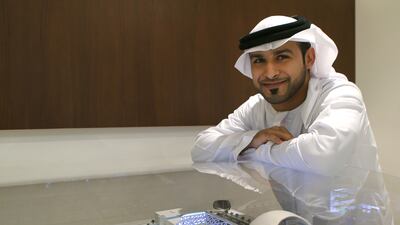
Khalid Naqbi was part of the first batch of resident inspectors sent to the construction site by the Federal Authority for Nuclear Regulation. Ravindranath K / The National



