


Two earthquakes measuring nearly magnitude 6 struck Kepulauan Batu, Indonesia, in the morning hours on Sunday, said the European Mediterranean Seismological Centre.
The first earthquake, pegged by the EMSC at a magnitude 6.1 was followed by another 5.8 magnitude quake just hours later.
The more violent ones that happened on February 6 in Turkey and Syria claimed more than 50,000 lives and caused widespread destruction. It was one of the most powerful earthquakes ever recorded in the area.
The 7.8-magnitude earthquake was followed by an aftershock that registered 7.5 on the Richter scale, and there were thousands of smaller tremors in the following weeks.
Reports of deaths and damage after such events, transmitted at rapid speed across the globe, can lead to the perception that earthquakes are becoming more common.
But is this actually the case? Here we look at the causes of earthquakes and consider whether there has really been an increase in their frequency.
What causes earthquakes and how often do they happen?
According to the United States Geological Survey, most earthquakes happen around the meeting points of tectonic plates, the large pieces of the Earth's crust and the uppermost part of the mantle — the layer directly below the crust.
At these meeting points, there are cracks or fractures known as geological faults.
The build-up of stress when tectonic plates become stuck against one another can lead to a sudden slip, releasing large amounts of energy that results in shaking.
University of Strathclyde
The National Earthquake Information Centre, part of the USGS, records about 20,000 earthquakes annually worldwide, or an average of about 55 per day.
In a typical year, about 15 earthquakes with a magnitude of seven are expected and only one with a magnitude of eight or more.
As well as natural seismological events, human activity may also cause earthquakes.
For example, wastewater generated from oil production is sometimes injected deep underground so that it does not contaminate drinking water. This process may increase the pressure at faults and result in earthquakes.
Oklahoma experienced several earthquakes in 2016 with a magnitude greater than five as a result of fluid injection.
What is the situation in and around Turkey?
Turkey is very seismically active because it is at the meeting point of several tectonic plates: the Anatolian Plate, the Eurasian Plate, the Arabian Plate and the African Plate.
With the East Anatolian fault zone — where the Anatolian Plate and the Arabian Plate — and the adjacent North Anatolian fault zone — where the Eurasian Plate and the Anatolian Plate meet — ruptures may happen every few decades to every few hundred years and spark a series of quakes over several years.
-

A woman walks among destroyed buildings in Hatay, Turkey. Getty Images -
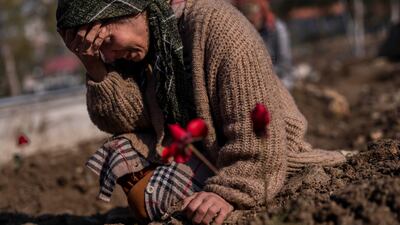
A woman mourns a relative during the burial of one of the earthquake victims in Antakya, southeastern Turkey. AP Photo -
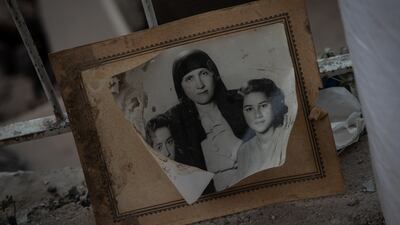
A family photo is seen amid the rubble in Hatay. Getty Images -
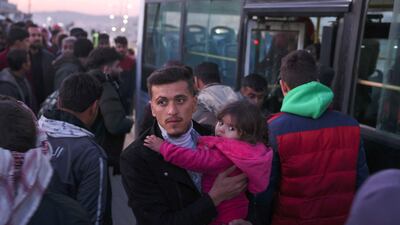
Syrian refugees in Turkey return to their home country following the deadly earthquake. AFP -

Members of NGOs Deathcare Embalming Team and Turkish Kurt-Ar inspect the bucket of an excavator as they search for bodies in Kahramanmaras, Turkey. AP Photo -
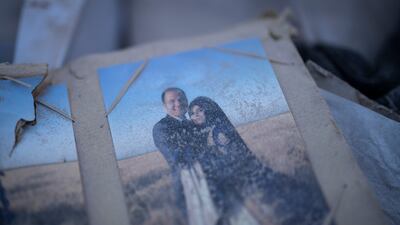
Dust covers a family photo album found in Antakya. AP Photo -
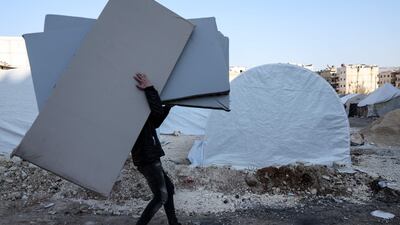
A man made homeless by the 7.8-magnitude quake carries mattresses distributed by an NGO at a makeshift camp in Afrin, in Syria's Aleppo province. AFP -
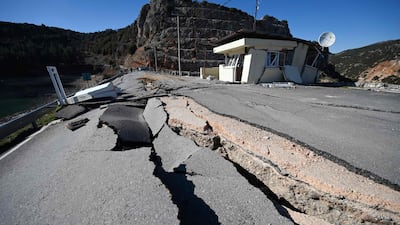
A cracked road near the quake’s epicentre in Kahramanmaras, Turkey. AFP -
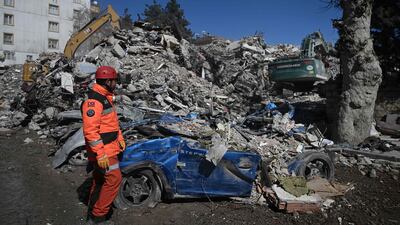
A rescuer stands near the site where Aleyna Olmez, 17, was rescued from the rubble of a collapsed building in Kahramanmaras, about 10 days after the quake struck. AFP -
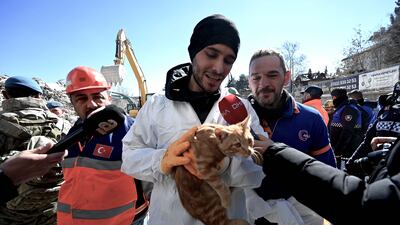
A rescuer holds a cat after it was rescued from the ruins of a collapsed building in Kahramanmaras. AFP -

Quake survivors queue for food amid the rubble in Kahramanmaras. Reuters -

Bedran, a local resident who lost his house in the earthquake, keeps warm in Antakya, Turkey. Reuters -

A girl carries a box of water bottles next to a damaged mosque in Antakya. Reuters -
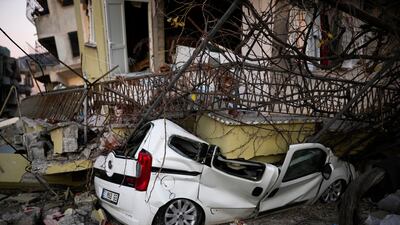
A car lies crushed by parts of a badly damaged building in Samandag, Turkey. AP -
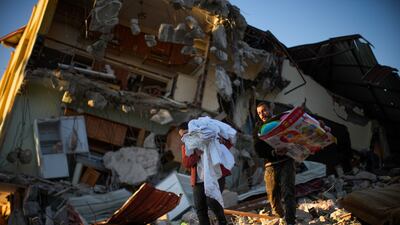
Residentes remove their belongings from their destroyed house in Samandag. AP -
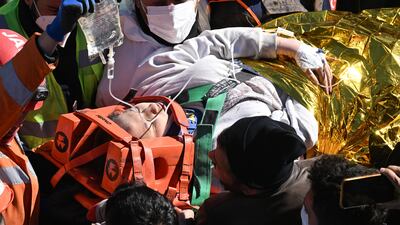
Aleyna Olmez, 17, is rescued after being trapped for 10 days in Kahramanmaras. Getty -
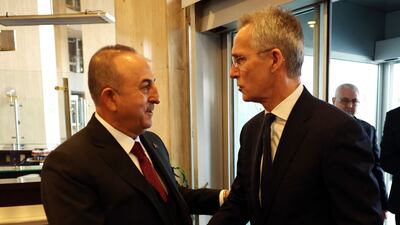
Turkish Foreign Minister Mevlut Cavusoglu, left, with Nato Secretary General Jens Stoltenberg in Ankara. AFP -

A message scrawled on a car covered in dust from collapsed buildings in Antakya, Turkey. AP -
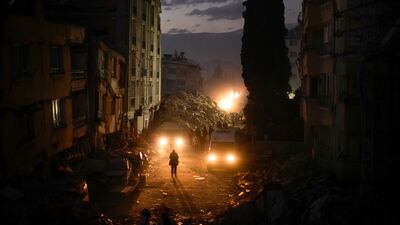
Destruction in Antakya. AP -

A cracked road leads to a flooded area in Antakya. AP -
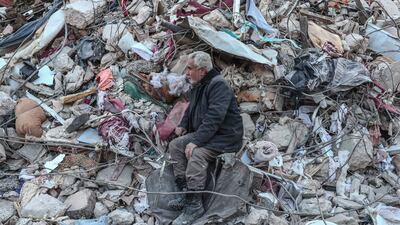
A man looks bewildered at the site of collapsed buildings in Hatay, Turkey. EPA -
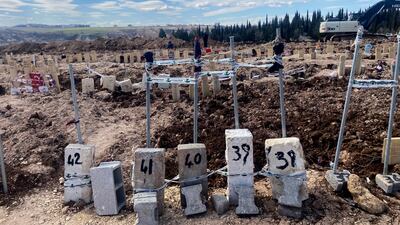
Numbered stones near graves of earthquake victims at a cemetery in Adiyaman, Turkey. EPA -

A makeshift camp set up amid the rubble in Antakya, south of Hatay. AFP -
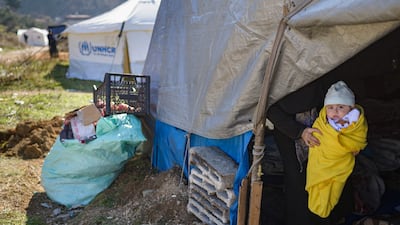
A woman holds her baby inside a tent in a camp in Antakya, Hatay. AFP -
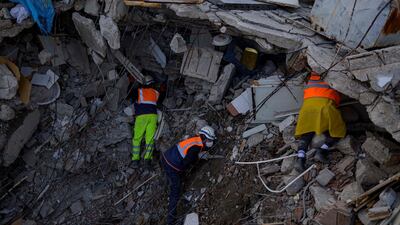
Greek and Turkish rescuers are at work to extract bodies of victims from the rubble in Antakya. AFP -
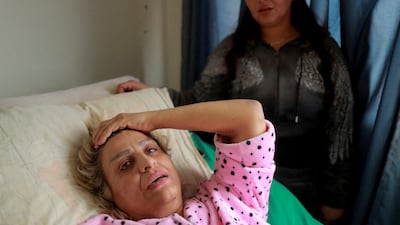
Samar Hamouda, 44, recalls her experience of the earthquake destroying her home, at Tishreen Hospital in Latakia, Syria. Reuters -
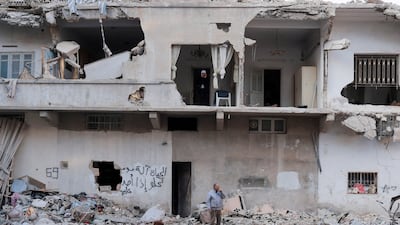
A damaged house in Jableh, Syria. Reuters -
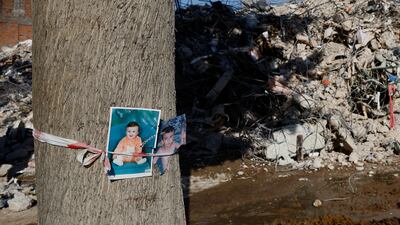
Photos of missing children left in hope in Kahramanmaras, Turkey. Reuters -
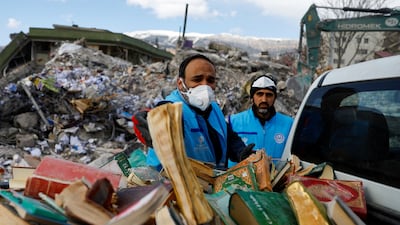
People collect copies of holy books from the rubble in Kahramanmaras. Reuters -
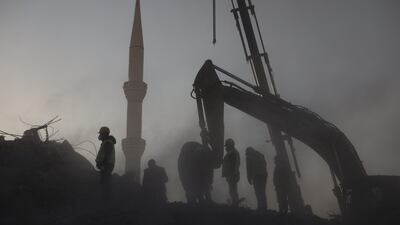
Rescuers search for survivors under the rubble of a collapsed building in Kahramanmaras. Reuters -

People carry a bodybag as residents wait for their relatives to be pulled out from the rubble in Hatay. AFP -

Dust covers a family photo album found in the debris of a building in Antakya. AP -
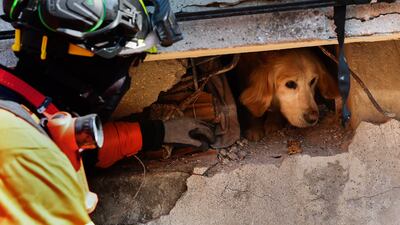
Portuguese rescue team members try to free the dog named Tarcin from the rubble in Antakya in Hatay. EPA -
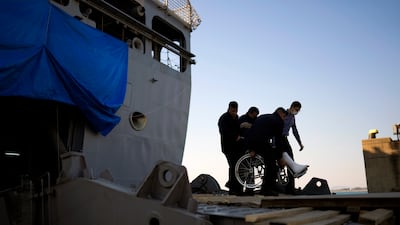
An injured survivor at a makeshift hospital set up at Turkish Bayraktar warship anchored near Iskenderun city, southern Turkey. AP -
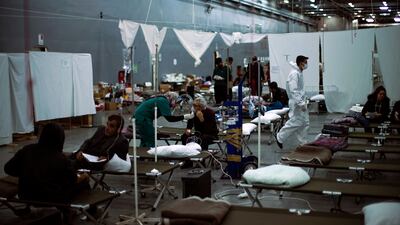
A makeshift hospital set up at Turkish Bayraktar warship anchored near Iskenderun city, southern Turkey. AP -

Britain's King Charles III (C) meets with members of the Turkish diaspora community who have been collecting, packaging and organising the transportation of food, blankets and warm clothing for people who have recently been affected by the earthquakes in Turkey and Syria, during a visit to the West London Turkish Volunteers, in Hounslow, greater London. AFP -
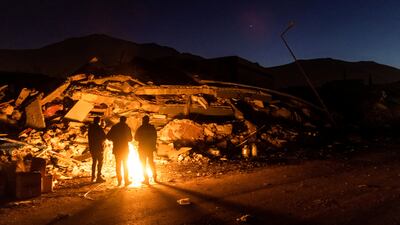
People stand by the fire next to the ruins of a collapsed building in Elbistan, Turkey. Reuters -
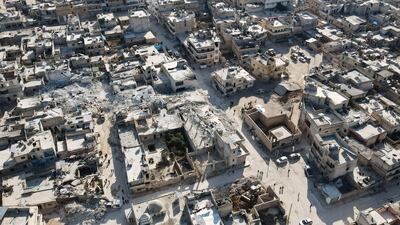
Destroyed buildings in Syria's rebel-held village of Atarib, in the north-western Aleppo province. AFP -

Rescuers carry Fatma, 15, who was pulled out from the rubble in Hatay, Turkey. Reuters -

A displaced woman receives food inside a stadium in Kahramanmaras, Turkey. Reuters -
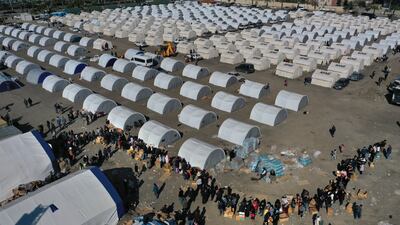
People lineup to receive aid supplies at a makeshift camp in Iskenderun city in southern Turkey. AP -
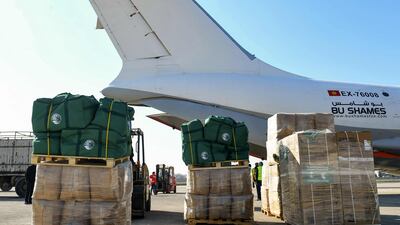
Humanitarian aid provided by Saudi Arabia for survivors of the February 6 earthquake are unloaded at Aleppo Airport in northern Syria. AFP -

Turkish President Recep Tayyip Erdogan addresses the World Government Summit in Dubai via video link. Antonie Robertson/The National -

A man walks between trains being using as shelters in Iskenderun, southern Turkey. AP Photo -
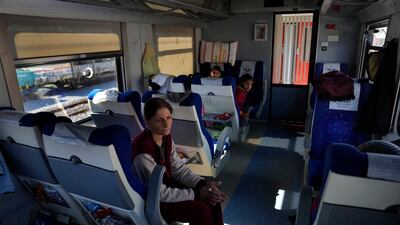
A woman and children inside a train being used as shelter after the earthquake, in Iskenderun. AP Photo -

Tents erected in a school yard for Syrians who have lost their homes after the deadly quake, in the rebel-held town of Harem in Syria. Reuters -
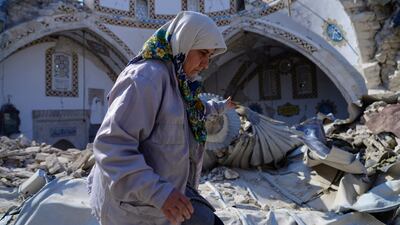
A woman walks by the destroyed Habib-i Neccar mosque in the historic southern city of Antakya in Hatay, Turkey. AFP -
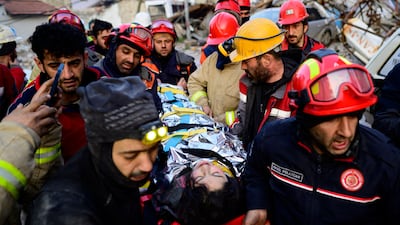
Rescuers pull out a 12-year-old Syrian girl, Cudi, from the rubble in Hatay. AFP -

Amar, a Syrian refugee living in Turkey, looks on as search for survivors continues in Kahramanmaras. Reuters -
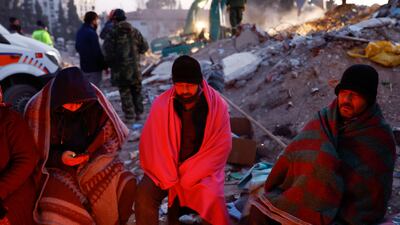
Displaced people keep warm by a fire in Kahramanmaras, Turkey. Reuters -
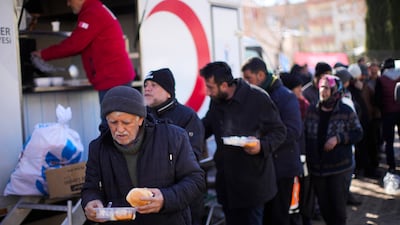
Earthquake survivors receive distributed meals in Golbasi, Turkey. AP -
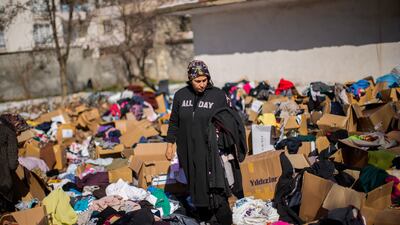
A woman stands amid boxes of donated clothes in Golbasi, Turkey. AP -
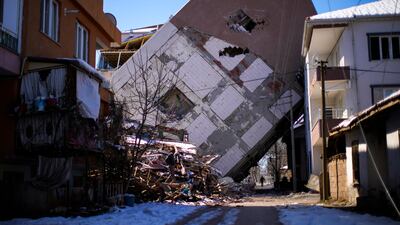
A man walks near a damaged building that leans on a neighbouring house in Golbasi, Turkey. AP -
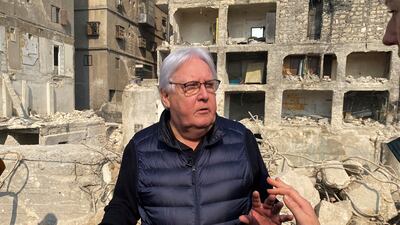
UN emergency relief co-ordinator Martin Griffiths stands amid quake-damaged buildings in Aleppo, Syria. Reuters -

Delegates observe a moment of silence for the Turkey–Syria earthquake before the start of the World Government Summit in Dubai. Pawan Singh / The National -
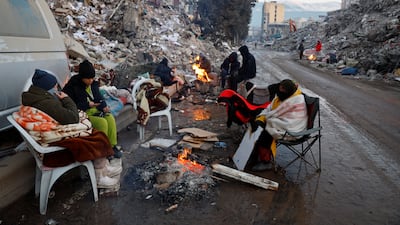
People keep warm by a fire as the search for survivors continues a week after the earthquake in Kahramanmaras, Turkey. Reuters -

A child receives food in Kahramanmaras, Turkey. Reuters -

A dog is seen through a glass door in Kahramanmaras, Turkey. Reuters -

Children walk in the street with food boxes in Kahramanmaras, Turkey. Reuters -

A minaret stands as the sun rises over the earthquake-hit city of Kahramanmaras, Turkey. Reuters


This is a phenomenon separate from aftershocks, which are smaller quakes around the epicentre of the main quake that take place in subsequent weeks.
The Turkey-Syria quake was the latest in a handful of big earthquakes that have taken place in the East Anatolian fault zone since 1998.
Before 1998, there had not been a major event caused by the fault zone since the 19th century. The North Anatolian fault line has been responsible for more than a dozen deadly quakes since 1939.
“It’s to do with how the stress is transferred to a different part of the fault and it triggers another earthquake maybe a decade later,” said John Douglas, a senior lecturer in civil and environmental engineering at the University of Strathclyde in the UK.
Some other faults typically have periods of inactivity that last more than 10,000 years.
While particular faults, such as those affecting Turkey, may experience alternating spells of dormancy and activity, the frequency of quakes worldwide fluctuates less.
“On a global scale, it’s more uniform because you’re averaging over lots of faults around the world. You need to look at long-term averages,” Dr Douglas said.
Nevertheless, over the past few decades, the number of earthquakes with a magnitude of seven or above in a single year has varied from less than 10 to more than 20, according to the USGS, something that can happen even without a systematic trend.
This may result in people feeling at times that earthquakes have become more frequent even when there is no long-term increase.
Are we detecting or hearing about earthquakes more?
Instruments used by geologists to detect earthquakes have improved over time, which has meant that more small earthquakes, in particular, can be recorded.
“In the last 50 years, the detection has improved a lot and probably in the last 20 years, everything went digital,” Dr Douglas said.
“There’s a lot more instruments that can detect smaller earthquakes. There’s still parts of the world that are less well instrumented, [but] any earthquake larger than about 4.0 [magnitude] is pretty much detected now.”
Dr Douglas said there may currently be a perception that earthquakes have become more common because of recent events in Turkey and Syria.
Instant communications and the 24-hour news cycle mean that events are reported more quickly and vividly than ever. After a major earthquake, he said, smaller quakes that would not normally warrant much media attention may be reported on.
This may cause people to think that earthquakes are becoming more common, even if this is not actually the case.
Knowing the likelihood of earthquakes of a given magnitude in a particular area is important for the siting of sensitive industrial facilities, such as nuclear power plants.
This is an area of interest for Dr Douglas, who might have to calculate the likelihood of seismic activity during the 50 years or so in which a facility is planned to be operational.
“If [earthquakes] do occur, what’s the shaking at a particular location?” he said. “If there’s shaking, what’s the risk that the structure will be damaged and how do you reduce the chance of that damage?”
Lands cracked by earthquake in Turkey — in pictures
-

Cracks on a farm in Kahramanmaras, the epicentre of the first 7.8-magnitude earthquake, in south-eastern Turkey. AFP -
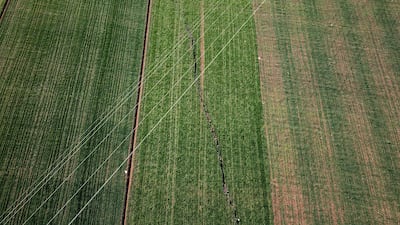
The ground has cracked open in various areas as a result of the earthquake in Turkey and neighbouring Syria. AFP -
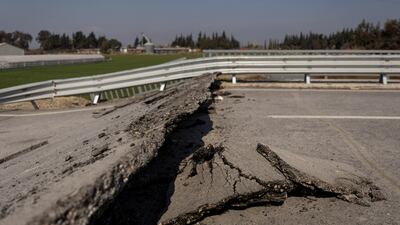
A motorway damaged by the quake, in Hatay, Turkey. Reuters -

A destroyed road near Koseli village, in Kahramanmaras. AP -
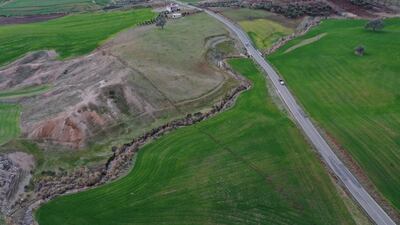
Grasslands and a motorway split in two, near Tevekkeli village, in Kahramanmaras. Reuters -
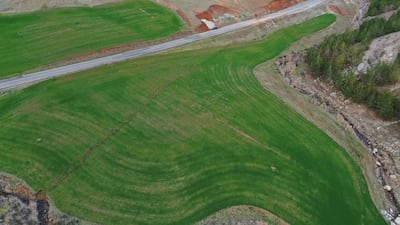
Cracks in the ground, near Tevekkeli village, in Kahramanmaras. Reuters -
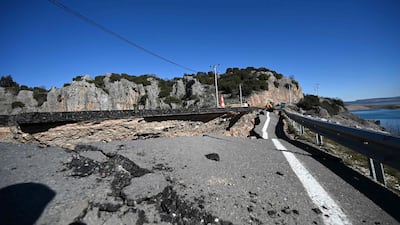
A road near the quake’s epicentre, in Pazarcik, Kahramanmaras. AFP -
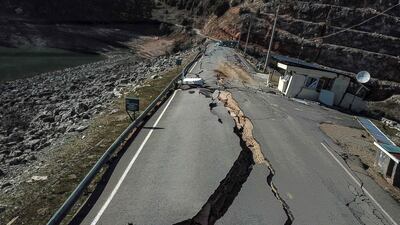
Land on either side of the ruptures moved in opposite directions up to seven metres in some locations, according to data from the California Institute of Technology. AFP -
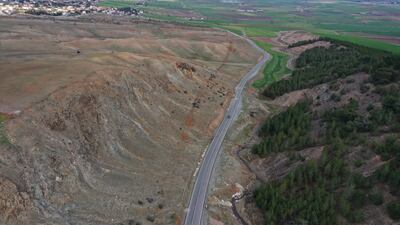
Villages such as Tevekkeli, above, and small towns directly above the fault line suffered some of the most severe shaking. Reuters -
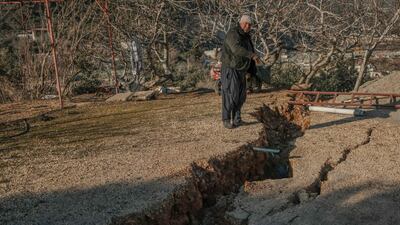
A resident shows the giant cracks next to his home in Nurdagi. AFP -
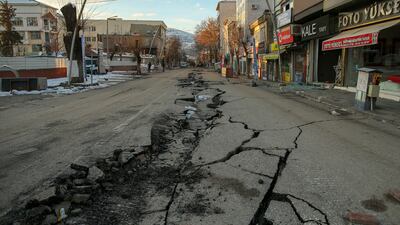
A damaged road in Golbasi, Adiyaman province. AP -
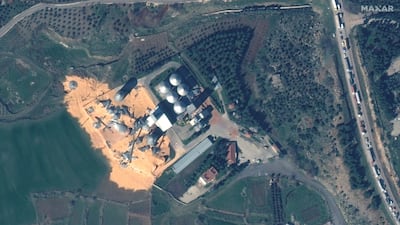
Grain silos damaged by the earthquake, in Nurdagi. Reuters -
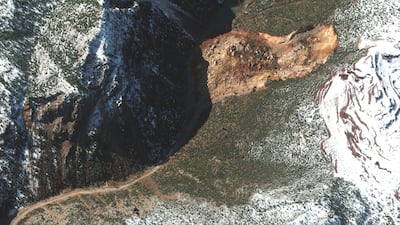
A blocked road after a landslide caused by the earthquake, in the Islahiye region of Turkey's Gaziantep. AP



