



UAE astronaut Sultan Al Neyadi will spend the entire month of Ramadan on the International Space Station this year.
Ramadan sees Muslims fast from sunrise to sunset, but it is not mandatory while they are travelling.
Dr Al Neyadi, who will spend six months in space, launched earlier this month, said during a press conference on that the rule also applies to astronauts.
Ramadan this year began on March 23, which means Eid Al Fitr — the festival that marks the end of Ramadan — is expected to be from April 20 to April 23.
“Throughout the six months, we will be passing through very nice occasions like Eid and Ramadan,” said Dr Al Neyadi.
“I’m in the definition of a traveller, and we can actually break fast and it’s not compulsory.
“And, actually, fasting is not compulsory if you’re not feeling well. Eating sufficient food is allowed if lack of food, nutrition or dehydration can jeopardise the mission, or maybe put a crew member at risk.”
He said that if he gets the opportunity, he will observe some fasts, and will share some of the meals with his colleagues on board the station.
For fasting and praying in space, astronauts can follow the time zone that is used on the space station, which is UTC, also called GMT, or they can follow the timings of Makkah.
How astronauts carry out their Islamic duties in space
Dr Al Neyadi is not the first Muslim to spend Ramadan in space.
Prince Sultan bin Salman of Saudi Arabia was the first Muslim in space when he flew the US space shuttle Discovery in 1985.
He was fasting on the day he launched into space, which was the last day of Ramadan.
In his book Seven Days in Space, he spoke extensively about carrying out his Islamic duties during his training and time in space.
He spoke about eating suhoor — the pre-dawn meal — on the day of lift-off, praying on the launch tower before boarding the spaceship, fasting while in space and reading the Quran.
“Now I feel quite exhausted, possibly due to lack of sleep, weightlessness, and loss of bodily fluids,” he said in his book.
“I really feel dehydrated. I have one hour left until I can break my fast. The rest of the crew on the ship are supposed to be sleeping at that time, but they have decided to stay with me until I break my fast. What a beautiful feeling”.
He also spent Eid Al Fitr on the shuttle. He said that he was “ecstatic” to be spending the special day in space and that he would “celebrate it in my own way”.
He spoke about how his American colleague John Fabian wished him well when Saudi Arabia announced that the lunar crescent had been sighted, marking the end of Ramadan and the beginning of Eid.
Prince Salman had a special menu on the shuttle, including sweet and sour chicken, boiled sweetcorn, cauliflower cheese, tuna salad, pasta, shrimp, salmon, fried chicken, hot chocolate, fruits and vegetables and decaffeinated coffee and tea.
The astronaut also shared pictures of himself praying and reading the Quran in space.
Malaysian astronaut Sheikh Muszaphar Shukor also spent a few days of Ramadan in space in 2007.
He launched on a Russian Soyuz rocket from Kazakhstan’s Baikonur Cosmodrome spaceport.
“Islam is very lenient. If I can’t fast in space I can always come back and do it at a later time,” Mr Shukor said a few weeks before his launch.
It was reported that the astronaut threw an “Eid party” in space for his colleagues. He took some Malaysian satay, or skewers of spicy meat chunks, and cookies with him.
UAE's first astronaut Hazza Al Mansouri, who spent eight days on the ISS in 2019, filmed himself praying while in space.
His menu on the ISS were traditional Emirati dishes, including balaleet (an Emirati breakfast staple of sweetened vermicelli served with an omelette on top), salona (chicken stew) and madrooba (a savoury thick oatmeal).
A version of this story was first published on January 26, 2023.
Sultan Al Neyadi - in pictures
-
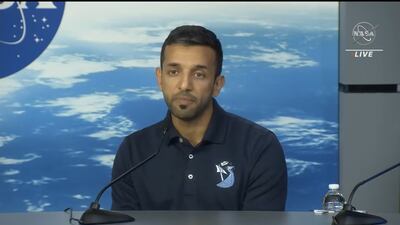
UAE astronaut Sultan Al Neyadi at a Nasa press conference. Photo: Nasa -
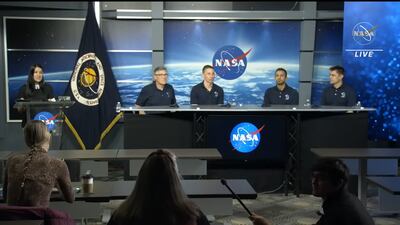
Dr Al Neyadi and his SpaceX/Nasa Crew-6 colleagues speak at a press conference in Houston. Photo: Nasa -
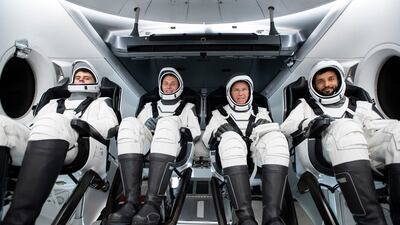
Dr Al Neyadi (R) in a Dragon capsule during a training session. Photo: Nasa / SpaceX -
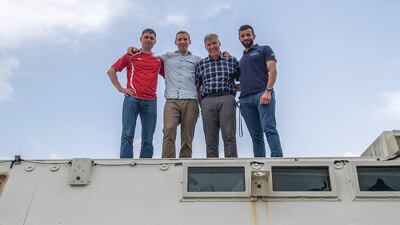
(L-R) Mission specialist Andrey Fedyaev, pilot William Hoburg, commander Stephen Bowen and Dr Al Neyadi. Photo: Nasa / SpaceX -
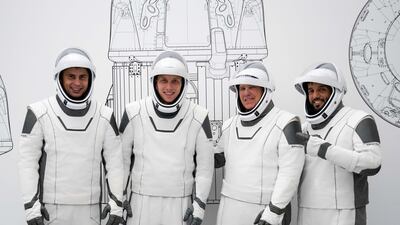
Dr Al Neyadi (R) with colleagues who are part of the SpaceX Crew-6 mission. Photo: Nasa / SpaceX -
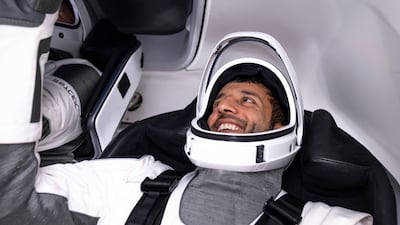
Dr Al Neyadi training inside a Dragon mock-up crew vehicle at SpaceX headquarters in Hawthorne, California. Photo: Nasa / SpaceX -
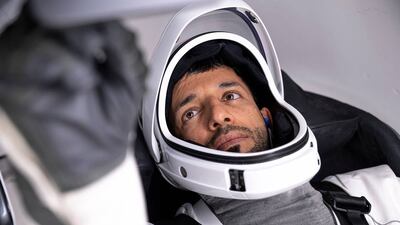
Dr Al Neyadi training. Photo: Nasa / SpaceX -
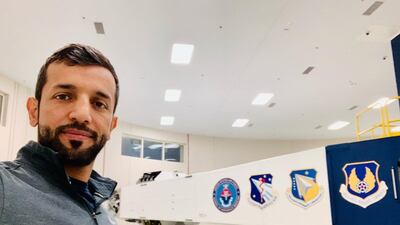
Dr Al Neyadi training in a centrifuge, a robotic machine that simulates gravitational forces. Photo: Sultan Al Neyadi Twitter -
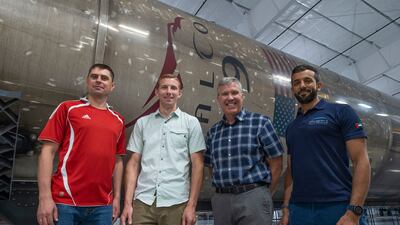
The SpaceX Crew-6 team. Photo: Nasa / SpaceX -
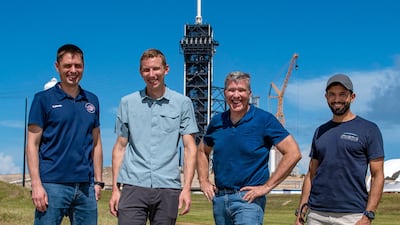
At the launch site in Florida. Photo: Nasa / SpaceX -
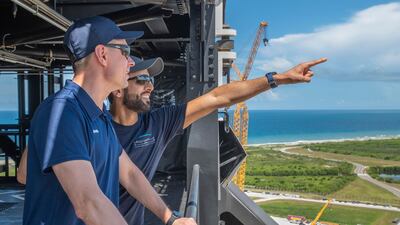
Pointers for success from Dr Al Neyadi, with Mr Fedyaev. Photo: Nasa / SpaceX



