• Sarah Al Amiri, Minister for Public Education and Future Technology and Chairwoman of the UAE Space Agency, talks to Dr Hiroshi Yamakawa of Japan Aerospace Exploration Agency at the Abu Dhabi Space Debate. All photos: Chris Whiteoak / The National
    Sarah Al Amiri, Minister for Public Education and Future Technology and Chairwoman of the UAE Space Agency, talks to Dr Hiroshi Yamakawa of Japan Aerospace Exploration Agency at the Abu Dhabi Space Debate. All photos: Chris Whiteoak / The National
  • Sheikh Abdullah bin Zayed, Minister of Foreign Affairs and International Co-operation, with India's Minister of State for Science and Technology Dr Jitendra Singh, centre, at the Abu Dhabi Space Debate
    Sheikh Abdullah bin Zayed, Minister of Foreign Affairs and International Co-operation, with India's Minister of State for Science and Technology Dr Jitendra Singh, centre, at the Abu Dhabi Space Debate
  • Sheikh Khaled bin Mohamed, Member of the Abu Dhabi Executive Council and Chairman of the Abu Dhabi Executive Office, at the debate
    Sheikh Khaled bin Mohamed, Member of the Abu Dhabi Executive Council and Chairman of the Abu Dhabi Executive Office, at the debate
  • Israeli President Isaac Herzog, right, with Sheikh Abdullah and Dr Singh
    Israeli President Isaac Herzog, right, with Sheikh Abdullah and Dr Singh
  • Omran Sharaf, Assistant Minister of Foreign Affairs and International Co-operation for Advanced Science and Technology, speaks on the subject of the new geopolitics of space
    Omran Sharaf, Assistant Minister of Foreign Affairs and International Co-operation for Advanced Science and Technology, speaks on the subject of the new geopolitics of space
  • Ms Al Amiri speaks at the Abu Dhabi Space Debate
    Ms Al Amiri speaks at the Abu Dhabi Space Debate
  • Sheikh Abdullah bin Zayed
    Sheikh Abdullah bin Zayed
  • Dr Singh of India speaking at the Abu Dhabi Space Debate
    Dr Singh of India speaking at the Abu Dhabi Space Debate
  • Israel's Mr Herzog speaking at the Abu Dhabi Space Debate
    Israel's Mr Herzog speaking at the Abu Dhabi Space Debate

Saudi Arabia in talks over plans for next-generation space stations


Sarwat Nasir
  • English
  • Arabic

Saudi Arabia is in talks with other nations over plans for the next generation of space stations, which could one day serve as floating hotels among the stars.

Mohammed bin Saud Al Tamimi, governor of the Communications, Space and Technology Commission, said he sees space commodities as a “huge opportunity”.

He was speaking remotely on the first day of the Abu Dhabi Space Debate, a major conference that addressed the new geopolitics of space and emerging trends.

Mr Al Tamimi said that the Kingdom would be announcing its national space strategy early next year.

“We’ve heard lots of initiatives from the private sector, not only from a scientific point of view, we also hear about commercialisation of space station,” he said.

“We hear lots of announcements by multiple companies regarding space tourism and building a hotel as a space station, becoming like a commodity.

“For me, I see there is a huge opportunity. This is the right time in history of space where we can see real commercialisation of space.”

“And also there's more collaboration and active discussions right now between us in Saudi Arabia and other countries when it comes to building a new model for space stations.”

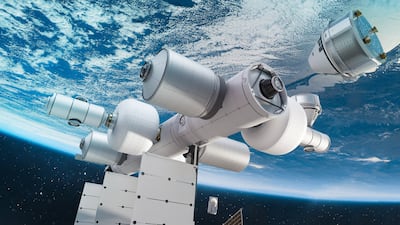
  • In October, Jeff Bezos’ Blue Origin announced plans to build a private space station in Earth orbit, called Orbital Reef. Photo: Blue Origin
    In October, Jeff Bezos’ Blue Origin announced plans to build a private space station in Earth orbit, called Orbital Reef. Photo: Blue Origin
  • The interior design of Blue Origin's Orbital Reef space station. Photo: Blue Origin
    The interior design of Blue Origin's Orbital Reef space station. Photo: Blue Origin
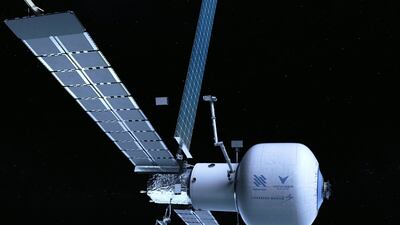
  • Nanoracks unveiled plans of a commercial space station, called Starlab, that would aid efforts in scientific research and tourism. It has partnered with Voyager Space and Lockheed Martin to build its first free-flying space station. Photo: Nanoracks
    Nanoracks unveiled plans of a commercial space station, called Starlab, that would aid efforts in scientific research and tourism. It has partnered with Voyager Space and Lockheed Martin to build its first free-flying space station. Photo: Nanoracks
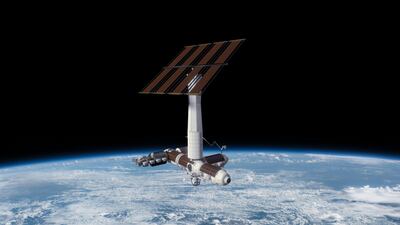
  • Space infrastructure company Axiom is planning to launch a commercial module to the International Space Station (ISS) that would become its own independent station once the ISS retires. Photo: Axiom Space
    Space infrastructure company Axiom is planning to launch a commercial module to the International Space Station (ISS) that would become its own independent station once the ISS retires. Photo: Axiom Space
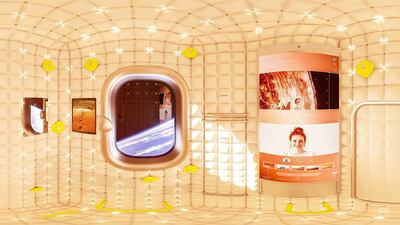
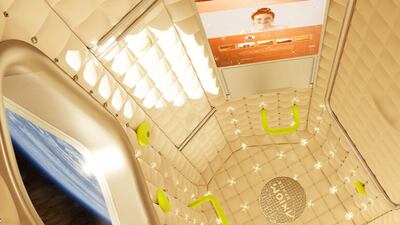
  • Inside the cabin of the Axiom Station, large windows would offer crew views of the Earth. Photo: Axiom Space
    Inside the cabin of the Axiom Station, large windows would offer crew views of the Earth. Photo: Axiom Space
  • The interior of the Axiom Station. Photo: Axiom Space
    The interior of the Axiom Station. Photo: Axiom Space
  • Nasa has ambitious plans to build a station in the Moon’s orbit. Called the Lunar Gateway, the station would host astronauts before they land on the lunar surface, using a human landing system. Photo: Nasa
    Nasa has ambitious plans to build a station in the Moon’s orbit. Called the Lunar Gateway, the station would host astronauts before they land on the lunar surface, using a human landing system. Photo: Nasa
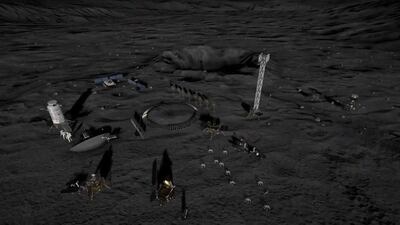
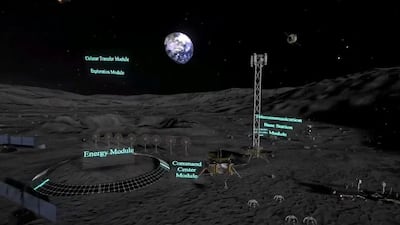
  • Rendering of International Lunar Research Station.
    Rendering of International Lunar Research Station.
  • Rendering of International Lunar Research Station.
    Rendering of International Lunar Research Station.

Companies such as Blue Origin, Nanoracks and Axiom Space have announced plans to build a station in low-Earth orbit.

These structures would be open to tourists, researchers and government astronauts.

Commercialisation of low-Earth orbit is gaining momentum, as the International Space Station - a science laboratory operated by different space agencies - nears retirement.

And as Saudi Arabia tries to revive its space programme, the Kingdom is hoping to tap into these new opportunities.

The Kingdom sent the first Arab astronaut to space in 1985, when Prince Sultan bin Salman flew aboard Nasa’s Discovery space shuttle as part of a seven-member international crew.

In September, Saudi Arabia announced a new human spaceflight programme.

Two Saudi citizens, including a female, are scheduled to fly to the International Space Station in May as part of a private flight, organised by Houston-based company Axiom Space.

If this goes as planned, the Saudi woman will be the first Arab female in space.

“We are looking for more partnerships in the coming future,” said Mr Al Tamimi.

“We already joined the Artemis Accords a few months ago and we started our human spaceflight programme.

“When it comes to scientific breakthrough, we have multiple partnerships… that will be announced by the private sector.”

Saudi Arabia’s signing of the Artemis Accords – a US-led international agreement that outlines peaceful exploration – signifies that the Kingdom is looking to explore the Moon.

The agreement has been signed by more than 20 countries so far, as many look to land astronauts, landers and rovers on the lunar surface, as well as utilise lunar resources.

In 2020, Saudi Arabia allocated $2.1 billion for its space programme under its Vision 2030 economic diversification plan.

The Saudi Space Commission was established in 2018 with the aim of driving growth in the sector.

The commission has held meetings with a number of space agency partners to increase co-operation, including the US, China and the UK.

Turkey also signed a deal with Axiom Space to send the first Turkish astronaut to space in 2023.

UK’s AI plan
  • AI ambassadors such as MIT economist Simon Johnson, Monzo cofounder Tom Blomfield and Google DeepMind’s Raia Hadsell
  • £10bn AI growth zone in South Wales to create 5,000 jobs
  • £100m of government support for startups building AI hardware products
  • £250m to train new AI models
COMPANY%20PROFILE
%3Cp%3E%3Cstrong%3EName%3A%20%3C%2Fstrong%3EKinetic%207%3Cbr%3E%3Cstrong%3EStarted%3A%3C%2Fstrong%3E%202018%3Cbr%3E%3Cstrong%3EFounder%3A%3C%2Fstrong%3E%20Rick%20Parish%3Cbr%3E%3Cstrong%3EBased%3A%3C%2Fstrong%3E%20Abu%20Dhabi%2C%20UAE%3Cbr%3E%3Cstrong%3EIndustry%3A%3C%2Fstrong%3E%20Clean%20cooking%3Cbr%3E%3Cstrong%3EFunding%3A%3C%2Fstrong%3E%20%2410%20million%3Cbr%3E%3Cstrong%3EInvestors%3A%3C%2Fstrong%3E%20Self-funded%3C%2Fp%3E%0A
The specs

Engine: 4.0-litre V8 twin-turbocharged and three electric motors

Power: Combined output 920hp

Torque: 730Nm at 4,000-7,000rpm

Transmission: 8-speed dual-clutch automatic

Fuel consumption: 11.2L/100km

On sale: Now, deliveries expected later in 2025

Price: expected to start at Dh1,432,000

Mercer, the investment consulting arm of US services company Marsh & McLennan, expects its wealth division to at least double its assets under management (AUM) in the Middle East as wealth in the region continues to grow despite economic headwinds, a company official said.

Mercer Wealth, which globally has $160 billion in AUM, plans to boost its AUM in the region to $2-$3bn in the next 2-3 years from the present $1bn, said Yasir AbuShaban, a Dubai-based principal with Mercer Wealth.

Within the next two to three years, we are looking at reaching $2 to $3 billion as a conservative estimate and we do see an opportunity to do so,” said Mr AbuShaban.

Mercer does not directly make investments, but allocates clients’ money they have discretion to, to professional asset managers. They also provide advice to clients.

“We have buying power. We can negotiate on their (client’s) behalf with asset managers to provide them lower fees than they otherwise would have to get on their own,” he added.

Mercer Wealth’s clients include sovereign wealth funds, family offices, and insurance companies among others.

From its office in Dubai, Mercer also looks after Africa, India and Turkey, where they also see opportunity for growth.

Wealth creation in Middle East and Africa (MEA) grew 8.5 per cent to $8.1 trillion last year from $7.5tn in 2015, higher than last year’s global average of 6 per cent and the second-highest growth in a region after Asia-Pacific which grew 9.9 per cent, according to consultancy Boston Consulting Group (BCG). In the region, where wealth grew just 1.9 per cent in 2015 compared with 2014, a pickup in oil prices has helped in wealth generation.

BCG is forecasting MEA wealth will rise to $12tn by 2021, growing at an annual average of 8 per cent.

Drivers of wealth generation in the region will be split evenly between new wealth creation and growth of performance of existing assets, according to BCG.

Another general trend in the region is clients’ looking for a comprehensive approach to investing, according to Mr AbuShaban.

“Institutional investors or some of the families are seeing a slowdown in the available capital they have to invest and in that sense they are looking at optimizing the way they manage their portfolios and making sure they are not investing haphazardly and different parts of their investment are working together,” said Mr AbuShaban.

Some clients also have a higher appetite for risk, given the low interest-rate environment that does not provide enough yield for some institutional investors. These clients are keen to invest in illiquid assets, such as private equity and infrastructure.

“What we have seen is a desire for higher returns in what has been a low-return environment specifically in various fixed income or bonds,” he said.

“In this environment, we have seen a de facto increase in the risk that clients are taking in things like illiquid investments, private equity investments, infrastructure and private debt, those kind of investments were higher illiquidity results in incrementally higher returns.”

The Abu Dhabi Investment Authority, one of the largest sovereign wealth funds, said in its 2016 report that has gradually increased its exposure in direct private equity and private credit transactions, mainly in Asian markets and especially in China and India. The authority’s private equity department focused on structured equities owing to “their defensive characteristics.”

T20 SQUADS

Australia: Aaron Finch (c), Mitchell Marsh, Alex Carey, Ashton Agar, Nathan Coulter-Nile, Chris Lynn, Nathan Lyon, Glenn Maxwell, Ben McDermott, D’Arcy Short, Billy Stanlake, Mitchell Starc, Andrew Tye, Adam Zampa.

Pakistan: Sarfraz Ahmed (c), Fakhar Zaman, Mohammad Hafeez, Sahibzada Farhan, Babar Azam, Shoaib Malik, Asif Ali, Hussain Talat, Shadab Khan, Shaheen Shah Afridi, Usman Khan Shinwari, Hassan Ali, Imad Wasim, Waqas Maqsood, Faheem Ashraf.

The years Ramadan fell in May

1987

1954

1921

1888

Four tips to secure IoT networks

Mohammed Abukhater, vice president at FireEye in the Middle East, said:

- Keep device software up-to-date. Most come with basic operating system, so users should ensure that they always have the latest version

- Besides a strong password, use two-step authentication. There should be a second log-in step like adding a code sent to your mobile number

- Usually smart devices come with many unnecessary features. Users should lock those features that are not required or used frequently

- Always create a different guest network for visitors

The%20specs
%3Cp%3E%3Cstrong%3EEngine%3A%20%3C%2Fstrong%3E2.0-litre%204-cyl%20turbo%3Cbr%3E%3Cstrong%3EPower%3A%20%3C%2Fstrong%3E190hp%20at%205%2C600rpm%3Cbr%3E%3Cstrong%3ETorque%3A%20%3C%2Fstrong%3E320Nm%20at%201%2C500-4%2C000rpm%3Cbr%3E%3Cstrong%3ETransmission%3A%20%3C%2Fstrong%3E7-speed%20dual-clutch%20auto%3Cbr%3E%3Cstrong%3EFuel%20consumption%3A%20%3C%2Fstrong%3E10.9L%2F100km%3Cbr%3E%3Cstrong%3EPrice%3A%20%3C%2Fstrong%3EFrom%20Dh119%2C900%3Cbr%3E%3Cstrong%3EOn%20sale%3A%20%3C%2Fstrong%3ENow%3C%2Fp%3E%0A
The%20Beekeeper
%3Cp%3E%3Cstrong%3EDirector%3A%20%3C%2Fstrong%3EDavid%20Ayer%C2%A0%3C%2Fp%3E%0A%3Cp%3E%3Cstrong%3EStarring%3A%20%3C%2Fstrong%3EJason%20Statham%2C%20Josh%20Hutcherson%2C%20Emmy%20Raver-Lampman%2C%20Minnie%20Driver%2C%20Jeremy%20Irons%3C%2Fp%3E%0A%3Cp%3E%3Cstrong%3ERating%3A%20%3C%2Fstrong%3E3%2F5%3C%2Fp%3E%0A
PROFILE

Name: Enhance Fitness 

Year started: 2018 

Based: UAE 

Employees: 200 

Amount raised: $3m 

Investors: Global Ventures and angel investors 

England World Cup squad

Eoin Morgan (capt), Moeen Ali, Jofra Archer, Jonny Bairstow, Jos Buttler (wkt), Tom Curran, Liam Dawson, Liam Plunkett, Adil Rashid, Joe Root, Jason Roy, Ben Stokes, James Vince, Chris Woakes, Mark Wood

The bio

Job: Coder, website designer and chief executive, Trinet solutions

School: Year 8 pupil at Elite English School in Abu Hail, Deira

Role Models: Mark Zuckerberg and Elon Musk

Dream City: San Francisco

Hometown: Dubai

City of birth: Thiruvilla, Kerala

Company%20Profile
%3Cp%3E%3Cstrong%3EName%3A%3C%2Fstrong%3E%20HyveGeo%3Cbr%3E%3Cstrong%3EStarted%3A%3C%2Fstrong%3E%202023%3Cbr%3E%3Cstrong%3EFounders%3A%3C%2Fstrong%3E%20Abdulaziz%20bin%20Redha%2C%20Dr%20Samsurin%20Welch%2C%20Eva%20Morales%20and%20Dr%20Harjit%20Singh%3Cbr%3E%3Cstrong%3EBased%3A%20%3C%2Fstrong%3ECambridge%20and%20Dubai%3Cbr%3E%3Cstrong%3ENumber%20of%20employees%3A%3C%2Fstrong%3E%208%3Cbr%3E%3Cstrong%3EIndustry%3A%20%3C%2Fstrong%3ESustainability%20%26amp%3B%20Environment%3Cbr%3E%3Cstrong%3EFunding%3A%20%3C%2Fstrong%3E%24200%2C000%20plus%20undisclosed%20grant%3Cbr%3E%3Cstrong%3EInvestors%3A%20%3C%2Fstrong%3EVenture%20capital%20and%20government%3C%2Fp%3E%0A
The specs

Engine: 3.0-litre six-cylinder MHEV

Power: 360bhp

Torque: 500Nm

Transmission: eight-speed automatic

Price: from Dh282,870

On sale: now

Updated: December 05, 2022, 3:30 PM