



The UAE could welcome the return of Chinese tourists in the next six to 12 months, tourism analysts said.
But the expected surge in visitor numbers, which reached nearly a million in Dubai in 2019, will be on hold until there is a further easing of China's zero-Covid policy restrictions.
Hoteliers, real estate figures and government officials said the reopening of China, one of the region's most important source markets, would bring a tourism boom for the Emirates and the wider Middle East.
Department of Economy and Tourism
A senior executive with Dubai Tourism said a further relaxation of China’s Covid-19 restrictions would lead to an immediate surge in visitors to the UAE.
“We anticipate that the rebound from one of our top international feeder markets, China, will be swift and robust once travel restrictions are further eased,” Hoor Al Khaja, associate vice president at Dubai’s Department of Economy and Tourism, told The National.
"As we focus on driving sustainable growth in 2022 and beyond with our ever-expanding diverse destination proposition, we very much look forward to welcoming back visitors from China to Dubai.”
Beijing's decision last month to cut the ultra-strict 21-day isolation period to 10 days for arrivals was closely watched.
For now, however, travel is effectively off limits for all but the most essential business and diplomatic journeys.
In June, Etihad Airways resumed flights to Beijing and Emirates airline will increase its Dubai-to-Guangzhou service to twice weekly from August 3 ― the latest indications that the travel corridor between the two countries is opening up again.

In the years before the pandemic, Chinese tourists visited the UAE in droves.
Dubai welcomed almost 17 million visitors in 2019, with Chinese visitors making up almost almost 990,000 of that number ― an increase of almost 15 per cent over the previous year.
The introduction of visas on arrival for Chinese visitors in 2016 led numbers to double in four years, Dubai Tourism said in its 2020 report.
That all changed, however, with the outbreak of Covid-19, and while the UAE is performing better than most countries in terms of tourism, there is a noticeable absence of Chinese visitors.
Gradual increase
One expert says it is possible the Emirates could enjoy a significant return of tourists from the world’s second-largest economy sooner rather than later.
“Given the reduction in central quarantine length in China, and a continuing increase in vaccination rates in the country, growth in Chinese tourist numbers is likely this calendar year,” said Dr Ross Curran, an assistant professor at Edinburgh Business School at Heriot-Watt University Dubai, who regularly lectures on tourism.
“However, I would expect to see a gradual increase in numbers that move in tandem with the easing of quarantine requirements.
“Were the restrictions to be significantly eased or lifted in the coming months, a surge in numbers this year could be expected. Consequently, the industry needs to remain agile and flexible to respond to rapidly changing conditions.”
China reduced Covid-19 quarantine restrictions at the end of June for inbound travellers, the biggest indication yet the country was preparing to open up again.
Travellers need spend only seven days in a quarantine facility, before monitoring their health for a further three days.
-
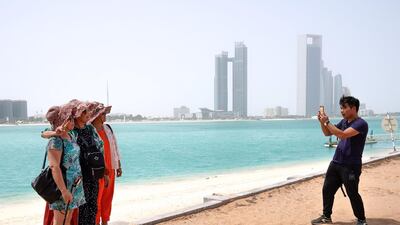
Chinese tourists enjoy the sights at the Heritage Village, Abu Dhabi. Victor Besa/The National -
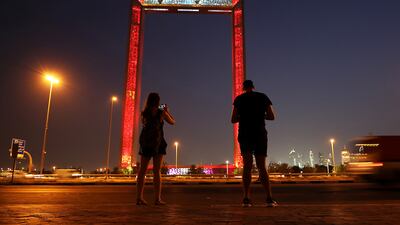
Tourists take photos of the Dubai Frame lit up in red for Chinese President Xi Jinping’s visit to the UAE in 2018. Pawan Singh / The National -
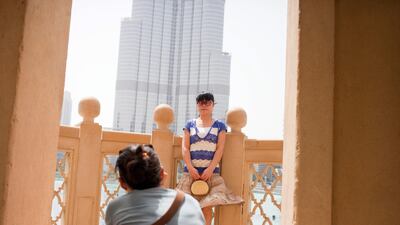
Tourists from Inner Mongolia in China take pictures in front of the Burj Khalifa. Razan Alzayani / The National -

Chinese tourists shopping in Deira. Razan Alzayani / The National -

Dubai's retail trade will be boosted by an increase in tourists from China. Victor Besa / The National


“The recent reduction to seven-day central quarantine will have a positive impact. However, it is yet unclear whether this will significantly affect travel where tourism is the primary motivation,” Dr Curran said.
“We may see tourists visiting the Gulf region for stays of longer duration or an increase in the extension of business trips to include additional leisure days.”
An influx of tourists from China would have a hugely positive impact on a range of sectors, not just hospitality, he said.
“Not only does a hotel stay benefit the hospitality industry, but visitor spending in retail and leisure activities boosts demand for employment and stimulates the wider economy,” Dr Curran said.
“Prior to the pandemic, real estate sales to Chinese citizens were at record levels. Despite a dip during the global lockdown, these are once again increasing.”
Global travel market research firm Phocuswright said nearly half (44 per cent) of all Chinese tourists travel in arranged groups and most (85 per cent) will travel to a destination that they had never visited before.
Xini Wei, 32, a Chinese citizen who lives in Dubai, said it would be 2023 at the earliest before large numbers of her compatriots would return to the UAE.
“It’s going to be at least six months, maybe even 12 before Chinese visitors start returning to Dubai,” said Ms Wei, who works in marketing.
“I haven’t had family or friends over since before the pandemic. So it would be great to have them here again.”

She said part of the problem was concern over the ability to return to China, once out of the country.
“Once the restrictions are fully lifted, you will see a lot of Chinese people coming here to see family and friends, as well as to work,” Ms Wei said.
“I have a lot of friends who would love to come here. Even though restrictions have eased a little, the government is still encouraging people not to travel.
“Once you are out, it’s very hard to get back in.”
Boost for airlines, hospitality and retail
The Chinese tourism market was the fourth most popular for visitors to the UAE in the first five months of 2019, according to a recent report released by Emirates NBD.
“By the end of May this year there were essentially no visitors from China, making it a sizeable proportion of usual visitors who have still not returned,” the report said.
“Now, the tourism sector is performing well so far this year but total visitors through the first five months remained down by about 14 per cent compared with pre-pandemic levels, and the dollar strength we have seen in recent months could slow down the recovery should it persist through the end of the year.
“A meaningful return of Chinese visitors would help mitigate that, and provide a fillip to airlines, hotels, restaurants and also luxury goods sales.”
Monica Malik, chief economist at Abu Dhabi Commercial Bank, said China is an important source of visitors to the UAE, which will support sectors related to tourism and hospitality and retail spending.
"For airlines, this will not only be higher demand for visitors into the UAE but also transit demand," Ms Malik said.
"Chinese investment in the property sectors should also benefit, with Dubai being a popular destination for overseas purchases."
The UAE’s successful handling of the pandemic would put the country near the top of the list of potential destinations for visitors from China, said Heather Jeffrey, a lecturer at University of Birmingham Dubai who specialises in tourism.
“There is still a perception of international travel as unsafe and travellers from China will look for destinations with few cases of Covid,” Dr Jeffrey said.
“The UAE's reputation as a stable country with good health care may well make it a desirable destination.”
She said the country’s varied tourism offerings would also play a part in attracting visitors from China.
“As tourists do return their changing interests will need to be catered for, with many seeking transformative or cultural experience in addition to the traditional shopping holiday,” Dr Jeffrey said.
“As such, desert tourism and itineraries offering educational content may see an increase in demand.”
Investing in the region
Over the past decade, China has become one of the major sources of foreign investment in the Middle East and Gulf region.
While that investment took a hit over the past few years owing to the pandemic, Vijay Valecha, chief investment officer for Century Financial, said the reopening of the country will probably lead to a big revival of interest from investors, which will have a positive effect on the UAE economy.
“Between 2005 and 2021, cumulative Chinese investments in the UAE reached $36.16 billion,” he said.
“Because of its strategic location, the UAE has become a key axis and focal point for Chinese investment in other Mena regions and Arab countries.
"The UAE has also provided the necessary infrastructure and resources for the Chinese to expand their base here.”

Of the 200,000 Chinese citizens who call the UAE home, he said many run small to big businesses, such as commodity shops, wholesale, and retail trade, as well as other professional services like real estate agencies.
According to the latest estimates, the Chinese now own more than 6,000 businesses in the UAE and this is expected to grow as investors begin travelling again.
“While the overall trade value has gone down over the last three years, the reopening of the Chinese economy would likely bring in more tourists and investments for UAE,” Mr Valecha said.
“Removing lockdown restrictions in China will further increase the tourism base of the UAE and thus open up opportunities for more investment.”
Sights set on real estate
With optimism rising as China prepares to reopen, Lewis Allsopp, chief executive of Allsopp & Allsopp, a real estate agency in Dubai, said it will have a big effect on the UAE’s thriving real estate market.
“We already have a small but active Chinese client base but I see this growing and growing quickly,” Mr Allsopp said.
“Pre-pandemic saw a lot of interest in Dubai for Chinese investors. So much so that we hired Mandarin speakers to ensure investors were taken care of and communication was clear.
“Chinese buyers, especially investors, do like to buy off-plan. However, we have worked with Chinese expat families looking for family homes and people who are over to work looking for an apartment.”
While the agency has no immediate plans to hire additional Mandarin-speaking agents, Mr Allsopp said this will be reviewed if more Chinese clients approach the firm in the coming months, which is highly likely."

