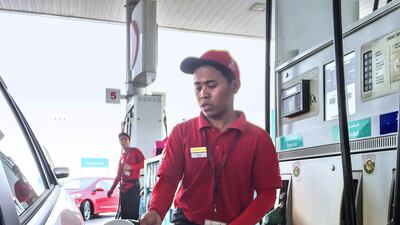
• Hessa Buhumaid said fuel and shopping subsidies would begin on July 5, 2022, while household payments and other measures will be introduced in September 2022. Khushnum Bhandari / The National
    Hessa Buhumaid said fuel and shopping subsidies would begin on July 5, 2022, while household payments and other measures will be introduced in September 2022. Khushnum Bhandari / The National
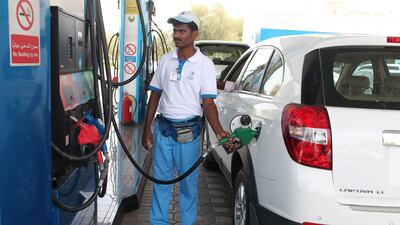
  • Emiratis on lower incomes will receive a subsidy on the petrol they purchase. This effectively means a 85 per cent discount on any petrol that costs more than Dh2.1 per litre - the current price is about Dh4.6 per litre. Sarah Dea/ The National
    Emiratis on lower incomes will receive a subsidy on the petrol they purchase. This effectively means a 85 per cent discount on any petrol that costs more than Dh2.1 per litre - the current price is about Dh4.6 per litre. Sarah Dea/ The National
  • Monthly support payments will help Emiratis to absorb the cost of living. Jaime Puebla / The National
    Monthly support payments will help Emiratis to absorb the cost of living. Jaime Puebla / The National
  • Emiratis on household incomes lower than Dh25,000 will receive a further subsidy on energy costs. Photo: PA
    Emiratis on household incomes lower than Dh25,000 will receive a further subsidy on energy costs. Photo: PA
  • University fees will be subsidised to encourgage Emirati children to study further. Pawan Singh / The National
    University fees will be subsidised to encourgage Emirati children to study further. Pawan Singh / The National

Minister reports high demand as lower-income Emiratis apply for cost-of-living subsidy


  • English
  • Arabic

A multibillion-dirham fund to help Emiratis with the rising cost of living was in high demand on Tuesday, hours after the scheme went live.

The Ministry of Community Development said its website was "experiencing pressure as a result of the increasing numbers due to submission of requests and inquiries".

"The ministry’s technical team is currently working to quickly fix the problem. The site will return to normal in the coming hours," the ministry added in a tweet.

Minister Hessa Buhumaid said there had been high demand in the first hours. Discounts on fuel and shopping will begin immediately. Other measures will take effect in September.

We have witnessed a tremendous number of applications on the website
Hessa Buhumaid,
Ministry of Community Development

“Inflation subsidies will be enforced immediately and we will not wait to September," Ms Buhumaid told Abu Dhabi Radio.

“We will open the opportunity to apply for the subsidies program starting today.

"We have witnessed a tremendous [number of applications] on the website and have had some glitches ... but are working around the clock to make it easier for applicants.”

Emirati families whose household income is up to Dh25,000 per month ($6,800) are eligible for a series of measures designed to ease rising inflation.

The relief package of Dh28 billion ($7.6bn), approved by President Sheikh Mohamed on Monday, is a significant expansion of an existing fund for lower-income families.

How the fuel subsidy works

The government aims to mitigate the impact of rising fuel costs, which have increased by more than 70 per cent in the UAE since January, in line with soaring global prices.

Eligible Emiratis will receive an 85 per cent discount on the cost of petrol above Dh2.10 per litre — the current price is Dh4.6. That means they would pay a price similar to that in 2015, when the government ended subsidies.

Ms Buhumaid said: "Beneficiaries will be contacted directly by the ministry and they will be immediately tied to their Emirates ID, so they can immediately go to any gas station to receive this month allowance.

"The allowance is renewed every month to up to 400 litres for the father and if both couple have a car, then 500 litres."

Key measures:

Immediate

- Fuel subsidy

- Subsidy to tackle food price inflation

September

- Monthly payment of at least Dh5,000 ($1,360) to the father of the family, rising to a maximum of Dh13,000, depending on age and work circumstances. Monthly allowance to wife of Dh3,500

- Parents to receive support payment of Dh2,400 a month for the first child, Dh1,600 a month for the second and third child, and Dh800 for every subsequent child – up to the age of 21.

- Electricity and water subsidy of 50 per cent on electricity more than 4,000 kilowatts and water consumption under 26,000 gallons

- Fixed subsidy ranging from Dh2,000 to Dh5,000 per month, according to age, for unemployed citizens aged over 45

A full breakdown of the policies can be found here.

Latest inflation rate

Nationwide, inflation was up 3.3 per cent in Q1 2022 compared to the previous year, official figures show.

In Dubai, consumer inflation rose to 4.6 per cent in April year-on-year, Emirates NBD said, the highest rise since 2015.

Food prices were 8.6 per cent higher year-on-year, the bank said, while fuel and average rents rose significantly.

Wife's job loss put pressure on finances

Mohamed Al Hammadi, 32, is hopeful he and his young family will benefit from the new subsidies.

Mr Al Hammadi, who earns Dh25,000 a month as head of programmes and activities at the Emirates Red Crescent Authority, said his wife lost her job a few months ago.

The couple have three children, one of whom is at a private school in Abu Dhabi.

Including tuition fees, utilities and petrol for their two cars, they also have to pay rent.

“My wife helped keep us afloat, but when she lost her job, it started becoming a challenge with prices going up,” Mr Al Hammadi told The National.

“I think what kept us going is the strong faith we have in our leadership. A faith that when things become dire, they will support us, and this latest decision is proof of that.

“It's a testament that they are aware of whatever challenges we face and are there to resolve any problems we might have,” he said.

“I do hope we are included in this latest decision and, if not, then we are confident that there will be something else for Emiratis who are in our situation.”

Fuel prices rise: in pictures

  • Motorists across the Emirates have been paying significantly more in recent months, with a 10 per cent rise in March, 16 per cent in April and 13 per cent in June. Antonie Robertson / The National
    Motorists across the Emirates have been paying significantly more in recent months, with a 10 per cent rise in March, 16 per cent in April and 13 per cent in June. Antonie Robertson / The National
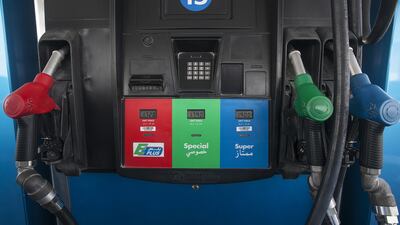
  • This is what drivers can expect to pay when filling their tanks – Super 98: Dh4.63; Special 95: Dh4.52; Diesel: Dh4.76 and E-plus 91: Dh4.44. Mona Al Marzooqi / The National
    This is what drivers can expect to pay when filling their tanks – Super 98: Dh4.63; Special 95: Dh4.52; Diesel: Dh4.76 and E-plus 91: Dh4.44. Mona Al Marzooqi / The National
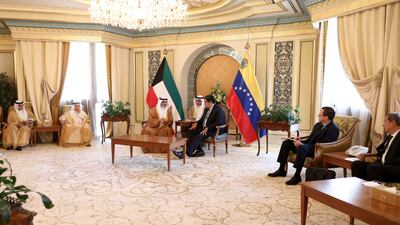
  • A meeting of Opec ministers in Kuwait City on June 14. On June 2, the oil producers said they would boost a planned production increase by 50 per cent, after US lobbying to ease price pressure. Reuters
    A meeting of Opec ministers in Kuwait City on June 14. On June 2, the oil producers said they would boost a planned production increase by 50 per cent, after US lobbying to ease price pressure. Reuters
  • Petrol prices in the UAE will increase in July as global oil prices remain at more than $100 a barrel. Antonie Robertson / The National
    Petrol prices in the UAE will increase in July as global oil prices remain at more than $100 a barrel. Antonie Robertson / The National
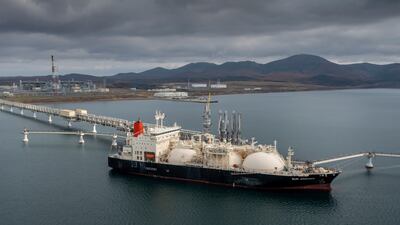
  • A Russian oil tanker in the port of Prigorodnoye. Oil prices jumped after Moscow invaded Ukraine. In May, EU leaders decided to ban 90 per cent of Russian crude by the end of the year, fuelling worries of a tighter market. AP
    A Russian oil tanker in the port of Prigorodnoye. Oil prices jumped after Moscow invaded Ukraine. In May, EU leaders decided to ban 90 per cent of Russian crude by the end of the year, fuelling worries of a tighter market. AP
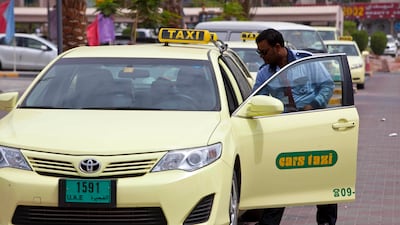
  • Sharjah is to set taxi fares each month based on the latest fuel prices in the country. The revised charges for July will be issued next week. Antonie Robertson / The National
    Sharjah is to set taxi fares each month based on the latest fuel prices in the country. The revised charges for July will be issued next week. Antonie Robertson / The National
  • The prices announced by the UAE Fuel Price Committee in June were the highest since they were liberalised in 2015 to allow them to move in line with the market. Sammy Dallal / The National
    The prices announced by the UAE Fuel Price Committee in June were the highest since they were liberalised in 2015 to allow them to move in line with the market. Sammy Dallal / The National
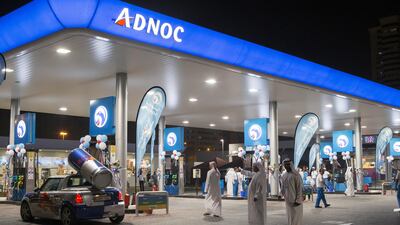
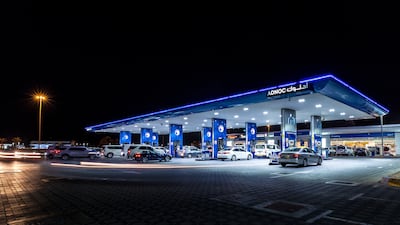
  • In 2020, prices were frozen by the Fuel Price Committee at the beginning of the coronavirus pandemic. The controls were removed in March 2021 to reflect the market flow. Photo: Adnoc
    In 2020, prices were frozen by the Fuel Price Committee at the beginning of the coronavirus pandemic. The controls were removed in March 2021 to reflect the market flow. Photo: Adnoc
So what is Spicy Chickenjoy?

Just as McDonald’s has the Big Mac, Jollibee has Spicy Chickenjoy – a piece of fried chicken that’s crispy and spicy on the outside and comes with a side of spaghetti, all covered in tomato sauce and topped with sausage slices and ground beef. It sounds like a recipe that a child would come up with, but perhaps that’s the point – a flavourbomb combination of cheap comfort foods. Chickenjoy is Jollibee’s best-selling product in every country in which it has a presence.
 

Mercer, the investment consulting arm of US services company Marsh & McLennan, expects its wealth division to at least double its assets under management (AUM) in the Middle East as wealth in the region continues to grow despite economic headwinds, a company official said.

Mercer Wealth, which globally has $160 billion in AUM, plans to boost its AUM in the region to $2-$3bn in the next 2-3 years from the present $1bn, said Yasir AbuShaban, a Dubai-based principal with Mercer Wealth.

Within the next two to three years, we are looking at reaching $2 to $3 billion as a conservative estimate and we do see an opportunity to do so,” said Mr AbuShaban.

Mercer does not directly make investments, but allocates clients’ money they have discretion to, to professional asset managers. They also provide advice to clients.

“We have buying power. We can negotiate on their (client’s) behalf with asset managers to provide them lower fees than they otherwise would have to get on their own,” he added.

Mercer Wealth’s clients include sovereign wealth funds, family offices, and insurance companies among others.

From its office in Dubai, Mercer also looks after Africa, India and Turkey, where they also see opportunity for growth.

Wealth creation in Middle East and Africa (MEA) grew 8.5 per cent to $8.1 trillion last year from $7.5tn in 2015, higher than last year’s global average of 6 per cent and the second-highest growth in a region after Asia-Pacific which grew 9.9 per cent, according to consultancy Boston Consulting Group (BCG). In the region, where wealth grew just 1.9 per cent in 2015 compared with 2014, a pickup in oil prices has helped in wealth generation.

BCG is forecasting MEA wealth will rise to $12tn by 2021, growing at an annual average of 8 per cent.

Drivers of wealth generation in the region will be split evenly between new wealth creation and growth of performance of existing assets, according to BCG.

Another general trend in the region is clients’ looking for a comprehensive approach to investing, according to Mr AbuShaban.

“Institutional investors or some of the families are seeing a slowdown in the available capital they have to invest and in that sense they are looking at optimizing the way they manage their portfolios and making sure they are not investing haphazardly and different parts of their investment are working together,” said Mr AbuShaban.

Some clients also have a higher appetite for risk, given the low interest-rate environment that does not provide enough yield for some institutional investors. These clients are keen to invest in illiquid assets, such as private equity and infrastructure.

“What we have seen is a desire for higher returns in what has been a low-return environment specifically in various fixed income or bonds,” he said.

“In this environment, we have seen a de facto increase in the risk that clients are taking in things like illiquid investments, private equity investments, infrastructure and private debt, those kind of investments were higher illiquidity results in incrementally higher returns.”

The Abu Dhabi Investment Authority, one of the largest sovereign wealth funds, said in its 2016 report that has gradually increased its exposure in direct private equity and private credit transactions, mainly in Asian markets and especially in China and India. The authority’s private equity department focused on structured equities owing to “their defensive characteristics.”

Updated: July 05, 2022, 2:32 PM