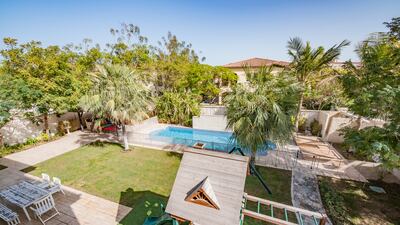
Briton Emma Button, who lives in a villa in Rawdat, Al Reef, said her landlord wanted to increase her rent from Dh67,000 a year to Dh120,000. Antonie Robertson / The National

Knowing rights is key for Abu Dhabi tenants faced with rent increases


Nick Webster
  • English
  • Arabic

Related: Abu Dhabi home values hit five-year high

Some tenants in Abu Dhabi are being told to pay huge rent increases or move out as the property market continues to rebound after the pandemic.

There are examples of landlords demanding substantially more than the 5 per cent annual increase permitted by Abu Dhabi Tenancy Law as rental values return to pre-pandemic levels.

While some tenants have paid up, others refuse and face eviction or a potentially complex resolution via the Abu Dhabi Rent Disputes Settlement Committee (RDSC).

By law, tenants and landlords must reach agreement on any contractual changes, including rent prices, at least two months before the end of a contract term.

Failing to do so results in an automatic contract renewal.

Rent rises came as landlords and property owners saw a boost in the value of their homes to a five-year high, the latest ValuStrat Price Index for Q4 2021 showed.

Rent request almost doubled

Briton Emma Button, who lives in a villa in Rawdat, Al Reef, said her landlord wanted to increase her rent from Dh67,000 ($18,243) a year to Dh120,000.

“My landlord tried to increase the rent after the renewal date had passed last year,” she said.

“It was not in writing and after I had already renewed, so I rejected it.

“I was then told the owner was selling the property, and I had to move out because someone else was going to move in.”

__________________________________________

Reem Island area guide: in pictures

  • Reem Island offers plenty of tranquil spots in which to unwind. All pictures by Victor Besa / The National
    Reem Island offers plenty of tranquil spots in which to unwind. All pictures by Victor Besa / The National
  • Reem Island is an attractive proposition for families
    Reem Island is an attractive proposition for families
  • Reem Island has been on the rise over the last decade, luring young professionals and families alike
    Reem Island has been on the rise over the last decade, luring young professionals and families alike
  • The imposing Gate Towers on Reem Island
    The imposing Gate Towers on Reem Island
  • The island boasts key amenities, such as Burjeel Day Surgery Centre
    The island boasts key amenities, such as Burjeel Day Surgery Centre
  • Parents have a school on their doorstep
    Parents have a school on their doorstep
  • the mangrove area is a great spot for some fun on the waters
    the mangrove area is a great spot for some fun on the waters
  • Reem Island offers increasingly good value for tenants
    Reem Island offers increasingly good value for tenants
  • Gateway Park is among the leisure spots on offer on the island
    Gateway Park is among the leisure spots on offer on the island
  • The multi-billion dirham Reem Mall is set to draw in crowds when it swings open its doors
    The multi-billion dirham Reem Mall is set to draw in crowds when it swings open its doors
  • Reem Island has been making waves in the capital's property market for years
    Reem Island has been making waves in the capital's property market for years
  • It is easy to stay on the move on Reem Island
    It is easy to stay on the move on Reem Island

__________________________________________

Once Ms Button’s landlord realised the law would not allow him to evict her without giving the adequate notice period, an agreement was reached to continue the contract under the existing terms for another 12 months.

“A lot of people don’t seem to understand their rights here as tenants, and some landlords take advantage of that and try to circumvent the rules,” said Ms Button, who used to work in the real estate market.

“Tenants need to check their lease agreements, which are often only in Arabic.

"Rental disputes should follow the correct process – the regulations are there to protect tenants, and landlords.”

In a similar trend to Dubai, where some villa communities have reported a 50 per cent rise in rental prices in recent months, prices in Abu Dhabi are also on the increase.

In Abu Dhabi landlords can remove a tenant without reason if enough notice is given, unlike in Dubai.

There, a landlord can evict only if they intend to move in themselves, sell or extensively renovate. Dubai landlords who evict tenants by legal notice are then unable to rent that property for two years.

The law in Dubai aims to protect tenants and stop landlords getting people out of their homes just because of a rising market.

Fanny Riad, who lives on Saadiyat Island, moved into her three-bedroom apartment at the start of the pandemic in 2020, paying annual rent of Dh260,000.

Her landlord asked for an increase of 5 per cent in 2021, then three months before the lease expiry in May 2022 demanded a further 30 per cent rise – an increase of about Dh82,000.

“It was a shock to have the notification by email,” she said.

“We replied to say we would only pay 5 per cent increase, then were told the landlord wanted us to vacate so he could move in himself.

“We spoke with a lawyer who said the rules were clear about a maximum 5 per cent rise.

“To take our case to the rent council for arbitration was expensive, so our best option was to sit down with the landlord and negotiate, which we did.”

The couple agreed to pay the 30 per cent increase, spread over two years, because they were due to have their first baby and did not want to move.

Rental rules differ from Dubai to Abu Dhabi

The rules for Abu Dhabi differ from Dubai, where the Real Estate Regulatory Authority (Rera) gives an average price indication for tenants and by how much landlords can increase renewals, capped at 20 per cent a year.

Property owners in Dubai must also give tenants 12 months to vacate a property at the end of a contract, and only if they intend to sell, move in or conduct extensive renovations.

The cost of opening a case to resolve a dispute also differs between the two emirates.

In Dubai, anyone opening a case at the Rent Disputes Settlement Centre must pay 3.5 per cent of the rental amount.

In Abu Dhabi, fees required by the Abu Dhabi Rent Dispute Settlement Committee to reach a resolution are 4 per cent of the annual rent, capped at Dh10,000.

To submit a dispute application to the committee, the tenancy contract must be registered in the Abu Dhabi Municipality’s Tawtheeq system, similar to the Ejari in Dubai.

Ben Crompton, managing director of Crompton Partners Estate Agents, said sitting tenants can refuse to pay rent increases above the allocated annual amount of 5 per cent.

“It is up to the landlord to open a case, not the tenant,” he said.

“The issue a tenant will have is getting a Tawtheeq agreement, otherwise the landlord can try to evict.

“It is different to the terms in Dubai, and landlords do not need to give a reason why but tenants can only be evicted at the end of their contracts.”

A Dh9.9m villa in Saadiyat Island - in pictures

  • The rear of the property has a large garden with pool.
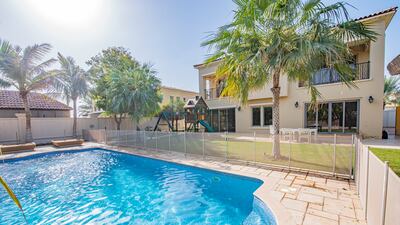
    The rear of the property has a large garden with pool.
  • The putting green.
    The putting green.
  • The front of the house has a double garage.
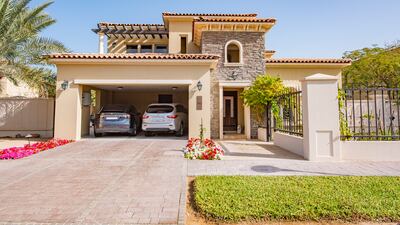
    The front of the house has a double garage.
  • The downstairs has been extended with an extra living area.
    The downstairs has been extended with an extra living area.
  • Another one of the living areas.
    Another one of the living areas.
  • Marble and wood feature in this bathroom.
    Marble and wood feature in this bathroom.
  • The kitchen has Bosch appliances.
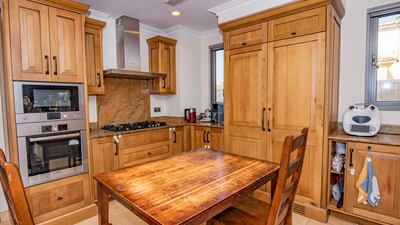
    The kitchen has Bosch appliances.
  • The garden is ready for family fun.
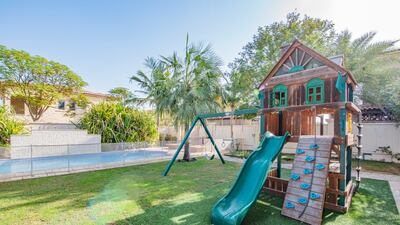
    The garden is ready for family fun.
  • The gazebo is perfect for entertaining.
    The gazebo is perfect for entertaining.
  • The property is on the market for just under Dh10 million.
    The property is on the market for just under Dh10 million.
  • The pool is fenced off for safety.
    The pool is fenced off for safety.
  • The trees offer added privacy.
    The trees offer added privacy.

Mercer, the investment consulting arm of US services company Marsh & McLennan, expects its wealth division to at least double its assets under management (AUM) in the Middle East as wealth in the region continues to grow despite economic headwinds, a company official said.

Mercer Wealth, which globally has $160 billion in AUM, plans to boost its AUM in the region to $2-$3bn in the next 2-3 years from the present $1bn, said Yasir AbuShaban, a Dubai-based principal with Mercer Wealth.

Within the next two to three years, we are looking at reaching $2 to $3 billion as a conservative estimate and we do see an opportunity to do so,” said Mr AbuShaban.

Mercer does not directly make investments, but allocates clients’ money they have discretion to, to professional asset managers. They also provide advice to clients.

“We have buying power. We can negotiate on their (client’s) behalf with asset managers to provide them lower fees than they otherwise would have to get on their own,” he added.

Mercer Wealth’s clients include sovereign wealth funds, family offices, and insurance companies among others.

From its office in Dubai, Mercer also looks after Africa, India and Turkey, where they also see opportunity for growth.

Wealth creation in Middle East and Africa (MEA) grew 8.5 per cent to $8.1 trillion last year from $7.5tn in 2015, higher than last year’s global average of 6 per cent and the second-highest growth in a region after Asia-Pacific which grew 9.9 per cent, according to consultancy Boston Consulting Group (BCG). In the region, where wealth grew just 1.9 per cent in 2015 compared with 2014, a pickup in oil prices has helped in wealth generation.

BCG is forecasting MEA wealth will rise to $12tn by 2021, growing at an annual average of 8 per cent.

Drivers of wealth generation in the region will be split evenly between new wealth creation and growth of performance of existing assets, according to BCG.

Another general trend in the region is clients’ looking for a comprehensive approach to investing, according to Mr AbuShaban.

“Institutional investors or some of the families are seeing a slowdown in the available capital they have to invest and in that sense they are looking at optimizing the way they manage their portfolios and making sure they are not investing haphazardly and different parts of their investment are working together,” said Mr AbuShaban.

Some clients also have a higher appetite for risk, given the low interest-rate environment that does not provide enough yield for some institutional investors. These clients are keen to invest in illiquid assets, such as private equity and infrastructure.

“What we have seen is a desire for higher returns in what has been a low-return environment specifically in various fixed income or bonds,” he said.

“In this environment, we have seen a de facto increase in the risk that clients are taking in things like illiquid investments, private equity investments, infrastructure and private debt, those kind of investments were higher illiquidity results in incrementally higher returns.”

The Abu Dhabi Investment Authority, one of the largest sovereign wealth funds, said in its 2016 report that has gradually increased its exposure in direct private equity and private credit transactions, mainly in Asian markets and especially in China and India. The authority’s private equity department focused on structured equities owing to “their defensive characteristics.”

What is a robo-adviser?

Robo-advisers use an online sign-up process to gauge an investor’s risk tolerance by feeding information such as their age, income, saving goals and investment history into an algorithm, which then assigns them an investment portfolio, ranging from more conservative to higher risk ones.

These portfolios are made up of exchange traded funds (ETFs) with exposure to indices such as US and global equities, fixed-income products like bonds, though exposure to real estate, commodity ETFs or gold is also possible.

Investing in ETFs allows robo-advisers to offer fees far lower than traditional investments, such as actively managed mutual funds bought through a bank or broker. Investors can buy ETFs directly via a brokerage, but with robo-advisers they benefit from investment portfolios matched to their risk tolerance as well as being user friendly.

Many robo-advisers charge what are called wrap fees, meaning there are no additional fees such as subscription or withdrawal fees, success fees or fees for rebalancing.

Jetour T1 specs

Engine: 2-litre turbocharged

Power: 254hp

Torque: 390Nm

Price: From Dh126,000

Available: Now

Updated: April 17, 2022, 7:10 AM