

Today, life in the Emirates moves in the fast lane. In a regular series to mark the 50th anniversary of the UAE, 'The National' takes a trip back in time to examine how much the country has changed.
Abu Dhabi had hotels before. But the 1973 opening of Hilton Abu Dhabi threw down the gauntlet.
The Founding President, Sheikh Zayed, opened the hotel on May 23 that year. It was the first five-star hotel in a city rapidly expanding on the back of the oil boom. Abu Dhabi had arrived.
Hilton Abu Dhabi had more than 170 rooms, a bowling alley, function rooms, tennis courts and stood in “lonely splendour” at the end of what would eventually become the Corniche.
-
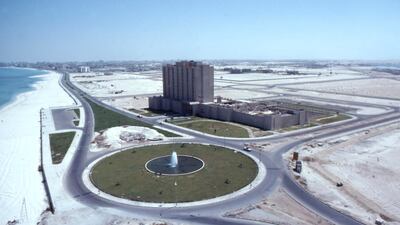
Hilton Abu Dhabi and the corniche in 1975. Photo: Alain Saint-Hilaire -
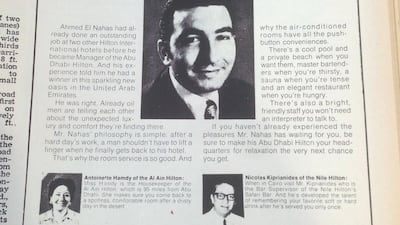
An advert for Hilton Abu Dhabi that appeared in the 'Gulf Mirror' in May 1973. -
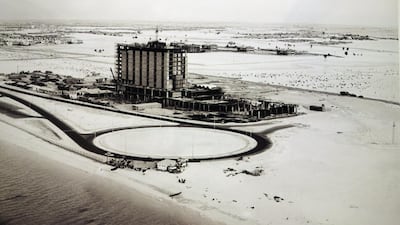
The Hilton Hotel under construction in 1971. Photo: British Embassy -

When it opened in 1973, the Hilton Abu Dhabi was one of only a few concrete buildings in the city. Victor Besa / The National -
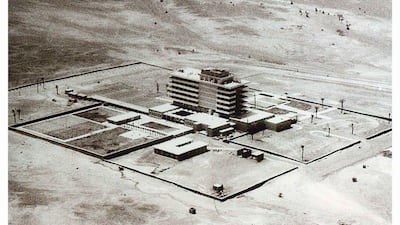
Al Ain already had a Hilton, which opened in 1971. But the opening in the city marked a new era of internationalism for Abu Dhabi. Photo: Hilton -
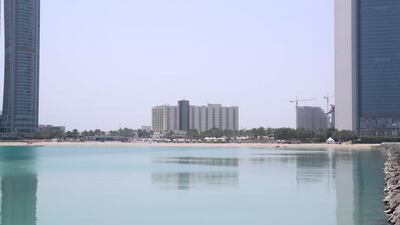
The Radisson Blu, formerly a Hilton hotel, once dominated the capital's skyline, but now it's dwarfed by its surroundings. Khushnum Bhandari / The National


“We drove along the seafront to a new Hilton hotel which stood on lonely splendour at one end of narrow road that would eventually become … the Corniche,” wrote Patricia Holton in her 1991 book, Mother Without a Mask, about her visits to Abu Dhabi in the 1970s.
“The hotel looked like a fort, standing strong and tall in the desert night.”
The Hilton’s first food and beverage manager and future co-founder of the Rotana hotel chain, Selim El Zyr, told The National how the hotel introduced new foods such as “smoked salmon, avocado and foie gras”.
“Smoked salmon – that was a big story,” said Mr El Zyr.
In the years that followed, more and more hotels were built and the Hilton Abu Dhabi added a new wing, beach club and other facilities. Then came the greatest change in the building’s 45-year history. From January 1, 2018, the hotel no longer carried the Hilton flag as Radisson Blu took over operations.
The old photograph, taken by French photographer Alain Saint-Hilaire, was shot from the water close to where the breakwater leading to Marina Mall sits today. It shows the hotel in that lonely splendour so aptly described by Ms Holton.
Today, the building is no longer lonely and is dominated by modern buildings that have been built on either side, such as Nation Towers and the Adnoc headquarters.
The photographer is also standing close to the Founder’s Memorial. This serene and peaceful part of the city celebrates the life of Sheikh Zayed, just footsteps away from where he toured the hotel all those years ago.
Remarkable architecture of the UAE – in pictures
-
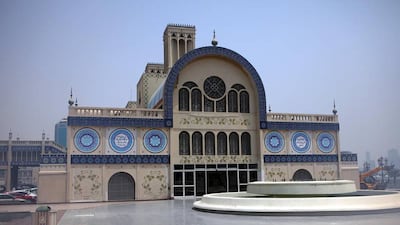
One of the entrances to the Central Market, also known as the Blue Souq, in Sharjah. It was built in 1979 and is adorned with Islamic designs. The market can be seen on the Arabic side of the Dh5 banknote. -
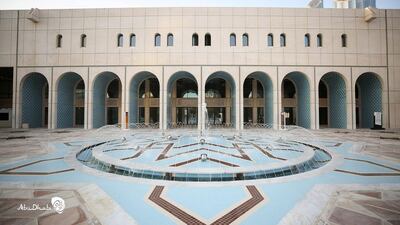
Abu Dhabi’s Cultural Foundation was created in 1981. The building has since been renovated. -

Abu Dhabi Souq, photographed in the late 1970s or early 1980s. -
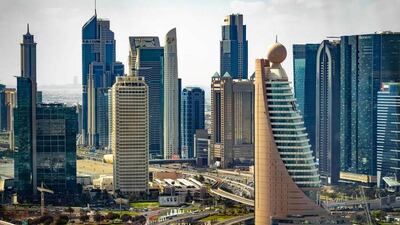
Dubai World Trade Centre – the grey, rectangular building to the middle left – was opened by Queen Elizabeth II in 1979. The tallest building in the UAE until 1999, it appears on the Dh100 banknote. -

Foggy and cold weather at the Deira Clocktower roundabout. Built in the mid-1960s and designed by Ziki Homsi, the tower was reconstructed in 1989 when its steel supports started to corrode. -
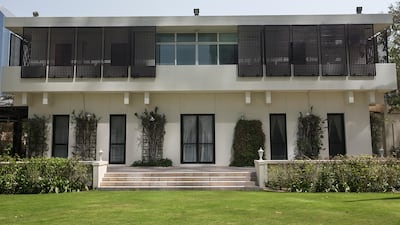
The UK ambassador’s residence was completed in 1981. It was designed by John Harris, the British architect behind Dubai World Trade Centre and Rashid Hospital. -

Dubai International Airport in the 1960s. -
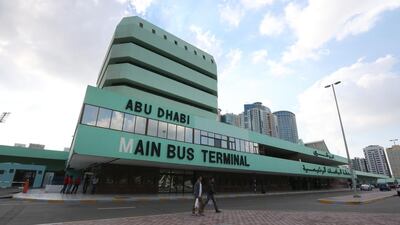
The brutalist Abu Dhabi Bus Terminal, by Bulgarian architect Georgi Kolarov. Also known as Al Wahda station, it opened in 1989. -

Zayed Sports City in Abu Dhabi opened in 1979. -

Electra Street’s Saeed Al Kalili Building opened in 1983. Also known as Al Ibrahimi Building, it was designed by Egyptian architect Farouk El Gohary. -
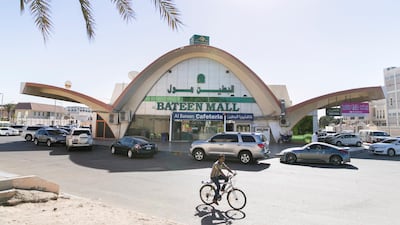
Bateen Mall, with its dramatic flying canopies, was completed in 1986. -
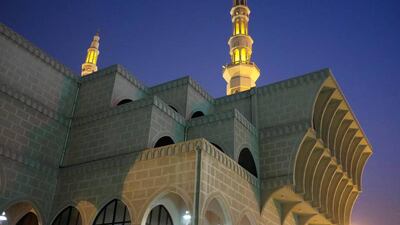
Completed in 1987, King Faisal Mosque in Sharjah was the largest in the country until Sheikh Zayed Grand Mosque opened two decades later. It can accommodate about 16,000 worshippers and was designed by Saudi architect Abdul-Rahman Al Junaidi.



