Kinderwood Nursery in Ras Al Khaimah is just one of the childcare centres supported. Ras Al Khaimah Government Media Office

Ras Al Khaimah supports nurseries hit by Covid-19


  • English
  • Arabic

Ras Al Khaimah has stepped in to support private nurseries that shut temporarily because of the Covid-19 pandemic.

The money has been distributed to centres that submitted applications and qualified for support, and many have reopened.

Nursery managers welcomed the move, with some saying without the support they could not have reopened.

“It has been so difficult for us over the past year and I was pleasantly surprised when [the] Ras Al Khaimah government helped us in this way,” said Amin Humood, manager of Little Dream Nursery.

“The support really means a lot to us and we now plan to reopen one of our branches within the next two months. If this support hadn’t come, we wouldn’t have been able to reopen.”

If this support hadn’t come, we wouldn’t have been able to reopen
Amin Humood,
manager of Little Dream Nursery


Helen John, manager of Kinderwood Nursery in Khuzam, said the business was closed for 11 months last year and the support was crucial.

“All fields are suffering and so I was relieved when I learned that we would receive this funding from Ras Al Khaimah Government,” she said.

“It’s a big help to the industry and will support the children at a crucial time of their development, which has suffered due to the pandemic.”

The financial support is the latest initiative by authorities in the emirate to support businesses affected by Covid-19.

It follows last year’s major stimulus package encompassing fee exemptions, payment deferrals and fine waivers.

“Research shows that supporting early-childhood education not only enhances the opportunities for future generations but also enables greater participation of women in the workforce,” said Mohamed Abdullatif Khalifa, secretary general of the Executive Council of Ras Al Khaimah.

“This initiative is, therefore, crucial to Ras Al Khaimah’s long-term development.”

The nurseries have introduced Ministry of Health measures designed to curb the spread of coronavirus.


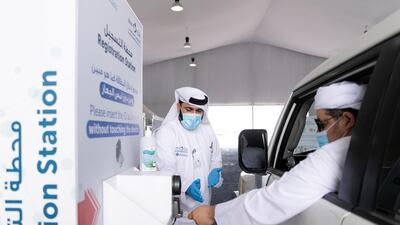
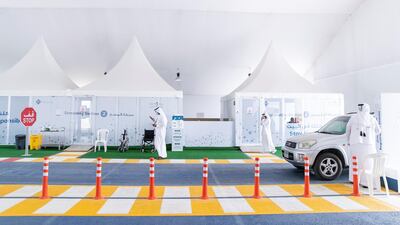
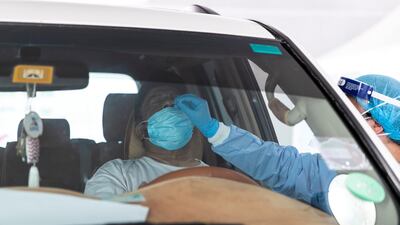
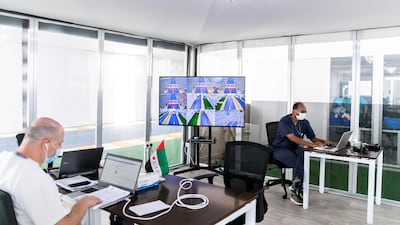
Covid-19 testing in Ras Al Khaimah - in pictures


The specs

Engine: 6.2-litre V8

Transmission: ten-speed

Power: 420bhp

Torque: 624Nm

Price: Dh325,125

On sale: Now

TEACHERS' PAY - WHAT YOU NEED TO KNOW

Pay varies significantly depending on the school, its rating and the curriculum. Here's a rough guide as of January 2021:

- top end schools tend to pay Dh16,000-17,000 a month - plus a monthly housing allowance of up to Dh6,000. These tend to be British curriculum schools rated 'outstanding' or 'very good', followed by American schools

- average salary across curriculums and skill levels is about Dh10,000, recruiters say

- it is becoming more common for schools to provide accommodation, sometimes in an apartment block with other teachers, rather than hand teachers a cash housing allowance

- some strong performing schools have cut back on salaries since the pandemic began, sometimes offering Dh16,000 including the housing allowance, which reflects the slump in rental costs, and sheer demand for jobs

- maths and science teachers are most in demand and some schools will pay up to Dh3,000 more than other teachers in recognition of their technical skills

- at the other end of the market, teachers in some Indian schools, where fees are lower and competition among applicants is intense, can be paid as low as Dh3,000 per month

- in Indian schools, it has also become common for teachers to share residential accommodation, living in a block with colleagues

Mercer, the investment consulting arm of US services company Marsh & McLennan, expects its wealth division to at least double its assets under management (AUM) in the Middle East as wealth in the region continues to grow despite economic headwinds, a company official said.

Mercer Wealth, which globally has $160 billion in AUM, plans to boost its AUM in the region to $2-$3bn in the next 2-3 years from the present $1bn, said Yasir AbuShaban, a Dubai-based principal with Mercer Wealth.

Within the next two to three years, we are looking at reaching $2 to $3 billion as a conservative estimate and we do see an opportunity to do so,” said Mr AbuShaban.

Mercer does not directly make investments, but allocates clients’ money they have discretion to, to professional asset managers. They also provide advice to clients.

“We have buying power. We can negotiate on their (client’s) behalf with asset managers to provide them lower fees than they otherwise would have to get on their own,” he added.

Mercer Wealth’s clients include sovereign wealth funds, family offices, and insurance companies among others.

From its office in Dubai, Mercer also looks after Africa, India and Turkey, where they also see opportunity for growth.

Wealth creation in Middle East and Africa (MEA) grew 8.5 per cent to $8.1 trillion last year from $7.5tn in 2015, higher than last year’s global average of 6 per cent and the second-highest growth in a region after Asia-Pacific which grew 9.9 per cent, according to consultancy Boston Consulting Group (BCG). In the region, where wealth grew just 1.9 per cent in 2015 compared with 2014, a pickup in oil prices has helped in wealth generation.

BCG is forecasting MEA wealth will rise to $12tn by 2021, growing at an annual average of 8 per cent.

Drivers of wealth generation in the region will be split evenly between new wealth creation and growth of performance of existing assets, according to BCG.

Another general trend in the region is clients’ looking for a comprehensive approach to investing, according to Mr AbuShaban.

“Institutional investors or some of the families are seeing a slowdown in the available capital they have to invest and in that sense they are looking at optimizing the way they manage their portfolios and making sure they are not investing haphazardly and different parts of their investment are working together,” said Mr AbuShaban.

Some clients also have a higher appetite for risk, given the low interest-rate environment that does not provide enough yield for some institutional investors. These clients are keen to invest in illiquid assets, such as private equity and infrastructure.

“What we have seen is a desire for higher returns in what has been a low-return environment specifically in various fixed income or bonds,” he said.

“In this environment, we have seen a de facto increase in the risk that clients are taking in things like illiquid investments, private equity investments, infrastructure and private debt, those kind of investments were higher illiquidity results in incrementally higher returns.”

The Abu Dhabi Investment Authority, one of the largest sovereign wealth funds, said in its 2016 report that has gradually increased its exposure in direct private equity and private credit transactions, mainly in Asian markets and especially in China and India. The authority’s private equity department focused on structured equities owing to “their defensive characteristics.”

The five pillars of Islam

1. Fasting 

2. Prayer 

3. Hajj 

4. Shahada 

5. Zakat 

UAE SQUAD FOR ASIAN JIU-JITSU CHAMPIONSHIP

Men’s squad: Faisal Al Ketbi, Omar Al Fadhli, Zayed Al Kathiri, Thiab Al Nuaimi, Khaled Al Shehhi, Mohamed Ali Al Suwaidi, Farraj Khaled Al Awlaqi, Muhammad Al Ameri, Mahdi Al Awlaqi, Saeed Al Qubaisi, Abdullah Al Qubaisi and Hazaa Farhan

Women's squad: Hamda Al Shekheili, Shouq Al Dhanhani, Balqis Abdullah, Sharifa Al Namani, Asma Al Hosani, Maitha Sultan, Bashayer Al Matrooshi, Maha Al Hanaei, Shamma Al Kalbani, Haya Al Jahuri, Mahra Mahfouz, Marwa Al Hosani, Tasneem Al Jahoori and Maryam Al Amri

Updated: July 28, 2021, 2:23 PM