


After more than two years of being sealed off to the world because of the coronavirus pandemic, Japan is getting ready to welcome international tourists again.
Starting next month, holidaymakers will be welcome to explore Tokyo’s neon streets, Kyoto’s ancient temples and the slopes of Mount Fuji.
That’s because the Japanese government aims to ease restrictions on foreign travellers arriving in the country, with no quarantine or self-isolation for fully-vaccinated travellers from June.
New rules from Japanese authorities will also allow up to 20,000 daily overseas visitors to fly to the country, according to a report from local news outlet Kyodo News.

The updated arrivals cap will go into force in June, the news agency reported on Wednesday, citing a government source. The increase in foreign arrival numbers is double the 10,000 cap previously in place for business and student visitors.
It comes following Japan’s Golden Week holidays, which ended with Children’s Day on May 5.
During this popular holiday period, authorities examined airport quarantine facilities and monitored domestic infections to assess whether the country was ready to embrace travel again.
Japan has been restricted to tourists since the early days of the pandemic. Even as much of the world started to travel again, the country stayed firmly closed.
Tourists and spectators were excluded from attending the delayed Tokyo 2020 Olympics last summer and the country opened to business travellers and those on student visas only in late 2021.
In March, Japan reopened to all new foreign arrivals, but the rule excluded one major group: international tourists.
Plans are in place for the return of tourism, with travellers being considered fully vaccinated if they have received three doses of a recognised Covid-19 vaccine. The country will first reopen to small tour groups with fixed itineraries before resuming general tourism, according to Bloomberg.
More than 80 per cent of Japan's population is vaccinated, according to data from Johns Hopkins University, higher than the average world rate of immunisation.
Japan's cherry blossom season blooms pink — in pictures:
-

Cherry blossoms in full bloom at the moat near the Imperial Palace in Chidorigafuchi, Tokyo. AP -
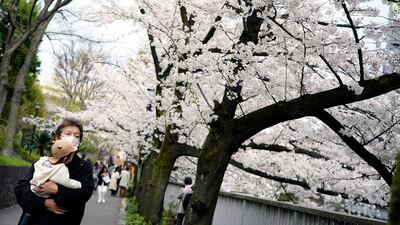
The Japan Meteorological Agency declared the full bloom of cherry blossoms in the capital in March 2022. EPA -
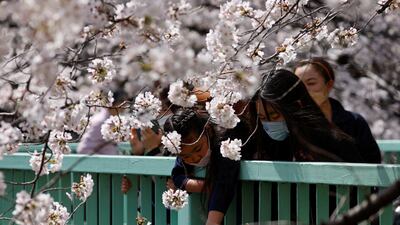
Cherry blossoms in Japan often bloom between late March and mid-April. Reuters -
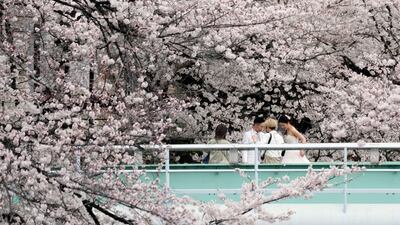
A newlywed couple stand under cherry blossoms in Tokyo. EPA -
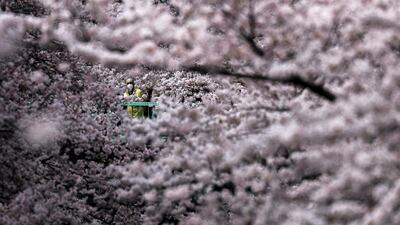
Authorities imposed restrictions in parks where cherry blossoms bloom owing to the Covid-19 pandemic. Reuters -
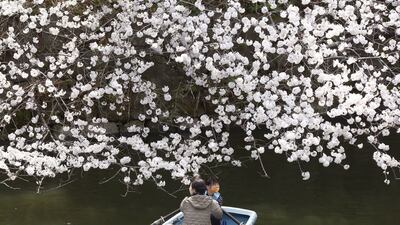
Visitors envoy the view at the Chidorigafuchi moat. AP -

Authorities in Tokyo declared the first bloom on March 20, 2022. EPA -
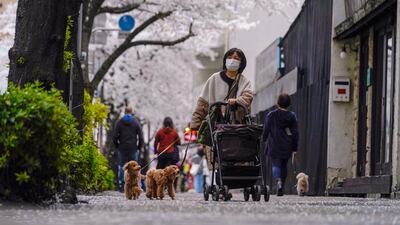
Blossoms of the Somei-Yoshino variety came to full bloom in Tokyo four days earlier than on an average year. AP -
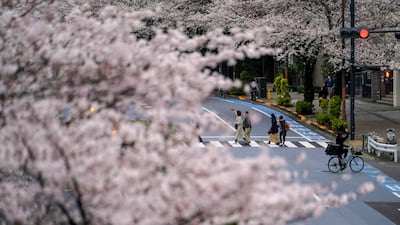
It was the first variety of cherry blossom to come to full bloom in Japan in 2022. AP -
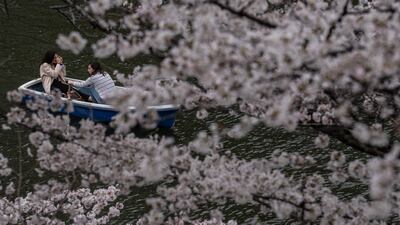
The bloom only lasts for about a week and marks the beginning of spring in Japan. Getty -
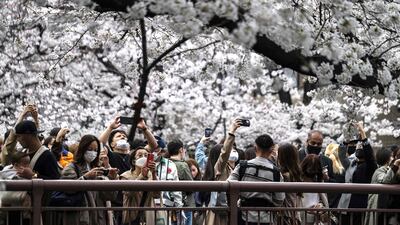
Cherry blossoms came to full bloom five days later than the previous year. AFP



