

“Can you believe it? Can you believe it?!" I screamed down the phone at my parents in Iraqi Arabic, seconds before the final whistle. My mother had already picked up crying, a broken sob on the other end of the line as she tried to catch her breath.
"I can't stop," she told me. My dad grabbed the phone and told me off. "Don't you ever doubt us," he said, laughing, celebrating in the background.
In case you couldn’t tell, I’m very proud of my Iraqi heritage, but I admit: I doubted us.
For the first time since 1986, Iraq are back at the World Cup after defeating Bolivia 2-1 in the intercontinental play-off. For forty years, Iraqis have waited to see their nation take its place on the grandest stage in sport.
It was a strange 12 hours. Italy had failed to qualify, their third consecutive absence from a World Cup, which had already cost me several genuine tears. But Iraq making it, winning, when I was, perhaps out of superstition, pessimistic about our chances, dried my tears but produced a feeling I have never quite experienced before.
I was certainly overjoyed, screaming and shouting, but almost immediately felt an immense heaviness in my heart. I shared in my mother's sobs. We were both fighting something overwhelming, utter sadness, or perhaps guilt. Iraqi pride would never invite sympathy, but there was a profound feeling of heartbreak, of reckoning with everything this country has endured in these 40 years, everything we have lost.
Iraq has long been a nation associated with suffering, and weeping felt cathartic in a way I cannot fully explain. It was the shedding of something, a traumatic past and the permission, just for a moment, to feel some hope.
-
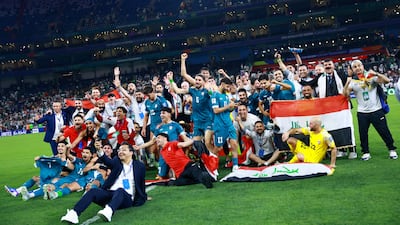
Iraq players celebrate after beating Bolivia 2-1 in their inter-confederation play-off final in Monterrey, Mexico to qualify for the 2026 Fifa World Cup. Reuters -
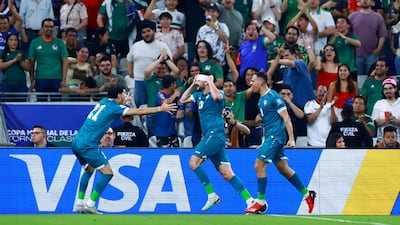
Iraq's Aymen Hussein celebrates scoring their second goal with teammates. Reuters -
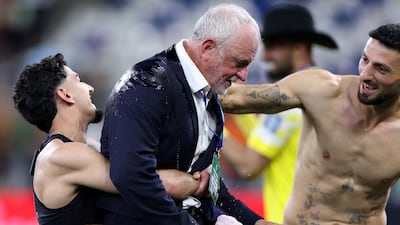
Iraq's Australian coach Graham Arnold celebrates with his players after securing the 48th and final place at the 2026 World Cup. AFP -
Bolivia's Moises Paniagua celebrates scoring their equaliser. Reuters -
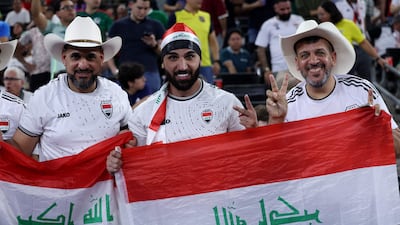
Iraqi fans celebrate at the BBVA Stadium in Guadalupe, Nuevo Leon state, Mexico. AFP -
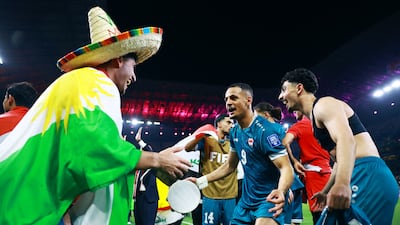
Iraq's Ali Al Hamadi, who opened the scoring in the first hald, celebrates with teammates. Reuters -
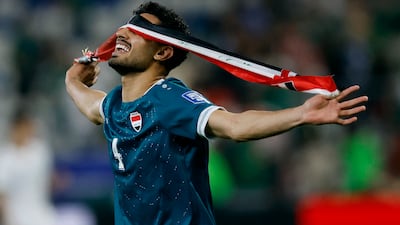
Iraq's Zaid Tahseen celebrates after the match. Reuters -
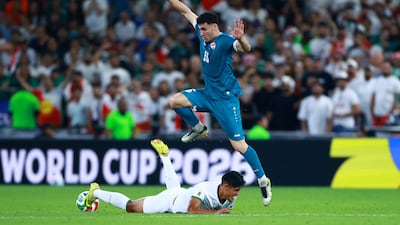
Bolivia's Fernando Nava, bottom, in action with Iraq's Zaid Ismail. Reuters -
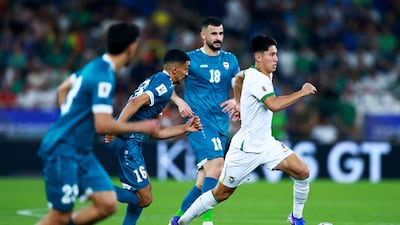
Bolivia's Miguelito evades Iraq's defence. Reuters -
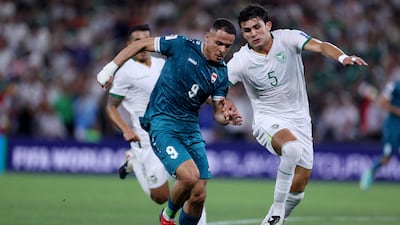
Iraq's Ali Al Hamadi, centre, in action against Bolivia's Efrain Morales. AFP -
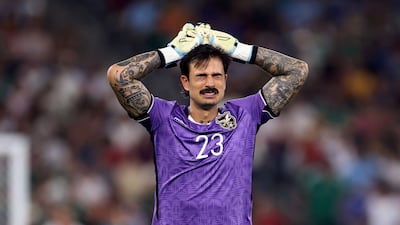
Bolivia goalkeeper Guillermo Viscarra looks dejected at the final whistle. AFP -
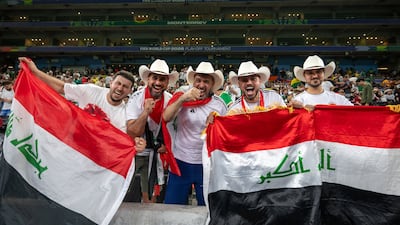
Iraqi fans cheer their team on during the 2026 Fifa World Cup Intercontinental play-off in Mexico. EPA -
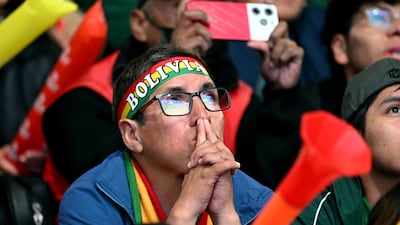
A Bolivia fan watches on. Reuters -
Ali Al Hamadi opened the scoring with a first-half header. AFP -
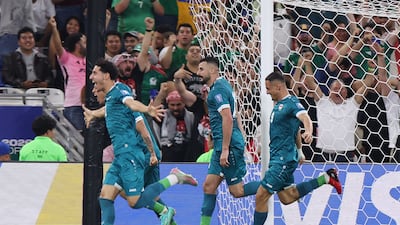
Aymen Hussein, centre, scored what proved to be the winner and the goal that sent Iraq to a first World Cup since 1986. AFP


And then, of course, we did what all Iraqis do and made fun of ourselves. "What if we lose all three group games?" My dad asked teasingly. "Hessa hai moo waqit’ha," I heard my mother reply, "This is not the time", shushing him as we watched this wonderful young squad hoist their coach, Graham Arnold, onto their shoulders, the Iraqi flag held aloft in his hands.
This is a time for celebration, and we must honour our victories, brought to us by a remarkable group of young men assembled from across the world, children of immigrants who found lives abroad but remained so fiercely rooted to their heritage.
We are going to the World Cup after 40 years.
The strikers have been magnificent. Aymen Hussein has been so consistently excellent leading the line that he now stands as Iraq's all-time leading scorer with 33 international goals, eight of them in this qualifying campaign alone.
Merchas Doski, the left-back born in Germany who plies his trade in the Czech Republic, was imperious, the symbol of a defensive solidity that held firm even as Bolivia threw everything at them in those final desperate minutes.
Young forward Marko Farji, born in Norway and playing his club football in Italy, came off the bench and delivered the assist for the winning goal within sixty seconds of his arrival.
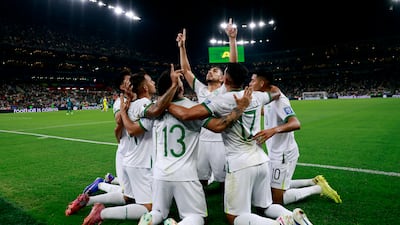
"Ali, Ali scored, that young boy, your friend," my mother said excitedly, referring to Ali Al Hamadi, the Iraqi striker with a thick Liverpudlian accent, whom I had interviewed for The National last year. He scored the opener in the 10th minute. The heroes of Mesopotamia. Friends on social media have already promised to name their children after them.
I have been fortunate, in this peripatetic life assembled across several countries and cultures, to interview some of the finest footballers of their generation. I have sat with genuine greatness and emerged professionally reinvigorated.
But speaking with Al Hamadi excavated something in me I did not know required excavating. Listening to him, I was overtaken by a nostalgia so acute and so irrational I could barely account for it. A tenderness for a country I have never lived in but which has never, not for a single day, released its hold on me. That is the strange alchemy of diaspora.
"I must congratulate the players who played with real Iraqi mentality," Iraq's Australian coach Arnold after the final whistle, "fighting and putting their bodies on the line – that's why we won the game."
Separated by politics but united by the love of our nation, we will make our way to North America to watch our beloved sons, brothers and countrymen attempt to bring us more joy this summer. Football is what our nation reaches for when other forms of expression have been bombed into silence. May we always celebrate together.
عاش عاش العراق (Long live, long live Iraq)

