


Nepal have had a lengthy wait for their shot at Asia Cup cricket, but by the time they booked their tickets for their debut tournament earlier this summer, they might have felt they were ready.
After all, they have been preparing for this moment for years. Big-match experience in front of fervent support? Check. Attendant riot police in case the atmosphere ever boils over? Always.
All that sort of stuff goes on at most major matches at Tribhuvan University, as the cricketers of the UAE will attest. Twice this year, Nepal have beaten the UAE to big prizes while being bayed on by over-capacity crowds in Kathmandu – including qualification for this Asia Cup.
And yet the touring side will have experienced nothing like what is in store in Multan, where they face Pakistan in the competition opener on Wednesday.
Everything is ramped up to extreme levels, from the security operation to the standard of opposition.
When the respective teams are on their way to the stadium, they do not follow the same route they have previously taken. The convoys include van loads of special forces troopers.
There is a massive police presence on the streets, including roadblocks preventing access anywhere near the stadium.
Then there is the small matter of the opposition. Nepal acquitted themselves well when they played full-member opposition for the first time at the World Cup Qualifier in Zimbabwe recently, but this is a different test altogether. Now they are going up against the world’s No 1 side.
And they will be playing against them at Pakistan’s biggest cricket stadium, in front of what is often referred to as the country’s most fierce support.
“It is always a great feeling to play in front of the passionate Multan crowd and we all are very excited that the Asia Cup is beginning in this city,” said Pakistan captain Babar Azam.
-

Champions Nepal with the trophy after winning the final of the ACC Men’s Premier Cup 2023 against the UAE at Tribhuvan University International Cricket Ground in Kathmandu on May 2, 2023. All photos: Asian Cricket Council -

Gulsan Jha of Nepal received receives the Player of the Match award. -
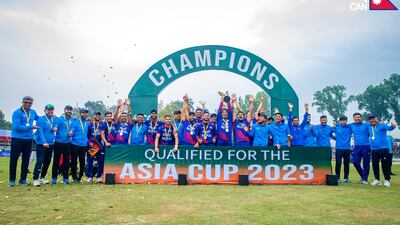
ACC Men’s Premier Cup 2023 champions Nepal with the trophy. -

Nepal skipper Rohit Paudel with the trophy. -
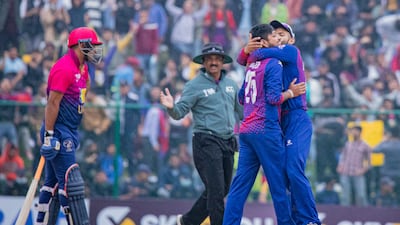
The UAE in action against Nepal in the ACC Premier Cup final. -

Nepal supporters at Tribhuvan University International Cricket Ground in Kathmandu for the ACC Premier Cup final. -

The UAE in action against Nepal in the ACC Premier Cup final. -

The UAE in action against Nepal in the ACC Premier Cup final. -

The UAE in action against Nepal in the ACC Premier Cup final. -

The UAE in action against Nepal in the ACC Premier Cup final. -

The UAE in action against Nepal in the ACC Premier Cup final.


“I want to congratulate Nepal for qualifying for the Asia Cup and I hope that their participation will give a boost to the development of the sport in the country.”
Rohit Paudel, the Nepal captain, was afforded a warm welcome by all on arrival at Multan Stadium on the eve of the game, with many referencing the fact it is both the city of saints, as well as being known for its mangoes.
He knows the hospitality will be less friendly once the action starts, but he is urging his players to focus on the ball, and not the reputation of the opposition players.
“There are a lot more expectations for us,” Paudel said. “All the players have been dreaming of this Asia Cup.
“We have been playing for more than two decades and this is a great opportunity to represent our country at the highest level, in the Asia Cup. It is a big occasion for all of us.
“The difference is experience. If you look at batting at bowling skills, both are the same.
“Pakistan is an experienced side. That is the only difference. Both the teams have world-class bowlers and batsmen.
“Our goal is to win one-ball battles. Focus on the ball, regardless of who the opponent is.”
Babar said that Pakistan’s No 1 ranking, earned during a clean-sweep of Afghanistan last week, is not a burden but something to be proud of.
“I would not say that there is a pressure,” Babar said. “Rather, we enter this tournament with more confidence.
“This team has put in a lot of hard work and effort over the last few years and achieving the top spot is testament to it. The job, however, is not done as we want to win the Asia Cup and the World Cup.
“We have some competitive and exciting next few months lined up and we are eager to do well for our country.
“Every player in this side wants to win matches for his country. They are always ready to put in the hard yards and never shy away from tough and difficult situations. We have had an amazing last few months and now it is time to build on the momentum.”

