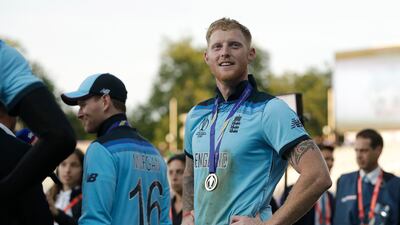
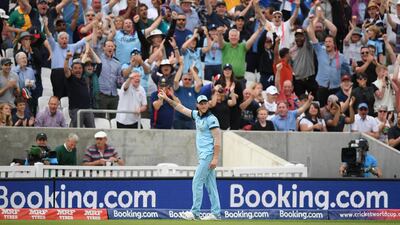
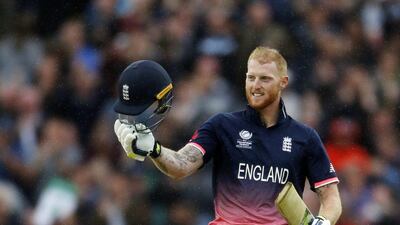
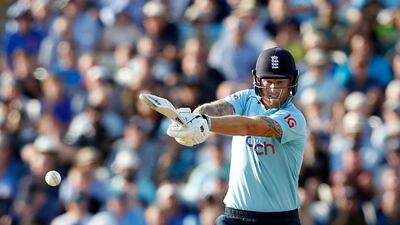
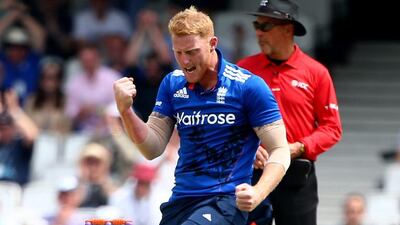
South Africa's Quinton de Kock, right, and England's Jos Butler, left, are worried about the packed cricket calendar. AP

Proteas star Quinton de Kock admits playing all three formats becoming tough


  • English
  • Arabic

South Africa wicketkeeper batsman Quinton de Kock said players will find it difficult to play all three formats of the game as more fixtures are added to the cricket calendar.

The three-match ODI series between the Proteas and England was drawn 1-1 on Sunday after heavy rain during the third ODI at Headingley.

Less than 28 overs of play were possible in Leeds before the game was called in the first innings with South Africa on 159-2.

De Kock was denied a chance to score a century as he was stranded on 92 off 76 balls before the weather intervened. But the spotlight was on cricket's busy calendar, which has attracted criticism following England all-rounder Ben Stokes's decision to retire from ODIs.

Former Pakistan fast bowler Wasim Akram last week said he understood the reasons behind Stokes's decision, while ex-England captain Nasser Hussain described the global cricket schedule as "madness".

"It's going to start being tough for players - three formats is a lot and it looks like more games are happening over the calendar," De Kock said.

"Players need to make decisions individually and if they feel they can do it [play all three formats], I am happy for them. But guys need to take decisions into their own hands."

The 29-year-old wicketkeeper-batsman announced his retirement from Test cricket in December, citing a desire to spend more time with his family.

"I've been roped in to play a couple of leagues but that's my own consequence," De Kock said. "I am happy to do it.

"It's still a sacrifice but I'm slowly getting to an age where I need to think about where I want to be in my career. As long as I can do it at my own pace then I am happy.

"When you're still young you need to play all three formats and get certain things done in your career. It starts getting harder as you start getting older and the body doesn't cooperate like it used to. It's just a management thing."

Meanwhile, England captain Jos Buttler admits he is frustrated with England's intense match schedule after his hopes of overseeing a first white-ball series victory since taking over the captaincy were scuppered due to rains.

Ben Stokes retires from ODIs

In Buttler's first month since taking over from World Cup-winning captain Eoin Morgan, he has had to contend with a hectic schedule as well as dealing with a hole in the team following the ODI retirement of Stokes.

England are currently nine games into a busy period which will see them take to the field 12 times in 24 days and they have had just one dedicated training day so far during that time, something the new captain revealed has been challenging.

"It's tough," Buttler said. "A lot of the time around training is when you do your best work, away from the pressures of the game, having good conversations and having a feel for where the group is at.

"And not just always in game mode, preparing for guys on the day. To get the highest standard of cricket possible, you need to prepare properly. Hopefully that's something we can look at going forward.

"As a new captain, just having that time to bed in and do that work around your players and with your coaches.

"That's been a frustration to be truthfully honest - it would be nice to have that time to do the work. But we don't, so you just have to adapt and find the best way. It's been a good challenge."

England and South Africa meet in three T20 internationals, starting in Bristol on Wednesday.

MANDOOB
%3Cp%3EDirector%3A%20Ali%20Kalthami%3C%2Fp%3E%0A%3Cp%3EStarring%3A%20Mohammed%20Dokhei%2C%20Sarah%20Taibah%2C%20Hajar%20Alshammari%3C%2Fp%3E%0A%3Cp%3ERating%3A%204%2F5%3C%2Fp%3E%0A%3Cp%3E%3C%2Fp%3E%0A
While you're here
THREE
%3Cp%3EDirector%3A%20Nayla%20Al%20Khaja%3C%2Fp%3E%0A%3Cp%3EStarring%3A%20Jefferson%20Hall%2C%20Faten%20Ahmed%2C%20Noura%20Alabed%2C%20Saud%20Alzarooni%3C%2Fp%3E%0A%3Cp%3ERating%3A%203.5%2F5%3C%2Fp%3E%0A
The story of Edge

Sheikh Mohamed bin Zayed, Crown Prince of Abu Dhabi and Deputy Supreme Commander of the Armed Forces, established Edge in 2019.

It brought together 25 state-owned and independent companies specialising in weapons systems, cyber protection and electronic warfare.

Edge has an annual revenue of $5 billion and employs more than 12,000 people.

Some of the companies include Nimr, a maker of armoured vehicles, Caracal, which manufactures guns and ammunitions company, Lahab


Who's who in Yemen conflict

Houthis: Iran-backed rebels who occupy Sanaa and run unrecognised government

Yemeni government: Exiled government in Aden led by eight-member Presidential Leadership Council

Southern Transitional Council: Faction in Yemeni government that seeks autonomy for the south

Habrish 'rebels': Tribal-backed forces feuding with STC over control of oil in government territory

COMPANY%20PROFILE
%3Cp%3E%3Cstrong%3ECompany%3A%3C%2Fstrong%3E%20Vault%3Cbr%3E%3Cstrong%3EStarted%3A%20%3C%2Fstrong%3EJune%202023%3Cbr%3E%3Cstrong%3ECo-founders%3A%20%3C%2Fstrong%3EBilal%20Abou-Diab%20and%20Sami%20Abdul%20Hadi%3Cbr%3E%3Cstrong%3EBased%3A%20%3C%2Fstrong%3EAbu%20Dhabi%3Cbr%3E%3Cstrong%3ELicensed%20by%3A%3C%2Fstrong%3E%20Abu%20Dhabi%20Global%20Market%3Cbr%3E%3Cstrong%3EIndustry%3A%20%3C%2Fstrong%3EInvestment%20and%20wealth%20advisory%3Cbr%3E%3Cstrong%3EFunding%3A%20%3C%2Fstrong%3E%241%20million%3Cbr%3E%3Cstrong%3EInvestors%3A%20%3C%2Fstrong%3EOutliers%20VC%20and%20angel%20investors%3Cbr%3E%3Cstrong%3ENumber%20of%20employees%3A%20%3C%2Fstrong%3E14%3Cbr%3E%3C%2Fp%3E%0A
Benefits of first-time home buyers' scheme
  • Priority access to new homes from participating developers
  • Discounts on sales price of off-plan units
  • Flexible payment plans from developers
  • Mortgages with better interest rates, faster approval times and reduced fees
  • DLD registration fee can be paid through banks or credit cards at zero interest rates
Superliminal%20
%3Cp%3EDeveloper%3A%20Pillow%20Castle%20Games%0D%3Cbr%3EPublisher%3A%20Pillow%20Castle%20Games%0D%3Cbr%3EConsole%3A%20PlayStation%204%26amp%3B5%2C%20Xbox%20Series%20One%20%26amp%3B%20X%2FS%2C%20Nintendo%20Switch%2C%20PC%20and%20Mac%0D%3Cbr%3ERating%3A%204%2F5%3C%2Fp%3E%0A
%3Cp%3EMATA%0D%3Cbr%3EArtist%3A%20M.I.A%0D%3Cbr%3ELabel%3A%20Island%0D%3Cbr%3ERating%3A%203.5%2F5%3C%2Fp%3E%0A
How will Gen Alpha invest?

Mark Chahwan, co-founder and chief executive of robo-advisory firm Sarwa, forecasts that Generation Alpha (born between 2010 and 2024) will start investing in their teenage years and therefore benefit from compound interest.

“Technology and education should be the main drivers to make this happen, whether it’s investing in a few clicks or their schools/parents stepping up their personal finance education skills,” he adds.

Mr Chahwan says younger generations have a higher capacity to take on risk, but for some their appetite can be more cautious because they are investing for the first time. “Schools still do not teach personal finance and stock market investing, so a lot of the learning journey can feel daunting and intimidating,” he says.

He advises millennials to not always start with an aggressive portfolio even if they can afford to take risks. “We always advise to work your way up to your risk capacity, that way you experience volatility and get used to it. Given the higher risk capacity for the younger generations, stocks are a favourite,” says Mr Chahwan.

Highlighting the role technology has played in encouraging millennials and Gen Z to invest, he says: “They were often excluded, but with lower account minimums ... a customer with $1,000 [Dh3,672] in their account has their money working for them just as hard as the portfolio of a high get-worth individual.”

BELGIUM%20SQUAD
%3Cp%3EGoalkeepers%3A%20Thibaut%20Courtois%2C%20Simon%20Mignolet%2C%20Koen%20Casteels%0D%3Cbr%3E%0D%3Cbr%3EDefenders%3A%20Jan%20Vertonghen%2C%20Toby%20Alderweireld%2C%20Leander%20Dendoncker%2C%20Zeno%20Debast%2C%20Arthur%20Theate%2C%20Wout%20Faes%0D%3Cbr%3E%0D%3Cbr%3EMidfielders%3A%20Hans%20Vanaken%2C%20Axel%20Witsel%2C%20Youri%20Tielemans%2C%20Amadou%20Onana%2C%20Kevin%20De%20Bruyne%2C%20Yannick%20Carrasco%2C%20Thorgan%20Hazard%2C%20Timothy%20Castagne%2C%20Thomas%20Meunier%0D%3Cbr%3E%0D%3Cbr%3EForwards%3A%20Romelu%20Lukaku%2C%20Michy%20Batshuayi%2C%20Lo%C3%AFs%20Openda%2C%20Charles%20De%20Ketelaere%2C%20Eden%20Hazard%2C%20Jeremy%20Doku%2C%20Dries%20Mertens%2C%20Leandro%20Trossard%3C%2Fp%3E%0A
Tearful appearance

Chancellor Rachel Reeves set markets on edge as she appeared visibly distraught in parliament on Wednesday. 

Legislative setbacks for the government have blown a new hole in the budgetary calculations at a time when the deficit is stubbornly large and the economy is struggling to grow. 

She appeared with Keir Starmer on Thursday and the pair embraced, but he had failed to give her his backing as she cried a day earlier.

A spokesman said her upset demeanour was due to a personal matter.

War 2

Director: Ayan Mukerji

Stars: Hrithik Roshan, NTR, Kiara Advani, Ashutosh Rana

Rating: 2/5

Elvis
%3Cp%3E%3Cstrong%3EDirector%3A%3C%2Fstrong%3E%20Baz%20Luhrmann%3C%2Fp%3E%0A%3Cp%3E%3Cstrong%3EStars%3A%3C%2Fstrong%3E%20Austin%20Butler%2C%20Tom%20Hanks%2C%20Olivia%20DeJonge%3C%2Fp%3E%0A%3Cp%3E%3Cstrong%3ERating%3A%3C%2Fstrong%3E%204%2F5%3C%2Fp%3E%0A

Mercer, the investment consulting arm of US services company Marsh & McLennan, expects its wealth division to at least double its assets under management (AUM) in the Middle East as wealth in the region continues to grow despite economic headwinds, a company official said.

Mercer Wealth, which globally has $160 billion in AUM, plans to boost its AUM in the region to $2-$3bn in the next 2-3 years from the present $1bn, said Yasir AbuShaban, a Dubai-based principal with Mercer Wealth.

Within the next two to three years, we are looking at reaching $2 to $3 billion as a conservative estimate and we do see an opportunity to do so,” said Mr AbuShaban.

Mercer does not directly make investments, but allocates clients’ money they have discretion to, to professional asset managers. They also provide advice to clients.

“We have buying power. We can negotiate on their (client’s) behalf with asset managers to provide them lower fees than they otherwise would have to get on their own,” he added.

Mercer Wealth’s clients include sovereign wealth funds, family offices, and insurance companies among others.

From its office in Dubai, Mercer also looks after Africa, India and Turkey, where they also see opportunity for growth.

Wealth creation in Middle East and Africa (MEA) grew 8.5 per cent to $8.1 trillion last year from $7.5tn in 2015, higher than last year’s global average of 6 per cent and the second-highest growth in a region after Asia-Pacific which grew 9.9 per cent, according to consultancy Boston Consulting Group (BCG). In the region, where wealth grew just 1.9 per cent in 2015 compared with 2014, a pickup in oil prices has helped in wealth generation.

BCG is forecasting MEA wealth will rise to $12tn by 2021, growing at an annual average of 8 per cent.

Drivers of wealth generation in the region will be split evenly between new wealth creation and growth of performance of existing assets, according to BCG.

Another general trend in the region is clients’ looking for a comprehensive approach to investing, according to Mr AbuShaban.

“Institutional investors or some of the families are seeing a slowdown in the available capital they have to invest and in that sense they are looking at optimizing the way they manage their portfolios and making sure they are not investing haphazardly and different parts of their investment are working together,” said Mr AbuShaban.

Some clients also have a higher appetite for risk, given the low interest-rate environment that does not provide enough yield for some institutional investors. These clients are keen to invest in illiquid assets, such as private equity and infrastructure.

“What we have seen is a desire for higher returns in what has been a low-return environment specifically in various fixed income or bonds,” he said.

“In this environment, we have seen a de facto increase in the risk that clients are taking in things like illiquid investments, private equity investments, infrastructure and private debt, those kind of investments were higher illiquidity results in incrementally higher returns.”

The Abu Dhabi Investment Authority, one of the largest sovereign wealth funds, said in its 2016 report that has gradually increased its exposure in direct private equity and private credit transactions, mainly in Asian markets and especially in China and India. The authority’s private equity department focused on structured equities owing to “their defensive characteristics.”

F1 The Movie

Starring: Brad Pitt, Damson Idris, Kerry Condon, Javier Bardem

Director: Joseph Kosinski

Rating: 4/5

How to become a Boglehead

Bogleheads follow simple investing philosophies to build their wealth and live better lives. Just follow these steps.

•   Spend less than you earn and save the rest. You can do this by earning more, or being frugal. Better still, do both.

•   Invest early, invest often. It takes time to grow your wealth on the stock market. The sooner you begin, the better.

•   Choose the right level of risk. Don't gamble by investing in get-rich-quick schemes or high-risk plays. Don't play it too safe, either, by leaving long-term savings in cash.

•   Diversify. Do not keep all your eggs in one basket. Spread your money between different companies, sectors, markets and asset classes such as bonds and property.

•   Keep charges low. The biggest drag on investment performance is all the charges you pay to advisers and active fund managers.

•   Keep it simple. Complexity is your enemy. You can build a balanced, diversified portfolio with just a handful of ETFs.

•   Forget timing the market. Nobody knows where share prices will go next, so don't try to second-guess them.

•   Stick with it. Do not sell up in a market crash. Use the opportunity to invest more at the lower price.

Updated: July 25, 2022, 8:00 AM