• Australia players winning the T20 World Cup in Dubai on Sunday, November 4, 2021. Chris Whiteoak / The National
    Australia players winning the T20 World Cup in Dubai on Sunday, November 4, 2021. Chris Whiteoak / The National
  • Mitchell Marsh celebrates winning the T20 World Cup final. Chris Whiteoak / The National
    Mitchell Marsh celebrates winning the T20 World Cup final. Chris Whiteoak / The National
  • Australia's David Warner scored a fine fifty to set up victory over New Zealand in the T20 World Cup final at the Dubai International Stadium. Chris Whiteoak / The National
    Australia's David Warner scored a fine fifty to set up victory over New Zealand in the T20 World Cup final at the Dubai International Stadium. Chris Whiteoak / The National
  • Australia's Mitchell Marsh scored a superb fifty against New Zealand in the T20 World Cup final on Sunday. Chris Whiteoak / The National
    Australia's Mitchell Marsh scored a superb fifty against New Zealand in the T20 World Cup final on Sunday. Chris Whiteoak / The National
  • David Warner celebrates reaching fifty at the Dubai International Stadium. Chris Whiteoak / The National
    David Warner celebrates reaching fifty at the Dubai International Stadium. Chris Whiteoak / The National
  • New Zealand captain Kane Williamson held the innings together with a fifty. Chris Whiteoak / The National
    New Zealand captain Kane Williamson held the innings together with a fifty. Chris Whiteoak / The National
  • Australia's Steve Smith fields at the boundary. Chris Whiteoak / The National
    Australia's Steve Smith fields at the boundary. Chris Whiteoak / The National
  • New Zealand's Kane Williamson is caught on the boundary by Steve Smith. Chris Whiteoak / The National
    New Zealand's Kane Williamson is caught on the boundary by Steve Smith. Chris Whiteoak / The National
  • Josh Hazlewood was the pick of the bowlers, taking 3-16. Chris Whiteoak / The National
    Josh Hazlewood was the pick of the bowlers, taking 3-16. Chris Whiteoak / The National
  • Australia's Glenn Maxwell at the Dubai International Stadium. Chris Whiteoak / The National
    Australia's Glenn Maxwell at the Dubai International Stadium. Chris Whiteoak / The National

Warner enjoys Dubai redemption as T20 World Cup's player of the tournament


Paul Radley
  • English
  • Arabic

When David Warner was sat in the stands in Dubai five weeks ago waving a flag, some critics might have suggested it should have been a white one.

His form for Sunrisers Hyderabad in the Indian Premier League had been so dire, he had lost the captaincy of the side to Kane Williamson. He had lost his place in the XI, and been jettisoned from the match day squad, too.

Because of rules over how many players from each side were allowed on site at each game, that meant watching some matches on TV from the team hotel.

By the end of the campaign, he had at least made it back as far as the team’s box at the Dubai International Stadium, from where he could maintain appearances by waving an orange Sunrisers flag.

Through it all was a feeling of foreboding. Warner has form for going off the rails in times of stress in the past. And still his IPL future remains unclear.

A little before that time, Australia’s T20 captain, Aaron Finch, made a call to the team’s coach, Justin Langer. During it, he says, he made a prediction.

“Without a word of a lie, I promise you, I called Justin Langer a few months ago and said, ‘Don’t worry about Davey, he’ll be man of the tournament’,” Finch said.

“I thought Adam Zampa should have been man of the tournament personally. But [Warner] is a great player. He is one of the all-time great batters.

“He is a fighter. He is someone who, when his back is against the wall, that is when you get the very, very best of David Warner.

“It was a special, special tournament for him, especially the last couple of knocks.”

Finch’s suggestion that Warner excels in tough circumstances was evidenced in his end to the competition.

He made 89 not out in the must-win last pool match against West Indies, then a vital 49 against Pakistan in the semi-final.

In the final, he made 53 from 38 balls as Australia chased 173 to beat New Zealand with eight wickets to spare.

His effort in the final was trumped by Mitch Marsh, with whom he shared a telling alliance worth 92 for the second wicket.

Marsh was named player of the match for his 77 not out, which included the winning runs.

“[Marsh] is someone who loves a contest, loves a challenge, and we just backed him from the start,” Finch said.

“We committed to him batting No 3 for a long time, and he knew that. That is all you need sometimes, just a little bit of backing and some confidence from everybody else.

“I think it was the first ball he faced in the first practice game against New Zealand, which he also hit for six [as he did in the final].

“It showed the confidence he has, and the confidence we have in each other. It was brilliant.”

Team of the tournament

  • 1. Babar Azam (Pakistan, 303 runs, 126.25 strike rate) The leading run-scorer and most consistent player in the event, he also led the most thrilling side in it with great poise. Getty Images
    1. Babar Azam (Pakistan, 303 runs, 126.25 strike rate) The leading run-scorer and most consistent player in the event, he also led the most thrilling side in it with great poise. Getty Images
  • 2. David Warner (Australia, 289 runs, 146.70 strike rate) As pointed out by his wife Candice, he was supposedly out of form, too old and too slow. Not so, it turns out. Getty Images
    2. David Warner (Australia, 289 runs, 146.70 strike rate) As pointed out by his wife Candice, he was supposedly out of form, too old and too slow. Not so, it turns out. Getty Images
  • 3. Mohammed Rizwan (Pakistan, 282 runs, 127.72 strike rate) Has to be in our team, even if it is out of position at No 3, because of his heroics against India and getting off his sickbed for the semi-final. Getty Images
    3. Mohammed Rizwan (Pakistan, 282 runs, 127.72 strike rate) Has to be in our team, even if it is out of position at No 3, because of his heroics against India and getting off his sickbed for the semi-final. Getty Images
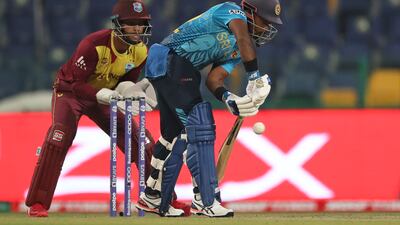
  • 4. Charith Asalanka (Sri Lanka, 231 runs, 147.13 strike rate) Sri Lanka may have dropped off from the standards of their winning team two tournaments ago, but Asalanka is one of many reasons for optimism. AP Photo
    4. Charith Asalanka (Sri Lanka, 231 runs, 147.13 strike rate) Sri Lanka may have dropped off from the standards of their winning team two tournaments ago, but Asalanka is one of many reasons for optimism. AP Photo
  • 5. David Wiese (Namibia, 227 runs, 127.52 strike rate) Namibia were far from a one man team, but their best-known player was still outstanding in their run to the Super 12. Getty Images
    5. David Wiese (Namibia, 227 runs, 127.52 strike rate) Namibia were far from a one man team, but their best-known player was still outstanding in their run to the Super 12. Getty Images
  • 6. Jimmy Neesham (New Zealand, 86 runs, 175.51 strike rate, three wickets, 7.36 economy rate) Edges out Asif Ali from selection because of his late-over excellence with both bat and ball.Getty Images
    6. Jimmy Neesham (New Zealand, 86 runs, 175.51 strike rate, three wickets, 7.36 economy rate) Edges out Asif Ali from selection because of his late-over excellence with both bat and ball.Getty Images
  • 7. Moeen Ali (England, 92 runs, 131.42 strike rate, seven wickets, 5.50 economy rate) Continued his sparkling form from the Indian Premier League, and only just fell short of being a double winner. PA
    7. Moeen Ali (England, 92 runs, 131.42 strike rate, seven wickets, 5.50 economy rate) Continued his sparkling form from the Indian Premier League, and only just fell short of being a double winner. PA
  • 8. Adam Zampa (Australia, 13 wickets, 5.81 economy rate) David Warner was the official player of the tournament, but Australia’s leg-spinner must have pushed him close. Chris Whiteoak / The National
    8. Adam Zampa (Australia, 13 wickets, 5.81 economy rate) David Warner was the official player of the tournament, but Australia’s leg-spinner must have pushed him close. Chris Whiteoak / The National
  • 9. Trent Boult (New Zealand, 13 wickets, 6.50 economy rate) Over the past two years of major cricket in UAE – a World Cup and one-and-a-half IPLs – there has been no more reliable performer. Getty Images
    9. Trent Boult (New Zealand, 13 wickets, 6.50 economy rate) Over the past two years of major cricket in UAE – a World Cup and one-and-a-half IPLs – there has been no more reliable performer. Getty Images
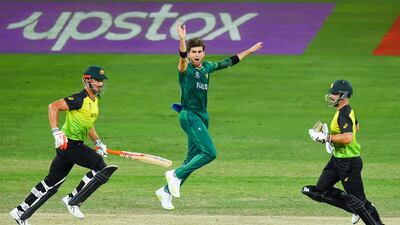
  • 10. Shaheen Afridi (Pakistan, seven wickets, 7.04 economy rate) There was no greater event in this tournament than the Shaheen Afridi First Over. The Rohit Sharma-KL Rahul one-two was spellbinding. AFP
    10. Shaheen Afridi (Pakistan, seven wickets, 7.04 economy rate) There was no greater event in this tournament than the Shaheen Afridi First Over. The Rohit Sharma-KL Rahul one-two was spellbinding. AFP
  • 11. Josh Hazlewood (Australia, 11 wickets, 7.29 economy rate) Second highest wicket-taking seamer after Boult. Robbed of the match award in the final, when he took three for 16. Getty Images
    11. Josh Hazlewood (Australia, 11 wickets, 7.29 economy rate) Second highest wicket-taking seamer after Boult. Robbed of the match award in the final, when he took three for 16. Getty Images
ICC Women's T20 World Cup Asia Qualifier 2025, Thailand

UAE fixtures
May 9, v Malaysia
May 10, v Qatar
May 13, v Malaysia
May 15, v Qatar
May 18 and 19, semi-finals
May 20, final

Gothia Cup 2025

4,872 matches 

1,942 teams

116 pitches

76 nations

26 UAE teams

15 Lebanese teams

2 Kuwaiti teams

Living in...

This article is part of a guide on where to live in the UAE. Our reporters will profile some of the country’s most desirable districts, provide an estimate of rental prices and introduce you to some of the residents who call each area home.

Difference between fractional ownership and timeshare

Although similar in its appearance, the concept of a fractional title deed is unlike that of a timeshare, which usually involves multiple investors buying “time” in a property whereby the owner has the right to occupation for a specified period of time in any year, as opposed to the actual real estate, said John Peacock, Head of Indirect Tax and Conveyancing, BSA Ahmad Bin Hezeem & Associates, a law firm.

EU Russia

The EU imports 90 per cent  of the natural gas used to generate electricity, heat homes and supply industry, with Russia supplying almost 40 per cent of EU gas and a quarter of its oil. 

The Gandhi Murder
  • 71 - Years since the death of MK Gandhi, also christened India's Father of the Nation
  • 34 - Nationalities featured in the film The Gandhi Murder
  • 7 - million dollars, the film's budget 

Favourite book: ‘The Art of Learning’ by Josh Waitzkin

Favourite film: Marvel movies

Favourite parkour spot in Dubai: Residence towers in Jumeirah Beach Residence

What are the main cyber security threats?

Cyber crime - This includes fraud, impersonation, scams and deepfake technology, tactics that are increasingly targeting infrastructure and exploiting human vulnerabilities.
Cyber terrorism - Social media platforms are used to spread radical ideologies, misinformation and disinformation, often with the aim of disrupting critical infrastructure such as power grids.
Cyber warfare - Shaped by geopolitical tension, hostile actors seek to infiltrate and compromise national infrastructure, using one country’s systems as a springboard to launch attacks on others.

Our legal columnist

Name: Yousef Al Bahar

Advocate at Al Bahar & Associate Advocates and Legal Consultants, established in 1994

Education: Mr Al Bahar was born in 1979 and graduated in 2008 from the Judicial Institute. He took after his father, who was one of the first Emirati lawyers

Profile box

Company name: baraka
Started: July 2020
Founders: Feras Jalbout and Kunal Taneja
Based: Dubai and Bahrain
Sector: FinTech
Initial investment: $150,000
Current staff: 12
Stage: Pre-seed capital raising of $1 million
Investors: Class 5 Global, FJ Labs, IMO Ventures, The Community Fund, VentureSouq, Fox Ventures, Dr Abdulla Elyas (private investment)

The Sand Castle

Director: Matty Brown

Stars: Nadine Labaki, Ziad Bakri, Zain Al Rafeea, Riman Al Rafeea

Rating: 2.5/5

The five pillars of Islam

1. Fasting

2. Prayer

3. Hajj

4. Shahada

5. Zakat 

Ten tax points to be aware of in 2026

1. Domestic VAT refund amendments: request your refund within five years

If a business does not apply for the refund on time, they lose their credit.

2. E-invoicing in the UAE

Businesses should continue preparing for the implementation of e-invoicing in the UAE, with 2026 a preparation and transition period ahead of phased mandatory adoption. 

3. More tax audits

Tax authorities are increasingly using data already available across multiple filings to identify audit risks. 

4. More beneficial VAT and excise tax penalty regime

Tax disputes are expected to become more frequent and more structured, with clearer administrative objection and appeal processes. The UAE has adopted a new penalty regime for VAT and excise disputes, which now mirrors the penalty regime for corporate tax.

5. Greater emphasis on statutory audit

There is a greater need for the accuracy of financial statements. The International Financial Reporting Standards standards need to be strictly adhered to and, as a result, the quality of the audits will need to increase.

6. Further transfer pricing enforcement

Transfer pricing enforcement, which refers to the practice of establishing prices for internal transactions between related entities, is expected to broaden in scope. The UAE will shortly open the possibility to negotiate advance pricing agreements, or essentially rulings for transfer pricing purposes. 

7. Limited time periods for audits

Recent amendments also introduce a default five-year limitation period for tax audits and assessments, subject to specific statutory exceptions. While the standard audit and assessment period is five years, this may be extended to up to 15 years in cases involving fraud or tax evasion. 

8. Pillar 2 implementation 

Many multinational groups will begin to feel the practical effect of the Domestic Minimum Top-Up Tax (DMTT), the UAE's implementation of the OECD’s global minimum tax under Pillar 2. While the rules apply for financial years starting on or after January 1, 2025, it is 2026 that marks the transition to an operational phase.

9. Reduced compliance obligations for imported goods and services

Businesses that apply the reverse-charge mechanism for VAT purposes in the UAE may benefit from reduced compliance obligations. 

10. Substance and CbC reporting focus

Tax authorities are expected to continue strengthening the enforcement of economic substance and Country-by-Country (CbC) reporting frameworks. In the UAE, these regimes are increasingly being used as risk-assessment tools, providing tax authorities with a comprehensive view of multinational groups’ global footprints and enabling them to assess whether profits are aligned with real economic activity. 

Contributed by Thomas Vanhee and Hend Rashwan, Aurifer

Defined benefit and defined contribution schemes explained

Defined Benefit Plan (DB)

A defined benefit plan is where the benefit is defined by a formula, typically length of service to and salary at date of leaving.

Defined Contribution Plan (DC) 

A defined contribution plan is where the benefit depends on the amount of money put into the plan for an employee, and how much investment return is earned on those contributions.

The five pillars of Islam

1. Fasting 

2. Prayer 

3. Hajj 

4. Shahada 

5. Zakat 

Jewel of the Expo 2020

252 projectors installed on Al Wasl dome

13.6km of steel used in the structure that makes it equal in length to 16 Burj Khalifas

550 tonnes of moulded steel were raised last year to cap the dome

724,000 cubic metres is the space it encloses

Stands taller than the leaning tower of Pisa

Steel trellis dome is one of the largest single structures on site

The size of 16 tennis courts and weighs as much as 500 elephants

Al Wasl means connection in Arabic

World’s largest 360-degree projection surface

Mercer, the investment consulting arm of US services company Marsh & McLennan, expects its wealth division to at least double its assets under management (AUM) in the Middle East as wealth in the region continues to grow despite economic headwinds, a company official said.

Mercer Wealth, which globally has $160 billion in AUM, plans to boost its AUM in the region to $2-$3bn in the next 2-3 years from the present $1bn, said Yasir AbuShaban, a Dubai-based principal with Mercer Wealth.

Within the next two to three years, we are looking at reaching $2 to $3 billion as a conservative estimate and we do see an opportunity to do so,” said Mr AbuShaban.

Mercer does not directly make investments, but allocates clients’ money they have discretion to, to professional asset managers. They also provide advice to clients.

“We have buying power. We can negotiate on their (client’s) behalf with asset managers to provide them lower fees than they otherwise would have to get on their own,” he added.

Mercer Wealth’s clients include sovereign wealth funds, family offices, and insurance companies among others.

From its office in Dubai, Mercer also looks after Africa, India and Turkey, where they also see opportunity for growth.

Wealth creation in Middle East and Africa (MEA) grew 8.5 per cent to $8.1 trillion last year from $7.5tn in 2015, higher than last year’s global average of 6 per cent and the second-highest growth in a region after Asia-Pacific which grew 9.9 per cent, according to consultancy Boston Consulting Group (BCG). In the region, where wealth grew just 1.9 per cent in 2015 compared with 2014, a pickup in oil prices has helped in wealth generation.

BCG is forecasting MEA wealth will rise to $12tn by 2021, growing at an annual average of 8 per cent.

Drivers of wealth generation in the region will be split evenly between new wealth creation and growth of performance of existing assets, according to BCG.

Another general trend in the region is clients’ looking for a comprehensive approach to investing, according to Mr AbuShaban.

“Institutional investors or some of the families are seeing a slowdown in the available capital they have to invest and in that sense they are looking at optimizing the way they manage their portfolios and making sure they are not investing haphazardly and different parts of their investment are working together,” said Mr AbuShaban.

Some clients also have a higher appetite for risk, given the low interest-rate environment that does not provide enough yield for some institutional investors. These clients are keen to invest in illiquid assets, such as private equity and infrastructure.

“What we have seen is a desire for higher returns in what has been a low-return environment specifically in various fixed income or bonds,” he said.

“In this environment, we have seen a de facto increase in the risk that clients are taking in things like illiquid investments, private equity investments, infrastructure and private debt, those kind of investments were higher illiquidity results in incrementally higher returns.”

The Abu Dhabi Investment Authority, one of the largest sovereign wealth funds, said in its 2016 report that has gradually increased its exposure in direct private equity and private credit transactions, mainly in Asian markets and especially in China and India. The authority’s private equity department focused on structured equities owing to “their defensive characteristics.”

War and the virus
Updated: November 15, 2021, 6:53 AM