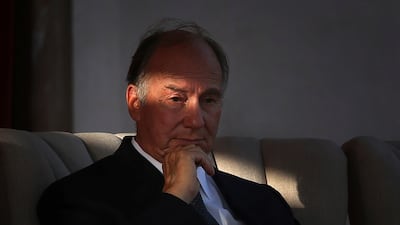
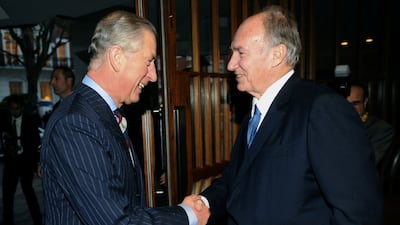
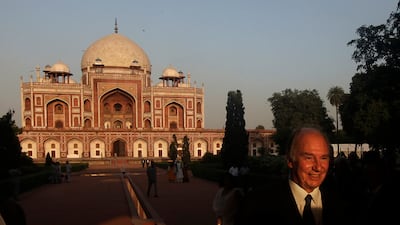
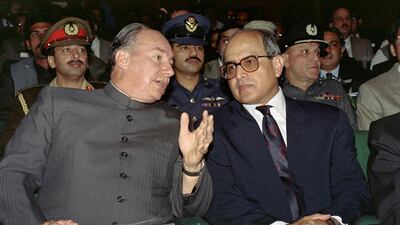
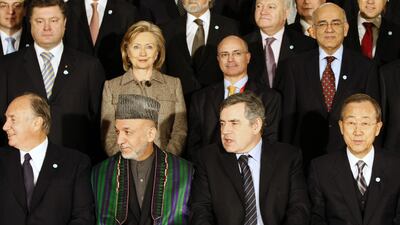
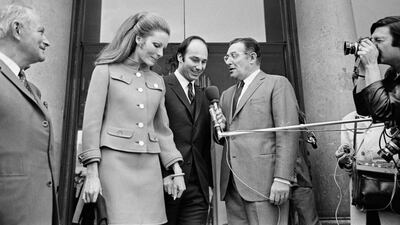
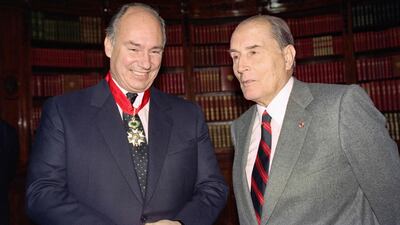
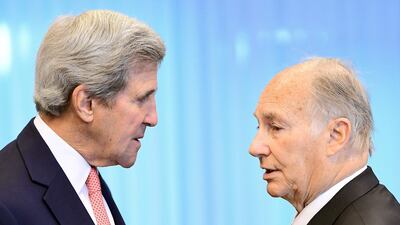
Prince Karim Al Hussaini, better known as the Aga Khan IV, died aged 88 in Lisbon on Tuesday. The Aga Khan was the spiritual leader of the world’s Ismaili Muslims.
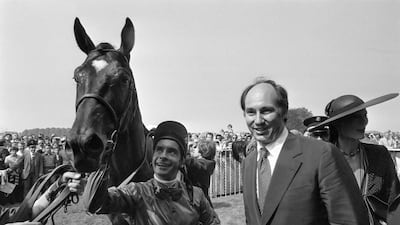
The Aga Khan was a high-profile figure in popular culture, his name synonymous with old-world glamour. Born in Switzerland in 1936, his high net worth and the trappings of his lifestyle – a royal title, an elite education, racing stables, private islands and private jets – provided European tabloids with ample fodder throughout his life. He was an Olympic skier, too, representing Iran at the 1964 Winter Games in Innsbruck, Austria.
All of that is worth mentioning at the outset, only so that it can be dispensed with quickly. In truth, it is a footnote to a more complicated, extraordinary and impactful life that combined religious duty with secular philanthropy on an unprecedented scale.
Today, the Aga Khan Development Network, grown out of a foundation started by Prince Karim in 1967, is one of the world’s largest development agencies, employing nearly 100,000 people and spending $1 billion a year in about 30 countries. While it is perhaps best known for its work in rural development and heritage restoration, the network operates non-denominational schools, universities, banks, hospitals, telecoms companies, power plants, airlines, hotels and industrial factories from northern Pakistan to Mali. Its footprint is greatest in places that are underserved by national aid agencies. In Burkina Faso, the network is the country’s largest private employer. In Kyrgyzstan, it operates the largest bank.
Prince Karim was a 20-year-old undergraduate studying Islamic history at Harvard University in 1957 when his grandfather, the previous spiritual leader of Ismaili Muslims, died and unexpectedly passed the title to Prince Karim in his will.
“Overnight, my whole life changed completely,” Prince Karim later told a journalist. "I woke up with serious responsibilities towards millions of other human beings. I knew I would have to abandon my hopes of studying for a doctorate in history.”
The leader’s role is to interpret the teachings of Islam for Ismaili Muslims. Prince Karim was obliged to carry out this responsibility even as he completed his undergraduate degree. Ismailis from western China to southern India, and eastern Iran to northern Syria, sent him letters or had his picture in their homes.
The burden was no doubt made greater by the Ismaili community’s geopolitical vulnerability. Despite there being 15 million Ismailis when Prince Karim became leader, the community was largely impoverished and spread thinly. This was a product of its dispersion after the fall of its empire, the Fatimid Caliphate, which founded Cairo, in the 11th century, persecution in the Levant during the Crusader period and massacres by the Mongols in the 13th century. By the 20th century, the Ismailis were religious and national minorities in the post-colonial nation states in which they lived. The community’s social insularity and practice of gender equality made it an object of suspicion for secular nationalists and religious extremists alike.
A duty to manage this situation against the volatility of the Cold War turned the young Aga Khan into a sort of statesman without a state. His emphasis on economic development helped his community to prosper, but its well-being grew more precarious. The Baathist revolution of 1963 divided the Ismailis of Syria along political fault lines. In 1972, Ugandan dictator Idi Amin expelled Ismailis and the Aga Khan had to arrange for the community to be moved to the West (mainly to Canada). The Iranian revolution in 1979 forced Ismailis in the country into permanent hiding – their houses of worship still operate under the radar.
Perhaps the most remarkable display of the Aga Khan’s leadership came amid Tajikistan’s civil war in the 1990s, which killed up to 150,000 people. The predominantly Ismaili region of Badakhshan, which is divided by a river from an Afghan province of the same name, became the primary staging ground for anti-communist opposition forces. Amid a siege that threatened to starve the population, the Aga Khan Foundation arranged a humanitarian corridor in co-operation with a US aid agency.
What few Badakhshan residents expected, however, was for the Aga Khan to land in a jet in one of the region’s remote valleys, in May 1995. A crowd of 50,000 of his followers gathered to sit on thousands of carpets hastily laid on the bare earth. Above, the roar of Russian attack helicopters had many in the crowd shuddering as they strained to hear the Aga Khan’s words. On the Afghan shore of the river, more Ismailis arrived to catch a glimpse of Prince Karim as he spoke.
Although Tajikistan’s civil war ended decades ago, the plight of Ismailis in the country remains. Since the start of a protest movement in 2021, the Tajik government has banned Ismaili religious symbols in public spaces and curbed the community’s prayer gatherings. Threats have proliferated elsewhere, too – Ismailis in Syria and Pakistan have been the victims of ISIS attacks, while the Taliban’s return to power in Afghanistan has spurred the community's retreat from public life.
It has been announced that his son, Rahim Al-Hussaini, would succeed him to become the Aga Khan V. He will be expected to give spiritual guidance in a changing world. The task is not getting any easier.
But if Prince Karim’s legacy is to serve as any guide, then optimism is warranted. His persistent faith in efforts to make peace, for the community and beyond, was best articulated in his address in Badakhshan that day in 1995. “Differences,” he said, “must be resolved within the ethic of our faith, through dialogue, through generosity, through forgiveness.”

Results
7pm: Wathba Stallions Cup – Handicap (PA) Dh70,000 (Dirt) 1,600m; Winner: RB Kings Bay, Abdul Aziz Al Balushi (jockey), Helal Al Alawi (trainer)
7.30pm: Maiden (PA) Dh 70,000 (D) 1,600m; Winner: AF Ensito, Fernando Jara, Mohamed Daggash
8pm: Maiden (PA) Dh70,000 (D) 1,400m; Winner: AF Sourouh, Tadhg O’Shea, Ernst Oertel
8.30pm: Maiden (PA) Dh70,000 (D) 1,800m; Winner: Baaher, Fabrice Veron, Eric Lemartinel
9pm: Maiden (PA) Dh70,000 (D) 2,000m; Winner: Mootahady, Antonio Fresu, Eric Lemartinel
9.30pm: Handicap (TB) Dh70,000 (D) 2,000m; Winner: Dubai Canal, Tadhg O’Shea, Satish Seemar
10pm: Al Ain Cup – Prestige (PA) Dh100,000 (D) 2,000m; Winner: Harrab, Bernardo Pinheiro, Majed Al Jahouri
UAE currency: the story behind the money in your pockets
What can you do?
Document everything immediately; including dates, times, locations and witnesses
Seek professional advice from a legal expert
You can report an incident to HR or an immediate supervisor
You can use the Ministry of Human Resources and Emiratisation’s dedicated hotline
In criminal cases, you can contact the police for additional support
MATCH RESULT
Al Jazira 3 Persepolis 2
Jazira: Mabkhout (52'), Romarinho (77'), Al Hammadi (90' 6)
Persepolis: Alipour (42'), Mensha (84')
ARM%20IPO%20DETAILS
%3Cp%3E%3Cstrong%3EShare%20price%3A%3C%2Fstrong%3E%20Undisclosed%3C%2Fp%3E%0A%3Cp%3E%3Cstrong%3ETarget%20raise%3A%3C%2Fstrong%3E%20%248%20billion%20to%20%2410%20billion%3C%2Fp%3E%0A%3Cp%3E%3Cstrong%3EProjected%20valuation%3A%3C%2Fstrong%3E%20%2460%20billion%20to%20%2470%20billion%20(Source%3A%20Bloomberg)%3C%2Fp%3E%0A%3Cp%3E%3Cstrong%3ELead%20underwriters%3A%3C%2Fstrong%3E%20Barclays%2C%20Goldman%20Sachs%20Group%2C%20JPMorgan%20Chase%20and%20Mizuho%20Financial%20Group%3C%2Fp%3E%0A
UAE SQUAD
Omar Abdulrahman (Al Hilal), Ali Khaseif, Ali Mabkhout, Salem Rashed, Khalifa Al Hammadi, Khalfan Mubarak, Zayed Al Ameri, Mohammed Al Attas (Al Jazira), Khalid Essa, Ahmed Barman, Ryan Yaslam, Bandar Al Ahbabi (Al Ain), Habib Fardan, Tariq Ahmed, Mohammed Al Akbari (Al Nasr), Ali Saleh, Ali Salmin (Al Wasl), Adel Al Hosani, Ali Hassan Saleh, Majed Suroor (Sharjah), Ahmed Khalil, Walid Abbas, Majed Hassan, Ismail Al Hammadi (Shabab Al Ahli), Hassan Al Muharrami, Fahad Al Dhahani (Bani Yas), Mohammed Al Shaker (Ajman)
Classification of skills
A worker is categorised as skilled by the MOHRE based on nine levels given in the International Standard Classification of Occupations (ISCO) issued by the International Labour Organisation.
A skilled worker would be someone at a professional level (levels 1 – 5) which includes managers, professionals, technicians and associate professionals, clerical support workers, and service and sales workers.
The worker must also have an attested educational certificate higher than secondary or an equivalent certification, and earn a monthly salary of at least Dh4,000.
Naga
%3Cp%3E%3Cstrong%3EDirector%3A%C2%A0%3C%2Fstrong%3EMeshal%20Al%20Jaser%3C%2Fp%3E%0A%3Cp%3E%3Cstrong%3EStarring%3A%C2%A0%3C%2Fstrong%3EAdwa%20Bader%2C%20Yazeed%20Almajyul%2C%20Khalid%20Bin%20Shaddad%3C%2Fp%3E%0A%3Cp%3E%3Cstrong%3ERating%3A%20%3C%2Fstrong%3E4%2F5%3C%2Fp%3E%0A
How to avoid crypto fraud
- Use unique usernames and passwords while enabling multi-factor authentication.
- Use an offline private key, a physical device that requires manual activation, whenever you access your wallet.
- Avoid suspicious social media ads promoting fraudulent schemes.
- Only invest in crypto projects that you fully understand.
- Critically assess whether a project’s promises or returns seem too good to be true.
- Only use reputable platforms that have a track record of strong regulatory compliance.
- Store funds in hardware wallets as opposed to online exchanges.
Race card
5.30pm: Maiden (TB) Dh82,500 (Turf) 1,400m
6.05pm: Handicap (TB) Dh87,500 (T) 1,400m
6.40pm: Handicap (TB) Dh105,000 (Dirt) 1,400m
7.15pm: Handicap (TB) Dh105,000 (T) 1,200m
7.50pm: Longines Stakes – Conditions (TB) Dh120,00 (D) 1,900m
8.25pm: Zabeel Trophy – Rated Conditions (TB) Dh120,000 (T) 1,600m
9pm: Handicap (TB) Dh105,000 (T) 2,410m
9.35pm: Handicap (TB) Dh92,500 (T) 2,000m
MATCH INFO
Uefa Champioons League semi-final, first leg:
Liverpool 5
Salah (35', 45 1'), Mane (56'), Firmino (61', 68')
Roma 2
Dzeko (81'), Perotti (85' pen)
Second leg: May 2, Stadio Olimpico, Rome
Company%C2%A0profile
%3Cp%3E%3Cstrong%3ECompany%20name%3A%20%3C%2Fstrong%3Eamana%3Cbr%3E%3Cstrong%3EStarted%3A%20%3C%2Fstrong%3E2010%3Cbr%3E%3Cstrong%3EFounders%3A%3C%2Fstrong%3E%20Karim%20Farra%20and%20Ziad%20Aboujeb%3Cbr%3E%3Cstrong%3EBased%3A%20%3C%2Fstrong%3EUAE%3Cbr%3E%3Cstrong%3ERegulator%3A%20%3C%2Fstrong%3EDFSA%3Cbr%3E%3Cstrong%3ESector%3A%20%3C%2Fstrong%3EFinancial%20services%3Cbr%3E%3Cstrong%3ECurrent%20number%20of%20staff%3A%20%3C%2Fstrong%3E85%3Cbr%3E%3Cstrong%3EInvestment%20stage%3A%20%3C%2Fstrong%3ESelf-funded%3Cbr%3E%3C%2Fp%3E%0A
The more serious side of specialty coffee
While the taste of beans and freshness of roast is paramount to the specialty coffee scene, so is sustainability and workers’ rights.
The bulk of genuine specialty coffee companies aim to improve on these elements in every stage of production via direct relationships with farmers. For instance, Mokha 1450 on Al Wasl Road strives to work predominantly with women-owned and -operated coffee organisations, including female farmers in the Sabree mountains of Yemen.
Because, as the boutique’s owner, Garfield Kerr, points out: “women represent over 90 per cent of the coffee value chain, but are woefully underrepresented in less than 10 per cent of ownership and management throughout the global coffee industry.”
One of the UAE’s largest suppliers of green (meaning not-yet-roasted) beans, Raw Coffee, is a founding member of the Partnership of Gender Equity, which aims to empower female coffee farmers and harvesters.
Also, globally, many companies have found the perfect way to recycle old coffee grounds: they create the perfect fertile soil in which to grow mushrooms.
Challenge Cup result:
1. UAE 3 faults
2. Ireland 9 faults
3. Brazil 11 faults
4. Spain 15 faults
5. Great Britain 17 faults
6. New Zealand 20 faults
7. Italy 26 faults
The Sand Castle
Director: Matty Brown
Stars: Nadine Labaki, Ziad Bakri, Zain Al Rafeea, Riman Al Rafeea
Rating: 2.5/5
Torbal Rayeh Wa Jayeh
Starring: Ali El Ghoureir, Khalil El Roumeithy, Mostafa Abo Seria
Stars: 3
Ten tax points to be aware of in 2026
1. Domestic VAT refund amendments: request your refund within five years
If a business does not apply for the refund on time, they lose their credit.
2. E-invoicing in the UAE
Businesses should continue preparing for the implementation of e-invoicing in the UAE, with 2026 a preparation and transition period ahead of phased mandatory adoption.
3. More tax audits
Tax authorities are increasingly using data already available across multiple filings to identify audit risks.
4. More beneficial VAT and excise tax penalty regime
Tax disputes are expected to become more frequent and more structured, with clearer administrative objection and appeal processes. The UAE has adopted a new penalty regime for VAT and excise disputes, which now mirrors the penalty regime for corporate tax.
5. Greater emphasis on statutory audit
There is a greater need for the accuracy of financial statements. The International Financial Reporting Standards standards need to be strictly adhered to and, as a result, the quality of the audits will need to increase.
6. Further transfer pricing enforcement
Transfer pricing enforcement, which refers to the practice of establishing prices for internal transactions between related entities, is expected to broaden in scope. The UAE will shortly open the possibility to negotiate advance pricing agreements, or essentially rulings for transfer pricing purposes.
7. Limited time periods for audits
Recent amendments also introduce a default five-year limitation period for tax audits and assessments, subject to specific statutory exceptions. While the standard audit and assessment period is five years, this may be extended to up to 15 years in cases involving fraud or tax evasion.
8. Pillar 2 implementation
Many multinational groups will begin to feel the practical effect of the Domestic Minimum Top-Up Tax (DMTT), the UAE's implementation of the OECD’s global minimum tax under Pillar 2. While the rules apply for financial years starting on or after January 1, 2025, it is 2026 that marks the transition to an operational phase.
9. Reduced compliance obligations for imported goods and services
Businesses that apply the reverse-charge mechanism for VAT purposes in the UAE may benefit from reduced compliance obligations.
10. Substance and CbC reporting focus
Tax authorities are expected to continue strengthening the enforcement of economic substance and Country-by-Country (CbC) reporting frameworks. In the UAE, these regimes are increasingly being used as risk-assessment tools, providing tax authorities with a comprehensive view of multinational groups’ global footprints and enabling them to assess whether profits are aligned with real economic activity.
Contributed by Thomas Vanhee and Hend Rashwan, Aurifer
Sri Lanka World Cup squad
Dimuth Karunaratne (c), Lasith Malinga, Angelo Mathews, Thisara Perera, Kusal Perera, Dhananjaya de Silva, Kusal Mendis, Isuru Udana, Milinda Siriwardana, Avishka Fernando, Jeevan Mendis, Lahiru Thirimanne, Jeffrey Vandersay, Nuwan Pradeep, Suranga Lakmal.