


It is quite possible that Benjamin Netanyahu – one of the most remarkable politicians in Israel's history – wishes he had delayed the publication of his recently released autobiography, Bibi, My Story.
If he had, he could have included a final chapter about Tuesday's news that he has managed to form a new government. It means he will now add yet more time to his record of being the longest-serving prime minister in Israeli history, with previous stints between 1996-1999 and then 2009-2021.
On a personal level, it is a remarkable comeback. He is fighting corruption allegations in court. By becoming prime minister, he has bought himself time and clout to push back.
He has relied on the most right-wing coalition partners in Israeli history to do so. Some are from traditional ultra-orthodox parties. They stand for policies to emphasise Israel's religious Jewish identity, at the expense of its competing secular one.
-
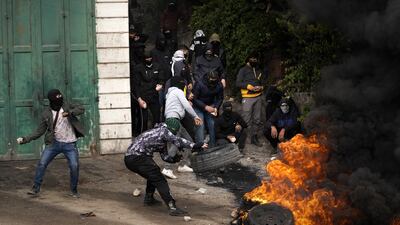
Tyres burn as violence flares between Palestinian protesters and Israeli troops in the occupied West Bank following the funeral of Mufid Khalil in the village of Beit Ummar, near Hebron. AP -
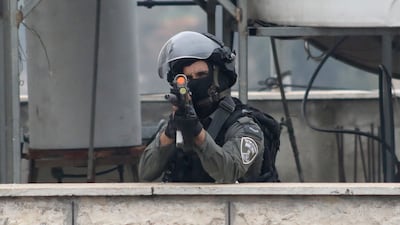
A Israeli soldier in Beit Ummar. Israeli forces shot dead three Palestinians in the occupied West Bank on November 29, Palestinian officials say. AFP -
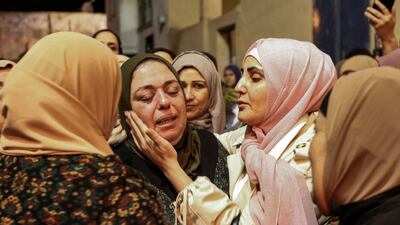
Mourners comfort the mother of Mohammed Badarneh, a 25-year-old Palestinian killed during protests as Israeli forces raided the West Bank town of Yabad on November 30. AFP -

A Palestinian protester throws rocks in Beit Ummar. AFP -
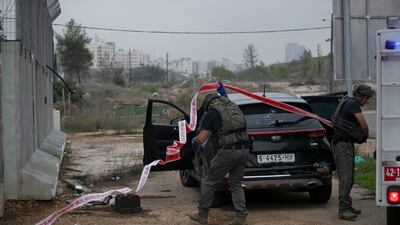
Israeli troops collect evidence after an Israeli soldier was injured in a car-ramming attack near the Israeli settlement of Kochav Yakov in the West Bank. AP -
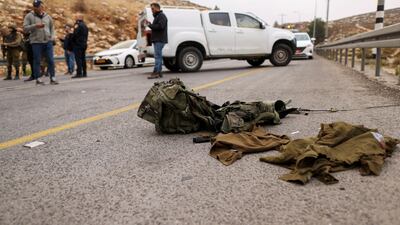
Items belonging to the Israeli soldier at the scene of the attack. Reuters -
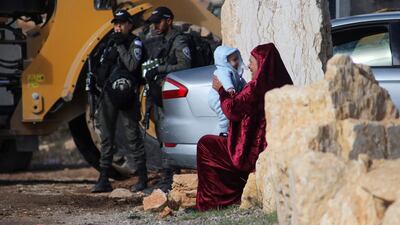
The Israeli army demolishes two Palestinian houses in the Jabal Johar area of the West Bank, near a settlement. AFP -
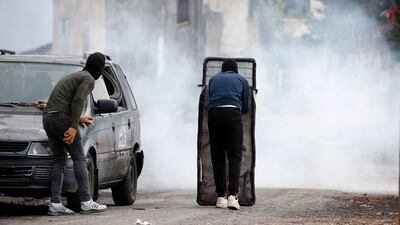
Palestinian protesters take cover after a demonstration against Israeli settlements in the West Bank. EPA -

Palestinians at a house stormed by Israeli soldiers during operation to arrest a suspected gunman in the West Bank city of Jenin. A Palestinian man died of after being injured in the raid, health authorities said. EPA -
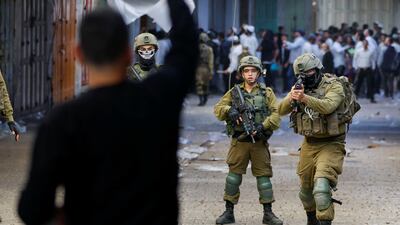
An Israeli soldier aims his rifle at a Palestinian during violence in Hebron. Reuters -
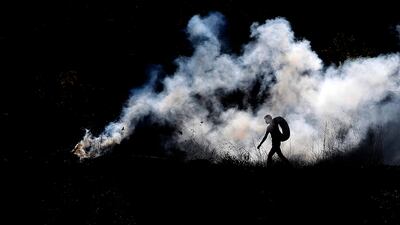
A Palestinian walks through tear gas during violence near the West Bank city of Nablus. EPA


But the partners getting the most attention are newer, far-right ones. While they also advocate ultra-religious policies, they also stood on manifestos that include policies that would have been considered taboo in previous times. Bezalel Smotrich, leader of the Religious Zionist Party, has faced accusations of plotting attacks against Palestinians. Itamar Ben-Gvir, leader of the Jewish Power party, has espoused racist and inflammatory ideas.
With such a dramatic new coalition, every branch of government could be affected. Only time will tell how such a complex development will shape the country going forward. The issues to watch now will be which of these coalition members get senior ministerial positions, therefore giving them a strong basis on which to push hardline policies.
This picture will emerge from the halls of power of Israel. Many liberals, whose parties suffered bad, if not terrible, results in the elections, will be looking on with a sense of powerlessness.
But, as ever, the group most vulnerable and unable to shape the future are Palestinians.
It is not so much because of a lack of political representation. That has always been the case, even during the last coalition in which three Arab parties joined forces to become the first Arab bloc ever to be part of an Israeli government.
This time, it is because of what appears to be a political chapter in Palestine and Israel in which the pursuit of a meaningful peace process seems more distant than ever. The government also comes off the back of a particularly violent year. More than 150 Palestinians and more than 20 Israelis have been killed in the West Bank and Israel in 2022, according to the UN Middle East envoy Tor Wennesland.
This is a tumultuous situation for Mr Netanyahu to manage. Israel is racked by one of the biggest identity crises in its history. While it does finally appear to have a stable government after a phase of political chaos in which five elections were held in three years, uncertainty elsewhere abounds.
Palestinians and Israelis need more than the close of a chaotic political chapter. They need a government that is able to bring the country together, particularly as regional security and economic challenges mount.
Mr Netanyahu is an experienced politician, and, if he wants to wield it, he has the experience and influence to ease the situation, at least to some extent. That might be the case, but there are significant doubts among liberals that he wants to do that and uncertainty reins supreme. There is one certainty, though: Israel's next chapter will be a historic and pivotal one.

