


Yesterday, the office of Sri Lanka’s Prime Minister announced that Gotabaya Rajapaksa, the country’s President, is expected to step down tomorrow.
Mr Rajapaksa’s impending resignation, in response to nationwide protests over Sri Lanka’s biggest economic crisis in more than seven decades, may finally bring the country some respite. Whether it also marks the end of the beginning of a journey to economic recovery will depend on what happens next.
The rest of the world would be wise to pay heed to Sri Lanka’s crisis. Colombo’s plight – drowning in unsustainable levels of foreign debt amid a tough global market – is not unique in the post-Covid-19 developing world.
But Sri Lanka's case is particularly alarming. The country doesn’t have enough foreign currency to import fuel. Soaring inflation and the shortage of basic goods mean that very few of its 22 million citizens can afford to buy food, medicines and cooking gas. Those who can, find themselves trapped in long queues. Power cuts are common, and the healthcare system is on the brink of collapse.
The crisis is the outcome of a number of factors, not least the two decades of unsustainable borrowing on the part of the state to fund large projects that left the government strapped during the pandemic, when it needed cash the most. The tourism industry, which accounts for 12 per cent of GDP, was severely damaged by Covid-19. Other causes include populist policies that the Rajapaksa government implemented over the past two years, including cutting taxes and banning chemical fertilisers as part of its pivot to organic farming.
-
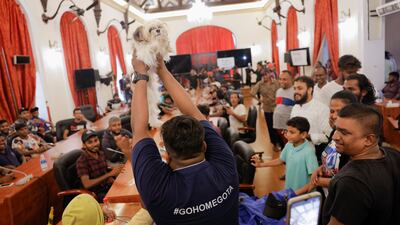
A demonstrator presents Sri Lanka's new 'Wildlife Minister' at President Gotabaya Rajapaksa's Cabinet meeting room in Colombo. Huge crowds had poured into the city to protest in previous days amid months of unrest sparked by the country's economic collapse. Reuters -
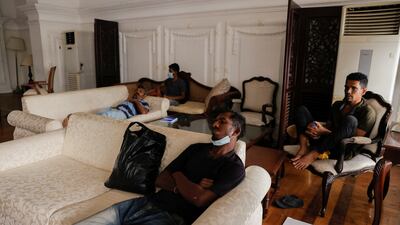
Demonstrators take a break inside Prime Minister Ranil Wickremesinghe's residence in Colombo. Reuters -
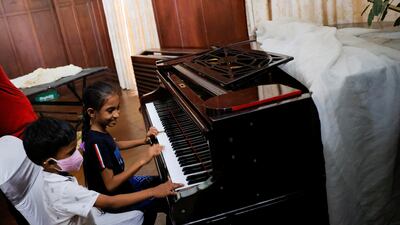
Children play the piano inside the president's house in Colombo. Reuters -
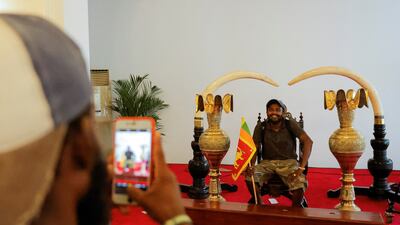
A demonstrator poses for photographs where President Gotabaya Rajapaksa used to hold events. Reuters -
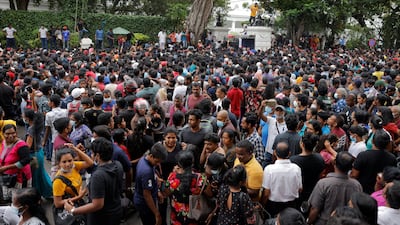
People wait to visit the presidential residence in Colombo after President Gotabaya Rajapaksa fled amid the country's economic turmoil. Reuters -
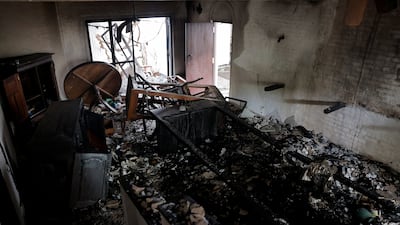
Part of the private residence of Prime Minister Ranil Wickremesinghe was burnt by demonstrators. Reuters -
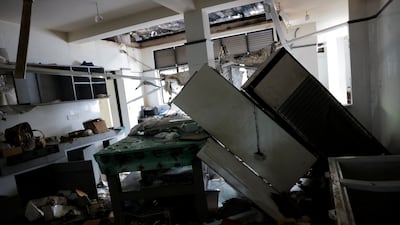
Demonstrators vandalised part of Prime Minister Ranil Wickremesinghe's house in Colombo. Reuters -
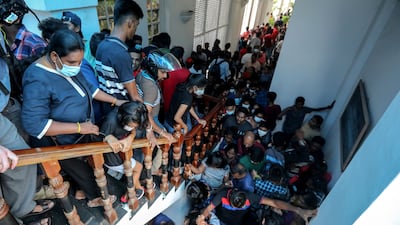
Crowds flock to take a look inside the presidential palace in Colombo. EPA -
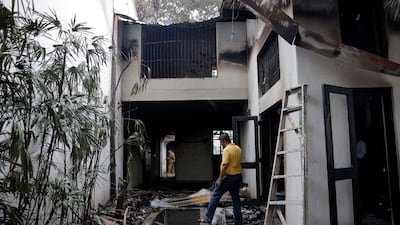
Part of Prime Minister Ranil Wickremesinghe's private residence was burnt by demonstrators. Reuters -
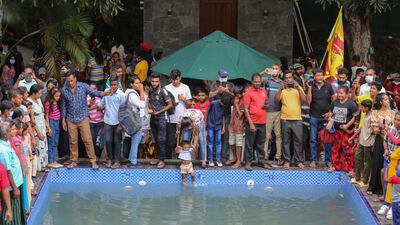
People take a dip in a swimming pool at the presidential palace in Colombo. EPA -
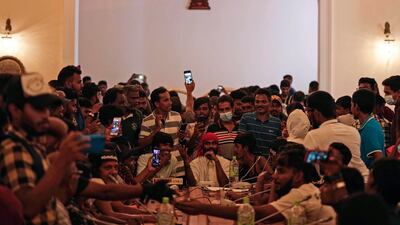
Protesters pretend to hold a Cabinet meeting in the meeting hall of the president's official residence. AP -
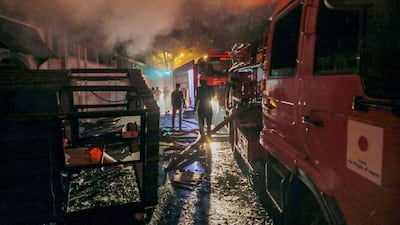
Firefighters try to douse a fire at the residence of Sri Lanka's prime minister during protests in Colombo. AFP -
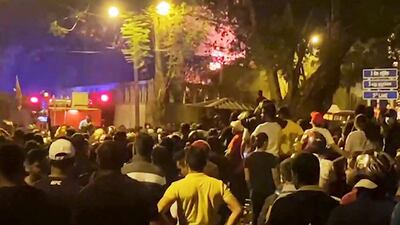
People watch the blaze. AFP -
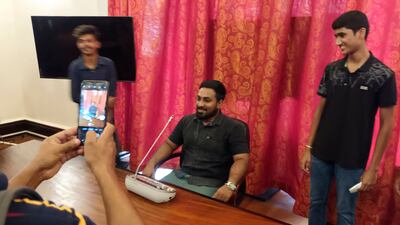
An unidentified man poses for pictures while seated on President Gotabaya Rajapaksa’s chair at the presidential palace in Colombo, a day after it was overrun by anti-government protestors. AFP -

Protesters rest on sofas in the prime minister's residence. AP -
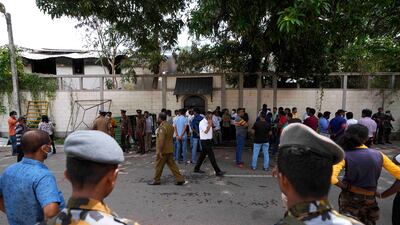
Soldiers and police gather outside the burnt private residence of Prime Minister Ranil Wickremesinghe in Colombo. AP -
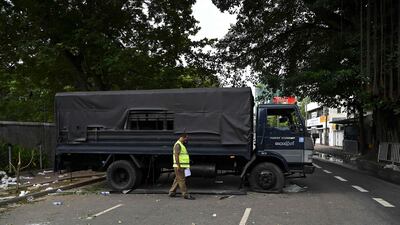
A security officer inspects a police vehicle, a day after it was vandalised by protesters in front of the residence of Sri Lanka's prime minister. AFP -
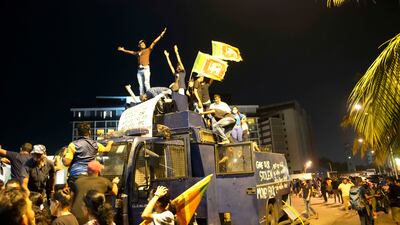
Protesters stand on a vandalised police water cannon at the entrance to the president's official residence. AP -
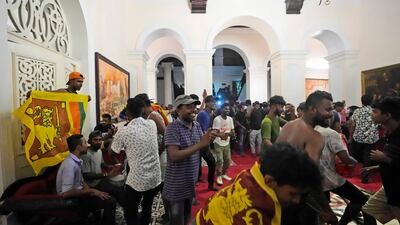
Protesters sing and dance after storming the Sri Lankan president's official residence. AP -
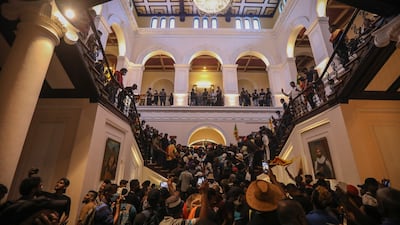
Protesters crowd inside the president's official residence. EPA -
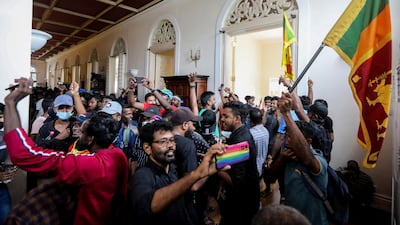
Protesters cheer inside the president's official residence. EPA -
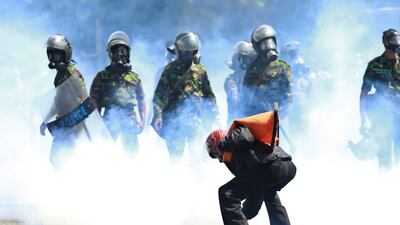
A man picks up a tear-gas canister to throw it away as police try to disperse protesters in Colombo. AP -
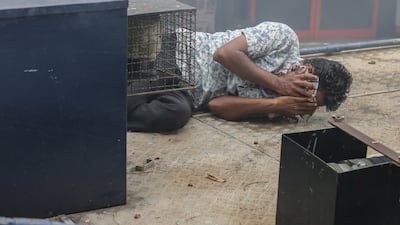
An injured protester during an anti-government demonstration in Colombo. EPA -
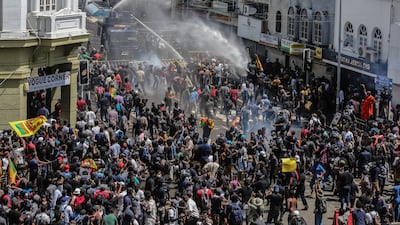
The security forces fire tear gas and use water cannon to disperse an anti-government protest. EPA -
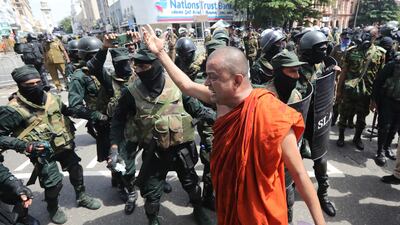
A protester walks in front of police during an anti-government protest, calling for the resignation of the president over his alleged failure to address Sri Lanka's economic crisis. EPA -
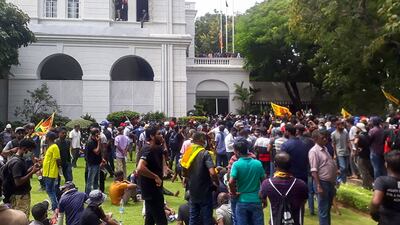
Protesters gather inside the compound of Sri Lanka's Presidential Palace in Colombo. AFP -

Protesters are demanding that President Gotabaya Rajapaksa resigns. AP Photo -
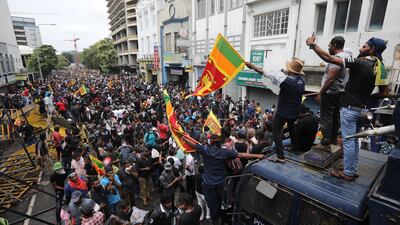
Hundreds of people attended the rally. EPA -
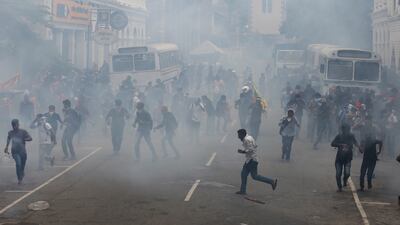
Security forces fire tear gas to disperse an anti government protest rally. EPA -
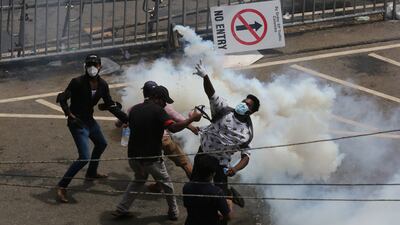
Protesters throw back tear gas canisters fired by security forces. EPA


Mr Rajapaksa’s economic team has approved several measures to mitigate the crisis, including a new corporate tax and declaring Fridays as holidays for non-essential public sector employees. The government has also reached out its neighbours in South Asia. Beyond receiving $4 billion worth of foreign assistance from India, it has requested from New Delhi a $500 million credit line to import fuel, fertilisers and rice. Colombo is also in talks with the International Monetary Fund for a bailout.
These are short-term remedies, however, and it has become painfully clear that the public considers the Rajapaksa government to be part of the problem and not the solution. The President’s eventual resignation, and the formation of a unity government, will be an essential first step towards assuaging angry protesters and restoring the rule of law. Early elections will also be key so that a government with a strong mandate is ushered in as quickly as possible.
Sri Lanka’s solution to its debt problem will, and should be, specific to its particular needs. Its crisis has already galvanised ordinary Sri Lankans and rallied together people of all ethnic, religious and cultural groups, creating a rare moment for a country whose history was blighted by decades-long ethnic strife that led to civil war and the eventual rise of majoritarian rule. Economic rejuvenation would be impossible without stitching together Sri Lanka’s complex social fabric that has been damaged for far too long.
But this week’s events in Colombo may be simply the first of a series of debt-fuelled reckonings to come in emerging economies, if the international community is not cognisant of the scale of the problem. In March, the IMF warned that 23 African countries are now either in debt distress or at a high risk of it. In some of these countries, as well as others, facing a similar problem, debt-funded spending was done too unwisely or inefficiently – failing to bring about the economic growth or tax revenues required to pay it back. The pandemic made things difficult, but the root of the problem is the same as it has always been for a number of countries: a lack of accountability for state finances and irresponsible lending practices from the international community.
In Sri Lanka, protesters’ demands for the government to reform are finally being taken seriously. For others, the time to shape up is now.

