


Around the world, governments are having to take swift, large-scale action to help people deal with economic crises bearing down from a number of quarters.
The situation in the Gulf is little different, although perhaps not quite as critical for now. This is in part because authorities have been quick to identify support that is needed, and generous with the resources they offer.
The UAE has always looked after all of its citizens, particularly when it comes to the crucial fields of education, housing and healthcare. Nonetheless, President Sheikh Mohamed has announced a doubling of social support funding, raised to Dh28 billion ($7.6bn) for eligible Emiratis with low income. It will cover essential areas such as housing, food and fuel. It also includes other subsidies, such as a 50 per cent one on electricity and water, on consumption of more than 4,000 kilowatts and less than 26,000 gallons respectively. There are support payments for specific members of a family and the unemployed, too.
Fujairah resident Mohammed Ahmed, 41, who earns Dh6,000 a month, described it as a “wonderful decision that will benefit us all”. The UAE is also working at supporting those less fortunate elsewhere, most recently sending aid to Afghanistan and setting up a field hospital with 75 beds and two operating rooms to help those injured in last month’s earthquake.
-
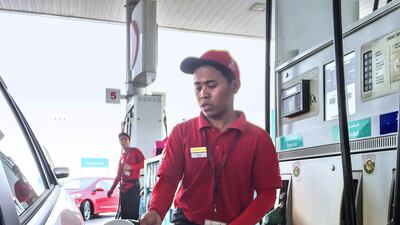
Motorists across the Emirates have been paying significantly more in recent months, with a 10 per cent rise in March, 16 per cent in April and 13 per cent in June. Antonie Robertson / The National -
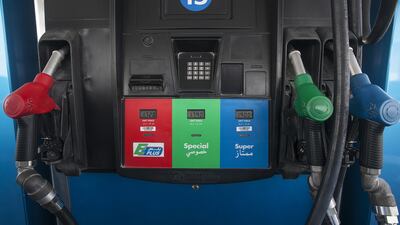
This is what drivers can expect to pay when filling their tanks – Super 98: Dh4.63; Special 95: Dh4.52; Diesel: Dh4.76 and E-plus 91: Dh4.44. Mona Al Marzooqi / The National -
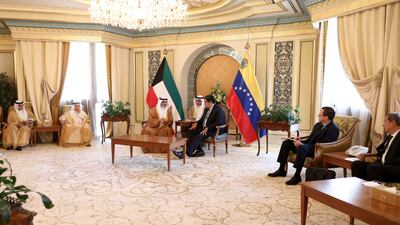
A meeting of Opec ministers in Kuwait City on June 14. On June 2, the oil producers said they would boost a planned production increase by 50 per cent, after US lobbying to ease price pressure. Reuters -
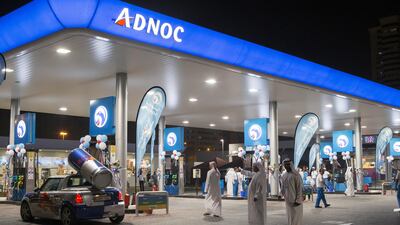
Petrol prices in the UAE will increase in July as global oil prices remain at more than $100 a barrel. Antonie Robertson / The National -
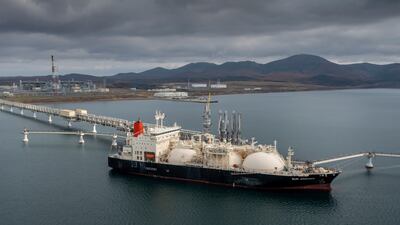
A Russian oil tanker in the port of Prigorodnoye. Oil prices jumped after Moscow invaded Ukraine. In May, EU leaders decided to ban 90 per cent of Russian crude by the end of the year, fuelling worries of a tighter market. AP -
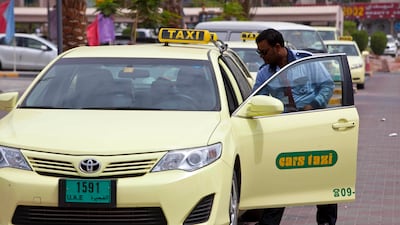
Sharjah is to set taxi fares each month based on the latest fuel prices in the country. The revised charges for July will be issued next week. Antonie Robertson / The National -
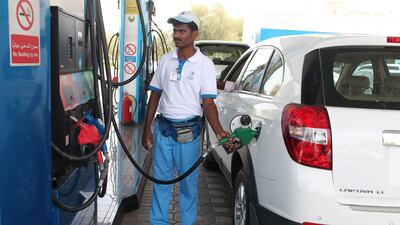
The prices announced by the UAE Fuel Price Committee in June were the highest since they were liberalised in 2015 to allow them to move in line with the market. Sammy Dallal / The National -
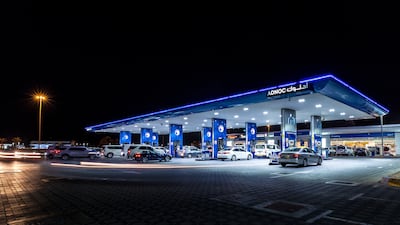
In 2020, prices were frozen by the Fuel Price Committee at the beginning of the coronavirus pandemic. The controls were removed in March 2021 to reflect the market flow. Photo: Adnoc


Meanwhile, the Saudi government is spending 20bn riyals ($5.33bn) to protect its citizens from rising inflation. Half the money will go to people on social security, the other on stockpiling key goods to prevent disruption to supplies.
The Kingdom is also lending its support elsewhere. Yemen, its neighbour, is one of the poorest countries in the region, already burdened with the effects of years of war. As prices rise globally, the economy is being pushed ever closer to the brink. Last week, Riyadh revealed that it would send a $600bn aid package to the country. Most of that is going towards development projects in six sectors, including energy, health and education. A remaining $200 million will go to providing fuel for power plants.
These measures across the region, while costly, are an appropriate welfare measure. A key difficulty with today’s crisis is untangling its many parts, which will take time. Headlines around the world paint a bleak picture, particularly in Europe. The euro has sunk to a 20-year low against the US dollar. A global shortage of materials has led to the UK automotive industry suffering its worst June for new car sales since 1996. Scandinavian airline SAS has filed for bankruptcy, blaming it in part on strike action by pilots. Across the continent, a number of airlines are facing similar industrial action.
Globally, investors are coming to terms with a historically bad start to 2022. Last week it was announced that $13 trillion has been wiped from global markets, the worst start to a year on record.
Gulf economies are global, and will inevitably experience secondary effects from such trends. Robust budgets and higher revenues from oil are helping, but high costs can also present challenges. The International Energy Agency has, for example, lowered its three-year growth forecast for gas demand, an important energy commodity for the region.
On Monday, The National reported that non-oil private sector business activity in the UAE and Saudi Arabia continued to improve in June. The IMF expects economic growth of 4.5 per cent in Oman this year, a result of effective fiscal reforms and high oil prices. Qatar’s economy has grown by 2.5 per cent in the first quarter of 2022.
Economic hardship is inevitable this year, but the effective response of governments around the world is not. So far, it appears GCC economies have heeded early warnings in coming to the aid of their citizens.

