


The Gulf's climate is on the whole a major asset. In 2019, inbound tourism spending in the GCC stood at more than $81 billion. Reliable sun is a key pull factor. It pays in other regards, too. According to a 2019 report by the International Renewable Energy Agency, solar energy represents 91 per cent of the potential renewable power generation currently being pursued in the ambitious green strategies of GCC countries.
But when the weather is not favourable, it can have serious consequences.
That is happening this week, as a massive dust and sand storm descends on the region, bringing extraordinarily high levels of dust and pollutants, particularly in Kuwait, Saudi Arabia and Iraq. People are being recommended to stay indoors, especially babies and at-risk groups, and to avoid physical exercise. Transport has also been affected. In the early afternoon of Tuesday, visibility at Qatar's main airport was less than a kilometre. Countries where there are strong north-westerly winds, such as Saudi Arabia, Kuwait and Iraq, tend to fare the worst of all when storms hit.
-
A picture taken from Muharraq Island shows a sandstorm engulfing the skyline of Bahrain's capital Manama. The Middle East's sandstorms are becoming more frequent and intense, a trend associated with overgrazing and deforestation, overuse of river water and more dams. AFP -
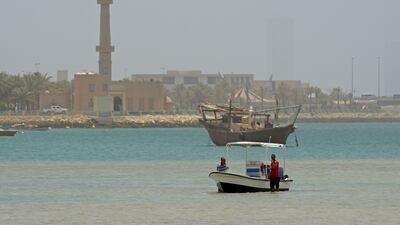
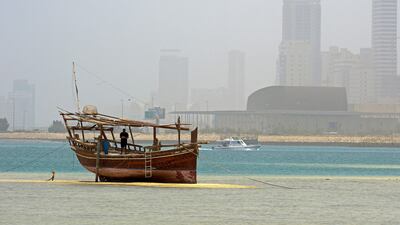
Massive dust and sand storms have descended on the Gulf this week, bringing extraordinarily high levels of dust and pollutants, particularly in Kuwait, Saudi Arabia and Iraq. Bahrain's capital Manama (pictured) has been similarly affected. AFP -
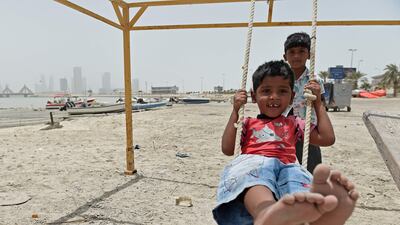
Children play outside during a sandstorm on Muharraq Island, north of the Bahraini capital Manama. People in the Mena region are being advised to stay indoors, especially babies and at-risk groups, and to avoid physical exercise. AFP -
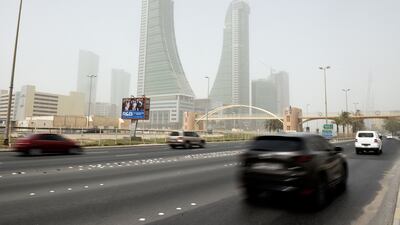
Cars on a highway in the Bahrain Financial Harbour area during a dust storm in the capital Manama. People in the Gulf are accustomed to frequent sand and dust storms and have attached the Arabic word “Shamal”, which means northern, to the phenomenon owing to the direction of the winds. AFP -
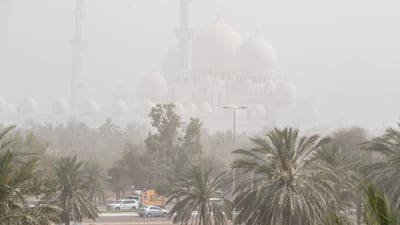
Sheikh Zayed Grand Mosque is obscured by a haze of sand and dust in Abu Dhabi. Winds have reached 40 kilometres an hour in the capital. Victor Besa / The National -
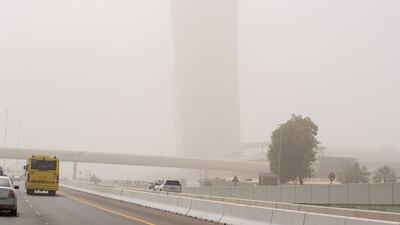
The Abu Dhabi National Exhibition Centre is almost hidden by dust. Visibility was down to a few hundred metres in the city. Victor Besa / The National -
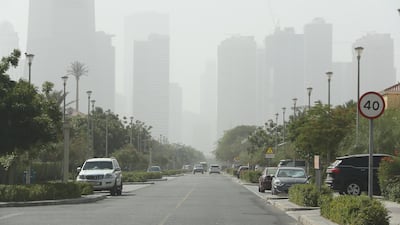
Jumeirah Lakes Towers in a hazy Dubai. Pawan Singh / The National -
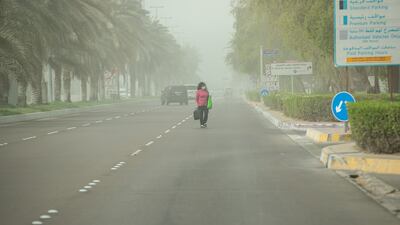
Strong winds stir up dust and sand in Abu Dhabi. Victor Besa / The National -
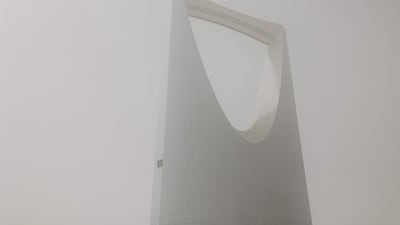
The Kingdom Centre skyscraper in Riyadh during a dust storm. AFP -
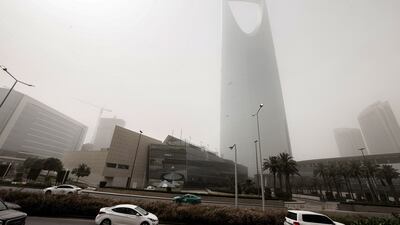
The 302-metre building is almost obscured by dust. AFP -
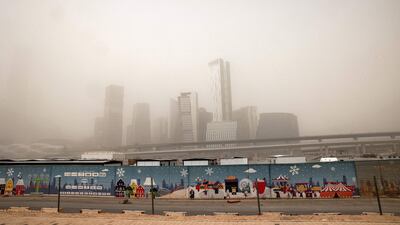
Saudi Arabia's National Centre for Meteorology issued alerts for large parts of the kingdom, including Riyadh and the Eastern Province. AFP -
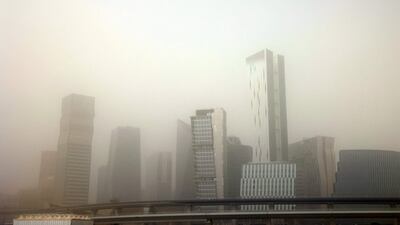
A haze of dust covers Riyadh's skyline. AFP -

Dust storms created hazardous conditions for drivers in Kuwait City, where winds reached 50kph. EPA -

A man waits to cross a road in Kuwait City as orange-red dust blows in the air. AFP -
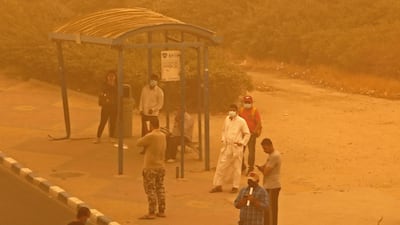
Kuwait's Ministry of Interior urged the public to exercise caution as dust severely reduced visibility. AFP -
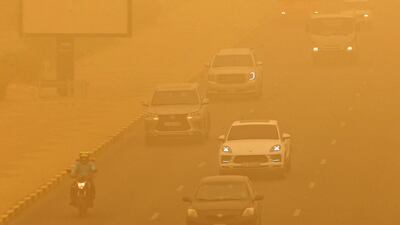
Schools in Kuwait were closed owing to the weather. AFP -
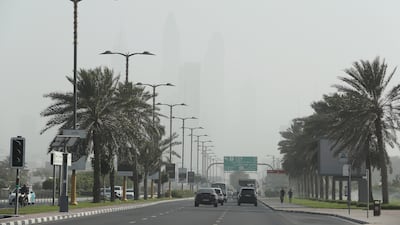
Towers in Dubai Marina are hard to see through the dust. Pawan Singh / The National -
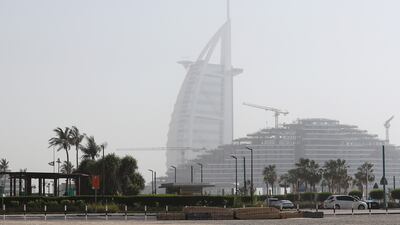
Dubai's Burj Al Arab hotel in the haze. Pawan Singh / The National -
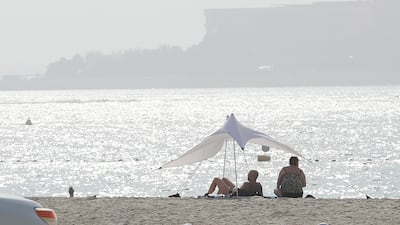
Beachgoers view a hazy skyline at Palm Jumeirah in Dubai. The conditions appear to be the tail of a storm that covered Iraq. Pawan Singh / The National -
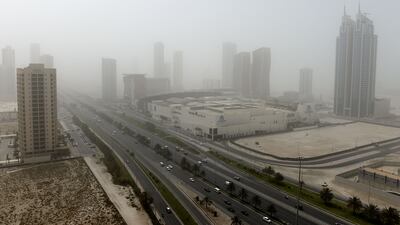
Cars drive on a highway in the Seef district during a dust storm in Bahrain's capital Manama. AFP -
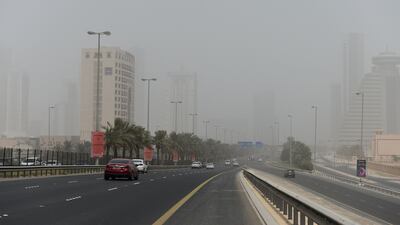
Cars drive on the main highway during a dust storm in the Bahraini capital Manama. AFP -
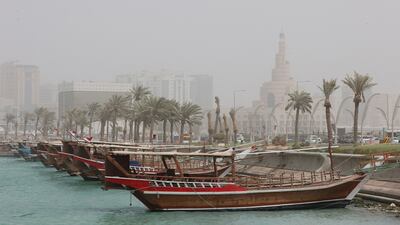
Haze obscures the dhow harbour in Doha, Qatar, during a heavy dust storm. AFP -
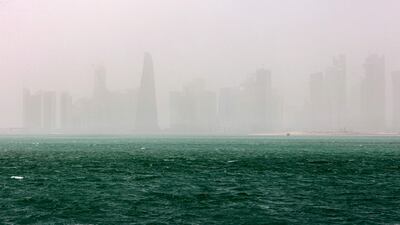
Haze obscures Doha's skyline. AFP -
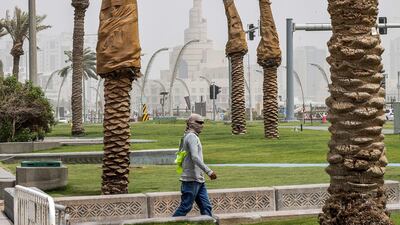
A man covers his face with a scarf in Doha during a heavy dust storm. AFP -
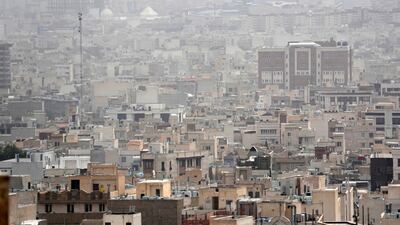
A sandstorm covers Tehran, Iran. Schools and government offices closed in the Iranian capital and elsewhere in the country. AP Photo -
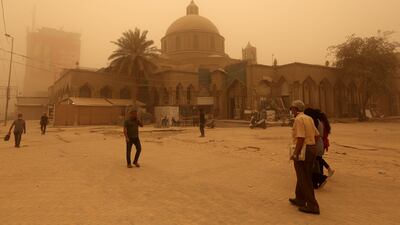
Iraqis walk along a street at the Shorja market shrouded in heavy dust in central Baghdad. EPA -

People with breathing problems are treated at a hospital during a sandstorm in Baghdad. AP Photo -

People travel along a street during a sandstorm in Baghdad. AP Photo -
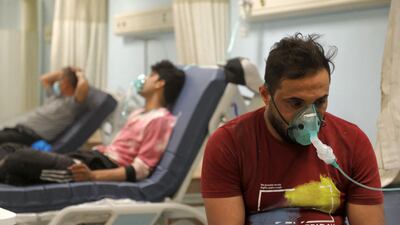
A patient suffering from breathing problems at a hospital in the city of Nasiriyah in Iraq's southern Dhi Qar province. AFP -

People walk on a street in Baghdad during a sandstorm. AP -
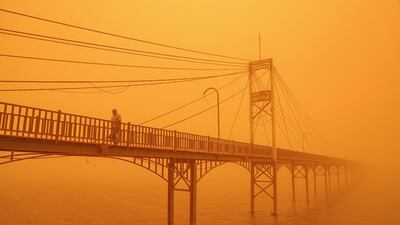
A man walks along the Euphrates river in Nasiriyah in Iraq's southern Dhi Qar province during a heavy dust storm. AFP -

The dust has affected visibility at Abu Dhabi's Corniche. Khushnum Bhandari / The National -
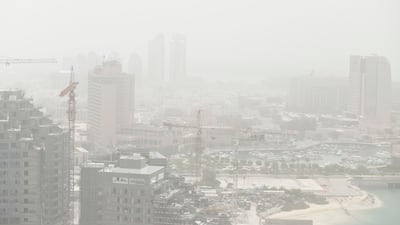
Abu Dhabi city is difficult to see through the dust. Khushnum Bhandari / The National -
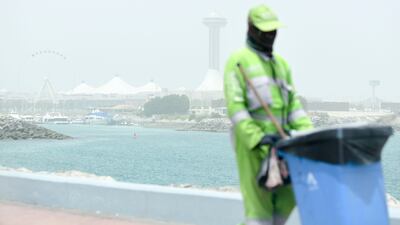
The Marina Mall area in Abu Dhabi is obscured by the dust. Khushnum Bhandari / The National -

Adnoc headquarters in the capital amid the dust storm. Khushnum Bhandari / The National -
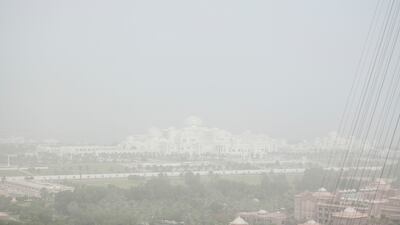
Qasr Al Watan is obscured by a haze of sand and dust in Abu Dhabi. Khushnum Bhandari / The National -
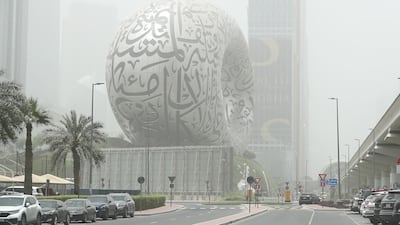
Museum of the Future during the dust storm in Dubai. Pawan Singh / The National -
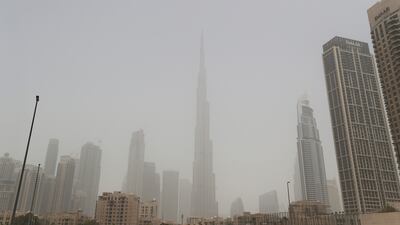
Burj Khalifa obscured by the dusty and hazy weather in Dubai. Pawan Singh / The National -

Abras on Dubai creek during the dusty weather. Pawan Singh / The National


But they do not only affect the Gulf. At the beginning of the year, areas of India and Pakistan saw similar conditions. The results are even worse where poverty is high. A report published in the journal The Lancet Planetary Health found that 9 million people died as a result of pollution in 2019, much of it from the air. Deaths were disproportionately likely in poorer areas.
A particular concern for that region is the effect on agriculture, especially cotton, of which India supplies 26 per cent of the global stock. Even the richest farmers cannot escape such catastrophes. Some experts say that the 2001 foot and mouth disease outbreak in the UK, which resulted in the culling of 6 million sheep and cattle, was caused by a large storm in North Africa spreading spores.
Unfortunately, these storms are a natural part of life. For years the Gulf region has been living through them, particularly in the summer months. They have been described for centuries, frequently an evocative trope in some of the Arab world's most famous poems. Arthur John Arberry's translation of pre-Islamic poet Imru Al Qais's Muallaqa reads: "Friend, do you see yonder lightning? Look, there goes its glitter flashing like two hands now in the heaped-up, crowned storm cloud."
Living through these storms in a tent hundreds of years ago would have been a more evocative, far more dangerous affair than today, when strong buildings, air filtration and scientific understanding offers some protection. But it would also have been less common. A report published in 2017 found that the number of storms in the region is expected to increase due to the effects of climate change, a visible reminder of the pressing need to embrace the green transition.
Most importantly, on a personal level, it is time for more efforts to tackle deforestation in a number of countries and find long term solutions to the effects of climate change.

