


In 2009, US tech giant Apple brought in almost $43 billion in revenue. In the first quarter of that year, the iPod, a portable music-listening device, made up 30 per cent of the income. After the iMac, it was yet another sign of Apple's ability to create products that obsessed the world.
But the iPod was more than just a cash cow. It changed the way millions of listeners interacted with music.
Key to the company's success is its ongoing ability to create products that consumers can personalise. For music, the iPod did this to a revolutionary degree. High-end laptops and desktops, the beginning of Apple, were and still are great. But a portable jukebox, with far more songs on offer, was nothing short of a milestone for both tech and music, and one which massively empowered the customer.
Now, in a sign of the mercilessness of both industries, the company has announced that it will be discontinuing the product after more than two decades of production. Commercially it is an understandable decision. The value of the previous titan had been diminishing over time, and now it will only command premium prices as memorabilia, although with so many around that might take some time; the company produced a total of 450 million. In a final irony, it was the excellence of newer Apple products such as the iPhone that played a large role in making the iPod, a separate, expensive device, redundant.
-
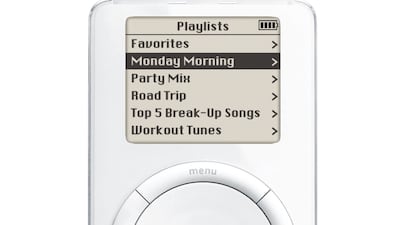
The Apple iPod 1st generation was released October 23, 2001. It cost $399, and had 5GB storage holding 1,000 songs. Photo: Apple -
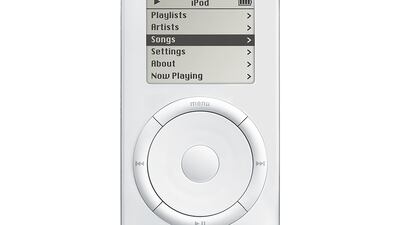
The Apple iPod 2nd generation was released July 17, 2002. It came with 10GB of storage for $399 and later a 20GB version was released for $499. Photo: Apple -
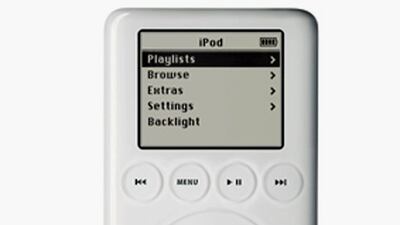
The Apple iPod 3rd generation was released April 28, 2003 and started making use of the iTunes store. It was the first to have an all-touch wheel to scroll. Prices ranged from $299 to $499 depending on storage size. Photo: Apple -
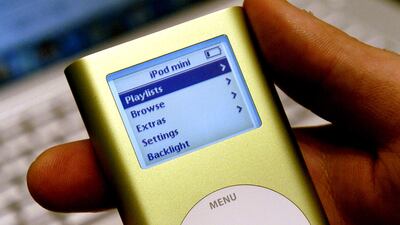
The Apple iPod mini 1st generation was released January 6, 2004. This was the first time the click wheel was used and the pod came in five different colours - blue, pink, silver, green, and gold. It sold for $249. Photo: Getty Images -
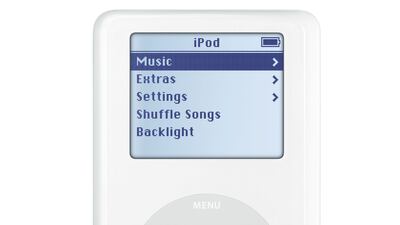
The Apple iPod 4th generation was released July 19, 2004. The function buttons were moved on to the wheel. A 20 GB model sold for $299, while a 40 GB model was available for $399. Photo: Apple -
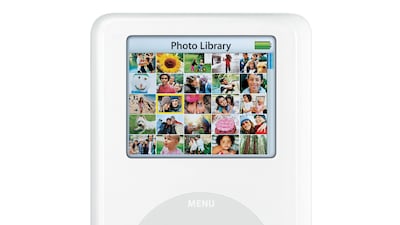
The Apple iPod 4th generation with a colour screen was released October 26, 2004. Album covers could be seen for the first time and the shuffle function was introduced. Photo: Apple -
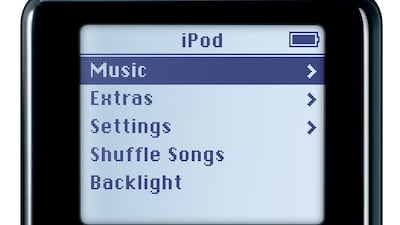
The Apple iPod U2 Edition was released at the same time as the 4th generation. It held up to 5,000 songs and featured a black enclosure with a red click wheel and custom engraving of U2 band member signatures. It retailed at $349. Photo: Apple -
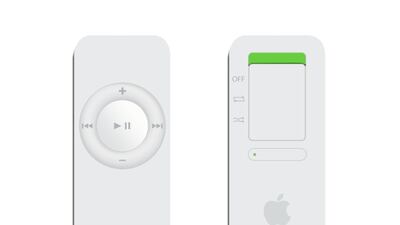
The Apple iPod shuffle 1st generation was released January 11, 2005. A first entry to the low-end market, it had no screen and just buttons to play / pause, next song or previous. The 512MB model sold for $99, while the 1GB model sold for $149. Photo: Apple -
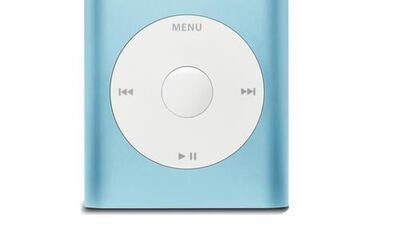
The Apple iPod mini 2nd generation was released February 22, 2005. It had just minor changes from the first generation mini, and the 4GB version sold for $199, while the 6GB model sold for $249. Photo: Getty Images -
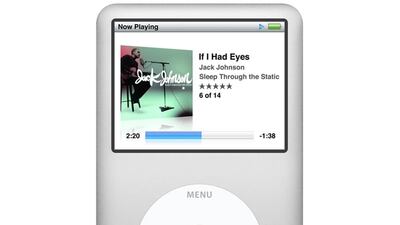
The Apple iPod 6th generation was released September 5, 2007. It came in a 160GB model for $349. Photo: Apple -
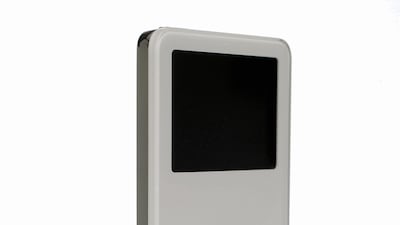
The Apple Nano iPod 1st generation was released September 7, 2005. This was a super thin iPod at just 0.27in thick. It used flash memory for storage, and sold at $199 and $249 for 4BG and 6GB respectively. Photo: Getty Images -
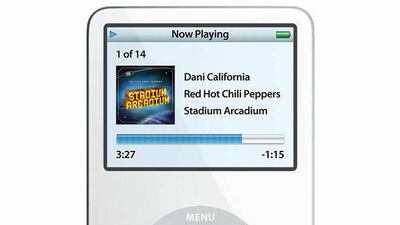
The Apple iPod 5th generation was released October 12, 2005. This had a larger screen, smaller wheel and played video. In 2005, Apple also released the iPod nano and iPod shuffle. Photo: Apple -
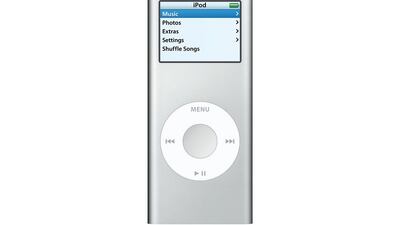
The Apple Nano iPod 2nd generation was released September 12, 2006. More colour options were added, plus an 8GB version for $249. Photo: Apple -

The Apple iPod shuffle 2nd generation was released September 12, 2006. A small, clip-on size was introduced in a variety of colours. A dock replaced the integrated USB connector. With 1GB is was $79. Photo: Apple -
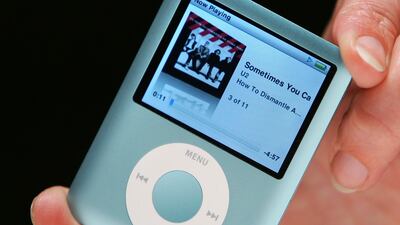
The Apple iPod Nano 3rd generation was released September 5, 2007. A big change in shape to allow video display. The 4GB model was $149, while the 8GB model was $199. Photo: Getty Images -

The Apple iPod Touch 1st generation was released September 5, 2007. It was basically the iPhone without the camera and phone capabilities. An 8GB model sold for $299, and a 16 GB model sold for $399. Photo: Apple -
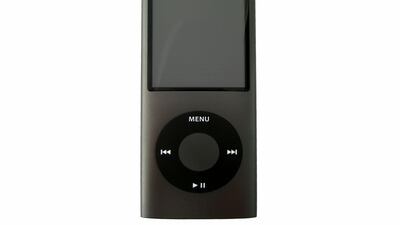
The Apple Nano iPod 4th generation was released September 9, 2008. It was a return to the rectangular shape, while the "Genius" playlist option was introduced. It had bigger capacity, came in nine colours and was $149 and $199 for 8GB and 16GB respectively. Photo: Getty Images -
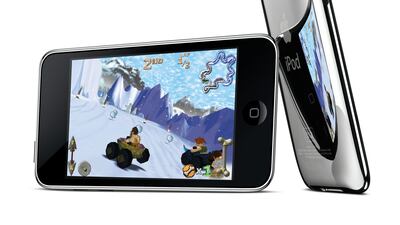
The Apple iPod Touch 2nd generation was released September 9, 2008. It featured the new iPhone 2.0 OS and a curved back. An 8GB model was $229, a 16GB model was $299, and a 32GB model was $399. Photo: Apple -
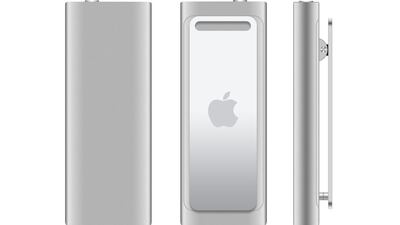
The Apple iPod shuffle 3rd generation was released March 11, 2009. A shape change saw it go back to rectangular. It included Apple's new VoiceOver feature, with song title, artist, and playlist title spoken aloud. Photo: Apple -
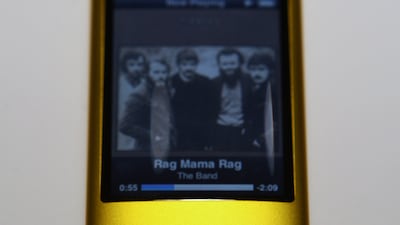
The Apple iPod Nano 5th generation was released September 9, 2009. An integrated video camera, FM radio and pedometer were added. 8GB and 16 GB cost $149 and $179 respectively. Photo: Getty Images -
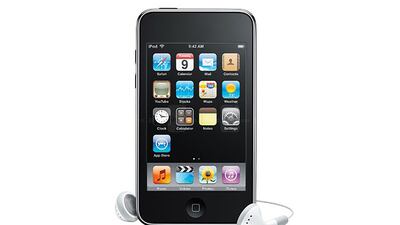
The Apple iPod Touch 3rd generation was released September 9, 2009. Faster and with greater capacity, it came in 32GB and 64GB for $299 and $399 respectively. Photo: Apple -
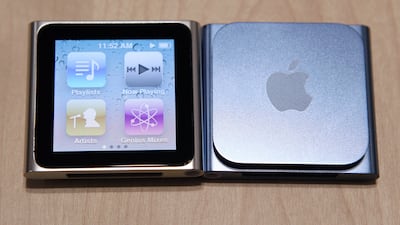
The Apple iPod Nano 6th generation was released September 1, 2010. It was goodbye click wheel and hello touch screen. The camera was removed, while it was sold in seven colors, in capacities of 8 and 16 GB, for $149 and $179, respectively. Photo: Getty Images -

The Apple iPod shuffle 4th generation was released September 1, 2010. It shrunk in size again and was sold with 2GB of storage for $49, in five colours. Photo: Apple -

The Apple iPod Touch 4th generation was released September 1, 2010. It brought in iPhone 4 enhancements such as retina display, front and rear cameras. 8GB was $229, 32GB was $299 and 64GB $399. Photo: Apple -
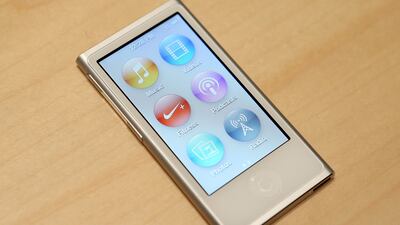
The Apple iPod Nano 7th generation was released September 12, 2012. Another change in shape - back to tall and thin. It sold in eight colours, with 16GB of storage for $149. Photo: Getty Images -
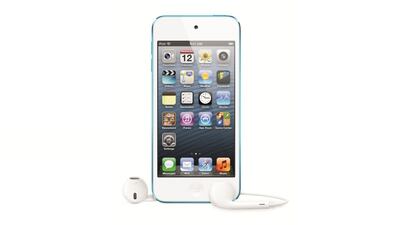
The Apple iPod Touch 5th generation was released September 12, 2012. A bigger 4in screen was added, plus Bluetooth 4.0 and the lightning connector. 32GB was $299 and 64GB $399. Photo: Apple -
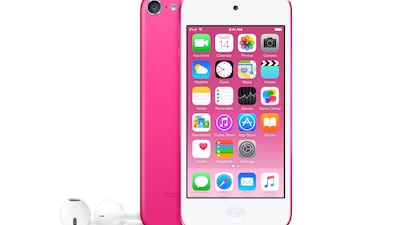
The Apple iPod Touch 6th generation was released July 15, 2015. The A8 processor found in the iPhone 6 was brought in, plus better cameras. 16 GB was sold for $199, 32 GB for $249, 64GB for $299 and 128GB for $399. Photo: Apple -
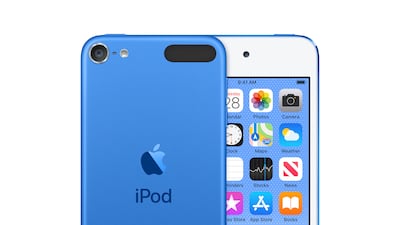
The Apple iPod Touch 7th generation was released May 28, 2019. The quad-core A10 chip from the iPhone 7 was used, and Apple said it had a 40-hour battery life for music. It coincided with the launch of Apple Arcade games. 32, 128, and 256GB cost $199, $299 and $399 respectively. Photo: Apple


But as the years go on, iPod nostalgia will run deeper than the object itself. It formed something of a bridge between the days of CDs, when consumers parted with a lot more cash to get a physical product, and streaming, a development that is great for listeners, largely for the same reasons that it could be bad for musicians.
In recent years there have been a number of high-profile boycotts of such services, most notably Spotify, including a three-year one that ended in 2017 by Taylor Swift – she was one of their most popular musicians – over artist royalties. Nor did Apple escape her ire. In 2015, she prompted Apple Music to change its payment policy with an open letter saying she would withhold an album from the platform.
The predecessor of that service was iTunes, which, going hand in hand with the iPod, met its end in 2019. The service kick-started much of the debate around the danger of tech to artist incomes, especially given its vast market presence at the time. But however valid these criticisms might have been then, the situation is far more radical today. On iTunes, $9.99 would typically have bought you an album. On Spotify, the same amount gets you access for an entire month. In the days of iTunes, if you wanted to listen to a single song, you paid for it. On Spotify in 2021, 226 million non-premium listeners of the 406m total subscribers did not pay any fee at all.
With those numbers in mind, news of the iPod's demise might be sad and nostalgic, but it is not surprising.

