


Mursal Hedayat knows all too well the prolonged trauma of being a refugee. For her and her mother, the journey to safety from Afghanistan did not end when they were granted asylum in the UK. Her mother, a qualified civil engineer, never practiced again and had to rebuild a career from nothing.
This is a burden carried by more than 26 million refugees today. That number is about to climb sharply, as the conflict in Ukraine creates what is expected to be the biggest refugee crisis in Europe since the Second World War. The EU believes the total number of Ukrainians fleeing westwards could rise to 7 million people.
The remarkable generosity shown by Ukraine's neighbours is one of the only positive stories to emerge from the conflict. Moldova, one of the poorest countries in Europe, has taken in the most per capita. Poland, which hosts more than 2 million Ukrainian refugees, has taken the largest number, a surprise to some in western parts of the EU who for years have been decrying what they view as a growing culture of intolerance in the country's politics. Warsaw is already buckling under the strain, however, and its mayor, Rafal Trzaskowski, is pleading for help. Similar calls are coming from Poland's neighbours.
-
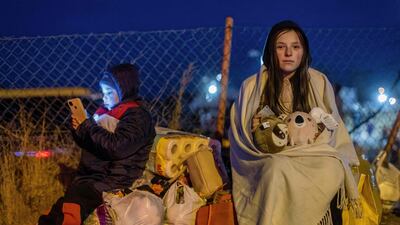
Helena, right, and her brother Bodia, from Lviv, wait at the Medyka border crossing in eastern Poland. AFP -
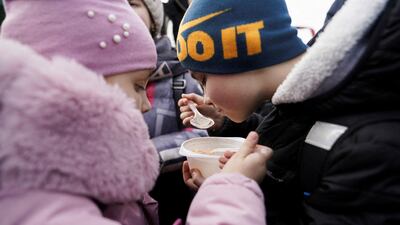
A brother and sister share a bowl of soup after they and their mother fled the Russian invasion of Ukraine and crossed the border at Medyka, Poland. Reuters -
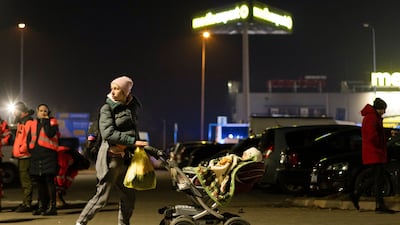
Nadia, a Ukrainian woman, walks around with her baby in a car park in Przemysl, Poland as she waits for help with transport and accommodation. Reuters -

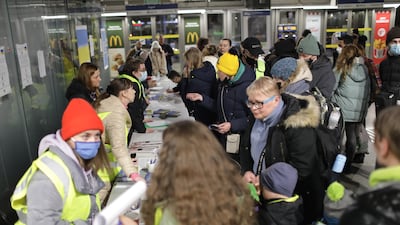
A woman searches through donated clothes for useful items after she and her children fled the Russian invasion in Ukraine and crossed the border in Medyka, Poland. Reuters -
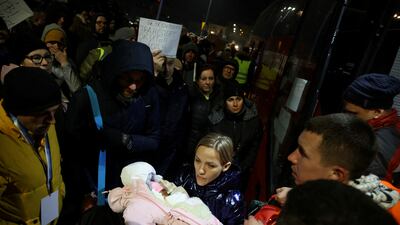
Oksana, 30, holds a seven-day-old child after arriving by bus at a rendezvous point organised to help Ukrainian refugees with accommodation and transport to different cities in Poland. Reuters -
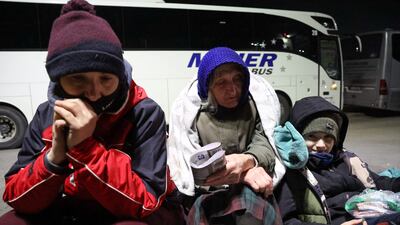
Refugees wait for help in Przemysl, Poland. Reuters -

People wait in a Polish car park to help refugees arriving from Ukraine. Reuters -
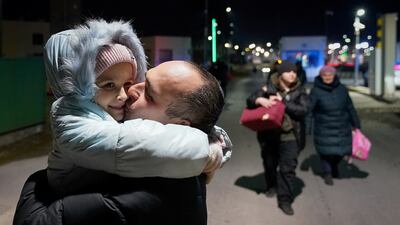
A father kisses his daughter after she, her mother and grandmother fled from the Russian invasion in Ukraine and crossed the border in Medyka, Poland. Reuters -
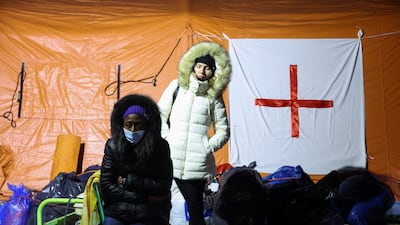
Refugees wait for help in Przemysl, Poland. Reuters -
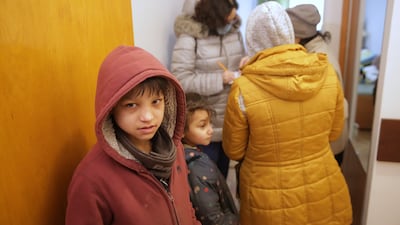
Ukrainian refugees in the town of Maroz near Olsztyn, Poland. EPA -

A Ukrainian refugee in the town of Maroz, Poland. EPA -

Ukrainian refugees in the town of Maroz, northern Poland. EPA -

Hospital employees and volunteers make hundreds of beds to prepare for an influx of Ukrainian refugees in Rzeszow, Poland. AP -
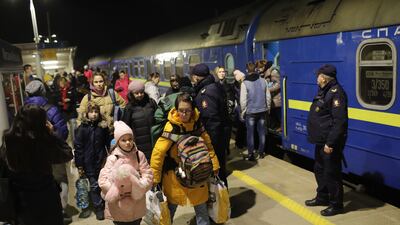
Ukrainian refugees who arrived by evening train from Kiev to Warsaw are helped at the Warszawa Wschodnia railway station in the Polish capital. EPA -
Ukrainian refugees arrive by train from Kiev at the Warszawa Wschodnia station in Warsaw. EPA -
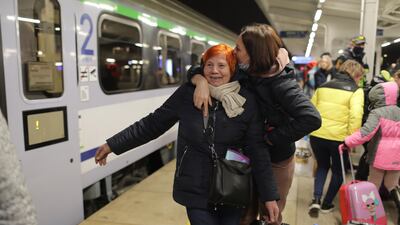
Ukrainian refugees arrive by train from Kiev to Warsaw, Poland. EPA -
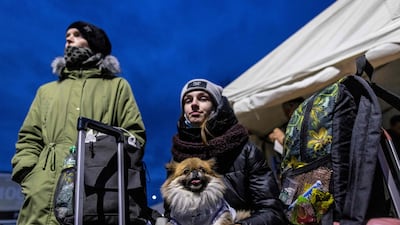
Ukrainian refugees arrive from the Medyka border crossing in eastern Poland. AFP -

A man hugs a child at the Polish-Ukrainian border crossing in Medyka, Poland. Getty


Aid must continue to flow to the areas currently serving as processing centres, but European countries also need to start asking themselves complex, longer-term questions about the next phase of integrating traumatised millions. For Ukrainians, whose lives changed overnight, keeping professional and personal continuity is key to mitigating mass psychological injury. Unfortunately, many countries have a record of failing in this regard. Almost 12,000 Afghan refugees are still waiting to leave temporary accommodation in the UK, arrangements that make it very difficult to find jobs and the stability needed to recover.
Fortunately, where government initiative might be lacking, private companies can help. Last week, The National wrote about Chatterbox, Ms Hedayat's start-up that uses AI to train and employ refugees as language teachers. It has just raised almost $2mn in pre-seed investment. Other companies are stepping up. The National also reported on major British retailers, such as retailer Marks & Spencer and Asos, offering jobs to Ukrainian refugees as they arrive in the UK.
It is important to note that these gestures are not charity. By taking the initiative, companies are getting much-needed employees, who are often highly qualified. Refugees are finding more than an income, but a degree of autonomy, key to overcoming the limbo and idleness that risks prolonging trauma.
It is also incumbent on hosts and employers, private or public, to understand the complexity of the commitment they are taking on. The charity Refugee Trauma Initiative encourages hosts to learn about "trauma-informed care", the recognition that there is no one-size-fits-all approach to caring for asylum seekers and fulfilling the holistic needs they have.
Charity will only go so far. To truly care for the millions of people en route, as well as those who have arrived but are still in limbo, governments will have to start consulting the full range of experts on offer. Ms Hedayat is one. Psychologists, translators, employers and teachers will be among others. They need to brought in now.

