


At the start of the year, a British teacher in the UAE became the first female football commentator at a major sporting event in the Emirates. Amy Gillingham, 29, told The National: "I have played since I was a kid, so I had lots to say.”
In that summation, Gillingham, who spent 90 minutes giving real-time commentary in the Super Cup final on January 7, managed to highlight the important issue of women in sport and what is possible if girls have equal opportunity, encouragement and access to sporting facilities.
“If I can inspire more girls to take up the sport in the process, I will be a happy lady because that really is my motivation,” Gillingham said. She is not alone in that quest.
Emirati women in sport have over the years been role models for girls to take up a sport. In 2016, Nada Al Bedwawi became the first Emirati woman swimmer to represent the country at the Rio de Janeiro Olympics.
And welcomingly, much before the pandemic isolated and shunted indoors not just athletes, the number of Emirati women footballers rose from 800 players in 2014 to 2,300 players in 2017. Former goalkeeper for the UAE women's national team Houriya Al Taheri even made history as the first Arab female Fifa coach. But internationally, there is a long way to go. The International Olympic Committee says just 10 per cent of accredited coaches at the Olympic Summer and Winter Games over the past decade have been female.
The bigger picture notwithstanding, there are several examples from the Middle East that can encourage and inspire young girls who want to, even if not competitively, participate in local marathons or pick up a tennis racquet as a matter of habit.
Last year, Emirati Shahad Budebs was part of the first Arab team to make it to the world CrossFit games in the US. Another female trailblazer is the Emirati champion, UAE's "ice hockey queen" Fatima Al Ali. And Saudi Arabia sprinter Yasmeen Al Dabbagh, her nation’s flagbearer at the Olympic opening ceremony in Tokyo last year, spoke of inspiring others in the way she was inspired by past Saudi Olympians.
But despite the progress, not enough girls play sport, for a host of cultural and socio-economic reasons, of which a large part is education.
“There are still more than 127 million girls who are deprived of education," Malala Yousafazi told Expo 2020 Dubai visitors this weekend. The 24-year-old Nobel Peace Prize winner and activist, who the Taliban shot in the head when she was 15, for advocating for women's rights and education, spoke of how gender should never be the deterrent for any role boys or girls aspire to.
When girls are in school, they can avail of the school badminton court or running track, sporting facilities that are an invaluable platform to stay the course and not give up sport – as is too often the case in at least developing countries – due to factors such as family pressure. Parents too, world over, need to understand why daughters should be encouraged to play a sport, beyond finishing their homework. The benefits are many.
Nor is this merely about fitness or health, which, although undeniably important, can be maintained at a gym. Taking up sport has a positive effect on women's lives and professions. The World Economic Forum cited an Ernst and Young study that saw a connection between women, sport and leadership; attributing the top three leadership skills developed by sport: the ability to see projects through, team work and motivation.
The Middle East, especially, has the advantage of a predominantly young demographic, with the World Bank saying, two thirds of the Mena population is under the age of 35. Considering the region's "youth bulge", there are plenty of girls who can have a shot at turning pro, given the equal opportunity.
Research also shows that investment in girls and sport contributes to economic growth overall and national development. To achieve this, role models, male and female, can start with urging parents to nudge their girls to pick up a racquet or join a local team. The pay-offs are too significant to ignore – for girls, for parents, for champions of women's rights, for organisations, and those who believe we must live in a world where, for both boys and girls, there must exist a level playing field.
-
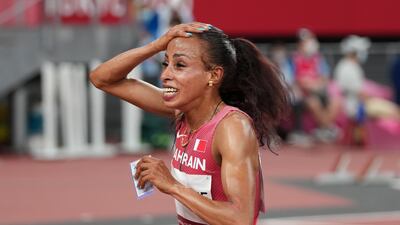
Kalkidan Gezahegne, of Bahrain, celebrates after winning the silver medal in the women's 10,000 metres in Tokyo. -
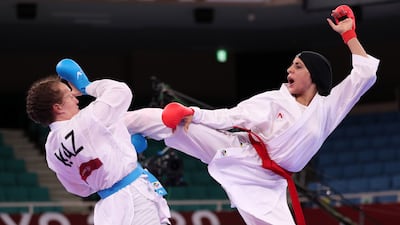
Feryal Abdelaziz of Egypt (R) and Sofya Berultseva of Kazakhstan compete in their women's kumite +61kg karate semi-final. Abdelaziz went on to win gold while Berultseva clinched the bronze medal. -
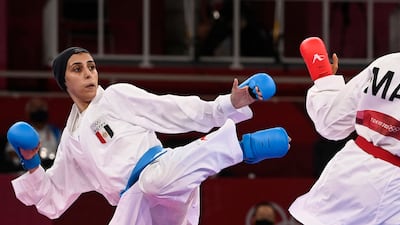
Bronze-medal winning Giana Lotfy (L), of Egypt, competes against Morocco's Btissam Sadini in the women's kumite +61kg karate. -
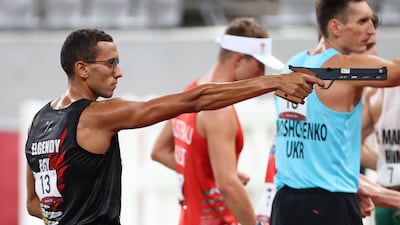
Silver medallist Ahmed Elgendy of Egypt (L) in the laser run of the modern pentathlon event at the Tokyo Stadium. -
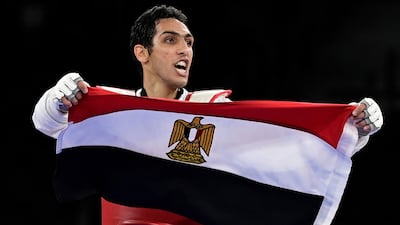
Egypt's Seif Eissa celebrates after winning a bronze medal in taekwondo at the Makuhari Messe Hall in Tokyo. -

Hedaya Malak Wahba of Egypt won bronze in taekwondo at the 2016 Rio Olympics and repeated that feat in Tokyo. -
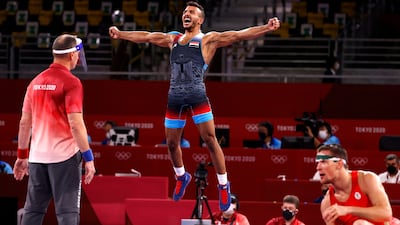
Mohamed Ibrahim Elsayed of Egypt jumps for joy after defeating Artem Surkov to win bronze in the Greco-Roman wrestling. -
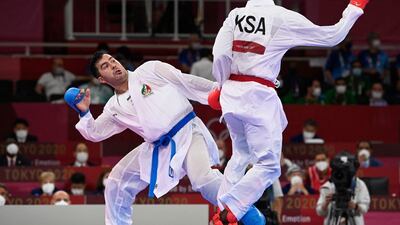
Saudi Arabia's Tareg Hamedi (R) competes against Iran's Sajad Ganjzadeh in the men's kumite +75kg final of the karate competition. Ganjzadeh was awarded the gold medal after Hamedi was disqualified in the final. -

Gold medallist Javad Foroughi of Iran on the podium after winning an air pistol event at Asaka Shooting Range. -
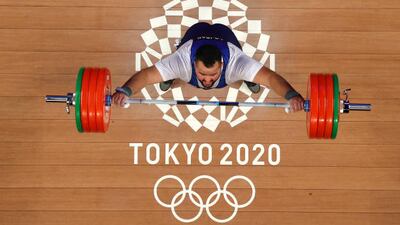
Ali Davoudi of Iran won silver in the men’s 109kg weightlifting. -
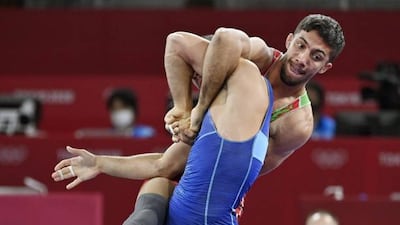
Mohammadreza Geraei of Iran (facing camera) competes en route to winning the Greco-Roman wrestling 67kg final against Ukraine's Parviz Nasibov. -
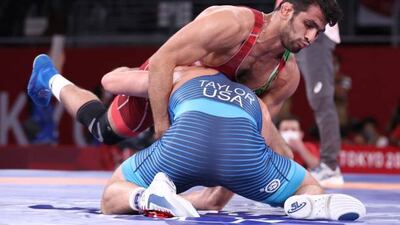
USA's David Taylor (blue) wrestles Iran's Hassan Yazdanicharati in their men's freestyle 86kg wrestling final, which Taylor won. -
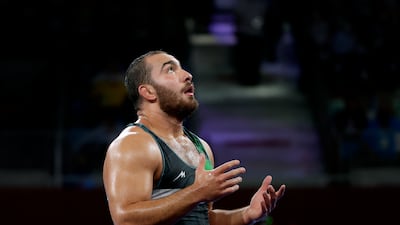
Iranian wrestler Hossein Amir Zare looks exhausted after defeating Zhiwei Deng of China in an epic bout to win the men’s freestyle 125kg bronze. -
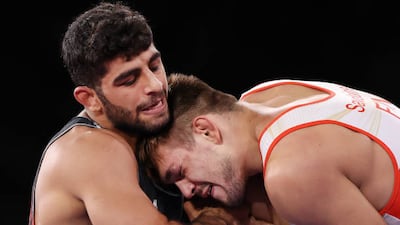
Mohammadhadi Saravi (L) of Iran landed bronze in Greco-Roman wrestling. -
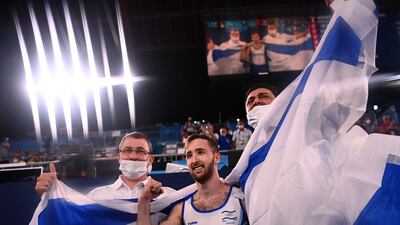
Israel's Artem Dolgopyat (C) celebrates with his team after winning the floor event of the artistic gymnastics men's floor exercise final. -
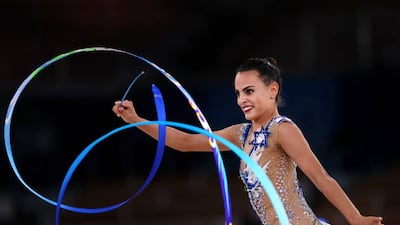
Linoy Ashram of Israel won gold in the Women's rhythmic individual all-around gymnastics. -
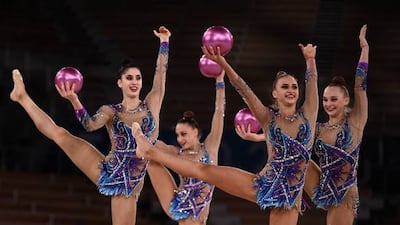
Team Israel competes in the group all-around final of the Rhythmic Gymnastics event during Tokyo 2020 Olympic Games at Ariake Gymnastics centre in Tokyo. -
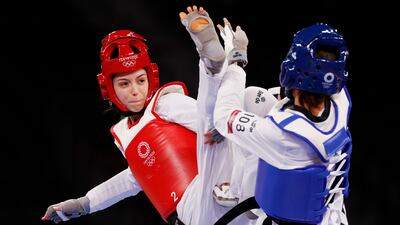
Semberg Abishag (L) of Israel won a taekwondo bronze in Tokyo. -
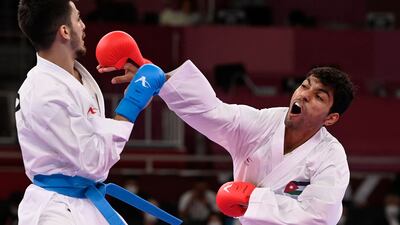
Turkish karate star Eray Samdan (L), who won silver, competes against Jordan's Abdel Rahman Almasatfa, who won bronze in the men's kumite 67kg in Tokyo. -
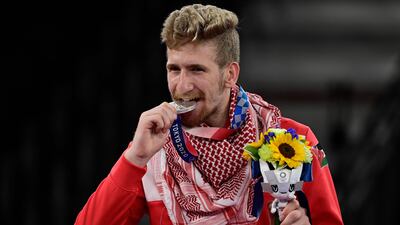
Silver medallist Saleh Elsharabaty of Jordan celebrates on the podium after the taekwondo men's 80kg bouts. -

Abdullah Alrashidi of Kuwait during skeet men's qualification at Asaka Shooting Range. He left Japan with a bronze medal. -

Morocco's Soufiane El Bakkali (R) wins the men's 3,000m steeplechase final followed by Ethiopia's Lamecha Girma (green). Kenya's Benjamin Kigen (L) was third. -
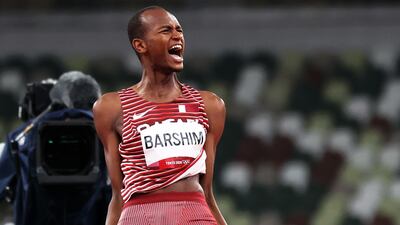
Essa Mutaz Barshim of Qatar shared the men's high jump gold medal with Gianmarco Tamberi of Italy. -
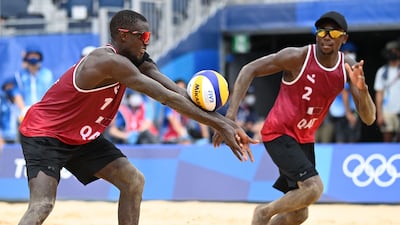
Qatar's Ahmed Tijan (R) watches as partner Cherif Younousse digs the ball on their way to winning the men's beach volleyball bronze medal match against Latvia at Shiokaze Park in Tokyo. -
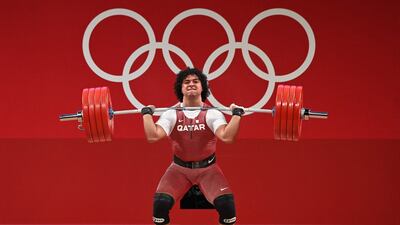
Qatar's Fares Ibrahim Elbakh won gold in the men's 96kg weightlifting. -
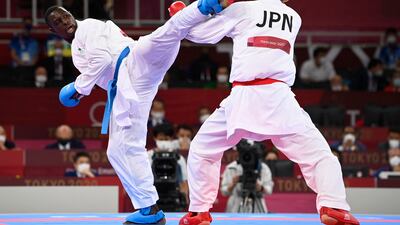
Saudi Arabian karate star Tareg Hamedi (L) won silver in the men's kumite +75kg event. -
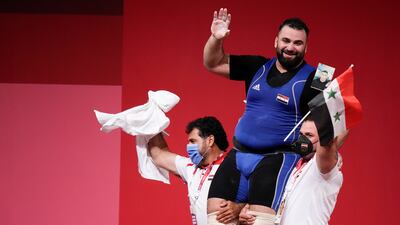
Man Asaad of Syria is lifted by his coaches after winning a bronze medal in the men's +109kg weightlifting. -

Ahmed Hafnaoui of Tunisia celebrates after winning the gold medal in the men's 400m freestyle at Tokyo Aquatics Centre. -
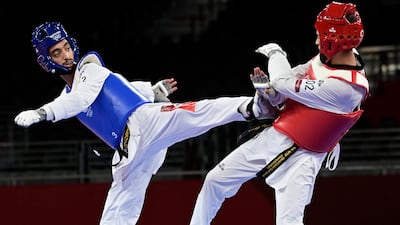
Tunisia's Mohamed Khalil Jendoubi (Blue) won silver in the taekwondo men's 58kg event..



