The G20 has the ability to bring together key global stakeholders to deal with the pandemic. AFP

Whose coronavirus is it anyway? It does not matter


  • English
  • Arabic

Saudi Arabia’s decision to convene a special meeting of the G20 group of nations could not come at a better time as far as global attempts to meet the challenge of the coronavirus are concerned.

Arguably the most depressing feature of the pandemic is that, rather than bringing countries together to meet the biggest challenge the world has faced since the Second World War, it has set some nations against one another, with too many influential governments apparently more interested in protecting their own interests than pooling their resources for the common good.

An emergency G20 summit is therefore vital if some world leaders are to be persuaded to stop indulging in their self-defeating blame game and, instead, work together to defeat the virus and help each other to overcome the very significant challenges the pandemic poses, both to the well-being of their respective citizens as well as the well-being of the global economy.

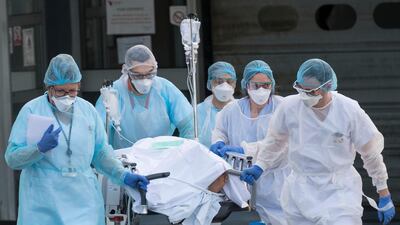
  • Medical staff push a patient on a gurney to a waiting medical helicopter at the Emile Muller hospital in Mulhouse, eastern France. AFP
    Medical staff push a patient on a gurney to a waiting medical helicopter at the Emile Muller hospital in Mulhouse, eastern France. AFP
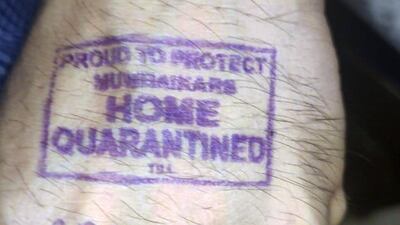
  • An Indian man shows his stamped hand, indicating that the person is under 'home quarantine', in Mumbai, India. EPA
    An Indian man shows his stamped hand, indicating that the person is under 'home quarantine', in Mumbai, India. EPA
  • Judie Shape, centre, who has tested positive for the coronavirus, but isn't showing symptoms, presses her hand against her window after a visit through the window and on the phone with her daughter Lori Spencer, left, and her son-in-law Michael Spencer, at the Life Care Center in Kirkland. AP Photo
    Judie Shape, centre, who has tested positive for the coronavirus, but isn't showing symptoms, presses her hand against her window after a visit through the window and on the phone with her daughter Lori Spencer, left, and her son-in-law Michael Spencer, at the Life Care Center in Kirkland. AP Photo
  • A single worshipper wearing a surgical mask sits on a pew in Westminster Cathedral in central London. AFP
    A single worshipper wearing a surgical mask sits on a pew in Westminster Cathedral in central London. AFP
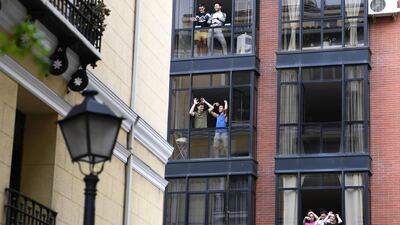
  • People confined at their homes sing and dance from their windows to bolster themselves up during a lockdown in Madrid. AFP
    People confined at their homes sing and dance from their windows to bolster themselves up during a lockdown in Madrid. AFP
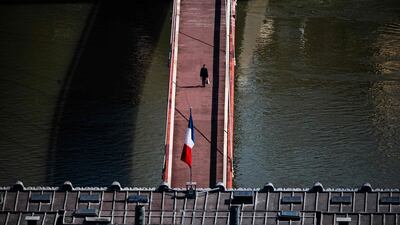
  • A person walks on the deserted Passerelle du Palais de Justice in Lyon, central eastern France as a strict lockdown comes into in effect. AFP
    A person walks on the deserted Passerelle du Palais de Justice in Lyon, central eastern France as a strict lockdown comes into in effect. AFP
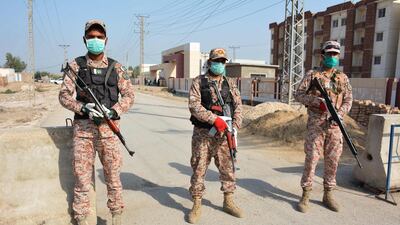
  • Soldiers stand guard on road leading to a quarantine faciltity for people returning from Iran via the Pakistan-Iran border town of Taftan, in Sukkur in southern Sindh province. AFP
    Soldiers stand guard on road leading to a quarantine faciltity for people returning from Iran via the Pakistan-Iran border town of Taftan, in Sukkur in southern Sindh province. AFP
  • A passenger wearing protective clothing uses a self check-in machine at Incheon international airport, west of Seoul. AFP
    A passenger wearing protective clothing uses a self check-in machine at Incheon international airport, west of Seoul. AFP
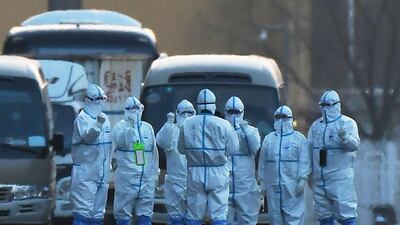
  • Workers cheer themselves after loading travellers onto buses outside the New China International Exhibition Centre, near Beijing Capital Airport in Beijing. AFP
    Workers cheer themselves after loading travellers onto buses outside the New China International Exhibition Centre, near Beijing Capital Airport in Beijing. AFP
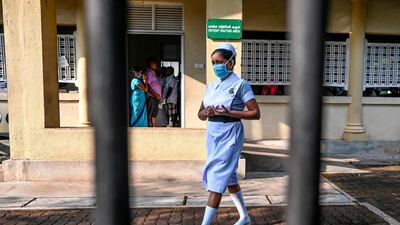
  • A nurse wearing a facemask walks outside the entrance of Sri Lanka's Infectious Diseases Hospital near Colombo. AFP
    A nurse wearing a facemask walks outside the entrance of Sri Lanka's Infectious Diseases Hospital near Colombo. AFP
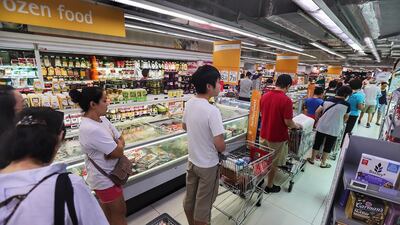
  • People queue for groceries at a supermarket in Singapore. AFP
    People queue for groceries at a supermarket in Singapore. AFP
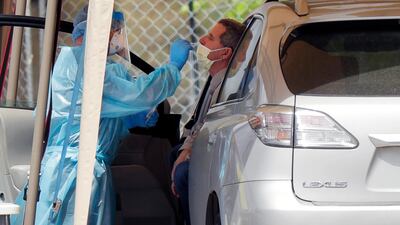
  • A medical worker tests a person for the coronavirus at a drive-through facility primarily for first responders and medical personnel in San Antonio. AP Photo
    A medical worker tests a person for the coronavirus at a drive-through facility primarily for first responders and medical personnel in San Antonio. AP Photo
  • A robot, developed by a start-up firm Asimov Robotics, holds a tray with face masks and sanitiser after the two robots were launched to spread awareness about the coronavirus, in Kochi, India, March 17, 2020. Reuters
    A robot, developed by a start-up firm Asimov Robotics, holds a tray with face masks and sanitiser after the two robots were launched to spread awareness about the coronavirus, in Kochi, India, March 17, 2020. Reuters

Announcing that Saudi Arabia is to hold a virtual meeting of leaders from the world's largest economies next week, the Kingdom said it aimed to "put forward a co-ordinated set of policies to protect people and safeguard the global economy".

The summit will be a unique event; rather than meeting to face-to-face, it will be conducted by video link, thereby respecting the prevailing medical advice in favour of social distancing and isolation to prevent the virus from spreading further. By far the most important issue the meeting needs to address is the unseemly bickering that has broken out between some world leaders over who is to blame for the outbreak, as well as disputes over which countries are best prepared to deal with the virus.

At a time when international co-operation should be at the heart of the battle to defeat the pandemic, the opposite appears to be the case among some of the strongest nations of the world.

China set the tone at the start of the crisis when it initially refused assistance from the World Health Organisation to deal with the virus and, instead, pursued its own, unilateral measures to contain the outbreak, including the wholesale lockdown of entire cities. Since then we have seen the Trump administration adopt a similarly isolationist approach, not least when Washington announced that it was imposing an immediate travel ban on Europe without even bothering to observe the basic courtesy of discussing the decision with America’s so-called allies in Europe.

Moreover, US President Donald Trump’s insistence on constantly tweeting about what he calls “the Chinese virus” has provoked a fierce response from Beijing, with senior Chinese officials claiming that the virus originated in the US, and not China, and that Washington owes China “an explanation".

According to Zhao Lijian, the deputy minister of China’s Foreign Ministry Department, the US Army may have brought the disease to China last October when American troops visited the Chinese city of Wuhan, where the outbreak originated at the end of last year.

The row has escalated to the point where China has expelled a number of American journalists from the country, raising fears that the tit-for-tat recriminations between Washington and Beijing could provoke a new trade war between the two countries, with all the implications that might have for the world’s battered economy.

Then there are the deep divisions that have emerged in Europe over how best to respond to the pandemic.

Having been slow to respond to the initial outbreak, the European Union is seeking to impose its own restrictions on non-EU citizens entering the bloc. The more worrying concern for Brussels, though, is the deepening divisions among member states as European leaders appear more interested in protecting their national interests rather than those of Europe as a whole.

Perhaps the most egregious example of the fall-out among rival EU states was when the German government denied a request from neighbouring Italy to supply much-needed medical equipment, such as face masks and ventilators. In addition other EU states, such as Austria and the Czech Republic, responded to the extensive coronavirus outbreak in Italy by closing their borders to their Italian neighbours, a clear breach of the EU’s rules that allow for free movement of all citizens of the union between member states.

Add to this the self-centred approach being adopted to the pandemic by other leading countries, and it is clear that the G20 summit has a number of notable challenges to overcome if it is to succeed in securing a more co-ordinated global response to the crisis.

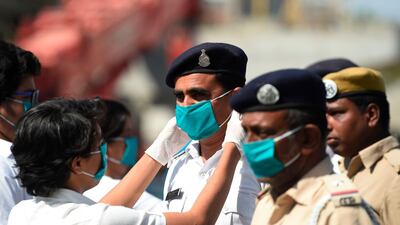
  • A student adjusts a free facemask to a policeman during a facemaks donation campaing in Ahmedabad. AFP
    A student adjusts a free facemask to a policeman during a facemaks donation campaing in Ahmedabad. AFP
  • A robot, developed by a start-up firm Asimov Robotics, holds a tray with face masks and sanitiser in Kochi. Reuters
    A robot, developed by a start-up firm Asimov Robotics, holds a tray with face masks and sanitiser in Kochi. Reuters
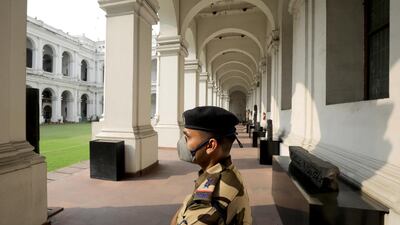
  • A security officer wears a protective mask as he stand guard at empty Indian Museum in Kolkata. EPA
    A security officer wears a protective mask as he stand guard at empty Indian Museum in Kolkata. EPA
  • Indians waiting at a train station in Mumbai. AP Photo
    Indians waiting at a train station in Mumbai. AP Photo
  • Indian municipal workers prepare a room to be used as isolation ward in Hyderabad. AP Photo
    Indian municipal workers prepare a room to be used as isolation ward in Hyderabad. AP Photo
  • A view shows the historic Red Fort after the government tightened up measures for coronavirus prevention, in old quarters of Delhi. REUTERS
    A view shows the historic Red Fort after the government tightened up measures for coronavirus prevention, in old quarters of Delhi. REUTERS
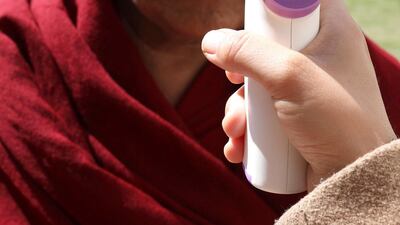
  • A doctor checks the temperature of a Tibetan man, living-in-exile in India, outside the Tibetan Parliament house during the Parliament session at Dharamsala, India. EPA
    A doctor checks the temperature of a Tibetan man, living-in-exile in India, outside the Tibetan Parliament house during the Parliament session at Dharamsala, India. EPA
  • An Indian municipal worker cleans an athletic stadium building where rooms are being prepared to be used as isolation wards in Hyderabad. AP Photo
    An Indian municipal worker cleans an athletic stadium building where rooms are being prepared to be used as isolation wards in Hyderabad. AP Photo
  • Devotees take a selfie at the Golden Temple in Amritsar. AFP
    Devotees take a selfie at the Golden Temple in Amritsar. AFP
  • Visitors wearing facemasks as a preventive measure against the COVID-19 coronavirus have their picture taken outside Taj Mahal following its closure in Agra. AFP
    Visitors wearing facemasks as a preventive measure against the COVID-19 coronavirus have their picture taken outside Taj Mahal following its closure in Agra. AFP
  • A general view shows the empty Safdarjung Tomb in New Delhi. AFP
    A general view shows the empty Safdarjung Tomb in New Delhi. AFP
  • A man shows his stamped hand, indicating that the person is under 'home quarantine' in Mumbai, India. EPA
    A man shows his stamped hand, indicating that the person is under 'home quarantine' in Mumbai, India. EPA

Certainly, the top priority at next week’s gathering must be to persuade world leaders to formulate an agreed international formula on how to defeat the virus, which can only be achieved by sharing knowledge and resources. For example the two countries that have so far been most effective at controlling the spread of Covid-19 are South Korea and Singapore, which have succeeded in limiting its spread by a combination of widespread testing, isolation of each individual infected and using mobile phone data to track those who might be at risk.

The implementation of such measures in Europe, which has now become the epicentre of the outbreak, could have a similar beneficial impact.

There is a pressing need for the world’s leading nations to work more closely together on producing the equipment needed to deal with the pandemic, such as ventilators. Global co-operation is also essential in finding an effective vaccine against the virus.

One of the major concerns of health officials is that, once the outbreak has been dealt with, the world will be hit by further pandemics if there is no vaccine that acts against the virus.

The novel coronavirus has demonstrated that it does not respect borders or nations, so the only way to end the pandemic is for world leaders to pool their resources and work together, rather than indulging in pointless bickering.

Con Coughlin is the Telegraph’s defence and foreign affairs editor

Paris%20Agreement
%3Cp%3EArticle%2014%3C%2Fp%3E%0A%3Cp%3E1.%20%5BThe%20Cop%5D%20shall%20periodically%20take%20stock%20of%20the%20implementation%20of%20this%20Agreement%20to%20assess%20the%20collective%20progress%20towards%20achieving%20the%20purpose%20of%20this%20Agreement%20and%20its%20long-term%20goals%20(referred%20to%20as%20the%20%22global%20stocktake%22)%3C%2Fp%3E%0A%3Cp%3E2.%20%5BThe%20Cop%5D%20shall%20undertake%20its%20first%20global%20stocktake%20in%202023%20and%20every%20five%20years%20thereafter%C2%A0%3C%2Fp%3E%0A

The Cockroach

 (Vintage)

Ian McEwan 
 

Best Academy: Ajax and Benfica

Best Agent: Jorge Mendes

Best Club : Liverpool   

 Best Coach: Jurgen Klopp (Liverpool)  

 Best Goalkeeper: Alisson Becker

 Best Men’s Player: Cristiano Ronaldo

 Best Partnership of the Year Award by SportBusiness: Manchester City and SAP

 Best Referee: Stephanie Frappart

Best Revelation Player: Joao Felix (Atletico Madrid and Portugal)

Best Sporting Director: Andrea Berta (Atletico Madrid)

Best Women's Player:  Lucy Bronze

Best Young Arab Player: Achraf Hakimi

 Kooora – Best Arab Club: Al Hilal (Saudi Arabia)

 Kooora – Best Arab Player: Abderrazak Hamdallah (Al-Nassr FC, Saudi Arabia)

 Player Career Award: Miralem Pjanic and Ryan Giggs

Seven%20Winters%20in%20Tehran
%3Cp%3E%3Cstrong%3EDirector%20%3A%3C%2Fstrong%3E%20Steffi%20Niederzoll%3C%2Fp%3E%0A%3Cp%3E%3Cstrong%3EStarring%3A%3C%2Fstrong%3E%20Reyhaneh%20Jabbari%2C%20Shole%20Pakravan%2C%20Zar%20Amir%20Ebrahimi%3C%2Fp%3E%0A%3Cp%3E%3Cstrong%3ERating%3A%3C%2Fstrong%3E%204%2F5%3C%2Fp%3E%0A
In numbers: PKK’s money network in Europe

Germany: PKK collectors typically bring in $18 million in cash a year – amount has trebled since 2010

Revolutionary tax: Investigators say about $2 million a year raised from ‘tax collection’ around Marseille

Extortion: Gunman convicted in 2023 of demanding $10,000 from Kurdish businessman in Stockholm

Drug trade: PKK income claimed by Turkish anti-drugs force in 2024 to be as high as $500 million a year

Denmark: PKK one of two terrorist groups along with Iranian separatists ASMLA to raise “two-digit million amounts”

Contributions: Hundreds of euros expected from typical Kurdish families and thousands from business owners

TV channel: Kurdish Roj TV accounts frozen and went bankrupt after Denmark fined it more than $1 million over PKK links in 2013 

Ten tax points to be aware of in 2026

1. Domestic VAT refund amendments: request your refund within five years

If a business does not apply for the refund on time, they lose their credit.

2. E-invoicing in the UAE

Businesses should continue preparing for the implementation of e-invoicing in the UAE, with 2026 a preparation and transition period ahead of phased mandatory adoption. 

3. More tax audits

Tax authorities are increasingly using data already available across multiple filings to identify audit risks. 

4. More beneficial VAT and excise tax penalty regime

Tax disputes are expected to become more frequent and more structured, with clearer administrative objection and appeal processes. The UAE has adopted a new penalty regime for VAT and excise disputes, which now mirrors the penalty regime for corporate tax.

5. Greater emphasis on statutory audit

There is a greater need for the accuracy of financial statements. The International Financial Reporting Standards standards need to be strictly adhered to and, as a result, the quality of the audits will need to increase.

6. Further transfer pricing enforcement

Transfer pricing enforcement, which refers to the practice of establishing prices for internal transactions between related entities, is expected to broaden in scope. The UAE will shortly open the possibility to negotiate advance pricing agreements, or essentially rulings for transfer pricing purposes. 

7. Limited time periods for audits

Recent amendments also introduce a default five-year limitation period for tax audits and assessments, subject to specific statutory exceptions. While the standard audit and assessment period is five years, this may be extended to up to 15 years in cases involving fraud or tax evasion. 

8. Pillar 2 implementation 

Many multinational groups will begin to feel the practical effect of the Domestic Minimum Top-Up Tax (DMTT), the UAE's implementation of the OECD’s global minimum tax under Pillar 2. While the rules apply for financial years starting on or after January 1, 2025, it is 2026 that marks the transition to an operational phase.

9. Reduced compliance obligations for imported goods and services

Businesses that apply the reverse-charge mechanism for VAT purposes in the UAE may benefit from reduced compliance obligations. 

10. Substance and CbC reporting focus

Tax authorities are expected to continue strengthening the enforcement of economic substance and Country-by-Country (CbC) reporting frameworks. In the UAE, these regimes are increasingly being used as risk-assessment tools, providing tax authorities with a comprehensive view of multinational groups’ global footprints and enabling them to assess whether profits are aligned with real economic activity. 

Contributed by Thomas Vanhee and Hend Rashwan, Aurifer

HEADLINE HERE
  • I would recommend writing out the text in the body 
  • And then copy into this box
  • It can be as long as you link
  • But I recommend you use the bullet point function (see red square)
  • Or try to keep the word count down
  • Be wary of other embeds lengthy fact boxes could crash into 
  • That's about it
Important questions to consider

1. Where on the plane does my pet travel?

There are different types of travel available for pets:

  • Manifest cargo
  • Excess luggage in the hold
  • Excess luggage in the cabin

Each option is safe. The feasibility of each option is based on the size and breed of your pet, the airline they are traveling on and country they are travelling to.


2. What is the difference between my pet traveling as manifest cargo or as excess luggage?

If traveling as manifest cargo, your pet is traveling in the front hold of the plane and can travel with or without you being on the same plane. The cost of your pets travel is based on volumetric weight, in other words, the size of their travel crate.

If traveling as excess luggage, your pet will be in the rear hold of the plane and must be traveling under the ticket of a human passenger. The cost of your pets travel is based on the actual (combined) weight of your pet in their crate.


3. What happens when my pet arrives in the country they are traveling to?

As soon as the flight arrives, your pet will be taken from the plane straight to the airport terminal.

If your pet is traveling as excess luggage, they will taken to the oversized luggage area in the arrival hall. Once you clear passport control, you will be able to collect them at the same time as your normal luggage. As you exit the airport via the ‘something to declare’ customs channel you will be asked to present your pets travel paperwork to the customs official and / or the vet on duty. 

If your pet is traveling as manifest cargo, they will be taken to the Animal Reception Centre. There, their documentation will be reviewed by the staff of the ARC to ensure all is in order. At the same time, relevant customs formalities will be completed by staff based at the arriving airport. 


4. How long does the travel paperwork and other travel preparations take?

This depends entirely on the location that your pet is traveling to. Your pet relocation compnay will provide you with an accurate timeline of how long the relevant preparations will take and at what point in the process the various steps must be taken.

In some cases they can get your pet ‘travel ready’ in a few days. In others it can be up to six months or more.


5. What vaccinations does my pet need to travel?

Regardless of where your pet is traveling, they will need certain vaccinations. The exact vaccinations they need are entirely dependent on the location they are traveling to. The one vaccination that is mandatory for every country your pet may travel to is a rabies vaccination.

Other vaccinations may also be necessary. These will be advised to you as relevant. In every situation, it is essential to keep your vaccinations current and to not miss a due date, even by one day. To do so could severely hinder your pets travel plans.

Source: Pawsome Pets UAE

COMPANY PROFILE
Name: HyperSpace
 
Started: 2020
 
Founders: Alexander Heller, Rama Allen and Desi Gonzalez
 
Based: Dubai, UAE
 
Sector: Entertainment 
 
Number of staff: 210 
 
Investment raised: $75 million from investors including Galaxy Interactive, Riyadh Season, Sega Ventures and Apis Venture Partners
How to become a Boglehead

Bogleheads follow simple investing philosophies to build their wealth and live better lives. Just follow these steps.

•   Spend less than you earn and save the rest. You can do this by earning more, or being frugal. Better still, do both.

•   Invest early, invest often. It takes time to grow your wealth on the stock market. The sooner you begin, the better.

•   Choose the right level of risk. Don't gamble by investing in get-rich-quick schemes or high-risk plays. Don't play it too safe, either, by leaving long-term savings in cash.

•   Diversify. Do not keep all your eggs in one basket. Spread your money between different companies, sectors, markets and asset classes such as bonds and property.

•   Keep charges low. The biggest drag on investment performance is all the charges you pay to advisers and active fund managers.

•   Keep it simple. Complexity is your enemy. You can build a balanced, diversified portfolio with just a handful of ETFs.

•   Forget timing the market. Nobody knows where share prices will go next, so don't try to second-guess them.

•   Stick with it. Do not sell up in a market crash. Use the opportunity to invest more at the lower price.

COMPANY%20PROFILE%20
%3Cp%3E%3Cstrong%3ECompany%20name%3A%20%3C%2Fstrong%3ENomad%20Homes%3Cbr%3E%3Cstrong%3EStarted%3A%20%3C%2Fstrong%3E2020%3Cbr%3E%3Cstrong%3EFounders%3A%20%3C%2Fstrong%3EHelen%20Chen%2C%20Damien%20Drap%2C%20and%20Dan%20Piehler%3Cbr%3E%3Cstrong%3EBased%3A%3C%2Fstrong%3E%20UAE%20and%20Europe%3Cbr%3E%3Cstrong%3EIndustry%3C%2Fstrong%3E%3A%20PropTech%3Cbr%3E%3Cstrong%3EFunds%20raised%20so%20far%3A%3C%2Fstrong%3E%20%2444m%3Cbr%3E%3Cstrong%3EInvestors%3A%3C%2Fstrong%3E%20Acrew%20Capital%2C%2001%20Advisors%2C%20HighSage%20Ventures%2C%20Abstract%20Ventures%2C%20Partech%2C%20Precursor%20Ventures%2C%20Potluck%20Ventures%2C%20Knollwood%20and%20several%20undisclosed%20hedge%20funds%3C%2Fp%3E%0A
Overview

What: The Arab Women’s Sports Tournament is a biennial multisport event exclusively for Arab women athletes.

When: From Sunday, February 2, to Wednesday, February 12.

Where: At 13 different centres across Sharjah.

Disciplines: Athletics, archery, basketball, fencing, Karate, table tennis, shooting (rifle and pistol), show jumping and volleyball.

Participating countries: Algeria, Bahrain, Comoros, Egypt, Iraq, Jordan, Kuwait, Lebanon, Libya, Morocco, Oman, Palestine, Saudi Arabia, Sudan, Syria, Tunisia, Qatar and UAE.

Key facilities
  • Olympic-size swimming pool with a split bulkhead for multi-use configurations, including water polo and 50m/25m training lanes
  • Premier League-standard football pitch
  • 400m Olympic running track
  • NBA-spec basketball court with auditorium
  • 600-seat auditorium
  • Spaces for historical and cultural exploration
  • An elevated football field that doubles as a helipad
  • Specialist robotics and science laboratories
  • AR and VR-enabled learning centres
  • Disruption Lab and Research Centre for developing entrepreneurial skills
How to wear a kandura

Dos

  • Wear the right fabric for the right season and occasion 
  • Always ask for the dress code if you don’t know
  • Wear a white kandura, white ghutra / shemagh (headwear) and black shoes for work 
  • Wear 100 per cent cotton under the kandura as most fabrics are polyester

Don’ts 

  • Wear hamdania for work, always wear a ghutra and agal 
  • Buy a kandura only based on how it feels; ask questions about the fabric and understand what you are buying
Global state-owned investor ranking by size

1.

United States

2.

China

3.

UAE

4.

Japan

5

Norway

6.

Canada

7.

Singapore

8.

Australia

9.

Saudi Arabia

10.

South Korea

Our legal consultant

Name: Hassan Mohsen Elhais

Position: legal consultant with Al Rowaad Advocates and Legal Consultants.