From placards to political power: these student protesters are Lebanon’s future


  • English
  • Arabic

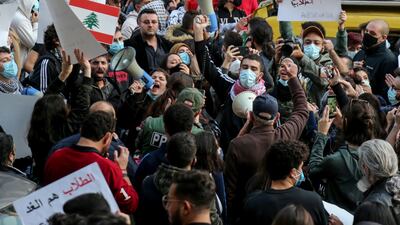
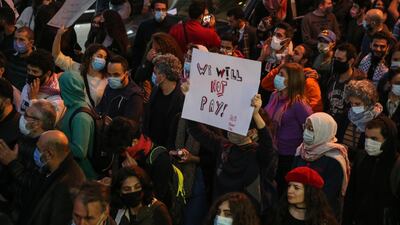
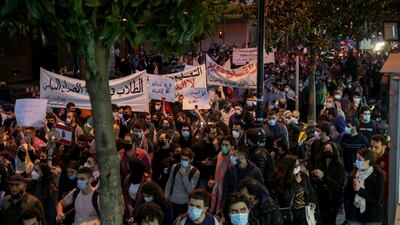
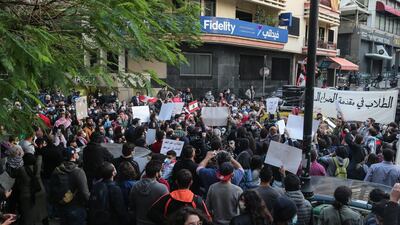
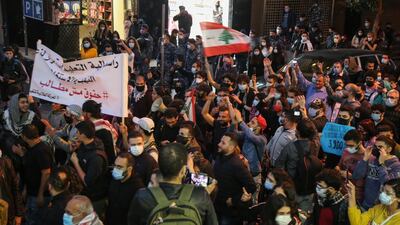
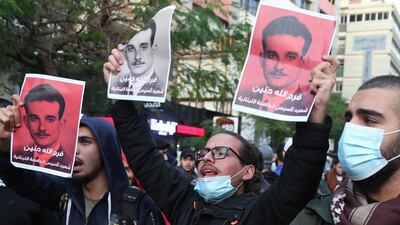
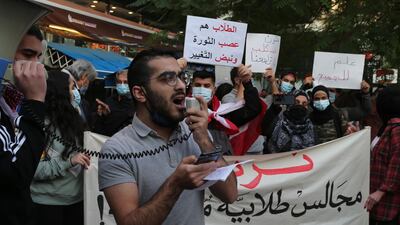
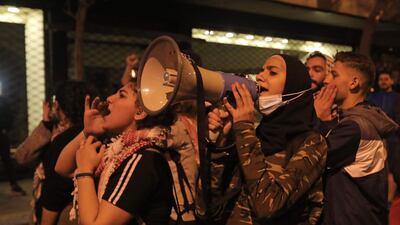
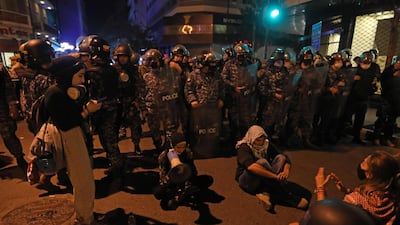
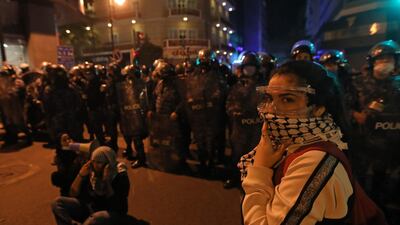
On December 19, a large group of students gathered in Beirut's Hamra Street to protest against rising tuition fees, as well as the decision by universities to enforce dollar payments for the fees. This comes amid a severe economic crisis, which has affected all areas of life in Lebanon.

Protesters were from a range of public and private universities. Also present were family members of Lebanese students studying abroad, who are now unable to pay their fees due to restrictions implemented by the country’s banks.

Before this protest, students – particularly the increasing numbers of those who were joining so-called secular and unaffiliated university groups – had been demanding change to the manner in which they paid for their courses. Many of these clubs, emboldened by their victories in annual student elections, decided to take their demands to the streets, knowing well that this could spark a wave of nationwide demonstrations.

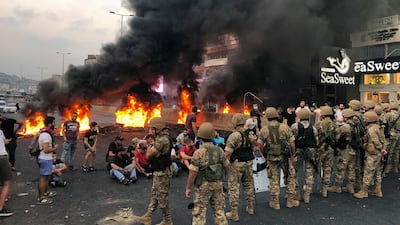
The December 19 protest, which involved a march through the university district, soon arrived at the doors of the American University of Beirut, only to be welcomed by teargas canisters and violence at the hands of members of the armed forces. But students persisted and it took security forces more than four hours to stop the riot, during which local banks were attacked and vandalised, rubbish bins were set on fire and roadblocks erected, in scenes reminiscent of the October 17, 2019 revolution.

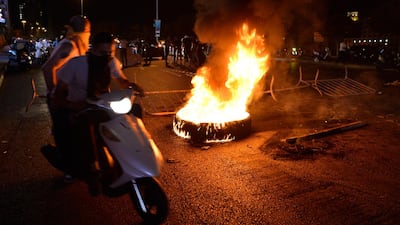
  • A protester throws a tyre on to a fire to block a road during a protest in north of Beirut, Lebanon in October 2019. EPA
    A protester throws a tyre on to a fire to block a road during a protest in north of Beirut, Lebanon in October 2019. EPA
  • Demonstrators sit together during a protest over deteriorating economic situation, in the city of Jounieh, north of Beirut. Reuters
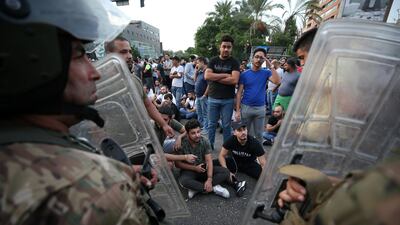
    Demonstrators sit together during a protest over deteriorating economic situation, in the city of Jounieh, north of Beirut. Reuters
  • Demonstrators gather in Sidon, Lebanon. Reuters
    Demonstrators gather in Sidon, Lebanon. Reuters
  • Lebanese riot police fire tear gas. AP Photo
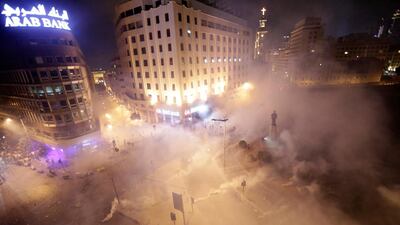
    Lebanese riot police fire tear gas. AP Photo
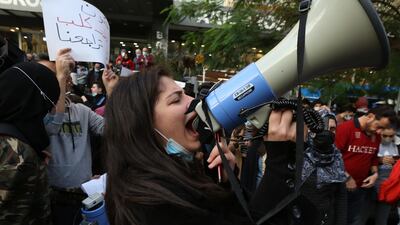
  • Protesters shout anti-government slogans in front of the Government Palace in downtown Beirut. EPA
    Protesters shout anti-government slogans in front of the Government Palace in downtown Beirut. EPA
  • Thousands of protesters, mainly civil activists, condemned the proposed taxes that would go along with the 2020 budget, especially an unexpected government plan to impose a fee for using WhatsApp calls. EPA
    Thousands of protesters, mainly civil activists, condemned the proposed taxes that would go along with the 2020 budget, especially an unexpected government plan to impose a fee for using WhatsApp calls. EPA
  • Public anger has simmered since parliament passed an austerity budget in July to help trim a ballooning deficit. EPA
    Public anger has simmered since parliament passed an austerity budget in July to help trim a ballooning deficit. EPA
  • Protesters in the capital blocked the road to the airport with burning tyres, prompting a heavy deployment by security forces. EPA
    Protesters in the capital blocked the road to the airport with burning tyres, prompting a heavy deployment by security forces. EPA
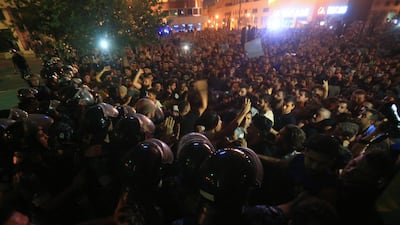
  • A crows of demonstrators faces police. EPA
    A crows of demonstrators faces police. EPA
  • Lebanese demonstrators gather during a protest in Zouk Mikael. AFP
    Lebanese demonstrators gather during a protest in Zouk Mikael. AFP
  • Lebanese army convoy waits for a blocked road to be open. EPA
    Lebanese army convoy waits for a blocked road to be open. EPA
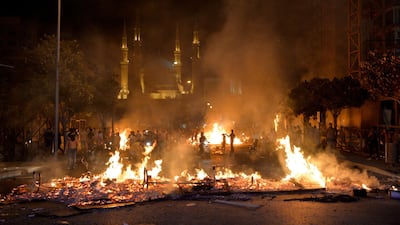
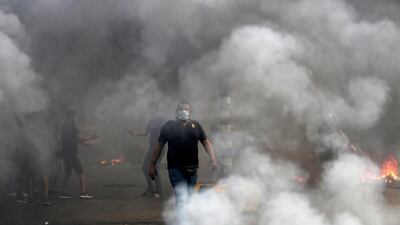
  • An anti-government protester walks between burning tyres in Beirut, Lebanon. AP Photo
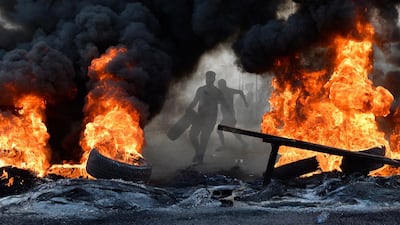
    An anti-government protester walks between burning tyres in Beirut, Lebanon. AP Photo
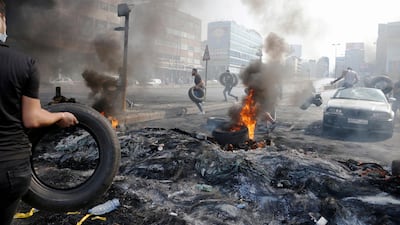
  • Demonstrators run as they hold tyres during a protest over the deteriorating economic situation, in Dora, Lebanon. Reuters
    Demonstrators run as they hold tyres during a protest over the deteriorating economic situation, in Dora, Lebanon. Reuters
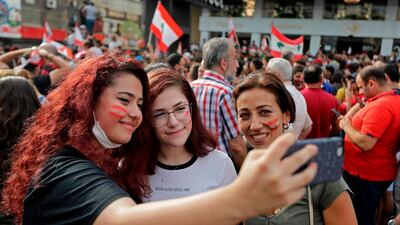
  • Lebanese demonstrators take a selfie during the protest. AFP
    Lebanese demonstrators take a selfie during the protest. AFP
  • Passengers walk to the airport after anti-government protesters blocked the road. AP Photo
    Passengers walk to the airport after anti-government protesters blocked the road. AP Photo
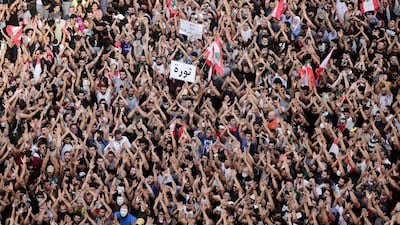
  • Anti-government protesters hold a placard with Arabic that reads "Revolution," as shout slogans against the Lebanese government. AP Photo
    Anti-government protesters hold a placard with Arabic that reads "Revolution," as shout slogans against the Lebanese government. AP Photo
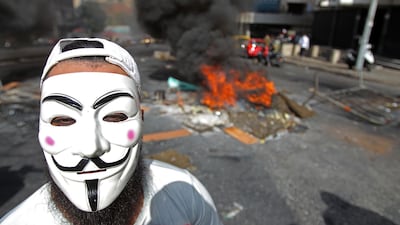
  • A protester wearing a Guy Fawkes mask looks in Beirut's Salim Slem neighbourhood. AFP
    A protester wearing a Guy Fawkes mask looks in Beirut's Salim Slem neighbourhood. AFP
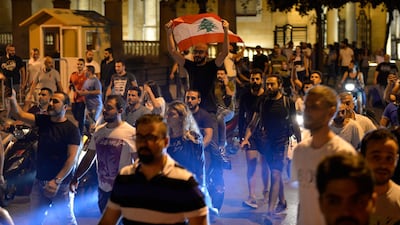
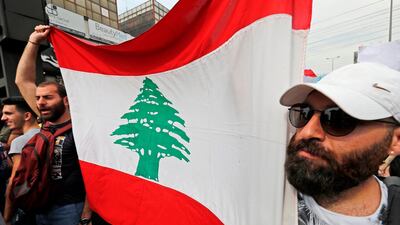
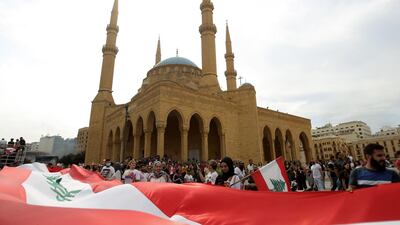
  • Lebanese demonstrators wave the national flag during a protest against dire economic conditions in downtown Beirut. AFP
    Lebanese demonstrators wave the national flag during a protest against dire economic conditions in downtown Beirut. AFP

All this demonstrated the new assertiveness of an increasing number of these secular student groups in the three main private universities in Lebanon, which are now consistently wresting away power from traditional clubs affiliated with the country's political parties.

But this protest was not the first. Earlier that same week, students from the Amal Movement, a political party associated with the country's Shiite community, protested in front of the ministry of education. They were also demonstrating against the enforcement of dollar payment for the fees.

In my years studying journalism at the Lebanese University, I never really heard or thought much about student elections or independent councils. When I was admitted to my faculty, I was told that the Amal Movement’s student council would support me if I was ever in need. When I asked about student elections and how the council had come into existence, it soon became obvious that I had asked the wrong question. There were no elections at my university. Instead, each traditional political party got a stake in the running of faculties assigned to them. In mine, it was Amal.

Such examples of people power in private Lebanese universities give us a condensed example of how the wider national political system works and the resulting predicaments the country faces because of it. With this in mind, it is possible that the current success of secular student groups might translate into a country-wide emergence of new secular parties. These could be the basis for a rejection of Lebanon’s traditional sectarian party system. Their rapid increase in popularity on campuses means it is timely to ask how they might affect the future of all politics in the country.

Change is not expected to take place in the next two years. But in five years’ time, these students might be at a stage when they could transfer the momentum that the secular parties have on campuses to the arena of national politics, possibly even winning elections.

When I talk to students about this, they routinely say the same thing: that their efforts on campus today are primarily to prepare them for the bigger battle of taking on corrupt parties at the national level. So do they consider this to be good practice? “Of course, it is,” one student tells me, “we now know how to advocate, debunk fake news and combat misinformation intentionally spread about us. Imagine what we can do in five years?”

During a roundtable discussion on the topic "Youth and Politics: Between isolation and partisan drift", held by Beirut’s Saint Joseph University in October 2016, Essam Khalifa, the former president of the Association of Full-Time Professors at the Lebanese University, talked about how young people should take the lead in the push to reform politics.

Professor Khalifa, who provided an overview of his struggle at the Lebanese University in the 1970s, predicted back then the protests that were to arrive a few years later. He also said that the primary issue that motivated students to demonstrate and engage in civil disobedience in the 70s pertained to their graduation prospects, which were at the time being undermined by the ongoing civil war. Students were also dissatisfied at their inability to participate in the administration of universities.

  • Students from different universities carry placards, wave Lebanese flags during a demonstration under the slogan of 'A Day of Student Rage' in Al-Hamra, Beirut. EPA
    Students from different universities carry placards, wave Lebanese flags during a demonstration under the slogan of 'A Day of Student Rage' in Al-Hamra, Beirut. EPA
  • Students from different universities carry placards, wave Lebanese flags during a demonstration under the slogan of 'A Day of Student Rage' in Al-Hamra, Beirut. EPA
    Students from different universities carry placards, wave Lebanese flags during a demonstration under the slogan of 'A Day of Student Rage' in Al-Hamra, Beirut. EPA
  • Students from different universities carry placards, wave Lebanese flags during a demonstration under the slogan of 'A Day of Student Rage' in Al-Hamra, Beirut. EPA
    Students from different universities carry placards, wave Lebanese flags during a demonstration under the slogan of 'A Day of Student Rage' in Al-Hamra, Beirut. EPA
  • Students from different universities carry placards, wave Lebanese flags during a demonstration under the slogan of 'A Day of Student Rage' in Al-Hamra, Beirut. EPA
    Students from different universities carry placards, wave Lebanese flags during a demonstration under the slogan of 'A Day of Student Rage' in Al-Hamra, Beirut. EPA
  • Students from different universities carry placards, wave Lebanese flags during a demonstration under the slogan of 'A Day of Student Rage' in Al-Hamra, Beirut. EPA
    Students from different universities carry placards, wave Lebanese flags during a demonstration under the slogan of 'A Day of Student Rage' in Al-Hamra, Beirut. EPA
  • Students from different universities carry placards, wave Lebanese flags during a demonstration under the slogan of 'A Day of Student Rage' in Al-Hamra, Beirut. EPA
    Students from different universities carry placards, wave Lebanese flags during a demonstration under the slogan of 'A Day of Student Rage' in Al-Hamra, Beirut. EPA
  • Students from different universities carry placards, wave Lebanese flags during a demonstration under the slogan of 'A Day of Student Rage' in Al-Hamra, Beirut. EPA
    Students from different universities carry placards, wave Lebanese flags during a demonstration under the slogan of 'A Day of Student Rage' in Al-Hamra, Beirut. EPA
  • Students from different universities carry placards, wave Lebanese flags during a demonstration under the slogan of 'A Day of Student Rage' in Al-Hamra, Beirut. EPA
    Students from different universities carry placards, wave Lebanese flags during a demonstration under the slogan of 'A Day of Student Rage' in Al-Hamra, Beirut. EPA
  • Lebanese students protest a decision by top universities to adopt a new dollar exchange rate to price tuition in Beirut's Hamra district. AFP
    Lebanese students protest a decision by top universities to adopt a new dollar exchange rate to price tuition in Beirut's Hamra district. AFP
  • Lebanese students burn dumpsters while protesting a decision by top universities to adopt a new dollar exchange rate to price tuition in Beirut's Hamra district. AFP
    Lebanese students burn dumpsters while protesting a decision by top universities to adopt a new dollar exchange rate to price tuition in Beirut's Hamra district. AFP
  • Lebanese students protest a decision by top universities to adopt a new dollar exchange rate to price tuition in Beirut's Hamra district. AFP
    Lebanese students protest a decision by top universities to adopt a new dollar exchange rate to price tuition in Beirut's Hamra district. AFP
  • Lebanese students protest a decision by top universities to adopt a new dollar exchange rate to price tuition in Beirut's Hamra district. AFP
    Lebanese students protest a decision by top universities to adopt a new dollar exchange rate to price tuition in Beirut's Hamra district. AFP
In five years' time, these students might be at a stage when they could transfer the momentum they have on campuses to the arena of national politics

Among the means used by Professor Khalifa and his companions to champion their cause was to publish a magazine called Al Wai or "Awareness". It was launched specifically to spread their ideas and demands. It eventually became an important part of the "awareness movement", which at that time topped the headlines in a number of local newspapers, given that its demands resonated with the masses on a national level. The movement was characterised by large demonstrations for a sustained period of time. Protests were held at Nejmeh Square, often to disrupt parliament sessions, as well as in politically sensitive areas, such as Airport Road, Hamra Street and Martyrs Square. As such, there are many parallels with today's demonstrations.

The 70s movement was not supported by any of the mainstream political figures. It even endured its fair share of attempts to repress it. And yet, it succeeded in ushering in meaningful change – including an amendment to laws regarding student participation in the administration of the Lebanese University.

One reason for the student groups' success was that they enjoyed good relations with members of the faculty across the board. The situation today, however, is different. Favouritism and nepotism are so entrenched that any action taken by students is bound to receive scrutiny from some of their professors. And in some universities, how they are graded could even depend on their politics.

Which is precisely why, in order to bring about change, taking to the streets might be the only option left for them.

Luna Safwan is a Lebanese freelance journalist who works on press freedom

The%20specs%3A%20Panamera%20Turbo%20E-Hybrid
%3Cp%3E%3Cstrong%3EEngine%3A%20%3C%2Fstrong%3E4.0-litre%20twin-turbo%20V8%20hybrid%0D%3Cbr%3E%3Cstrong%3EPower%3A%20%3C%2Fstrong%3E680hp%0D%3Cbr%3E%3Cstrong%3ETorque%3A%20%3C%2Fstrong%3E930Nm%0D%3Cbr%3E%3Cstrong%3ETransmission%3A%20%3C%2Fstrong%3EEight-speed%20dual-clutch%20auto%0D%3Cbr%3E%3Cstrong%3EPrice%3A%20%3C%2Fstrong%3EFrom%20Dh749%2C000%0D%3Cbr%3E%3Cstrong%3EOn%20sale%3A%20%3C%2Fstrong%3ENow%3C%2Fp%3E%0A
The%20specs%3A%202024%20Panamera
%3Cp%3E%3Cstrong%3EEngine%3A%20%3C%2Fstrong%3E2.9-litre%20twin-turbo%20V6%0D%3Cbr%3E%3Cstrong%3EPower%3A%20%3C%2Fstrong%3E353hp%0D%3Cbr%3E%3Cstrong%3ETorque%3A%20%3C%2Fstrong%3E500Nm%0D%3Cbr%3E%3Cstrong%3ETransmission%3A%20%3C%2Fstrong%3EEight-speed%20dual-clutch%20auto%0D%3Cbr%3E%3Cstrong%3EPrice%3A%20%3C%2Fstrong%3EFrom%20Dh408%2C200%0D%3Cbr%3E%3Cstrong%3EOn%20sale%3A%3C%2Fstrong%3E%20Now%3C%2Fp%3E%0A
Results

6pm: Dubai Trophy – Conditions (TB) $100,000 (Turf) 1,200m 

Winner: Silent Speech, William Buick (jockey), Charlie Appleby
(trainer) 

6.35pm: Jumeirah Derby Trial – Conditions (TB) $60,000 (T)
1,800m 

Winner: Island Falcon, Frankie Dettori, Saeed bin Suroor 

7.10pm: UAE 2000 Guineas Trial – Conditions (TB) $60,000 (Dirt)
1,400m 

Winner: Rawy, Mickael Barzalona, Salem bin Ghadayer 

7.45pm: Al Rashidiya – Group 2 (TB) $180,000 (T) 1,800m 

Winner: Desert Fire, Hector Crouch, Saeed bin Suroor 

8.20pm: Al Fahidi Fort – Group 2 (TB) $180,000 (T) 1,400m 

Winner: Naval Crown, William Buick, Charlie Appleby 

8.55pm: Dubawi Stakes – Group 3 (TB) $150,000 (D) 1,200m 

Winner: Al Tariq, Pat Dobbs, Doug Watsons 

9.30pm: Aliyah – Rated Conditions (TB) $80,000 (D) 2,000m 

Winner: Dubai Icon, Patrick Cosgrave, Saeed bin Suroor  

LA LIGA FIXTURES

Friday Valladolid v Osasuna (Kick-off midnight UAE)

Saturday Valencia v Athletic Bilbao (5pm), Getafe v Sevilla (7.15pm), Huesca v Alaves (9.30pm), Real Madrid v Atletico Madrid (midnight)

Sunday Real Sociedad v Eibar (5pm), Real Betis v Villarreal (7.15pm), Elche v Granada (9.30pm), Barcelona v Levante (midnight)

Monday Celta Vigo v Cadiz (midnight)

Ten tax points to be aware of in 2026

1. Domestic VAT refund amendments: request your refund within five years

If a business does not apply for the refund on time, they lose their credit.

2. E-invoicing in the UAE

Businesses should continue preparing for the implementation of e-invoicing in the UAE, with 2026 a preparation and transition period ahead of phased mandatory adoption. 

3. More tax audits

Tax authorities are increasingly using data already available across multiple filings to identify audit risks. 

4. More beneficial VAT and excise tax penalty regime

Tax disputes are expected to become more frequent and more structured, with clearer administrative objection and appeal processes. The UAE has adopted a new penalty regime for VAT and excise disputes, which now mirrors the penalty regime for corporate tax.

5. Greater emphasis on statutory audit

There is a greater need for the accuracy of financial statements. The International Financial Reporting Standards standards need to be strictly adhered to and, as a result, the quality of the audits will need to increase.

6. Further transfer pricing enforcement

Transfer pricing enforcement, which refers to the practice of establishing prices for internal transactions between related entities, is expected to broaden in scope. The UAE will shortly open the possibility to negotiate advance pricing agreements, or essentially rulings for transfer pricing purposes. 

7. Limited time periods for audits

Recent amendments also introduce a default five-year limitation period for tax audits and assessments, subject to specific statutory exceptions. While the standard audit and assessment period is five years, this may be extended to up to 15 years in cases involving fraud or tax evasion. 

8. Pillar 2 implementation 

Many multinational groups will begin to feel the practical effect of the Domestic Minimum Top-Up Tax (DMTT), the UAE's implementation of the OECD’s global minimum tax under Pillar 2. While the rules apply for financial years starting on or after January 1, 2025, it is 2026 that marks the transition to an operational phase.

9. Reduced compliance obligations for imported goods and services

Businesses that apply the reverse-charge mechanism for VAT purposes in the UAE may benefit from reduced compliance obligations. 

10. Substance and CbC reporting focus

Tax authorities are expected to continue strengthening the enforcement of economic substance and Country-by-Country (CbC) reporting frameworks. In the UAE, these regimes are increasingly being used as risk-assessment tools, providing tax authorities with a comprehensive view of multinational groups’ global footprints and enabling them to assess whether profits are aligned with real economic activity. 

Contributed by Thomas Vanhee and Hend Rashwan, Aurifer

THE BIO

Ms Al Ameri likes the variety of her job, and the daily environmental challenges she is presented with.

Regular contact with wildlife is the most appealing part of her role at the Environment Agency Abu Dhabi.

She loves to explore new destinations and lives by her motto of being a voice in the world, and not an echo.

She is the youngest of three children, and has a brother and sister.

Her favourite book, Moby Dick by Herman Melville helped inspire her towards a career exploring  the natural world.

UAE Premiership

Results

Dubai Exiles 24-28 Jebel Ali Dragons
Abu Dhabi Harlequins 43-27 Dubai Hurricanes

Final
Abu Dhabi Harlequins v Jebel Ali Dragons, Friday, March 29, 5pm at The Sevens, Dubai

What is Reform?

Reform is a right-wing, populist party led by Nigel Farage, a former MEP who won a seat in the House of Commons last year at his eighth attempt and a prominent figure in the campaign for the UK to leave the European Union.

It was founded in 2018 and originally called the Brexit Party.

Many of its members previously belonged to UKIP or the mainstream Conservatives.

After Brexit took place, the party focused on the reformation of British democracy.

Former Tory deputy chairman Lee Anderson became its first MP after defecting in March 2024.

The party gained support from Elon Musk, and had hoped the tech billionaire would make a £100m donation. However, Mr Musk changed his mind and called for Mr Farage to step down as leader in a row involving the US tycoon's support for far-right figurehead Tommy Robinson who is in prison for contempt of court.

GCC-UK%20Growth
%3Cp%3EAn%20FTA%20with%20the%20GCC%20would%20be%20very%20significant%20for%20the%20UK.%20%20%20%20%20%20%20%20%20%20%20%20%20%20%20%20%20%20%20%20%20%20%20%20%20%20%20%20%20%20%20%20%20%20%20%20%20%20%20%20%20%20%20%20%20%20%20%20%20%20%20%20%20%20%20%20%20%20%20%20%20%20%20%20%20%20%20%20%20%20%20%20%20%20%20%20%20%20%20My%20Department%20has%20forecast%20that%20it%20could%20generate%20an%20additional%20%C2%A31.6%20billion%20a%20year%20for%20our%20economy.%3Cbr%3EWith%20consumer%20demand%20across%20the%20GCC%20predicted%20to%20increase%20to%20%C2%A3800%20billion%20by%202035%20this%20deal%20could%20act%20as%20a%20launchpad%20from%20which%20our%20firms%20can%20boost%20their%20market%20share.%3C%2Fp%3E%0A
Auron Mein Kahan Dum Tha

Starring: Ajay Devgn, Tabu, Shantanu Maheshwari, Jimmy Shergill, Saiee Manjrekar

Director: Neeraj Pandey

Rating: 2.5/5

hall of shame

SUNDERLAND 2002-03

No one has ended a Premier League season quite like Sunderland. They lost each of their final 15 games, taking no points after January. They ended up with 19 in total, sacking managers Peter Reid and Howard Wilkinson and losing 3-1 to Charlton when they scored three own goals in eight minutes.

SUNDERLAND 2005-06

Until Derby came along, Sunderland’s total of 15 points was the Premier League’s record low. They made it until May and their final home game before winning at the Stadium of Light while they lost a joint record 29 of their 38 league games.

HUDDERSFIELD 2018-19

Joined Derby as the only team to be relegated in March. No striker scored until January, while only two players got more assists than goalkeeper Jonas Lossl. The mid-season appointment Jan Siewert was to end his time as Huddersfield manager with a 5.3 per cent win rate.

ASTON VILLA 2015-16

Perhaps the most inexplicably bad season, considering they signed Idrissa Gueye and Adama Traore and still only got 17 points. Villa won their first league game, but none of the next 19. They ended an abominable campaign by taking one point from the last 39 available.

FULHAM 2018-19

Terrible in different ways. Fulham’s total of 26 points is not among the lowest ever but they contrived to get relegated after spending over £100 million (Dh457m) in the transfer market. Much of it went on defenders but they only kept two clean sheets in their first 33 games.

LA LIGA: Sporting Gijon, 13 points in 1997-98.

BUNDESLIGA: Tasmania Berlin, 10 points in 1965-66

Mercer, the investment consulting arm of US services company Marsh & McLennan, expects its wealth division to at least double its assets under management (AUM) in the Middle East as wealth in the region continues to grow despite economic headwinds, a company official said.

Mercer Wealth, which globally has $160 billion in AUM, plans to boost its AUM in the region to $2-$3bn in the next 2-3 years from the present $1bn, said Yasir AbuShaban, a Dubai-based principal with Mercer Wealth.

Within the next two to three years, we are looking at reaching $2 to $3 billion as a conservative estimate and we do see an opportunity to do so,” said Mr AbuShaban.

Mercer does not directly make investments, but allocates clients’ money they have discretion to, to professional asset managers. They also provide advice to clients.

“We have buying power. We can negotiate on their (client’s) behalf with asset managers to provide them lower fees than they otherwise would have to get on their own,” he added.

Mercer Wealth’s clients include sovereign wealth funds, family offices, and insurance companies among others.

From its office in Dubai, Mercer also looks after Africa, India and Turkey, where they also see opportunity for growth.

Wealth creation in Middle East and Africa (MEA) grew 8.5 per cent to $8.1 trillion last year from $7.5tn in 2015, higher than last year’s global average of 6 per cent and the second-highest growth in a region after Asia-Pacific which grew 9.9 per cent, according to consultancy Boston Consulting Group (BCG). In the region, where wealth grew just 1.9 per cent in 2015 compared with 2014, a pickup in oil prices has helped in wealth generation.

BCG is forecasting MEA wealth will rise to $12tn by 2021, growing at an annual average of 8 per cent.

Drivers of wealth generation in the region will be split evenly between new wealth creation and growth of performance of existing assets, according to BCG.

Another general trend in the region is clients’ looking for a comprehensive approach to investing, according to Mr AbuShaban.

“Institutional investors or some of the families are seeing a slowdown in the available capital they have to invest and in that sense they are looking at optimizing the way they manage their portfolios and making sure they are not investing haphazardly and different parts of their investment are working together,” said Mr AbuShaban.

Some clients also have a higher appetite for risk, given the low interest-rate environment that does not provide enough yield for some institutional investors. These clients are keen to invest in illiquid assets, such as private equity and infrastructure.

“What we have seen is a desire for higher returns in what has been a low-return environment specifically in various fixed income or bonds,” he said.

“In this environment, we have seen a de facto increase in the risk that clients are taking in things like illiquid investments, private equity investments, infrastructure and private debt, those kind of investments were higher illiquidity results in incrementally higher returns.”

The Abu Dhabi Investment Authority, one of the largest sovereign wealth funds, said in its 2016 report that has gradually increased its exposure in direct private equity and private credit transactions, mainly in Asian markets and especially in China and India. The authority’s private equity department focused on structured equities owing to “their defensive characteristics.”

CHATGPT%20ENTERPRISE%20FEATURES
%3Cp%3E%E2%80%A2%20Enterprise-grade%20security%20and%20privacy%3C%2Fp%3E%0A%3Cp%3E%E2%80%A2%20Unlimited%20higher-speed%20GPT-4%20access%20with%20no%20caps%3C%2Fp%3E%0A%3Cp%3E%E2%80%A2%20Longer%20context%20windows%20for%20processing%20longer%20inputs%3C%2Fp%3E%0A%3Cp%3E%E2%80%A2%20Advanced%20data%20analysis%20capabilities%3C%2Fp%3E%0A%3Cp%3E%E2%80%A2%20Customisation%20options%3C%2Fp%3E%0A%3Cp%3E%E2%80%A2%20Shareable%20chat%20templates%20that%20companies%20can%20use%20to%20collaborate%20and%20build%20common%20workflows%3C%2Fp%3E%0A%3Cp%3E%E2%80%A2%20Analytics%20dashboard%20for%20usage%20insights%3C%2Fp%3E%0A%3Cp%3E%E2%80%A2%20Free%20credits%20to%20use%20OpenAI%20APIs%20to%20extend%20OpenAI%20into%20a%20fully-custom%20solution%20for%20enterprises%3C%2Fp%3E%0A
Score

Third Test, Day 2

New Zealand 274
Pakistan 139-3 (61 ov)

Pakistan trail by 135 runs with 7 wickets remaining in the innings

From Zero

Artist: Linkin Park

Label: Warner Records

Number of tracks: 11

Rating: 4/5