

On June 29, the director general of Lebanon's Finance Ministry, Alain Bifani, resigned from his position. He is the second official involved in negotiations with the International Monetary Fund to resign in less than two weeks, amid signs that the government's talks with the organisation are stalling.
Mr Bifani is the man who has estimated Lebanon's losses on behalf of the government, but his figures are seen as too high by the central bank and by a parliamentary committee looking at the figure. Most disheartening is the fact that this sterile debate is wasting valuable time as Lebanon sinks deeper into a very serious economic crisis, with the national currency in freefall.
The political class, like the ineffective government of Prime Minister Hassan Diab, is to blame for this situation. Last week, President Michel Aoun convened a national dialogue session that was a flop, as many key political representatives boycotted the event. Yet if Lebanon is to reach a deal with the IMF, a similar format will be needed to bring the politicians and parties together so that they can arrive at a consensus on reform needed to progress on a bailout.
Mr Aoun’s dialogue did not directly address economic issues, only “social peace.” With Lebanon on the threshold of hyperinflation, such an agenda made no sense. Indeed, the president has been largely absent as a national leader. The post-1989 constitution does not leave presidents with many prerogatives, but it does ordain them as “symbols of the nation’s unity.” Therefore, Mr Aoun is ideally placed, in principle at least, to help steer the politicians towards a compromise on reform.
Mr Bifani told a television station that his resignation came because he disagreed with the way the authorities were managing the economic crisis. If Lebanon fails to reach a deal with the IMF, the consequences would not only be catastrophic for the country, they would have existential repercussions, as Lebanon is rapidly running out of foreign currency reserves. These are absolutely essential for a country that imports the vast majority of what it consumes.
The ineffectiveness of the Diab government and of the political leadership in general has been breathtaking. The Lebanese pound has been collapsing in recent weeks, even as the government has printed more money. This suggests we are heading into hyperinflation territory. Economic reform will require that the politicians and parties surrender part of their corruption networks so that a deal can be agreed with the IMF. However, for now none of them want to give anything up before securing political concessions in exchange.
This should not come as a surprise. Lebanese politics has largely become a game of destructive brinkmanship of late. The prevailing wisdom is that the politicians and parties do not want to adopt the reforms necessary for an IMF deal. It is easy to assume the worst about them, but such a radical judgment is not necessarily true for a number of reasons. First, the entire system would collapse if no accord is reached, meaning not only would their corruption networks dry up, but so too would many of these leaders’ power base in the political order.
Moreover, Hezbollah, the main player in the political system, has shown a desire to preserve Lebanon as an entity that can protect the party from its enemies. That is why it was so keen to safeguard the political class and the sectarian structure when protests began last October, and that is why it is bolstering the Diab government today. Lebanon’s disintegration, which the absence of an IMF deal would ensure, would not only lead to geographic and institutional fragmentation, it would remove the covering of the state that had served Hezbollah well.
-
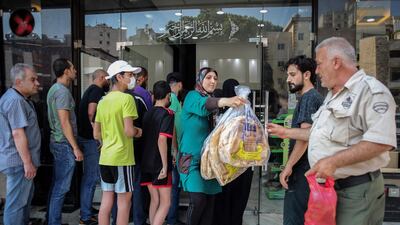
People queue to buy bread at a local bakery in Beirut, Lebanon on June 27. Lebanese officials announced more measures to stabilise the nation’s plunging local currency and rein in soaring food prices that have triggered nationwide protests. Hasan Shaaban/Bloomberg -
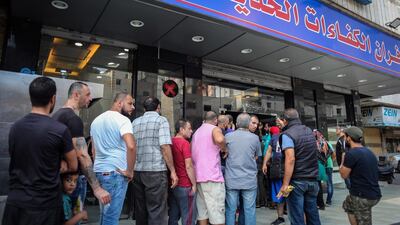
People queue to buy bread in Beirut, Lebanon on June 27. Hasan Shaaban/Bloomberg -
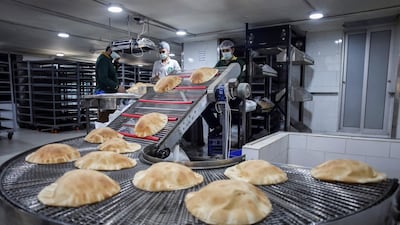
Flat bread loaves on a conveyor inside the kitchen at a local bakery in Beirut, Lebanon on June 27. Hasan Shaaban/Bloomberg -

Crowds outside a local bakery in Beirut. Hasan Shaaban/Bloomberg -
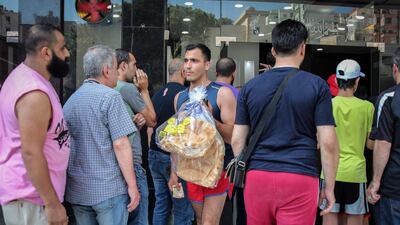
Scenes outside Beirut's bakeries. Hasan Shaaban/Bloomberg -
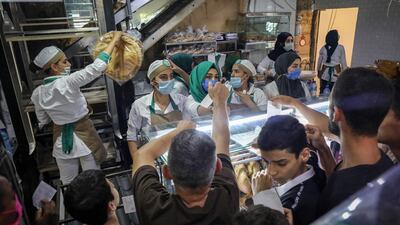
Workers wearing protective face masks serve a large crowd of customers at a bakery in Beirut on June 27. Bloomberg -
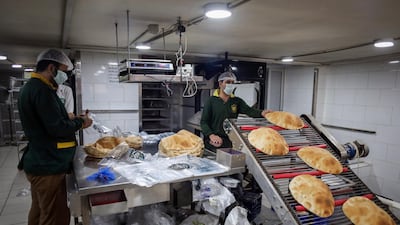
Flat bread inside the kitchen at a local bakery in Beirut. Bloomberg


So while Hezbollah would probably emerge stronger than other groups in Lebanon, it would also have to manage an increasingly unviable situation, while having to answer to over a million of its impoverished Shiite brethren. Unless an IMF bailout is forthcoming, this is a burden the paramilitary organisation could soon find overwhelming — regardless of its illicit financing networks. Moreover, this catastrophic situation would be open-ended without the introduction of reforms.
-
-
-
-
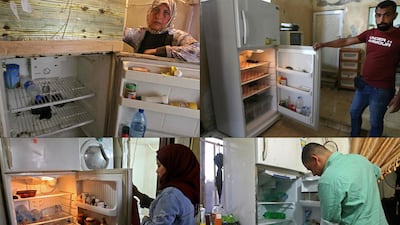
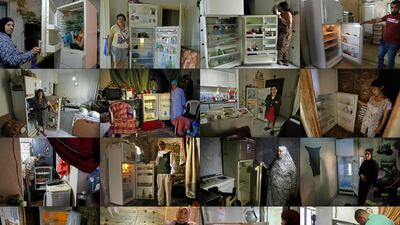
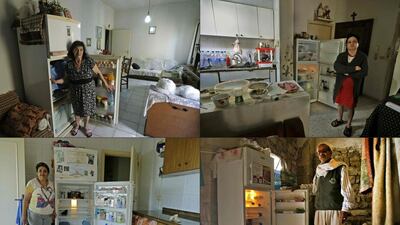
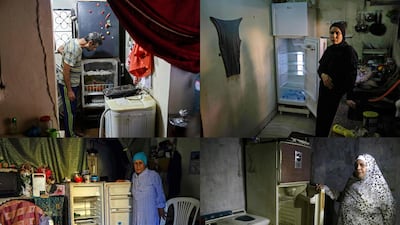
A combination image shows bare fridges across Lebanon as the economic crisis plunges households into poverty. AFP -
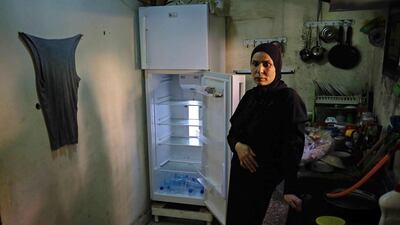
A Lebanese woman stands next to her empty refrigerator in her apartment in the port city of Tripoli. AFP -
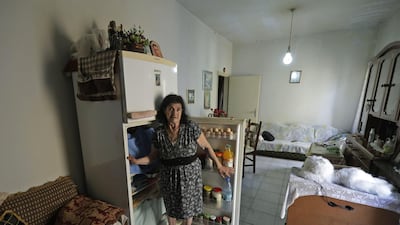
A Lebanese woman in Bouar north of Beirut displays the content of her refrigerator. AFP -

A Lebanese child stands next to an empty refrigerator in their apartment in the port city of Tripoli. AFP -
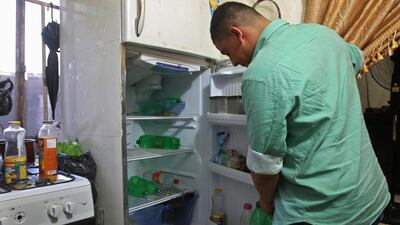
A Lebanese man displays the content of his refrigerator at his apartment in the southern city of Sidon. AFP -
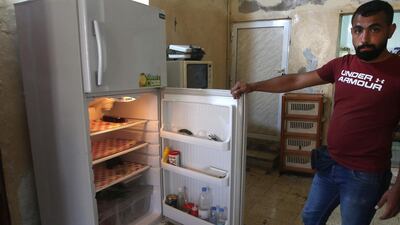
A Lebanese man displays the content of his refrigerator at his apartment in the southern city of Sidon. AFP -
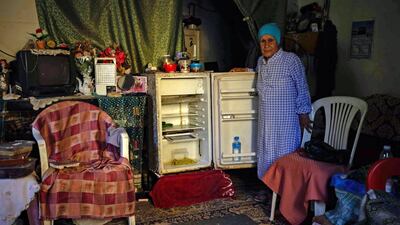
A Lebanese woman stands next to her empty refrigerator in her apartment in the port city of Tripoli. AFP -
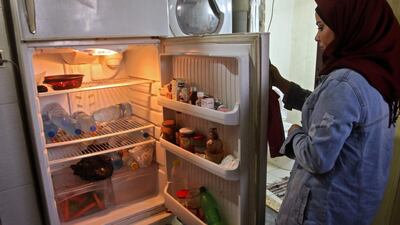
A Lebanese woman displays the content of her refrigerator at her apartment in the southern city of Sidon. AFP -
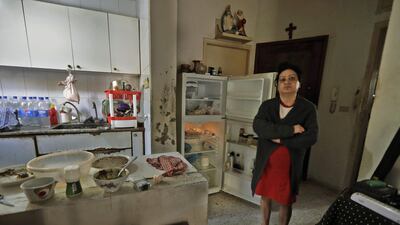
A Lebanese woman stands next to her empty refrigerator in her apartment in Zouk Mosbeh, north of Beirut. AFP -
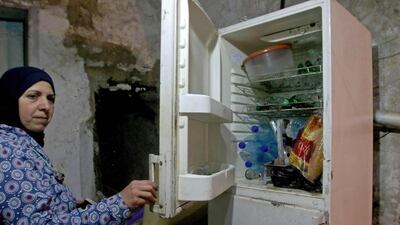
A Lebanese woman displays the content of her refrigerator at her apartment in the southern city of Sidon. AFP -
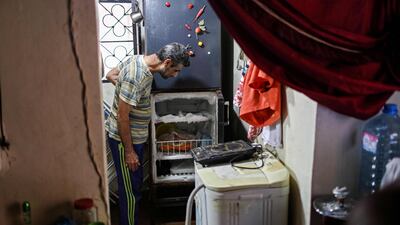
A Lebanese man looks at his empty refrigerator at his apartment in the capital. AFP -
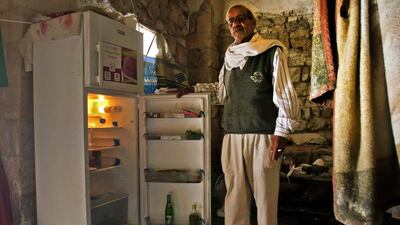
A Lebanese man displays the content of his refrigerator at his apartment in the southern city of Sidon. AFP -

A Lebanese woman displays the content of her refrigerator at her apartment in the southern city of Sidon. AFP -
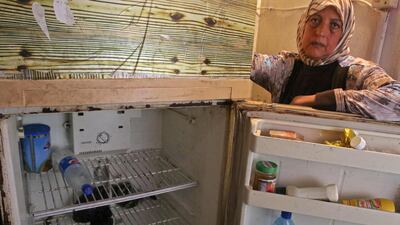
A Lebanese woman displays the content of her refrigerator at her apartment in the southern city of Sidon. AFP -
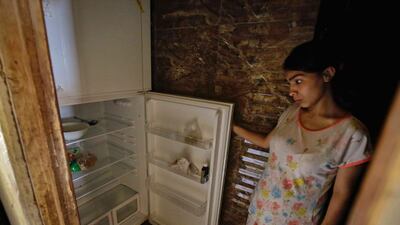
A Lebanese woman stands next to her empty refrigerator in her apartment in the port city of Tripoli. AFP -
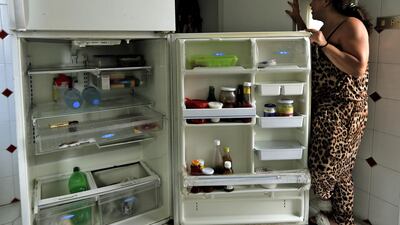
A Lebanese woman displays the content of her refrigerator at her apartment in Jounieh, north of Beirut. AFP -
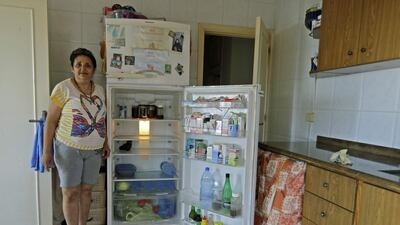
A Lebanese woman displays the content of her refrigerator at her apartment in Byblos. AFP


Therefore, given the starkness of the choice, the only option at this stage is for the sectarian political leaders to discuss a package deal that would allow Lebanon to move forward with the IMF. This can only take place in a closed forum portrayed as an emergency national summit on the economic situation. The politicians and parties would have to use this venue to come to a broad agreement over what they are willing to concede in order to begin implementing a reform project.
The equation is simple: if reforms are blocked and an IMF deal isn't agreed, Lebanon could disappear as a country on its hundredth anniversary. It will become a Hobbesian environment – without food, fuel, medicine and all the things that a normal country takes for granted. The cartel in power would salvage little from the wreckage. That is why its members must negotiate an agreement among themselves. Mr Aoun has not achieved much, but at least he can offer the country a road map and save some shards from his shattered mandate.
Michael Young is editor of Diwan, the blog of the Carnegie Middle East programme, in Beirut

