Picture this: it's a pre-historic age. The Sun rises over the horizon. It’s peaceful, only the birds chirp in the distance – some are close by. Gorg, a caveman, rolls out of his sleeping spot and readies himself for the day. His glance sweeps across the cave, mentally ticking off each of his family members as he sees them. And that’s when his eyes settle on Frurughz, the young male who has joined his family settlement when a pack of sabre-toothed tigers took out Frurughz’s community.
Gorg did not mind his presence. Not only had Frurughz remained an orphan at an early age, he also had wildly different interests and aptitudes than Gorg’s clan. His hunting and tool-shaping skills are just not up to par. What’s worse, he has no grasp of the terminology Gorg and his clan use to ambush and hunt down a mammoth.
Or, as Gorg would tell Armundzf, the mother of his children, and others around the table at his cave-folk dinner party, over a mammoth rib and some protozoan-infested water: Frurughz is such an illiterate.
For a person to become an active member of society, at any period in history, literacy in a certain number of areas is required. A minimal level is needed to survive in society and higher levels of literacy will result in thriving, not just surviving.
Throughout the ages, acquiring skills has been an evolutionary attribute of humanity and the importance and implications for people, society and the economy cannot be understated. Every technological and social step forward has contributed to who we are today. Agriculture, literature, arts, mathematics, engineering, the pyramids, and so much more, tell who we are, over time.
I am sure that during the age of hunter-gatherers, minimal literacy was about hunting and gathering. Plus, there will have been elements of shelter-building, clothes-making and culture-forming. All knowledge was imparted experientially by family and clan members, passed down the ages by storytelling.
I suspect that diversification of literacy-types will have evolved over the ages, too. Pyramids, temples, colosseums and other ancient super structures remain from a time that was hugely articulate: not everyone had to be a master temple-builder; but everyone had to have some form of literacy for a place in that society. The empires of ancient times had schools for some – mostly the wealthy or of royal descent, like those who became scribes in Mesopotamia – and advanced skills were taught on the job: masonry, shipbuilding, farming and so on.
I learnt a few basics on a Sinclair ZX81 with my dad’s computer instructor in the early 1980s. My son learns everything online, without an instructor
Fast-forward to the year 2000, and 75 per cent of the global population has received some form of elementary schooling, though regional and country variations are significant. Learning has moved from being a specialised on-the-job experience-based endeavour to being an in-class taught undertaking.
This latter approach has lifted the level of literacy that we commonly see today: children, adolescents and learners acquire fundamental literacy skills in reading, writing and mathematics. Specialised skills are taught in advanced learning settings as well as through apprenticeships and other means. However, the core skills that everyone needs are taught formally. This poses a conundrum, because the “core” changes over time.
Along come Generation Z (1997-2010) and Alpha (post-2010) – and the technologies they are native to, and that we older generations have learnt to use or at least live with. I learnt a few basics on a Sinclair ZX81 with my dad’s computer instructor in the early 1980s. My son learns everything online, without an instructor. And I mean everything. The opportunities are infinitely greater today, as are the risks.
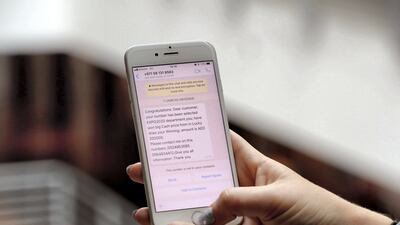
The entirety of our lives is online – from memories to bank accounts, to our social lives, our shopping lists and our travel arrangements. It often feels like malicious actors access my content with greater ease than I’m able to myself. This is precisely why digital literacy, while not new, is of paramount and universal importance. This entails understanding the meaning and impact of what we do, should or should not do online and how we protect ourselves and our families.
The race against viruses, phishing scams and malware in general is relentless. As private-sector companies invest significant percentages of their revenue to protect themselves, we need to become as literate as we possibly can, even if we are only end-users and not tech-savvy folks with specialist knowledge. While governments have a role in regulating and policing online activity, it is down to each single user to protect themselves.
And so, we come full circle: we live in a world in which classroom learning is being re-designed and re-configured, moving online and becoming personalised. Digital literacy is more important than ever today and for the future (as is financial literacy, by the way). Should this be taught alongside maths, reading and writing? Or should this happen indirectly, organically, through both official and dubious sources?
I don’t have an answer, but I would dread the day when I am at a dinner party and need to explain to my friends, over beef ribs and kale salad, that I have lost our holiday snaps because I was computer illiterate.

GAC GS8 Specs
Engine: 2.0-litre 4cyl turbo
Power: 248hp at 5,200rpm
Torque: 400Nm at 1,750-4,000rpm
Transmission: 8-speed auto
Fuel consumption: 9.1L/100km
On sale: Now
Price: From Dh149,900
Manchester United's summer dealings
In
Victor Lindelof (Benfica) £30.7 million
Romelu Lukaku (Everton) £75 million
Nemanja Matic (Chelsea) £40 million
Out
Zlatan Ibrahimovic Released
Wayne Rooney (Everton) Free transfer
Adnan Januzaj (Real Sociedad) £9.8 million
Specs
Engine: 51.5kW electric motor
Range: 400km
Power: 134bhp
Torque: 175Nm
Price: From Dh98,800
Available: Now
FIXTURES
All times UAE ( 4 GMT)
Saturday
Fiorentina v Torino (8pm)
Hellas Verona v Roma (10.45pm)
Sunday
Parma v Napoli (2.30pm)
Genoa v Crotone (5pm)
Sassuolo v Cagliari (8pm)
Juventus v Sampdoria (10.45pm)
Monday
AC Milan v Bologna (10.45om)
Playing September 30
Benevento v Inter Milan (8pm)
Udinese v Spezia (8pm)
Lazio v Atalanta (10.45pm)
Libya's Gold
UN Panel of Experts found regime secretly sold a fifth of the country's gold reserves.
The panel’s 2017 report followed a trail to West Africa where large sums of cash and gold were hidden by Abdullah Al Senussi, Qaddafi’s former intelligence chief, in 2011.
Cases filled with cash that was said to amount to $560m in 100 dollar notes, that was kept by a group of Libyans in Ouagadougou, Burkina Faso.
A second stash was said to have been held in Accra, Ghana, inside boxes at the local offices of an international human rights organisation based in France.
Timeline
2012-2015
The company offers payments/bribes to win key contracts in the Middle East
May 2017
The UK SFO officially opens investigation into Petrofac’s use of agents, corruption, and potential bribery to secure contracts
September 2021
Petrofac pleads guilty to seven counts of failing to prevent bribery under the UK Bribery Act
October 2021
Court fines Petrofac £77 million for bribery. Former executive receives a two-year suspended sentence
December 2024
Petrofac enters into comprehensive restructuring to strengthen the financial position of the group
May 2025
The High Court of England and Wales approves the company’s restructuring plan
July 2025
The Court of Appeal issues a judgment challenging parts of the restructuring plan
August 2025
Petrofac issues a business update to execute the restructuring and confirms it will appeal the Court of Appeal decision
October 2025
Petrofac loses a major TenneT offshore wind contract worth €13 billion. Holding company files for administration in the UK. Petrofac delisted from the London Stock Exchange
November 2025
180 Petrofac employees laid off in the UAE
Who's who in Yemen conflict
Houthis: Iran-backed rebels who occupy Sanaa and run unrecognised government
Yemeni government: Exiled government in Aden led by eight-member Presidential Leadership Council
Southern Transitional Council: Faction in Yemeni government that seeks autonomy for the south
Habrish 'rebels': Tribal-backed forces feuding with STC over control of oil in government territory
The%20specs
%3Cp%3E%0D%3Cstrong%3EEngine%3A%20%3C%2Fstrong%3E4.0-litre%20twin-turbo%20V8%0D%3Cbr%3E%3Cstrong%3EPower%3A%20%3C%2Fstrong%3E666hp%20at%206%2C000rpm%0D%3Cbr%3E%3Cstrong%3ETorque%3A%20%3C%2Fstrong%3E850Nm%20at%202%2C300-4%2C500rpm%0D%3Cbr%3E%3Cstrong%3ETransmission%3A%20%3C%2Fstrong%3E8-speed%20auto%0D%3Cbr%3E%3Cstrong%3EOn%20sale%3A%20%3C%2Fstrong%3EQ1%202023%0D%3Cbr%3E%3Cstrong%3EPrice%3A%20%3C%2Fstrong%3Efrom%20Dh1.15%20million%20(estimate)%3C%2Fp%3E%0A
COMPANY%20PROFILE
%3Cp%3E%3Cstrong%3ECompany%20name%3A%3C%2Fstrong%3E%20Switch%20Foods%3Cbr%3E%3Cstrong%3EStarted%3A%3C%2Fstrong%3E%202022%3Cbr%3E%3Cstrong%3EFounder%3A%3C%2Fstrong%3E%20Edward%20Hamod%3Cbr%3E%3Cstrong%3EBased%3A%3C%2Fstrong%3E%20Abu%20Dhabi%2C%20UAE%3Cbr%3E%3Cstrong%3EIndustry%3A%3C%2Fstrong%3E%20Plant-based%20meat%20production%3Cbr%3E%3Cstrong%3ENumber%20of%20employees%3A%3C%2Fstrong%3E%2034%3Cbr%3E%3Cstrong%3EFunding%3A%3C%2Fstrong%3E%20%246.5%20million%3Cbr%3E%3Cstrong%3EFunding%20round%3A%3C%2Fstrong%3E%20Seed%3Cbr%3E%3Cstrong%3EInvestors%3A%3C%2Fstrong%3E%20Based%20in%20US%20and%20across%20Middle%20East%3C%2Fp%3E%0A
Mercer, the investment consulting arm of US services company Marsh & McLennan, expects its wealth division to at least double its assets under management (AUM) in the Middle East as wealth in the region continues to grow despite economic headwinds, a company official said.
Mercer Wealth, which globally has $160 billion in AUM, plans to boost its AUM in the region to $2-$3bn in the next 2-3 years from the present $1bn, said Yasir AbuShaban, a Dubai-based principal with Mercer Wealth.
“Within the next two to three years, we are looking at reaching $2 to $3 billion as a conservative estimate and we do see an opportunity to do so,” said Mr AbuShaban.
Mercer does not directly make investments, but allocates clients’ money they have discretion to, to professional asset managers. They also provide advice to clients.
“We have buying power. We can negotiate on their (client’s) behalf with asset managers to provide them lower fees than they otherwise would have to get on their own,” he added.
Mercer Wealth’s clients include sovereign wealth funds, family offices, and insurance companies among others.
From its office in Dubai, Mercer also looks after Africa, India and Turkey, where they also see opportunity for growth.
Wealth creation in Middle East and Africa (MEA) grew 8.5 per cent to $8.1 trillion last year from $7.5tn in 2015, higher than last year’s global average of 6 per cent and the second-highest growth in a region after Asia-Pacific which grew 9.9 per cent, according to consultancy Boston Consulting Group (BCG). In the region, where wealth grew just 1.9 per cent in 2015 compared with 2014, a pickup in oil prices has helped in wealth generation.
BCG is forecasting MEA wealth will rise to $12tn by 2021, growing at an annual average of 8 per cent.
Drivers of wealth generation in the region will be split evenly between new wealth creation and growth of performance of existing assets, according to BCG.
Another general trend in the region is clients’ looking for a comprehensive approach to investing, according to Mr AbuShaban.
“Institutional investors or some of the families are seeing a slowdown in the available capital they have to invest and in that sense they are looking at optimizing the way they manage their portfolios and making sure they are not investing haphazardly and different parts of their investment are working together,” said Mr AbuShaban.
Some clients also have a higher appetite for risk, given the low interest-rate environment that does not provide enough yield for some institutional investors. These clients are keen to invest in illiquid assets, such as private equity and infrastructure.
“What we have seen is a desire for higher returns in what has been a low-return environment specifically in various fixed income or bonds,” he said.
“In this environment, we have seen a de facto increase in the risk that clients are taking in things like illiquid investments, private equity investments, infrastructure and private debt, those kind of investments were higher illiquidity results in incrementally higher returns.”
The Abu Dhabi Investment Authority, one of the largest sovereign wealth funds, said in its 2016 report that has gradually increased its exposure in direct private equity and private credit transactions, mainly in Asian markets and especially in China and India. The authority’s private equity department focused on structured equities owing to “their defensive characteristics.”
MORE ON CORONAVIRUS & THE ECONOMY
Ibrahim's play list
Completed an electrical diploma at the Adnoc Technical Institute
Works as a public relations officer with Adnoc
Apart from the piano, he plays the accordion, oud and guitar
His favourite composer is Johann Sebastian Bach
Also enjoys listening to Mozart
Likes all genres of music including Arabic music and jazz
Enjoys rock groups Scorpions and Metallica
Other musicians he likes are Syrian-American pianist Malek Jandali and Lebanese oud player Rabih Abou Khalil
COMPANY%20PROFILE
%3Cp%3E%3Cstrong%3EName%3A%20%3C%2Fstrong%3ESmartCrowd%0D%3Cbr%3E%3Cstrong%3EStarted%3A%20%3C%2Fstrong%3E2018%0D%3Cbr%3E%3Cstrong%3EFounder%3A%20%3C%2Fstrong%3ESiddiq%20Farid%20and%20Musfique%20Ahmed%0D%3Cbr%3E%3Cstrong%3EBased%3A%20%3C%2Fstrong%3EDubai%0D%3Cbr%3E%3Cstrong%3ESector%3A%20%3C%2Fstrong%3EFinTech%20%2F%20PropTech%0D%3Cbr%3E%3Cstrong%3EInitial%20investment%3A%20%3C%2Fstrong%3E%24650%2C000%0D%3Cbr%3E%3Cstrong%3ECurrent%20number%20of%20staff%3A%3C%2Fstrong%3E%2035%0D%3Cbr%3E%3Cstrong%3EInvestment%20stage%3A%20%3C%2Fstrong%3ESeries%20A%0D%3Cbr%3E%3Cstrong%3EInvestors%3A%20%3C%2Fstrong%3EVarious%20institutional%20investors%20and%20notable%20angel%20investors%20(500%20MENA%2C%20Shurooq%2C%20Mada%2C%20Seedstar%2C%20Tricap)%3C%2Fp%3E%0A
Past winners of the Abu Dhabi Grand Prix
2016 Lewis Hamilton (Mercedes-GP)
2015 Nico Rosberg (Mercedes-GP)
2014 Lewis Hamilton (Mercedes-GP)
2013 Sebastian Vettel (Red Bull Racing)
2012 Kimi Raikkonen (Lotus)
2011 Lewis Hamilton (McLaren)
2010 Sebastian Vettel (Red Bull Racing)
2009 Sebastian Vettel (Red Bull Racing)
Company profile
Name: Dukkantek
Started: January 2021
Founders: Sanad Yaghi, Ali Al Sayegh and Shadi Joulani
Based: UAE
Number of employees: 140
Sector: B2B Vertical SaaS(software as a service)
Investment: $5.2 million
Funding stage: Seed round
Investors: Global Founders Capital, Colle Capital Partners, Wamda Capital, Plug and Play, Comma Capital, Nowais Capital, Annex Investments and AMK Investment Office
PROFILE OF INVYGO
Started: 2018
Founders: Eslam Hussein and Pulkit Ganjoo
Based: Dubai
Sector: Transport
Size: 9 employees
Investment: $1,275,000
Investors: Class 5 Global, Equitrust, Gulf Islamic Investments, Kairos K50 and William Zeqiri