


The moment I saw what happened during the Hamas-led attack on October 7 – the horrendous massacre of more than 1,000 Israelis – I knew Gaza as we knew it would cease to exist.
The Israeli war that has ensued since then has been nothing short of a disaster. Most of the Strip’s infrastructure and housing stock has been destroyed to some degree by Israeli bombs, and entire families have been wiped out in a campaign that, at times, appears indiscriminate.
I have experienced this up close with the loss of more than 31 of my family members to Israeli airstrikes on both of my childhood homes, in Gaza City and Rafah. My entire family is now homeless and several of its members have been permanently maimed.
Allegations of Israel using AI tools to target Palestinians based on their probability of being a militant are particularly disturbing. For weeks, I have desperately sought even the slightest of explanations for what could have justified the airstrikes on my family homes, which killed dozens of women, elderly people and children as young as three and four months old.
I know my family well and have kept in close contact with them since leaving Gaza; they are not involved with Hamas. But perhaps, along with many other civilians across Gaza, they fell victim to error-prone technology that accelerated targeting acquisition for political purposes with little regard for sparing civilian lives.

The scale of needless death and destruction in Gaza – along with Israeli military and settler violence in the West Bank, which preceded October 7 – has enraged the global conscience and pro-Palestine advocates and activists, and rightly so.
The problem, however, is that those energies are not being harnessed constructively, in a way that would promote the best interest of Gazans beyond freeing them from Israeli oppression. Instead of rejecting violence and acknowledging Hamas’s destructive impact on the Palestinian people, some have fuelled hateful rhetoric against co-existence with Jews and Israelis, and given new life to the narrative that Hamas champions.
Within the pro-Palestine discourse, there is little space for diverse opinions and thoughts, with any dissent or difference of opinion being labelled treacherous and cowardly. Some of the very people who regularly tell us how Arabs and Muslims are not monolithic are quick to dismiss diverse views and enforce rigid conformity of what it means to be pro-Palestine and what a resolution to the conflict should entail.
There has also been a clear and indisputable rise in overt anti-Semitism and an irresponsible attempt in many corners to hold all Jewish people accountable for the actions of Israel.
I was appalled by the failure of many who claim to support Palestinian rights to see and acknowledge the humanity of the Israeli civilians who were mercilessly and randomly killed without any regard for the legal, moral and even religious protections they should have been afforded as non-combatants.
Some were quick to proclaim that all Israelis are guilty of occupation and are complicit in the injustices against the Palestinian people and, therefore, they’re all legitimate military targets. This twisted thinking is not only unethical, but it is comparable to some subsequent proclamations by Israelis that there are no innocent civilians in Gaza.
The mutual dehumanisation between many Israelis and Palestinians since then is one of the primary reasons to speak out against Hamas, the war and the binary narrative that has taken shape. Hamas and its leader, Yahya Sinwar, have helped to drag Gazans into that war without any strategic vision beyond violent extremism and messianic nihilism.

Having grown up in Gaza, I experienced Hamas’s rise to power and their gradual grip over the Strip and Palestinian politics and society, hiding behind a resistance narrative and using extremist politics to sabotage prospects for a peaceful resolution to the conflict with Israel. Months before October 7, tens of thousands of Gazans protested in the streets in defiance of Hamas, just as they had in 2019 and 2017.
The “We Want to Live” protest movement decried living conditions and unemployment in Gaza, as well as the lack of a political horizon for meaningful change in the territory's realities and opportunities. Hamas’s regime consisted of a criminal and despotic enterprise that used Gaza as a haven for the group's members and affiliates and turned Palestinians there into aid-dependent subjects reliant on the international community. Hamas enriched itself in the process of turning Gaza into a “resistance citadel” that was part of a nefarious regional alliance with Iran.
The blockade on Gaza after Hamas’s takeover in 2007 is in no small part the result of its violent decisions that bore terrible consequences for the people while the group insulated itself from the consequences. One cannot separate the injustices experienced by Palestinians in Gaza due to Israeli policies from Hamas’s role as a governing administrative body that also wants to operate as a militant resistance group simultaneously.
When asked at the beginning of the war why Hamas never built a single bomb shelter for civilians, one of the group’s senior leaders, Musa Abu Marzouk, said Hamas builds tunnels to protect themselves but that the protection and well-being of Gazans is the responsibility of the UN and the international community.
This attitude sums up almost two decades of Hamas’s rule in Gaza, in which the group instigated futile wars with Israel that failed to liberate an inch of Palestinian land and would instead get Gazans killed and batter the Strip.
Hamas would then benefit from the reconstruction funded by the international community and the work of humanitarian NGOs, absolving itself from its governance responsibilities and facing little consequences for its violent and destructive actions.
Though the Israel and Palestine issue has always entailed divisive politics, high tensions, and difficult dynamics, the discourse has become incredibly toxic since October 7 – having effectively broken down completely. Both sides are so entrenched in their respective narratives that little to no dialogue or constructive engagement has taken place.
-
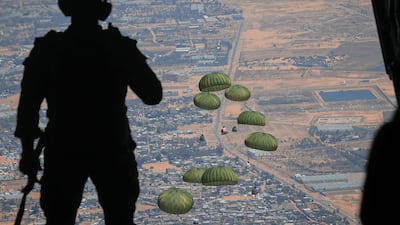
Humanitarian aid being dropped from a Jordan military aircraft over the Gaza Strip amid battles between Israel and Hamas. AFP -

British military personnel during the international aid air drop into Gaza. PA -
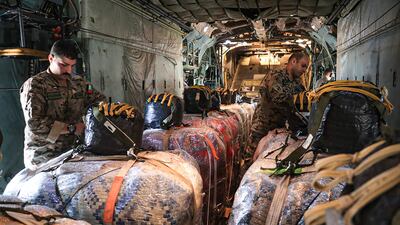
Humanitarian aid before being dropped from a military aircraft. AFP -
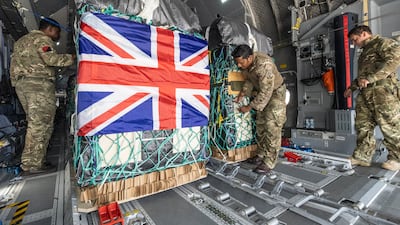
Hundreds of tonnes of resources were delivered into the enclave. The UAE, US, Germany, France, Indonesia, the Netherlands and Egypt also took part. PA -
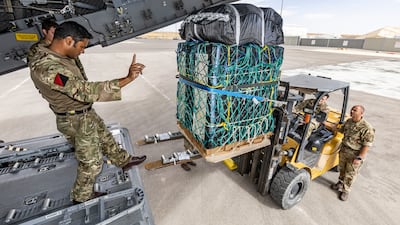
British military personnel took part in the international aid drop into Gaza. PA -
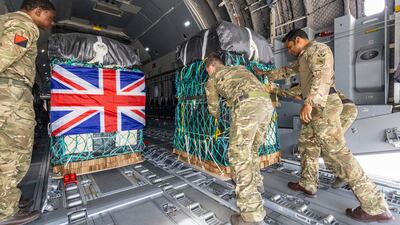
The operation was led by the Jordanian Armed Forces and coincided with Eid Al Fitr. PA -
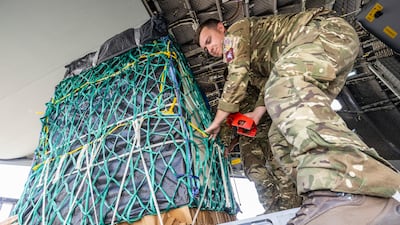
Led by the Jordanian Armed Forces, the delivery coincided with the end of Ramadan. PA


Unfortunately, some pro-Palestine activism has been dominated by extreme voices that have normalised Hamas’s actions against civilians, claiming it to be a natural expression of resistance and an inevitable result of occupation. Protests, university campuses and social media are full of rhetoric and slogans promoting the armed resistance narrative and framing dialogue, co-existence and peace as cowardly and undesirable. Those voices have obfuscated Hamas’s culpability and have understated Palestinian authorities’ own agency and consistent leadership mistakes and errors that have contributed to the failure of the Palestinian national project.
Much of the Pro-Palestine activism, as it stands today, has been largely ineffective in promoting pragmatic options that actually help the Palestinian people and improve their prospects beyond feel-good proclamations and statements. While many are motivated by sincere feelings of sympathy for the terrible suffering in Gaza, they are often misinformed about the realities of Hamas, its governance and its alliances.
Most also overlook just how useful Hamas has been to Israeli Prime Minister Benjamin Netanyahu’s Machiavellian and anti-Palestinian designs. Mr Netanyahu has long leveraged the group as a means to keep the Palestinians politically divided and prevent the establishment of a Palestinian state. Hamas has played that role dutifully by sabotaging an imperfect yet viable peace process, thereby empowering right-wing extremists in Israel.
Since October 7 I have spoken out against both Hamas and the conduct of the war, and engaged with Jewish and Israeli audiences, some of whom are hearing a Palestinian voice and perspective for the first time. They include centrists, centre-right and Zionist segments of the Jewish population who are often ignored, maligned and vilified by many pro-Palestine activists who insist that the only Jewish audiences worth communicating with are those who are explicitly anti-Zionist.
An intellectual renaissance is sorely needed in the pro-Palestine movement, to build new alliances with Jewish and Israeli audiences and to develop a substantially different ethos based on pragmatism and the end of zero-sum rhetoric and mutually exclusive approaches.
My experience, even amid an immensely destructive and harrowing war that is annihilating Gaza, is that it is possible to be pro-Palestine while maintaining the humanity of Israelis who have a right to live in safety and security, just as the Palestinian people have an undeniable right to live free from military occupation and perpetual dehumanisation by extremist policies.
Finding the slightest common ground is not easy, but it is fully attainable and possible. This requires pragmatic compromises and realising that time is not on the Palestinian people’s side. The world is growing tired of having to rebuild Gaza every few years.
While I can understand how it can be difficult for many in Gaza and the West Bank to see things differently (although many do not) because of the day-to-day struggles of life under an unjust occupation, it is frustrating and disheartening when so many diaspora allies, intellectuals, academics and activists fail to change course and try something different.
It is incumbent upon those of us who have privilege and access to safety, resources and free expression to speak up and out and help the Palestinian people develop a new programme and movement that propels their just and urgent cause forward. One only needs to look to other parts of the Arab world and the destructive impact of extremism since the Arab uprisings in 2011 to realise the incompatibility of groups like Hamas and the Muslim Brotherhood with the aspirations of the masses in the post-colonial modern world.
What is needed is a comprehensive rebranding and rejuvenation of what peace actually means in a Palestinian context – a definition that stands apart from what has been offered by Palestinian leaders. It involves a pragmatic acceptance that after 75 years of setbacks, Israel’s people are there to stay, and we must find a way to establish a shared future that embraces and acknowledges each other's mutual existence.
Naturally, this will also require significant steps by the Israeli government and people to acknowledge the rights of Palestinians to exist on their land as sovereign people and to reverse decades of an expanding occupation.
Many Israeli politicians often point to Gaza under Hamas as evidence of the failure of Palestinian control – how it doesn’t lead to peace and instead results in perpetual violence and terrorism. But a post-Hamas Palestinian leadership must view the reconstruction of Gaza after the war as an opportunity to prove and demonstrate the viability of the kind of governance of which Palestine is truly capable: one that can effectively usher in an independent and sovereign state.
Indeed, peace can and must be rebranded as the only way to prevent further death and occupation of Palestinian lives and land – peace is courageous and worthy of pursuing.

