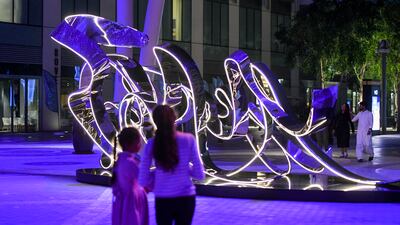
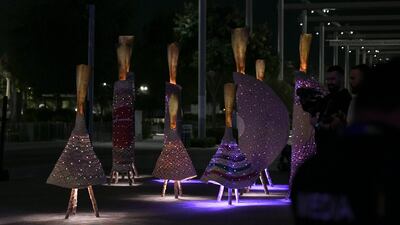
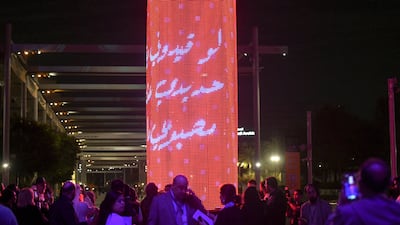
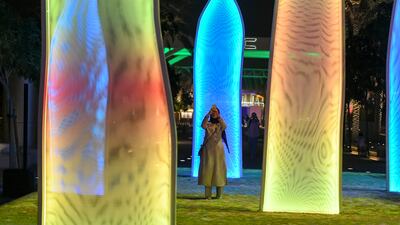
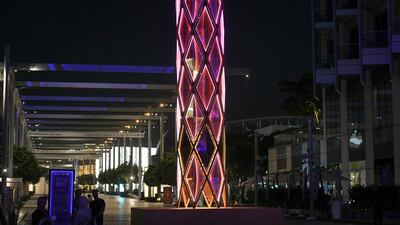
The Sleeping Muse, an art exhibition hosted by the One Wall Gallery inside Dubai's Index Mall. There is a growing recognition among shopping destinations that cultural and experiential offerings are integral to their appeal. Chris Whiteoak / The National
The Sleeping Muse, an art exhibition hosted by the One Wall Gallery inside Dubai's Index Mall. There is a growing recognition among shopping destinations that cultural and experiential offerings are i
Alexis Dijksterhuis is the Director of Strategic Consulting and Head of Sports, Leisure and Entertainment at JLL Mena
March 27, 2024
As boundaries blur between the physical and digital realms, increased personalisation and the desire for unique and engaging experiences are reshaping expectations and redefining how we interact with the world around us.
Nowhere is this transformation more keenly felt than in the retail industry where the traditional shopping mall, once hailed as the foundation of the retail economy, has reinvented itself to deliver much more than the basic shopping experience. The growth of a young, affluent population, its desire for new and captivating experiences, and the rapid evolution of technology, have seen traditional notions of retail give way to the “experience economy”.
The focus here is on Gen Z, the rising consumer group that highly values new experiences in dining, travel and gaming, delivered through touch interfaces and advanced technologies such as virtual and augmented reality. Immersive experiences that engage the senses, are lifelike, interactive and blend the physical and digital have become the new social currency of these tech-savvy consumers.
As well as selling phones, Samsung’s 'Samsung 837' pop-up store in Manhattan also offers interactive art, virtual reality, lounge areas and a recording studio. Reuters
The opening earlier this year of Arte Museum, a digital art gallery in Dubai Mall, reflects a growing recognition among shopping destinations that cultural and experiential offerings are integral components of their appeal. This follows the launch of the Mall of the Metaverse last year, the Emirates’ first virtual retail and entertainment destination.
Shopping malls in the Mena region have today transitioned from simple marketplaces into multi-purpose destinations and community hubs, integrating a combination of retail, entertainment, dining options and other asset classes. With the rise of e-commerce, traditional retailers are blending online and offline experiences to foster stronger connections and build brand loyalty. Innovative in-store concepts, interactive displays and the introduction of “phygital” concepts such as the physical store of online retailer, 6th Street.com, at Dubai Hills Mall align with the needs of the digital shopper.
Globally, brands such as Samsung are creating physical spaces to connect the metaverse with their products. This type of experiential retail goes beyond traditional shopping by offering customers unique experiences in physical retail spaces. Samsung’s “Samsung 837” pop-up store in Manhattan, spanning 560,000 square feet, provides interactive art, virtual reality, lounge areas, a recording studio, and a three-storey 96-screen display wall.
As developers and property owners adapt to the shifting demands of consumers, the effect of the experience economy is also being felt on office real estate
Unlike in the past, the concept of selling experiences has today expanded into the broader sports, leisure and entertainment industry. This sector is quickly adapting to the challenge of creating new experiences to keep consumers coming back for more, leading to a profound impact on the real estate landscape.
Family entertainment destinations, theme parks and leisure and amusement centres, are also being supported by an active year-round event and entertainment calendar to cater to diverse tastes in music, food, art and more. In 2022, Qatar’s hosting of the Fifa World Cup significantly boosted the economic potential and cultural attractiveness of the region on the global stage. The same is likely to happen again, and especially for Saudi Arabia, with Expo 2030 Riyadh and the 2034 World Cup.
The development of mixed-use entertainment districts is another example of how the experience economy is influencing real estate. A shining illustration of this trend is visible across Saudi Arabia where the country is actively building a vibrant entertainment ecosystem. Disruptive entertainment destinations such as Qiddiya, New Murabba and and Neom resonate with the shift in modern trends of gamification, “artainment” and “eatertainment”, delivering new genres of experience.
The Scent of Memories installation by Najat Makki. All photos: Khushnum Bhandari / The National
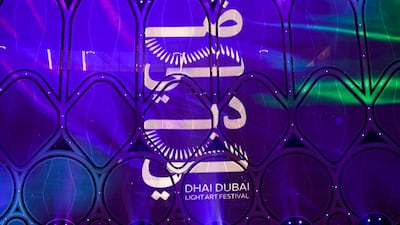
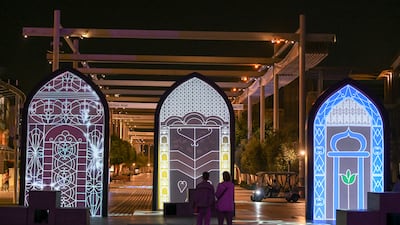
The festival is showcasing the work of seven Emirati artists from different generations and styles
Daraweezna by Reem Al Ghaith is based on the history of traditional doors of Dubai
Nomad 2.0 by Khalid Alshafar is based on the idea of the arish, a traditional UAE large hut-like structure made from panels of palm fronds
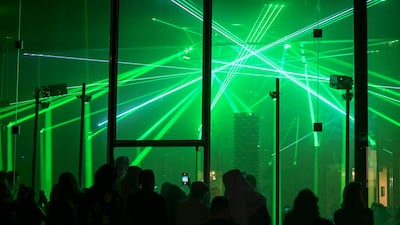
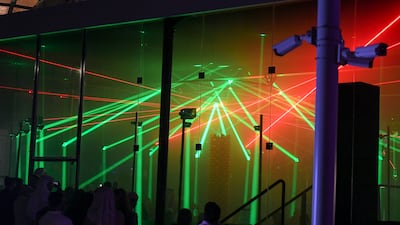
In three-minute intervals, a sound and light show captivates the viewers who gather inside
Movement of Stillness by Mattar Bin Lahej combines light, calligraphy and the essence of a speeding horse
Mohamed Yousef’s I'm Still a Child captures the perspective of childhood and elements of domestic life in the UAE
Afterlife by Maitha Hamdan displays unique and contemporary elements of graphic design and signage
The Scent of Memories Dr Najat Makki shows seven stylised female figures to represent the seven emirates
Minaret 2.0 by Abdalla Almulla is a stunning geometric piece inspired by the design and function of mosque’s minaret
The experience economy is also being incorporated in the development plans of smart cities and urban planning. City planners are designing spaces that prioritise walkability, green areas as well as cultural and recreational facilities to provide residents and visitors with diverse and enriching experiences. A case in point is Expo City Dubai, a future-centric mini-city that builds on the legacy of Expo 2020 Dubai.
The development of entertainment-focused destinations helps drive value addition, enabling residential and commercial spaces that are part of the wider masterplan to command premium prices. In Abu Dhabi, the Saadiyat Cultural District project exemplifies this, with its proximity to internationally renowned cultural landmarks such as Louvre Abu Dhabi, Guggenheim Abu Dhabi, the Zayed National Museum, Teamlab Abu Dhabi and the Natural History Museum Abu Dhabi. These landmarks, all located within a two square kilometre area, contribute to a unique and appealing experience that people buy in to, significantly elevating apartments and villas’ appeal – and value.
As developers and property owners adapt to the shifting demands of consumers, the effect of the experience economy is also being felt on office real estate. Co-working spaces that offer an experience of community, events, exhibitions, collaboration and flexibility are becoming increasingly popular, especially among freelancers, startups and even large corporations. Interior design is carefully considered to boost productivity, social interaction and well-being while natural lighting, open spaces, ergonomic furniture, relaxation zones and even nap pods are becoming the norm in the workspace.
As the experience economy evolves into its next phase, known as the "transformation economy", real estate developers and other stakeholders have an opportunity to deliver more hyper-personalised experiences that are memorable and fuel the demand for more.

Your UK residence status is assessed using the statutory residence test. While your residence status – ie where you live - is assessed every year, your domicile status is assessed over your lifetime.
Your domicile of origin generally comes from your parents and if your parents were not married, then it is decided by your father. Your domicile is generally the country your father considered his permanent home when you were born.
UK residents who have their permanent home ("domicile") outside the UK may not have to pay UK tax on foreign income. For example, they do not pay tax on foreign income or gains if they are less than £2,000 in the tax year and do not transfer that gain to a UK bank account.
A UK-domiciled person, however, is liable for UK tax on their worldwide income and gains when they are resident in the UK.
What are NFTs?
Are non-fungible tokens a currency, asset, or a licensing instrument? Arnab Das, global market strategist EMEA at Invesco, says they are mix of all of three.
You can buy, hold and use NFTs just like US dollars and Bitcoins. “They can appreciate in value and even produce cash flows.”
However, while money is fungible, NFTs are not. “One Bitcoin, dollar, euro or dirham is largely indistinguishable from the next. Nothing ties a dollar bill to a particular owner, for example. Nor does it tie you to to any goods, services or assets you bought with that currency. In contrast, NFTs confer specific ownership,” Mr Das says.
This makes NFTs closer to a piece of intellectual property such as a work of art or licence, as you can claim royalties or profit by exchanging it at a higher value later, Mr Das says. “They could provide a sustainable income stream.”
This income will depend on future demand and use, which makes NFTs difficult to value. “However, there is a credible use case for many forms of intellectual property, notably art, songs, videos,” Mr Das says.
Houthis: Iran-backed rebels who occupy Sanaa and run unrecognised government
Yemeni government: Exiled government in Aden led by eight-member Presidential Leadership Council
Southern Transitional Council: Faction in Yemeni government that seeks autonomy for the south
Habrish 'rebels': Tribal-backed forces feuding with STC over control of oil in government territory
Benefits of first-time home buyers' scheme
Priority access to new homes from participating developers
Discounts on sales price of off-plan units
Flexible payment plans from developers
Mortgages with better interest rates, faster approval times and reduced fees
DLD registration fee can be paid through banks or credit cards at zero interest rates
EA Sports FC 24
MATCH INFO
Barcelona v Real Madrid, 11pm UAE
Match is on BeIN Sports
How to watch Ireland v Pakistan in UAE
When: The one-off Test starts on Friday, May 11 What time: Each day’s play is scheduled to start at 2pm UAE time. TV: The match will be broadcast on OSN Sports Cricket HD. Subscribers to the channel can also stream the action live on OSN Play.
Engine: 1.8 litre combined with 16-volt electric motors
Transmission: Automatic with manual shifting mode
Power: 121hp
Torque: 142Nm
Price: Dh95,900
Mercer, the investment consulting arm of US services company Marsh & McLennan, expects its wealth division to at least double its assets under management (AUM) in the Middle East as wealth in the region continues to grow despite economic headwinds, a company official said.
Mercer Wealth, which globally has $160 billion in AUM, plans to boost its AUM in the region to $2-$3bn in the next 2-3 years from the present $1bn, said Yasir AbuShaban, a Dubai-based principal with Mercer Wealth.
“Within the next two to three years, we are looking at reaching $2 to $3 billion as a conservative estimate and we do see an opportunity to do so,” said Mr AbuShaban.
Mercer does not directly make investments, but allocates clients’ money they have discretion to, to professional asset managers. They also provide advice to clients.
“We have buying power. We can negotiate on their (client’s) behalf with asset managers to provide them lower fees than they otherwise would have to get on their own,” he added.
Mercer Wealth’s clients include sovereign wealth funds, family offices, and insurance companies among others.
From its office in Dubai, Mercer also looks after Africa, India and Turkey, where they also see opportunity for growth.
Wealth creation in Middle East and Africa (MEA) grew 8.5 per cent to $8.1 trillion last year from $7.5tn in 2015, higher than last year’s global average of 6 per cent and the second-highest growth in a region after Asia-Pacific which grew 9.9 per cent, according to consultancy Boston Consulting Group (BCG). In the region, where wealth grew just 1.9 per cent in 2015 compared with 2014, a pickup in oil prices has helped in wealth generation.
BCG is forecasting MEA wealth will rise to $12tn by 2021, growing at an annual average of 8 per cent.
Drivers of wealth generation in the region will be split evenly between new wealth creation and growth of performance of existing assets, according to BCG.
Another general trend in the region is clients’ looking for a comprehensive approach to investing, according to Mr AbuShaban.
“Institutional investors or some of the families are seeing a slowdown in the available capital they have to invest and in that sense they are looking at optimizing the way they manage their portfolios and making sure they are not investing haphazardly and different parts of their investment are working together,” said Mr AbuShaban.
Some clients also have a higher appetite for risk, given the low interest-rate environment that does not provide enough yield for some institutional investors. These clients are keen to invest in illiquid assets, such as private equity and infrastructure.
“What we have seen is a desire for higher returns in what has been a low-return environment specifically in various fixed income or bonds,” he said.
“In this environment, we have seen a de facto increase in the risk that clients are taking in things like illiquid investments, private equity investments, infrastructure and private debt, those kind of investments were higher illiquidity results in incrementally higher returns.”
The Abu Dhabi Investment Authority, one of the largest sovereign wealth funds, said in its 2016 report that has gradually increased its exposure in direct private equity and private credit transactions, mainly in Asian markets and especially in China and India. The authority’s private equity department focused on structured equities owing to “their defensive characteristics.”