


In a year marked by deepening humanitarian crises in the Middle East, Africa and Eastern Europe, division has torn the fabric of the international community. It has been a dark year for diplomacy, with hope often overshadowed by despair.
Then, at the most important climate negotiations to date, we saw a glimmer of light. Just when the world needed unity and action, the Cop28 presidency stepped up to the plate and delivered.
Meeting amid great geopolitical volatility, at the tail-end of the hottest year on record, and with the planet already 1.2°C degrees warmer than pre-industrial levels, the 198 parties at Cop28 agreed on a way forward to course-correct the trajectory of our energy systems and reconstruct the global financial climate architecture.
This is no small feat. Since 1995, the UN’s annual climate summits have failed to reach an agreement on the future of fossil fuels. Spurred by national interests, countries have been reluctant to discuss legally binding treaties to make clear the link between climate action and fossil fuels. Until Cop26 in Glasgow two years ago, fossil fuels were seldom, if ever, mentioned in connection with the conference’s negotiations.
The UAE Consensus breaks that mould, and then some. By inscribing clear and concrete language, for the first time in almost 30 years, into a Cop-negotiated text on the need to transition away from fossil fuels, Cop28 can mark a pivotal paradigm shift in the way we tackle the climate crisis, collectively.
If there is one consistent takeaway from each of the previous iterations of Cops, it’s that any plan is only as good as the speed and scale of its execution. Now, to turn the UAE Consensus into tangible climate action, we must continue to foster global collaboration to drive transformational change and build a resilient climate future for all. That means holding the pledges announced at Cop28 accountable through financial commitments and timelines.
The negotiated text, the pledges and the targets laid out at Cop28 were extensive and practical – reflecting not only the needs of the Parties but representing clear steps to keep 1.5°C within reach, while leaving no one behind.
Throughout Cop28, the spotlight was trained on previously overlooked sectors such as food, trade, education and nature, as well as new sectors such as health. It examined the demand and supply sides of heavy emitting industries, with the launch of the Oil and Gas Charter demonstrating a will to address the previously ignored elephants in the room. It reframed the finance dialogue, unlocked mitigation action and operationalised the loss and damage fund – on the very first day of the conference. And it garnered much-needed attention on the protection of public health from growing climate impacts, with 120 countries backing the UAE-World Health Organisation’s “Cop28 UAE Declaration on Climate and Health”.
Cop28 cast a wide net. But as we expected – and needed – renewable energy was a key focal point. The focus on renewables at Cop28 confirmed a latent principle: our world does not work without energy. But our future world will not work without clean energy. And parties rallied around this sentiment, with 130 countries signing up to the Renewable and Energy Efficiency Pledge. Informed by research from the International Renewable Energy Agency, the pledge seeks to triple global renewable energy capacity to 11,000 gigawatts and double energy efficiency from 2-4 per cent, both by 2030. Achieving these targets by the end of the century, Irena says, can put us back onto a 1.5°C pathway.
Though this shift to renewables is already well under way, especially in the UAE, this year, for the first time, there will be more finance invested in renewables than fossil fuels. And now, with official UNFCCC language on ramping up renewables, we can go further and faster in scaling up clean energy capabilities from the developed to the developing world. Scaling up the deployment and development of renewable solutions is a win-win. It works for the developing world. It works for climate. It works for private sector investors. And it works for the future.
To accelerate this shift to renewables, we must direct finance to research and development. We must empower private sector entrepreneurs working in the clean energy. And, at the top level, we must build on the foundations of our international partnerships, like the UAE is doing with Irena. On this point, we have seen the benefits of our continued collaboration from one Cop to the next.
-

Henrietta Moon, founder of Finnish start-up Carbo Culture, says carbon removal technology companies are valuable. Chris Whiteoak / The National -
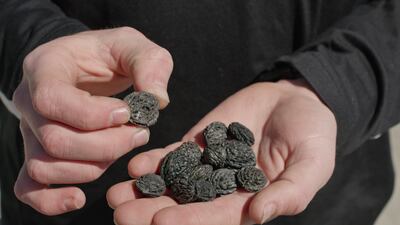
Carbo Culture uses bio-char generated from dust pellets and waste wood to lock in carbon. Photo: Carbo Culture -
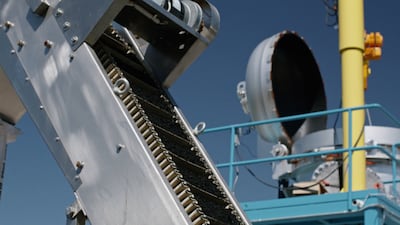
The company aims to extract 3,000 tonnes of carbon dioxide from the atmosphere. Photo: Carbo Culture -
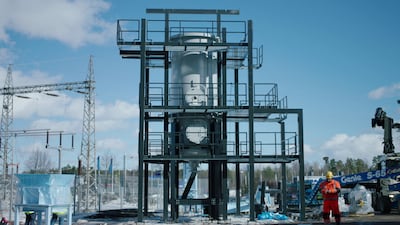
It has plants in the US and Europe and its bio-char can be used to improve soil quality. Photo: Carbo Culture -
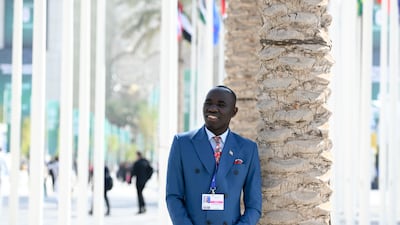
Jolis Nduwimana, an entrepreneur from Burundi, says he built connections at Cop28 to support his sustainability ambitions. Khushnum Bhandari / The National -

His start-up Wege collects plant, banana and paper waste from 15,200 small-scale farms that would otherwise be burnt. Photo: Jolis Nduwimana -
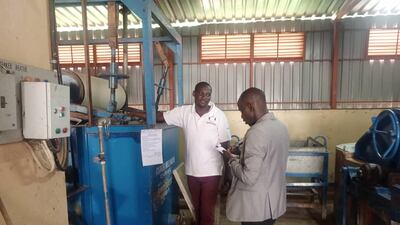
The waste is boiled in vats and transformed into eco-friendly bags. Photo: Jolis Nduwimana -
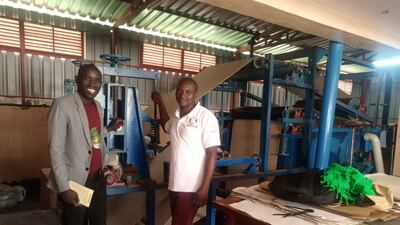
The company now makes 500 eco-friendly bags each day with ambition to grow to 2,000. Photo: Jolis Nduwimana -
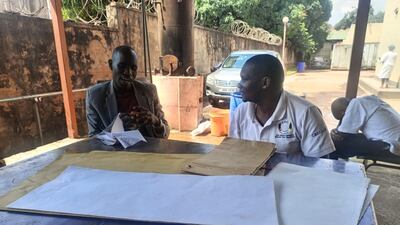
A Burundi ban on plastic bags set Mr Nduwimana thinking about a solution. Photo: Jolis Nduwimana -

The team spends hours separating paper, banana and rice waste before its converted to pulp. Photo: Jolis Nduwimana -

The waste would otherwise be burnt or rot in landfills. Photo: Jolis Nduwimana -

The pulp is dried in the sun before being used to make bags. Photo: Jolis Nduwimana -

Wege sells the bags to boutiques and pharmaceutical companies Photo: Jolis Nduwimana


For instance, since Irena launched the Energy Transition Accelerator Financing platform at Cop26 with support and anchor funding of $400 million from the Abu Dhabi Fund for Development, the platform surpassed its Cop28 target of mobilising $1 billion four-fold. Financial pledges towards ETAF at Cop28 reached $4 billion to scale up renewable energy projects that contribute to Nationally Determined Contributions in developing countries, while enhancing energy access and security, and promoting economic growth and diversification.
Building renewable energy capabilities and capacities is urgent in the Global South – which was a core focus area at Cop28. An estimated annual investment of up to $5 trillion is needed in clean and renewable infrastructure solutions by 2030. Especially in climate frontline communities. Clean energy investments in Africa currently represent just 2 per cent of the global total. The current global investment imbalance could not be clearer.
Access to finance, to fund these projects, goes hand-in-hand with access to energy. Throughout Cop28, climate finance was a central theme. More than three quarter of the $83.3 billion committed to climate action at the conference was assigned to climate finance mechanisms. One standout in this area was the Alterra climate fund announced by President Sheikh Mohamed.
Alterra marks a significant step towards bridging the climate finance gap, especially in the Global South. This $30 billion fund aims to mobilise at least another $250 billion of investment by 2030, demonstrating the UAE’s commitment to incentivising investments in key regions for the global energy transition.
And when we consider the operationalisation – and filling-up – of the Loss and Damage Fund, on the very first day of the conference, Cop28 has been a case study in negotiating breakthroughs for climate diplomacy.
No previous Cop achieved so much, nor so soon. In this sense, Cop28 has changed the game. With the world imploring its leaders for climate positive action, Cop28 delivered. But now the real test of our global commitment to bridging the energy and emissions gaps begins.
It is a test that we will pass only if we remain united in the face of unrelenting social, political and economic headwinds.

