

With only a day to go before Cop28 gets under way, the world is at a critical juncture in the fight against climate change. Record-shattering temperatures and devastating climate shocks have cost lives and livelihoods around the world, from prolonged wildfires in Chile to rampant hurricanes in Mexico, and intense flooding in Kenya and Somalia.
In this context, the agenda set by the incoming Cop28 Presidency, focusing on fast-tracking a just, equitable and orderly energy transition, is more than a strategy to tackle climate change. It is a moral imperative and, quite simply, a matter of survival.
The Paris Agreement provided us with a clear direction. And the science has since underscored the milestones we must reach by 2030. Now, our challenge lies in translating our targets into tangible, actionable steps to keep 1.5°C within reach.
We need to think bigger and implement quicker. We need to almost halve global carbon emissions by 2030. This calls for a dramatic increase in renewable energy deployment, a radical scaling-up of climate financing and a swift transition to new low-emission, sustainable economic models.
The energy transition is off track. To close the gap, the World Energy Transitions Outlook, a report published by the International Renewable Energy Agency, calls for a tripling of renewable energy and doubling of energy efficiency within the next seven years.
-

A rehearsal of 'Alya in Terraland,' a musical on climate change that will be open to all visitors of the Cop28 green zone at Expo City Dubai. The performance urges the audience to leave a positive impact on the environment. All photos: Khushnum Bhandari / The National -

Hend Al Mheiri, director of special projects at Expo City Dubai, Marjan Faraidooni, chief of education and culture, Nadia Verjee, executive director of Expo Dubai Group, Matt Brown, chief of sustainability at Expo City Dubai, and Yousuf Caires, executive director of the Expo Live Innovation Programme announce Expo City Dubai's public programming for Cop28. -

Hend Al Mheiri, director of special projects Expo City Dubai, said hosting Cop28 shows the UAE's commitment to working towards environmental sustainability and helping to address the global challenges of climate change. -

A rehearsal at the Terra Pavilion, of the musical Alya in Terraland, at Expo City. -

Cast members during the rehearsal of Alya in Terraland. -
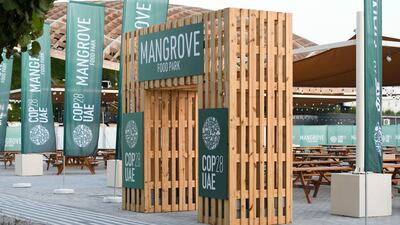
Reused material from palm trees has been used in Cop28 signs across Expo City Dubai. -
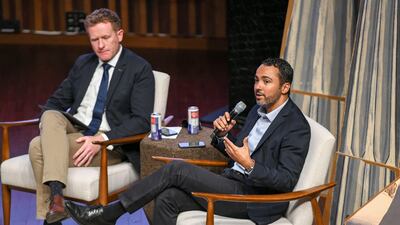
Matt Brown, sustainability chief, Expo City Dubai (left) and Yousuf Caires, executive director, Expo Live Innovation Programme, share details of an organic farm and workshops on climate action open to all in the Cop28 green zone. -

Ms Faraidooni says youth engagement is a key component of Cop28. -
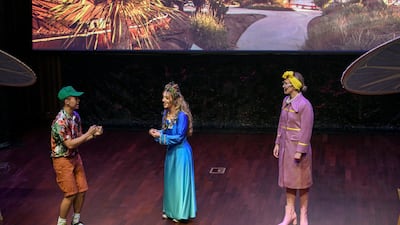
A 45-minute musical Alya in Terraland aims to inspire people to participate in climate discussions. -
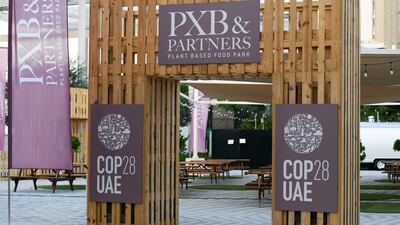
Sustainable material has been used in the Cop28 signs across Expo City Dubai.


When we talk about the energy transition and the goal of tripling renewables, we must remember what that means and the impact it can have. Hundreds of millions of people still live without basic energy access. About 675 million lack electricity and 2.3 billion are without clean cooking facilities, as highlighted in the UN’s most recent report on Sustainable Development Goals.
Set against this challenging socio-economic backdrop, we have an opportunity to design an inclusive energy future. But, in designing this future, we must imagine and deliver a scenario where energy access is universal and sustainable.
This requires policies that foster not just energy access, but clean energy access for all, with those most disproportionately affected by climate disasters at the forefront of this transition. We must help those already left behind by today’s energy system at the same time as ensuring those at risk of being marginalised in this shifting energy landscape are included in the future energy system.
In this sense, the transition to a system powered by renewable energy presents an extraordinary opportunity to build resilience, empower communities, catalyse economic growth and improve lives and livelihoods across the board. Renewables are available everywhere, offering countries socio-economic benefits and enhancing energy security.
Cop28 marks the year of the first Global Stocktake, in which the world reflects on its progress in implementing the Paris Agreement. It is vital that collective action be galvanised following this key milestone in our journey toward a climate-safe existence.
A key component of delivering this future is a Global Energy Pledge at Cop28 – a commitment to triple renewable energy capacity and double energy efficiency by 2030, as recommended by Irena’s World Energy Transitions Outlook. This pledge, proposed by the Cop28 Presidency can help create a future energy system that is rid of unabated fossil fuel production and consumption by mid-century.
The success of Cop28 hinges on translating commitments into actionable solutions.
With renewables, we have the cost-competitive, immediately deployable technological solutions at hand to achieve the 1.5°C temperature limit. Now, Irena has identified five key enablers to accelerate the energy transition.
First, we need holistic policy frameworks that promote renewable power solutions and energy efficiency measures. Second, enhancing the sustainability of global supply chains is crucial to develop a skilled workforce capable of delivering energy access for all.
Third, financing is key. We must mobilise public and private finance to support this ambitious expansion of renewable energy solutions. Fourth, international collaboration is vital. We need to foster collective action and knowledge sharing on governance, climate finance, and innovation.
Finally, infrastructure development is essential. We need to expand and modernise existing electricity infrastructure and build systems that are fit for renewables.
We have seen what is possible in the UAE. In the eight years since 2015, when the country’s total renewable energy capacity stood at just 100 megawatts, the Emirates has become a regional powerhouse of renewable energy production, and home to three of the world’s largest and lowest-cost solar power plants.
Today, the UAE’s total installed renewable energy capacity stands at more than 4 gigawatts, with the country on-track to triple this capacity to 14 GW by 2030. And as the first country in the Gulf that committed to net-zero by 2050, we expect the UAE’s green economy to only expand further. It shows what can be done when the planning, infrastructure, investment and political will to develop sustainable economic models is in place.
Our journey to a net-zero, climate resilient future runs via the tripling of renewable energy capacity by 2030. We have less than minutes to midnight as we hurtle ever closer to eclipsing the critical 1.5C warming limit set out in the Paris Agreement. As we head into Cop28 in our hour of need, the international community must unite to turn ambition into action for a just, inclusive and equitable global energy transition.

