


Climate change affects everyone, but not everyone is affected equally. In fact, we have seen how it deepens the inequalities that already exist.
This disparity cuts through communities with impunity, disproportionately affecting underrepresented demographics and exacerbating social and economic disparities. Women are more vulnerable to climate change compared to men, according to UN Women. While they make up 70 per cent of the world’s poor, studies show that they are 14 times less likely to survive climate-related disasters.
Women and girls often live on the frontlines of climate impacts, and yet are often excluded from the conversations, decisions and processes.
As the UN Climate Change High-Level Champion for Cop28, my team and I are working tirelessly to create a platform that ensures diverse perspectives are heard loud and clear. Put simply, we believe the world will fail to keep the 1.5°C goal alive if the voices of women and girls are absent.
It is important, therefore, to put their views and contributions, and integrate their methods and perspectives, into a multilateral climate process that leaves no one behind.
We know that communities are more successful in resilience and capacity-building strategies when women are part of the planning process. They are usually the first responders in community-led responses to natural disasters and contribute to post-recovery efforts by directly addressing the needs of families and the wider community.
A growing body of scientific evidence suggests that women can drive a more ambitious climate action.
Studies have shown that women’s leadership and participation in climate action leads to better governance, resource management and disaster readiness. Increasing their participation in national parliaments, for example, leads to the adoption of more robust climate policies, resulting in lower greenhouse gas emissions. Companies with a higher proportion of women on boards are 21 per cent more likely to have set emission reduction targets.
-
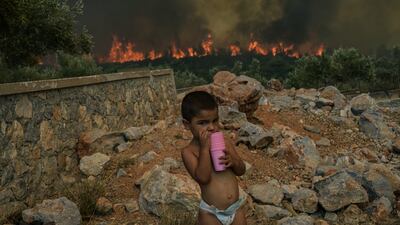
A child stands in his family's yard as a wildfire burns nearby, in the village of Agios Charalampos near Athens, in July 2023. Europe saw record temperatures amid a relentless heatwave and wildfires that scorched vast regions of the Northern Hemisphere, forcing the evacuation of 1,200 children close to a Greek seaside resort. Health authorities sounded alarms from North America to Europe and Asia, urging people to stay hydrated and shelter from the burning sun, in a stark reminder of the effects of global warming. AFP -
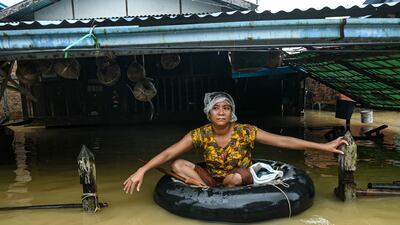
A resident uses a buoy to move through a flooded house after heavy rains in Bago township, in Myanmar's Bago region, in October. Floods sparked by record rain hit parts of southern Myanmar, inundating roads and fields and sending residents fleeing for higher ground. AFP -

Ali Hakim, an Iraqi Marsh Arab man, Iooks at the remains of a buffalo that died due to drought and the salinity of the water at the Basra marshes, Iraq. Reuters -
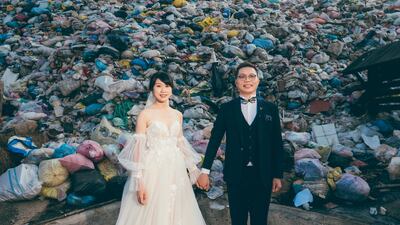
Iris Hsueh, left, and her fiance Ian Ciou pose for a pre-wedding photo in front of a rubbish heap in Puli Township, Taiwan. The couple chose the site for their photoshoot because the environment-conscious bride said she wanted to discourage guests and the public from generating waste. AFP -
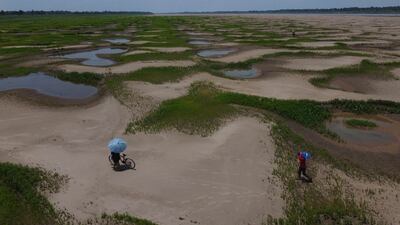
Residents of a riverside community in Amazonas state, Brazil, carry food and containers of drinking water distributed by the state's humanitarian aid action, amid a continuing drought and high temperatures that affect the region of the Solimoes River. AP -
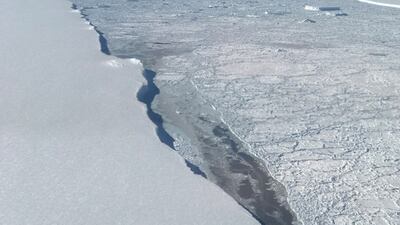
The edge of Larsen C Ice Shelf, left, and the western edge of iceberg A68 in the distance over the Antarctic in November 2017. The iceberg detached from the ice shelf in July 2017, becoming one of the largest in recorded history to split off from Antarctica. AFP -

A man walks past construction vehicles submerged in debris caused by flash floods after a lake burst in Rangpo, India, in October. Reuters -
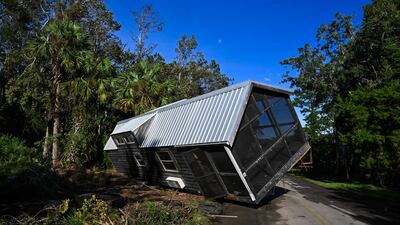
A mobile home swept by floodwaters in Steinhatchee, Florida, in August 2023, after Hurricane Idalia made landfall. Idalia slammed into north-west Florida as an 'extremely dangerous' Category 3 storm, buffeting coastal communities as officials warned of 'catastrophic' flooding in parts of the southern US state. AFP -
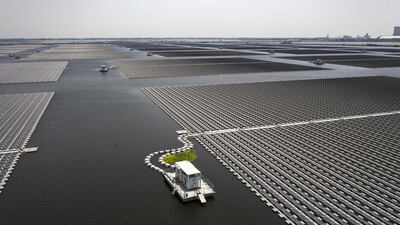
A floating solar farm, built on the site of a former coal mine since filled with water, in Huainan, China. The installation by Sungrow Power Supply Co covers the size of more than 400 football pitches and generates power for more than 100,000 homes. Getty Images -
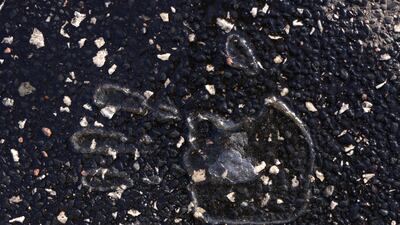
A handprint of glue left behind by an activist from the group Last Generation (Letzte Generation), after they were removed by police, is visible on the asphalt following a blockade at an intersection in Berlin, Germany, in September. Last Generation is continuing its disruptive protests in an effort to put pressure on politicians to stop the burning of fossil fuels. Getty Images


These reasons alone should help people understand why we are taking steps to ensure Cop28 serves as an inclusive platform for all.
I am heartened to see the growing momentum for integrating gender into climate planning. The Gender Action Plan agreed on at Cop25 has called for women’s full, equal and meaningful participation in the multilateral climate process. And since 2012, the UNFCCC Secretariat has been reporting on the gender composition of national delegations, as well as in policy and decision-making bodies.
The Cop28 presidency is also taking concrete steps to ensure that the perspectives and leadership of women are at the forefront of the climate process.
In June, the Cop28 presidency urged parties to increase diversity within national delegations, organise inclusive consultations with children, youth, women, indigenous peoples and local communities to strengthen efforts that enhance access to participation in climate decision-making, policy design and implementation processes. We have also requested for the consideration of age-diverse and gender-balanced perspectives across all engagements and initiatives ahead of and during Cop28.
Two-thirds of the Cop28 presidency officials, including the Youth Climate Champion and the High-Level Champion, are women. The UAE’s Chief Climate Negotiator for Cop28 is also a woman.
We are taking additional measures such as providing support to a Night School for Women Delegates, run by the Women’s Environment and Development Organisation (WEDO), to enhance capacity-building on gender and climate change.
The Cop28 presidency is also co-organising the Global Conference on Gender and Environment Data, which will take place on November 28 and 29. This responds to the lack of investment in and application of gender data and analysis, which impedes effective policymaking in climate and environment areas.
Co-hosted together with UN Women, UNFCCC, WEDO and the International Union for Conservation of Nature, the conference will feature new approaches to gender and environment data. It will also provide a political commitment and the requisite tools to inform gender-responsive climate policy implementation.
The Cop28 Gender Equality Day on December 4 will bring together diverse stakeholders, from researchers and activists to policymakers and civil society, to drive conversations around the intersectionality of gender and climate change.
We are also co-hosting the Arab Women Leaders’ Summit in collaboration with Women in Sustainability, Environment and Renewable Energy, to identify challenges, share best practices and develop strategies that promote gender equality in climate mitigation, adaptation and resilience-building efforts.
Our goal is not only to find solutions for everyone but also to ensure these solutions are deeply rooted in the diverse experiences and expertise of our shared humanity. Underpinning the climate summit with full inclusivity can be a turning point for everyone to recognise that every voice matters in the fight against climate change.


