


Imagine the Middle East and North Africa as a snow globe: a distinctive ecosystem that can be individually studied, providing insights into the stark reality of climate change. It’s uniquely well suited to this approach because it is a region where climate change is effectively being supercharged.
The region is warming at twice the global average. By 2050, the region could experience an increase in temperatures not in the 1.5-2.0°C range, but up to 4°C. This could bring with it widespread desertification, regionwide water scarcity, crop failure and extreme weather events such as heatwaves and flash floods. These environmental changes could widen socioeconomic disparities and drive tragic humanitarian repercussions, especially in the parts of the region that are already suffering from war and fragility.
This is the reality of the situation unless major policy change is implemented and the region’s businesses fully – and swiftly – commit to sustainable strategies.
Having hosted Cop27 in 2022, the forthcoming Cop28 in November-December, and potentially Cop29, Mena has the opportunity to shape sustainability discourse regionally and globally, reflecting the region’s distinctive needs and exposure. Pragmatic and forward-looking strategies could help it leapfrog other regions in its sustainability journey.
For this to happen, policymakers, business and the public in the region need to fully commit to a sustainable future, better understand the critical risks the region faces and become more aware of – and seize – the sizeable opportunities that the energy transition offers.
Data suggests that this is far from being the case. While it is true that governments are stepping up (60 per cent of the region’s current carbon emissions and gross domestic product have come under net-zero pledges in the past two years), the private sector currently fails to mirror this level of commitment. Compared to similar economies, Mena businesses lag in their sustainability ambitions. Just 12 per cent of businesses in the region have committed to net-zero targets, and even fewer, 7 per cent, have laid out how they are going to achieve these goals.
-
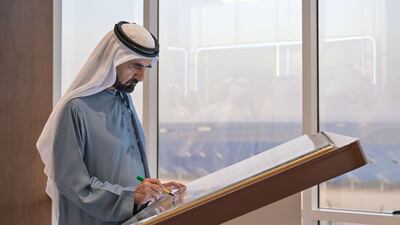
Sheikh Mohammed bin Rashid, Vice President and Ruler of Dubai, has inaugurated the fifth phase of the Mohammed bin Rashid Al Maktoum Solar Park. All photos: Wam -
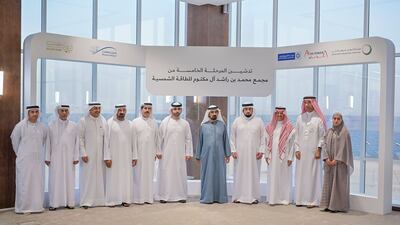
It will provide 900MW of power -
It is part of the largest single-site solar park in the world -
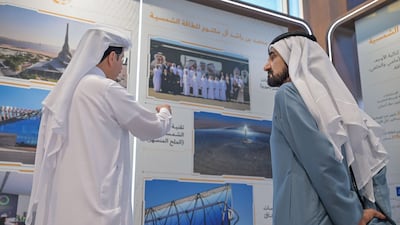
The entire site has a planned capacity of 5,000MW by 2030


Research suggests that consumers also underestimate the region’s vulnerability to climate change. With Bain and Company, we surveyed 2,000 people in the region and discovered that although 65 per cent of respondents recognise climate change as a global threat, just 45 per cent perceive Mena’s vulnerability. It is also worth noting that Mena is second only to North America in terms of total per capita emissions. This highlights the need for better awareness-building about climate change, energy conservation and sustainability.
A significant problem beyond these generalisations is the fact that there is no common policy or approach to climate change that will work Mena-wide.
Although the large GCC economies currently rely on hydrocarbon export for growth, they are the only countries with the resources and capacity for rapid adaptation to the untapped opportunities that the global energy transition presents. Most other countries in the region face several challenges, including currency devaluation, widespread unemployment and a cost-of-living crisis. Climate finance is required to fund new energy infrastructure if a just energy transition for these countries is to be assured.
Yet the effects of climate change do not stop at national borders. For a resilient, sustainable Mena, a regional sustainability agenda should prioritise co-operation and embrace climate action not as a cost, but as an opportunity. To achieve this, bold, innovative and regionwide strategies will be critical.
Business can play a powerful role in this step-change, led in part by Mena’s large state-owned enterprises. They can lead the way by driving supplier action (by encouraging suppliers to take positive steps to measure and reduce emissions); showing leadership with ambitious targets and plans; boosting consumer awareness; and by creating cross-border, public-private climate coalitions.
These steps will not be without cost, with businesses facing financial and human capital investments. But with this type of policy, drive and leadership in place, Mena countries will be better placed to leapfrog in terms of progress on their sustainability journey.
The other side of the equation is investment into clean energy. Beyond the benefits of reducing carbon emissions, the transition to renewables will create new jobs and promote the development of local talent. Localising supply chains will help develop local manufacturing capabilities, in turn, laying the foundations for developing the region’s human capital and expertise.
Framed this way, Mena’s response to climate change has the potential to turbo-charge economic diversification, exports, growth and job creation. But these regional stakeholders will have to act on several fronts. They must set – and follow through on – robust emissions targets; implement energy-efficiency measures, prioritise responsible water management, including conservation; and embrace green finance and investment.
Throughout the region, the energy transition mantra should be to consume less (prioritise energy efficiency), green the supply (deploy renewable energy), and manage the rest (invest in carbon-removal technology as a part of the energy production chain and nature-based solutions that act as carbon sinks).
All this should be readily attainable given Mena’s natural advantages. Its hours of sunshine, windy climate and the fact it has large tracts of unused land make it the perfect location for solar and wind power installations. For non-GCC countries, renewable energy in general is now more cost-efficient than fossil fuels. By switching to renewables, fuel subsidies can be dismantled and replaced with other forms of targeted citizen support. In turn, this boosts these countries’ chances of a just energy transition, while also helping to promote poverty reduction thanks to the redirected funds.
Regionwide, but particularly in the GCC, significant renewable resources combined with existing infrastructure provide the region with an opportunity to supply the growing international demand for clean energy. In this respect, Mena is already taking strides. One-half of its state-owned enterprises are developing either green and blue hydrogen or are involved in creating carbon capture, utilisation and storage capabilities. The task now is to become a leader in this field, which would help maintain the GCC’s global energy influence for generations to come.
Recent shocks have already shaken things up in the Mena snow globe, distorting supply chains for food, energy and other commodities, and creating a cost-of-living crisis for some of its countries.
How the future looks largely depends on how the region’s leaders – political and business – balance two very different needs: to provide immediate relief to their populations while also preparing for, and acting to, offset climate-related problems. The region is already seeing the initial effects of this crisis, but its full force will be borne out in the coming generations.

