


The breakthrough of the Oslo Accords wasn’t to be found in its details. Rather it was in the opening sentences, in which the Israeli government and the Palestine Liberation Organisation recognised one another’s legitimacy as representatives of two separate peoples and as negotiating partners.
The rest of the Accords did more to lay bare where the parties disagreed, than provide any real roadmap forward. Reading the text made clear the key issues that defined the deep chasm separating Israelis and Palestinians and their admitted inability to resolve the differences dividing them. It was as if they were saying: “This is as far as we could go.” More than an agreement, it was a cry for help.
Within days of the signing, it became evident that the US either didn’t hear, or didn’t want to hear, that cry. Listening to his “peace team” of advisers, then president Bill Clinton said that the US wasn’t going to insert itself into the process by acting as a mediator.
Abandoning its role as a guarantor of the Accords, the US made clear that it was now up to the parties to negotiate solutions between themselves. It was as if a couple who had been fighting for decades went to a marriage counsellor asking for help only to be told: “I’m glad you know you need help. I can’t do this for you, so I’m going to leave you to work this out.”
That was the fatal blow that ultimately spelled the death of Oslo.
Many problems were at the core of this failure.
First and foremost was the obvious asymmetry of power between the Israelis and Palestinians. Once the PLO had been defeated as an external force and the first Intifada had been crushed, the Palestinians in the occupied lands were left exhausted and without leverage. The “Authority” that the PLO was to establish had no real authority or power – and it was, at every turn, dependent on Israel for its ability to survive.
The Israelis, on the other hand, had full military control over a captive population. Their government was a fragile coalition, facing a hard-right opposition that continued to challenge prime minister Yitzhak Rabin’s legitimacy because maintaining his coalition’s majority required the support of parties representing Israel’s Palestinian citizens. In practice, Mr Rabin never stopped deferring to the opposition on anti-Palestinian measures and on settlement expansion. And so, as Israel continued to impose its will on the occupied lands, all the Palestinians could do was appeal to an unresponsive US.
Still, it was the problems posed by the US that proved decisive, and not in a good way.
The “peace team” of advisers that US president Bill Clinton left in charge of the peace process acted, as one member of the team later noted, more like “Israel’s lawyers” than honest brokers. They advised the president to leave the parties to their own devices – and continued, at each step along the way, to see the unfolding tragedy through an Israeli lens, insensitive to Palestinian perceptions and needs.
Palestinians were pressed to crack down on their violent opponents to the peace process – which they lacked the power to do – or to acquiesce to Israel’s often disproportionate responses to Palestinian acts of violence. Palestinians were also told to understand the internal problems faced by Mr Rabin and the leeway he gave to Israeli extremists who were acting in their own ways to sabotage peacemaking.
The passive, or sometimes negative, role played by the US “peace team” was compounded by the obstructionist role played by the US Congress.
Shortly after the signing of the Accords, Congress was expected to rescind its anti-Palestinian legislation and pass an aid package supporting the fledgling Palestinian Authority. Instead, Congress passed restrictive bills that not only failed to lift the ban on the PLO, but also imposed cumbersome conditions on any US aid to and relations with the Palestinians.
-
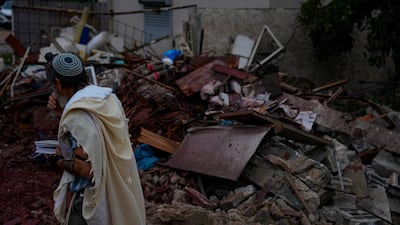
A structure in Ashkelon, Israel destroyed by a rocket fired on Wednesday from the Gaza Strip. AP -
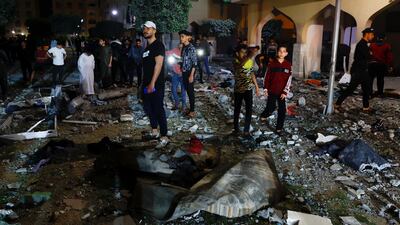
Palestinians survey the damage of an Israeli strike in Khan Younis in the southern Gaza Strip. Reuters -
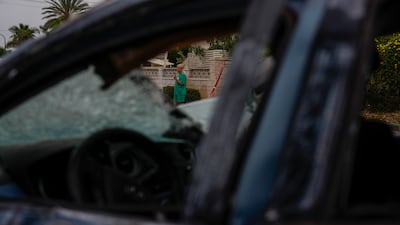
A car in Ashkelon damaged by a rocket fired by Palestinian militants. AP -
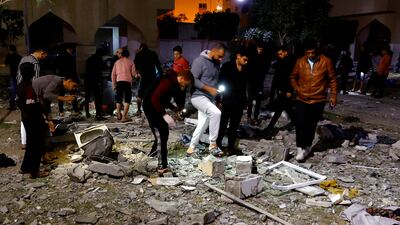
Damage from an Israeli strike in Khan Younis in the southern Gaza Strip. Reuters -
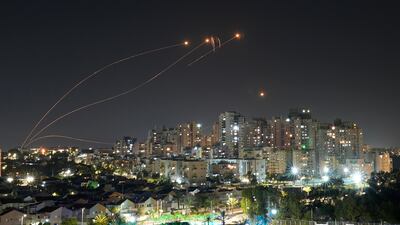
Israel's Iron Dome anti-missile system intercepts rockets launched from the Gaza Strip. AP -
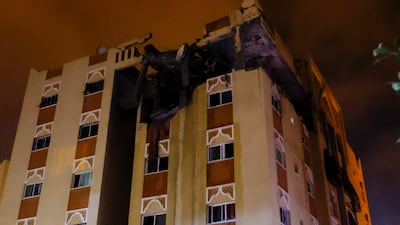
Damage from an Israeli strike in Khan Younis in the Gaza Strip. Reuters -
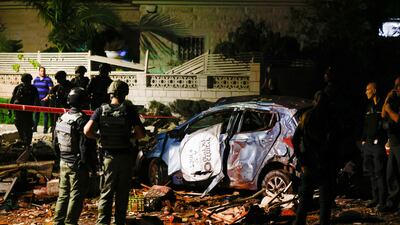
Israeli security forces cordon off a neighbourhood in Ashkelon hit by a rocket. AFP -
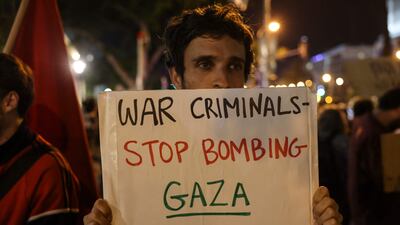
A demonstration in support of the Gaza Strip near the Israeli Defence Ministry in Tel Aviv. AFP -
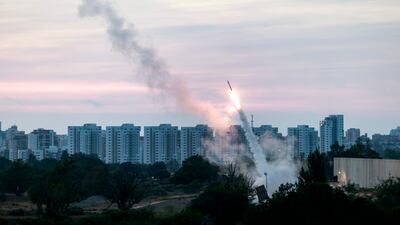
Israel's Iron Dome defence system intercepts rockets in Ashkelon. AFP -
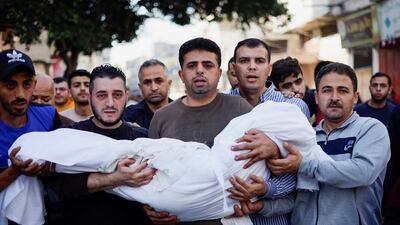
The father of Palestinian girl Lianne Mdoukh, who was killed in Israel-Gaza fighting, carries her body during the funeral in Gaza. Reuters -
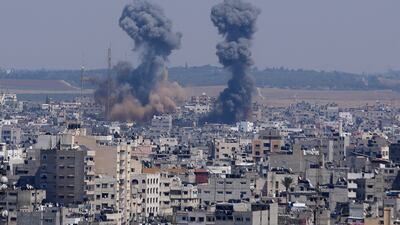
Smoke rises over the Gaza Strip following an Israeli air strike. AP -

Palestinians inspect a house damaged in an Israeli strike. Reuters -

Israel's Iron Dome air defence system intercepts a rocket launched from the Gaza Strip. AFP -
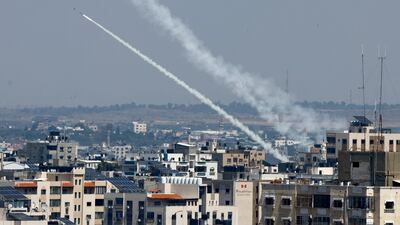
Rockets are fired from Gaza into Israel. Reuters -
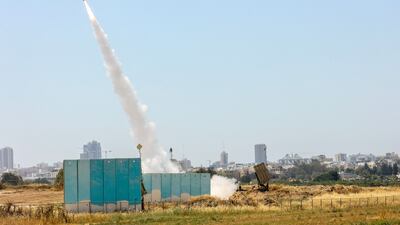
A rocket from Israel's Iron Dome defence system. AFP -
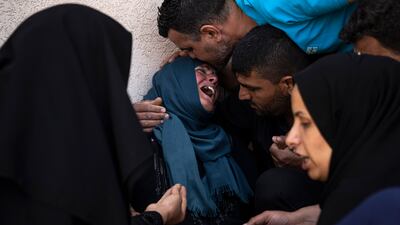
Palestinians mourn for a man killed in an Israeli air strike in Khan Younis in the Gaza Strip. AP -
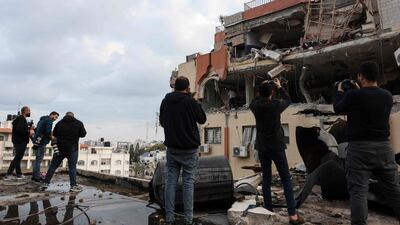
A building damaged in Israeli air strikes on the Gaza Strip. AFP -
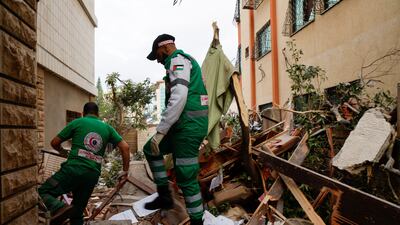
Rescuers pick through debris in the aftermath of the strikes. Reuters -
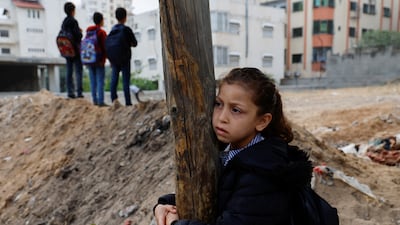
Children survey the damage. Reuters -

An Israeli drone flies over Khan Younis after the attack against members of militant group Palestinian Islamic Jihad. Reuters -
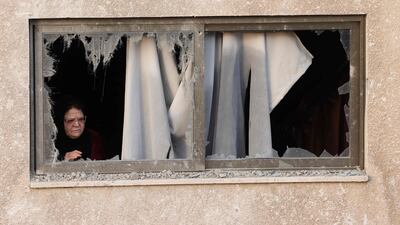
A woman looks out from her damaged building. AFP -
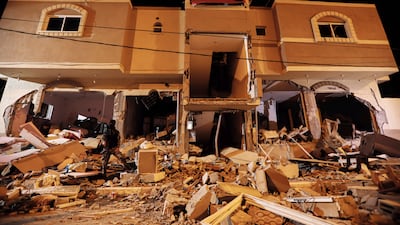
A members of the Ezzedine Al Qassam Brigades, the armed wing of Hamas, secures the Gaza Strip area of Rafah. AP -
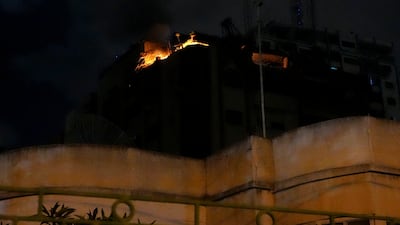
Fire burns at a Gaza city apartment. AP -
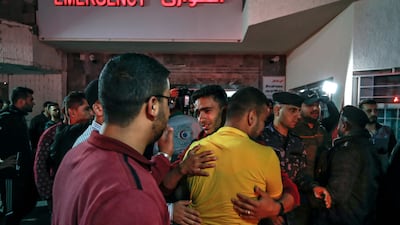
Men mourn outside Al Shifa hospital in the Gaza Strip. AFP -
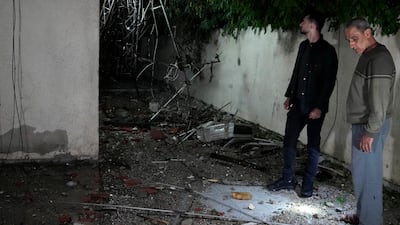
Palestinians inspect damage to their home. AP -
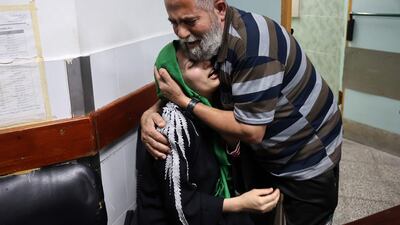
Relatives of Palestinian Islamic Jihad leader Jihad Ghannam, who was killed in the strikes, mourn at Al Najjar hospital in the Rafah refugee camp. AFP -
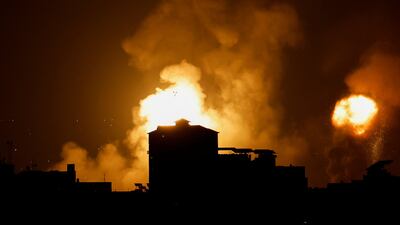
Fires burn soon after the pre-dawn strikes. Reuters


While the administration touted its “aid to the Palestinians”, in the early years after Oslo, that aid actually went directly to USAID which then dispensed it to US non-governmental groups for projects that Palestinians had no say in determining. Often, the funds weren’t disbursed at all.
To make matters worse, shortly after Oslo, Mr Rabin’s Israeli opposition in the Likud party established a counter-lobby in Washington, led by Benjamin Netanyahu. Partnering with Republicans in Congress, this US lobbying effort began to sabotage the peace process.
After Republicans won control of Congress in 1994, the sides were set: Mr Clinton and Mr Rabin versus Republicans and Likud.
The Palestinians never stood a chance. More punitive measures were imposed on them, while Israel was given a free ride.
After the assassination of Mr Rabin and the election of Mr Netanyahu, Israel was largely able to operate with impunity, culminating in the Republican-majority Congress inviting Mr Netanyahu to a joint session where he made clear his intention to end the Oslo process.
The asymmetry between Israelis and Palestinians became amplified. Israel had power while Palestinians had none. Israel received support, while Palestinians received pressure. Oslo was dying a slow death.
Since Oslo, Palestinians became poorer, with unemployment doubling; settlements dramatically increased by 50 per cent, as did the seizure of Palestinian lands; and while Israelis were acting with impunity, Palestinians were losing hope in the future.
Not only does this asymmetry persist today, but a solution to a decades-long problem remains out of reach.

