


In a deceptively quaint city that, beyond the trappings of every modern metropolis, is filled with hallmark features of quintessential Germany – colourful storybook houses layered with sloping roofs and cobbled streets beneath spindly church spires – hundreds of journalists from all over the world are plotting a gentle revolution.
Armed with pens, paper and the nervous energy of strangers meeting for the first time, they’ve come together to ask a simple question: how can we make journalism better?
It is the inaugural b°future festival, hosted by the Bonn Institute in Germany’s Cologne region. The event is scattered across rooms and halls in buildings throughout the beautiful city of the same name.
Bonn is famous for being the birthplace of Beethoven and as the de facto capital of the former West Germany. It is where the country’s modern constitution was written and approved. It is also the setting for British bestselling author John le Carre’s A Small Town in Germany – clearly a scene fit for grand plots and resounding legacies.
-
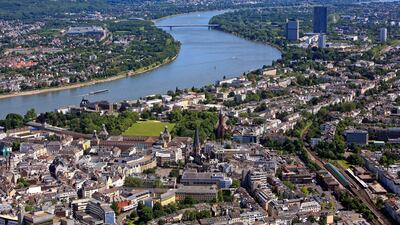
City of Bonn in Germany where the Bonn Institute hosted Europe's first solutions journalism event. Photo: Michael Sondermann/ Bundesstadt Bonn -
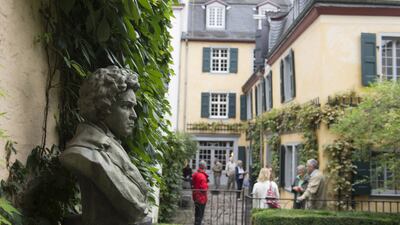
Beethoven House, in Bonn. The city is famous for being the birthplace of the composer. Photo: Barbara Frommann/Bundesstadt Bonn -
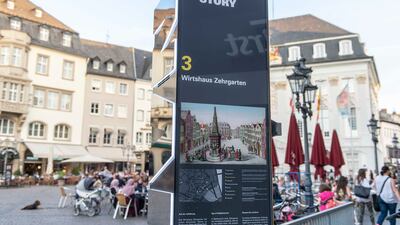
The inaugural b°future festival was held in buildings across the city. Photo: Barbara Frommann -
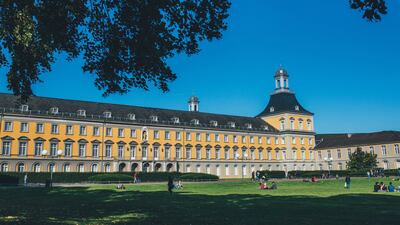
University of Bonn where events for the public were held on the second day of the event. Photo: Giacomo Zucca / Bundesstadt Bonn -
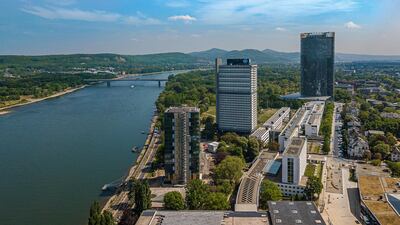
World Conference Center Bonn and the United Nations Campus on the banks of the Rhine. Photo: Giacomo Zucca/Bundesstadt Bonn -

In the spring months, the western city is famous for its cherry blossom. Michael Sondermann/Bundesstadt Bonn


On this particular sunny September day, it is playing host to a small legion of writers, researchers, filmmakers and thought leaders for the two-day conference. It is a professional event that is also open to the public – in the hope that its mission for constructive dialogue will strike a chord with the people who matter the most: the audience.
Those of us who are paid to put the world’s biggest stories into words or pictures know that there could be huge problems on the horizon for the industry. Readers and viewers seem to be turning away in droves.
So here we are, in the land where Symphony Number 5 was devised, hoping that a different approach can resonate as powerfully as the composer’s most famous work, the one he allegedly declared was “the sound of Fate knocking at the door”.
In her welcoming speech, the founder and managing director of the Bonn Institute, Ellen Heinrichs, laid bare the challenges facing the future of the journalism industry: news avoidance, dwindling trust, burnout, the whirlwind that is technological advancement, and most importantly, the wavering fate of the planet itself.

“We must now ask ourselves: how can we remain relevant in a world saturated with information yet teeming with conflicts and crises? How can we navigate this complex landscape without overwhelming not only our audiences but also ourselves as journalists?” Ms Heinrichs's questions go without response but they’re not rhetorical – they are greeted with nods and the acknowledgement that seeking the answers is the reason we are all here.
There are more than 200 different sessions to attend and living up to its festival moniker means there are clashes to contend with. I opt for a packed day of talks on AI, conflict, crisis and climate reporting, and community engagement and then round it off at a session with Nic Newman from the Reuters Institute for the Study of Journalism and Anita Zielina, the founder and chief executive of Better Leaders Lab. The final headline question of the day: what’s behind news fatigue, and what can we do about it?
Likening it to sensory overload in a supermarket, Mr Newman said as consumers “we just feel completely overwhelmed” by the amount of content and its inherent negativity, and urged us to think to the future: “What’s it going to be like in five years' time with artificial intelligence creating even more synthetic media?”
Five years’ time is a generous timescale. Already publishers are adopting AI in their output, from writing news in briefs to voicing full podcasts, while others are seeking legal action and outright banning AI tools from trawling content. But that’s another story.

Amid the buzz of large language models, newsrooms are readying for the sting of losing search engine traffic, a trend already started by Google’s own apparent reduction of news in content results. And of course, search engines are just one portion of the tech sector that has seemingly decided there’s a diminishing need for news on platforms.
Meta, the company behind Facebook, Instagram and now Threads, has been reducing news content for years, outright banning it in some countries. Who knows what’s happening with X, formerly known as Twitter and formerly the first stop for news on social media.
Mr Newman is the lead author of the annual Reuters Institute Digital News Reports, that in 2023 suggested that almost half of the 46 markets it surveyed are not participating in the news at all. He told the audience in Bonn that “one of the antidotes to news avoidance is how can we make news more accessible”. He was talking primarily about formats, products and tone, but even the most powerfully crafted story can have little impact if it cannot be found.
The report also showed that the number of people seeking news directly from a website or a publisher’s app is dwindling; even core news junkies are kicking the habit.
But this couldn’t come at a worse time. More than ever, we need more people to be informed about what is happening in the world. From finding help for those affected by an increasing number of natural disasters to sharing rapidly evolving knowledge that could influence behavioural change, we need to be an informed global audience with the common goal of climate action.

So, this cohort of journalists from all corners of the world – Australia, Argentina included – are hoping to make it a healthy, daily exercise once more, as Ms Zielina quipped, “like granola compared to a chocolate bar”.
And that’s where solution-focused journalism comes in, so say the growing number of supporters of the cause. But what is it?
SoJo, as it has been nicknamed, is said to have stemmed from a 2010 column in The New York Times called Fixes, which looked at plans to address issues in communities and whether they had worked. By 2013, the award-winning journalists behind it, David Bornstein and Tina Rosenberg, had created the Solutions Journalism Network. They have since trained 47,000 journalists across 190 countries to find stories that match their mission statement “that investigate and explain, in a critical and clear-eyed way, how people try to solve widely shared problems”.
Ten years on, their philosophy has spread to almost 2,000 news outlets and of course, inspired Europe’s first constructive journalism festival. They run fellowships, provide training and run the Solutions Story Tracker – where you will find several articles from The National.
If you are reading this, perhaps I am preaching to the choir. So much like the Bonn conference to the already-converted, I ask you to open this discussion up with others, the avoiders or the “snackers”. We will continue to do our bit – seek more robust answers and solutions, but I urge you to do your bit and continue to seek and read these stories.
While staying in Bonn, dining on the banks of the Rhine, I learned a phrase in the Rhenish dialect: “Et hatt noch emmer joot jejange" – it has always turned out well. A fitting thought as I ponder – not only how we get the world to read more news, but how we find the solutions and then the stories that will perhaps save the Earth.

