


If the Aqaba Summit in Jordan last month accomplished anything, it was to demonstrate the inadequacy of US policy towards Palestine and Israel.
The summit, instigated by the US and hosted by Jordan, brought together leaders from Israel, the Palestinian Authority, Jordan, Egypt and the US. The goal of convening was minimal: to reduce Palestinian-Israeli tensions and create calm in advance of and during the month of Ramadan and Passover. By failing to address the systemic problems at the root of the tensions, the summit became an exercise in futility leaving its stated “goal” unattainable.
The US proposed, and the parties apparently accepted, a number of half-measures that were intended to reduce tensions during the “next few months”.

Israel, for example, agreed to: a short-term freeze on “discussing” new settlements or demolishing Palestinian homes; a reduction in raids into Palestinian communities; respecting the “status quo” in Jerusalem; and freeing up more of the tax monies they collect for the Palestinians (but have been illegally withholding from the PA).
For its part, the Palestinian Authority agreed to: refrain for a period of time from taking its case to the UN; improving security co-operation with Israel; and using the additional tax revenues Israel will turn over to hire and train (with US support) new security forces to be better able to control the armed resistance groups that are springing up in the Palestinian territories.
As if to make the point that these agreements were both inadequate and divorced from reality, while the parties to the summit were meeting and drafting their communique, developments unfolding in Israel and the occupied Palestinian lands demonstrated that the summit was a failure.
Palestinians were still reeling from the February 22 Israeli undercover operation in Nablus in which 11 Palestinians were killed and more than 100 injured. On February 26, while the summit was concluding, Palestinian gunmen shot and killed two Israeli settlers who were driving through their village of Huwara. Within a few hours, hundreds of extremist settlers descended on the village attacking and injuring hundreds of Palestinian residents and torching hundreds of homes and cars.
Such violence has been escalating in the occupied Palestinian territories. Huge undercover raids in the heart of heavily populated Palestinian communities have been all too frequent. While Israel claims that these raids are conducted to arrest known terrorists, many of the 75 Palestinians killed and hundreds of those wounded this year have been innocents caught in the gunfire or armed Palestinians who have drawn their weapons to fight off the raiders. In addition to the police raids, the settler assaults on Palestinian homes, travellers, farms and businesses have also increased.
While these same undercover raids and acts of settler violence have taken place in the past, with the installation of the new government, they are occurring with greater frequency and impunity. Of the 350 settlers who participated in the initial Huwara rampage, only two remain under arrest. The two Israeli cabinet ministers in charge of the territories have been known to incite other settlers to violence. After the incidents in Huwara, one of these ministers joined lawmakers in his party in calling on the village to be “wiped out”. Another lawmaker said he wanted to see it “closed and burnt”.

In the days that followed the Aqaba Summit, there were more deadly raids, more shootings, and more settler assaults. After one Israeli raid killed six more Palestinians in Jenin, PA security forces attacked the funeral procession for one of the victims objecting to the display of Hamas flags. This only served to accent the Palestinian perception that the PA has become “an enforcement arm of the occupation".
When news of the Aqaba “agreements” became known in Israel, Prime Minister Netanyahu quickly announced: “There is no settlement freeze.” He was joined by one of his ministers who declared his intention to continue demolitions of Palestinian homes in Jerusalem during Ramadan, while another scoffed at the idea that Jews would refrain from praying at the Haram Al Sharif during Passover (which falls during Ramadan). One Israeli lawmaker reportedly noted: “What happened in Aqaba, stays in Aqaba.”
The bottom line is that while the US, Jordan and Egypt will want calm, the situation in Israel and Palestine is spinning out of control.
-

Protesters block a road during a demonstration in Tel Aviv on Saturday as Israeli Prime Minister Benjamin Netanyahu's government presses on with its contentious judicial overhaul. Reuters -

Tens of thousands of protesters took to the streets of Israeli cities for the ninth straight week. AFP -

Protesters during a demonstration. AFP -
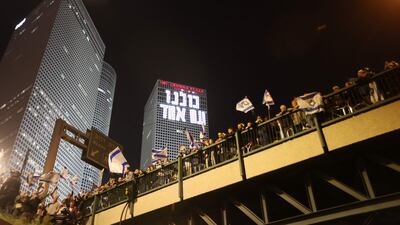
Protesters lineup on a walkway in Tel Aviv. AFP -
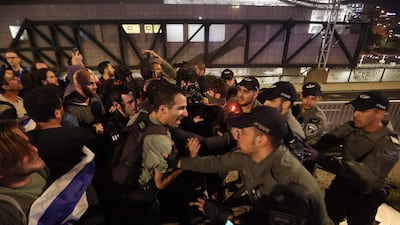
Protesters face off with the police in Tel Aviv. AFP -
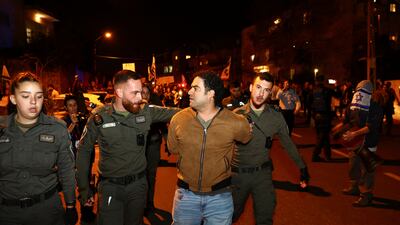
A protester being taken away by police officers in Jerusalem. Reuters -
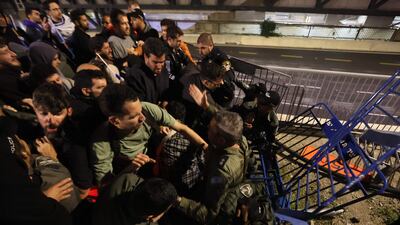
Protesters scuffle with police in Tel Aviv. AFP -

Demonstrators hold Israeli flags during a march in Jerusalem. Reuters -
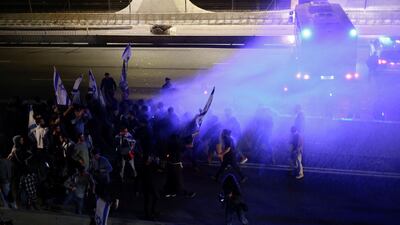
Protesters are sprayed with a water cannon as they block a road during a demonstration, in Tel Aviv. Reuters -

A mounted police officer gestures during a demonstration in Tel Aviv. Reuters -
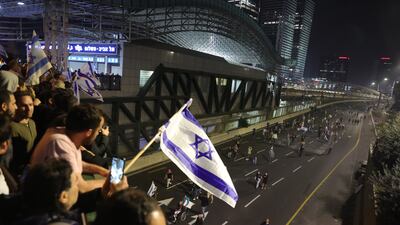
The blocked Ayalon Highway in Tel Aviv. EPA


The current Israeli government is unwilling to recognise Palestinian rights. Because the US has historically coddled successive Israeli governments, never enforcing limits to their unlawful behaviours, some of the Israelis in power today act with a sense of impunity.
For its part, because the PA has been so weakened by its inability to deliver on the “promise of peace” and because it has repeatedly endured humiliation at the hands of the US and Israel, it has lost the respect of angry constituents who now want to strike back when struck. They too are out of control.
The problem is that for decades the US approach to “peace” has consisted of nothing more than insisting that Palestinians crack down on their extremists – even if it meant civil war – but has placed no such demand on Israel to forcibly subdue its extremists. The result is what we have today: a right-wing Israeli government seemingly determined to subdue the last vestiges of Palestinian dignity and a discredited PA incapable of controlling its people’s anger.
Given this state of affairs, it was at best a fool’s errand for the US to assume that the Aqaba proposals would create calm. Instead of placing a bandage on a festering wound, the US should have used a scalpel to attack the root problems: key Israeli politicians' sense of entitlement and impunity and Palestinians’ anger at the abuse they continue to endure.
Only when the US establishes firm red lines for Israel and makes clear that there will be concrete negative consequences for continued bad behaviour will the downward spiral of violence be arrested. That would foster a new direction in Israel’s internal debate, and give the Palestinians a sense of hope that their plight is recognised and will be addressed. Change won’t come overnight. But bad policy has been digging this hole for decades; getting out of it will take courage, resolve and vision.
Until then, it is safe to assume that we could witness difficult days ahead.

