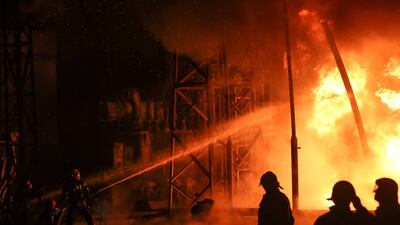
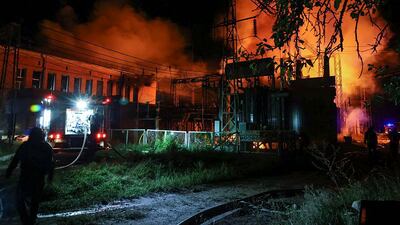
There can be little doubt that Russian President Vladimir Putin’s televised address on Wednesday represents a significant escalation in the Ukraine conflict on a number of levels.
At a time when the Russian military has been suffering significant setbacks on the Ukrainian battlefield, Mr Putin has been under pressure to turn the tide of the war in Moscow’s favour.
And, in his long-anticipated address, he delivered a series of measures, as well as threats, that he hopes will enable Moscow to achieve the goals in Ukraine that he set out at the beginning of the conflict nearly seven months ago.
By far the most eye-catching measure he announced was the mobilisation of 300,000 reservists to help boost the Kremlin’s faltering war effort.
Ever since Moscow launched its so-called “special military operation” in February, the Kremlin has resisted calls from ultra-nationalist supporters to implement a nationwide mobilisation, due in large part of its own view that the Ukraine mission could be accomplished by its existing military establishment. Another important consideration is that implementing a mobilisation would mean placing the country on a war footing, which would raise Russia’s involvement in the conflict at an entirely different level, one that might strengthen support for anti-war protesters in the country.
Thus, Mr Putin studiously avoided any talk of mobilisation during May’s anniversary parades marking the end of the Second World War, when several commentators believed he would call for a mass mobilisation.
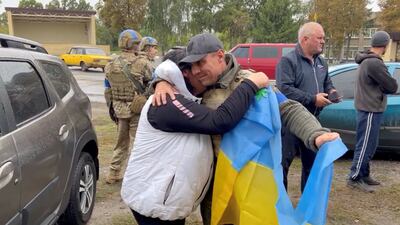
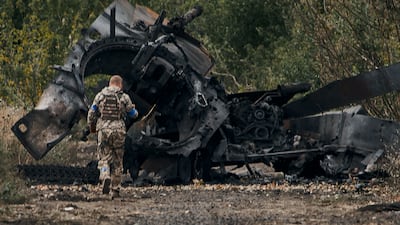
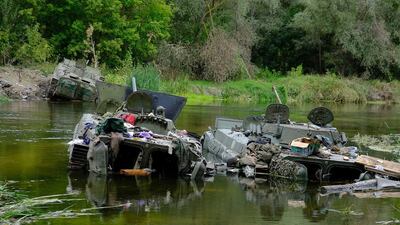
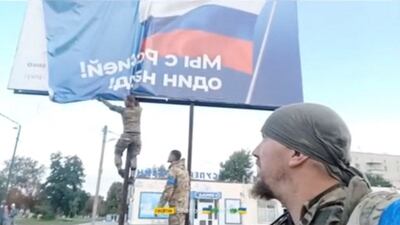
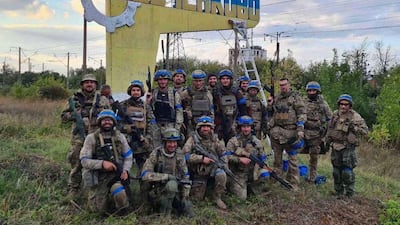
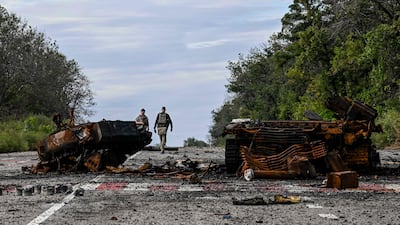
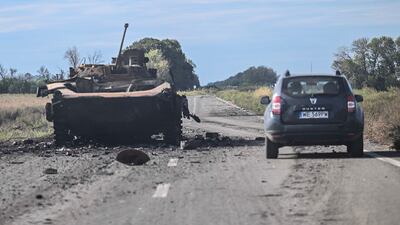
On the contrary, the Kremlin has continued to insist that, as Russia’s military operation was going according to plan, there was no need for additional measures. This line has been repeated continuously despite Russia suffering a number of setbacks, from its failed attempt to capture the capital Kyiv at the beginning of the conflict to the more recent heavy losses it has sustained around the north-eastern city of Kharkiv, where Ukraine’s surprise offensive this month has resulted in the recapture of about 5,000 square kilometres of territory.
The fact, therefore, that Mr Putin has now called for the mobilisation is a tacit acknowledgement that the military operation is experiencing difficulties, and that Russia’s forces are in desperate need of extra men and equipment if they are to achieve their objectives.
But rather than accept responsibility for the setbacks, he has blamed his country’s difficulties on western countries such as the UK and the US, which have provided Ukraine with the sophisticated weaponry that has enabled Ukrainian forces to go on the offensive.
Mr Putin insisted that the first mobilisation undertaken in Russia since the Second World War had been necessary because of the West’s involvement in the conflict, which he claimed “wants to destroy our country” and was trying to “turn Ukraine’s people into cannon fodder". Russian Defence Minister Sergei Shoigu echoed similar sentiments, conceding that conditions in Ukraine were “difficult”, and that Russia was at war with “the collective West”.
Mr Putin’s conviction would also explain his threat to resort to nuclear weapons if Russian territory came under attack, a statement that has understandably raised concerns that the conflict could ultimately provoke nuclear armageddon.
From the beginning of the conflict, Nato has taken great care not to become involved in a direct confrontation with Moscow, preferring instead to take a backseat role, providing the Ukrainians with weapons, but leaving the actual fighting to the Ukrainian military, which has solely been confined to the liberation of Ukrainian territory.
But the situation on the battlefield could change dramatically as a result of the referendums that are soon to be held in Russian-controlled territory in eastern and southern Ukraine, which are likely to result in their formal annexation by Moscow.
Once that happens, the Kremlin will be able to claim that any attack on the newly annexed territories of Ukraine is actually an attack against Russia. And by threatening to use nuclear weapons in response to an attack on Russian territory, Mr Putin is hoping to persuade the West to drop its support for Ukraine, a move that would severely diminish Kyiv’s war effort.
In some respects, the deliberate reference to nuclear weapons may be seen as a sign of desperation, the act of a leadership that realises that hopes of securing victory in Ukraine are fading by the day.
On Wednesday, the defence ministry gave its first official estimate of its battlefield losses since March, announcing that 5,937 soldiers had been killed. But this figure is disputed by western intelligence, which claims the real figure is significantly higher, with up to 80,000 soldiers killed or wounded. That amounts to the loss of more than half of the force that was initially deployed.
Nor is there any sign that Mr Putin’s nuclear threats will lead western leaders to review their support for Ukraine. In his address to the UN General Assembly, US President Joe Biden reiterated Washington’s support for the Ukrainian cause, while UK Prime Minister Liz Truss has promised to provide the same level of military support next year.
As long as the West remains committed to supporting Ukraine, Moscow’s objective of achieving a decisive victory is likely to remain an elusive dream.

Ain Issa camp:
- Established in 2016
- Houses 13,309 people, 2,092 families, 62 per cent children
- Of the adult population, 49 per cent men, 51 per cent women (not including foreigners annexe)
- Most from Deir Ezzor and Raqqa
- 950 foreigners linked to ISIS and their families
- NGO Blumont runs camp management for the UN
- One of the nine official (UN recognised) camps in the region
RESULTS
%3Cp%3E%0D5pm%3A%20Al%20Maha%20Stables%20%E2%80%93%20Maiden%20(PA)%20Dh80%2C000%20(Turf)%201%2C400m%0D%3Cbr%3EWinner%3A%20AF%20Alfahem%2C%20Tadhg%20O%E2%80%99Shea%20(jockey)%2C%20Ernst%20Oetrel%20(trainer)%0D%3Cbr%3E5.30pm%3A%20Al%20Anoud%20Stables%20%E2%80%93%20Handicap%20(PA)%20Dh80%2C000%20(T)%201%2C200m%0D%3Cbr%3EWinner%3A%20AF%20Musannef%2C%20Tadhg%20O%E2%80%99Shea%2C%20Ernst%20Oertel%0D%3Cbr%3E6pm%3A%20Wathba%20Stallions%20Cup%20%E2%80%93%20Handicap%20(PA)%20Dh70%2C000%20(T)%201%2C400m%0D%3Cbr%3EWinner%3A%20AF%20Rasam%2C%20Tadhg%20O%E2%80%99Shea%2C%20Ernst%20Oertel%0D%3Cbr%3E6.30pm%3A%20Arabian%20Triple%20Crown%20Round%202%20%E2%80%93%20Group%203%20(PA)%20Dh%20300%2C000%20(T)%202%2C200m%0D%3Cbr%3EWinner%3A%20Joe%20Star%2C%20Tadhg%20O%E2%80%99Shea%2C%20Helal%20Al%20Alawi%0D%3Cbr%3E7pm%3A%20Liwa%20Oasis%20%E2%80%93%20Group%202%20(PA)%20Dh300%2C000%20(T)%201%2C400m%0D%3Cbr%3EWinner%3A%20AF%20Alajaj%2C%20Tadhg%20O%E2%80%99Shea%2C%20Ernst%20Oertel%0D%3Cbr%3E7.30pm%3A%20Dames%20Stables%20%E2%80%93%20Handicap%20(TB)%20Dh80%2C000%20(T)%201%2C400m%0D%3Cbr%3EWinner%3A%20Silent%20Defense%2C%20Oscar%20Chavez%2C%20Rashed%20Bouresly%3C%2Fp%3E%0A
F1 The Movie
Starring: Brad Pitt, Damson Idris, Kerry Condon, Javier Bardem
Director: Joseph Kosinski
Rating: 4/5
The view from The National
Key facilities
- Olympic-size swimming pool with a split bulkhead for multi-use configurations, including water polo and 50m/25m training lanes
- Premier League-standard football pitch
- 400m Olympic running track
- NBA-spec basketball court with auditorium
- 600-seat auditorium
- Spaces for historical and cultural exploration
- An elevated football field that doubles as a helipad
- Specialist robotics and science laboratories
- AR and VR-enabled learning centres
- Disruption Lab and Research Centre for developing entrepreneurial skills
Various Artists
Habibi Funk: An Eclectic Selection Of Music From The Arab World (Habibi Funk)
Who's who in Yemen conflict
Houthis: Iran-backed rebels who occupy Sanaa and run unrecognised government
Yemeni government: Exiled government in Aden led by eight-member Presidential Leadership Council
Southern Transitional Council: Faction in Yemeni government that seeks autonomy for the south
Habrish 'rebels': Tribal-backed forces feuding with STC over control of oil in government territory
UAE currency: the story behind the money in your pockets
KINGDOM%20OF%20THE%20PLANET%20OF%20THE%20APES
%3Cp%3E%3Cstrong%3EDirector%3A%3C%2Fstrong%3E%20Wes%20Ball%3C%2Fp%3E%0A%3Cp%3E%3Cstrong%3EStarring%3A%3C%2Fstrong%3E%20Owen%20Teague%2C%20Freya%20Allen%2C%20Kevin%20Durand%3C%2Fp%3E%0A%3Cp%3E%3Cstrong%3ERating%3A%20%3C%2Fstrong%3E3.5%2F5%3C%2Fp%3E%0A
Winners
Ballon d’Or (Men’s)
Ousmane Dembélé (Paris Saint-Germain / France)
Ballon d’Or Féminin (Women’s)
Aitana Bonmatí (Barcelona / Spain)
Kopa Trophy (Best player under 21 – Men’s)
Lamine Yamal (Barcelona / Spain)
Best Young Women’s Player
Vicky López (Barcelona / Spain)
Yashin Trophy (Best Goalkeeper – Men’s)
Gianluigi Donnarumma (Paris Saint-Germain and Manchester City / Italy)
Best Women’s Goalkeeper
Hannah Hampton (England / Aston Villa and Chelsea)
Men’s Coach of the Year
Luis Enrique (Paris Saint-Germain)
Women’s Coach of the Year
Sarina Wiegman (England)
Timeline
2012-2015
The company offers payments/bribes to win key contracts in the Middle East
May 2017
The UK SFO officially opens investigation into Petrofac’s use of agents, corruption, and potential bribery to secure contracts
September 2021
Petrofac pleads guilty to seven counts of failing to prevent bribery under the UK Bribery Act
October 2021
Court fines Petrofac £77 million for bribery. Former executive receives a two-year suspended sentence
December 2024
Petrofac enters into comprehensive restructuring to strengthen the financial position of the group
May 2025
The High Court of England and Wales approves the company’s restructuring plan
July 2025
The Court of Appeal issues a judgment challenging parts of the restructuring plan
August 2025
Petrofac issues a business update to execute the restructuring and confirms it will appeal the Court of Appeal decision
October 2025
Petrofac loses a major TenneT offshore wind contract worth €13 billion. Holding company files for administration in the UK. Petrofac delisted from the London Stock Exchange
November 2025
180 Petrofac employees laid off in the UAE
More from Neighbourhood Watch:
COMPANY PROFILE
Company name: BorrowMe (BorrowMe.com)
Date started: August 2021
Founder: Nour Sabri
Based: Dubai, UAE
Sector: E-commerce / Marketplace
Size: Two employees
Funding stage: Seed investment
Initial investment: $200,000
Investors: Amr Manaa (director, PwC Middle East)
UAE tour of Zimbabwe
All matches in Bulawayo
Friday, Sept 26 – UAE won by 36 runs
Sunday, Sept 28 – Second ODI
Tuesday, Sept 30 – Third ODI
Thursday, Oct 2 – Fourth ODI
Sunday, Oct 5 – First T20I
Monday, Oct 6 – Second T20I
MOUNTAINHEAD REVIEW
Starring: Ramy Youssef, Steve Carell, Jason Schwartzman
Director: Jesse Armstrong
Rating: 3.5/5
The Written World: How Literature Shaped History
Martin Puchner
Granta
The Brutalist
Director: Brady Corbet
Stars: Adrien Brody, Felicity Jones, Guy Pearce, Joe Alwyn
Rating: 3.5/5
The bio
Date of Birth: April 25, 1993
Place of Birth: Dubai, UAE
Marital Status: Single
School: Al Sufouh in Jumeirah, Dubai
University: Emirates Airline National Cadet Programme and Hamdan University
Job Title: Pilot, First Officer
Number of hours flying in a Boeing 777: 1,200
Number of flights: Approximately 300
Hobbies: Exercising
Nicest destination: Milan, New Zealand, Seattle for shopping
Least nice destination: Kabul, but someone has to do it. It’s not scary but at least you can tick the box that you’ve been
Favourite place to visit: Dubai, there’s no place like home
I Feel Pretty
Dir: Abby Kohn/Mark Silverstein
Starring: Amy Schumer, Michelle Williams, Emily Ratajkowski, Rory Scovel
Profile of Tarabut Gateway
Founder: Abdulla Almoayed
Based: UAE
Founded: 2017
Number of employees: 35
Sector: FinTech
Raised: $13 million
Backers: Berlin-based venture capital company Target Global, Kingsway, CE Ventures, Entrée Capital, Zamil Investment Group, Global Ventures, Almoayed Technologies and Mad’a Investment.
Mercer, the investment consulting arm of US services company Marsh & McLennan, expects its wealth division to at least double its assets under management (AUM) in the Middle East as wealth in the region continues to grow despite economic headwinds, a company official said.
Mercer Wealth, which globally has $160 billion in AUM, plans to boost its AUM in the region to $2-$3bn in the next 2-3 years from the present $1bn, said Yasir AbuShaban, a Dubai-based principal with Mercer Wealth.
“Within the next two to three years, we are looking at reaching $2 to $3 billion as a conservative estimate and we do see an opportunity to do so,” said Mr AbuShaban.
Mercer does not directly make investments, but allocates clients’ money they have discretion to, to professional asset managers. They also provide advice to clients.
“We have buying power. We can negotiate on their (client’s) behalf with asset managers to provide them lower fees than they otherwise would have to get on their own,” he added.
Mercer Wealth’s clients include sovereign wealth funds, family offices, and insurance companies among others.
From its office in Dubai, Mercer also looks after Africa, India and Turkey, where they also see opportunity for growth.
Wealth creation in Middle East and Africa (MEA) grew 8.5 per cent to $8.1 trillion last year from $7.5tn in 2015, higher than last year’s global average of 6 per cent and the second-highest growth in a region after Asia-Pacific which grew 9.9 per cent, according to consultancy Boston Consulting Group (BCG). In the region, where wealth grew just 1.9 per cent in 2015 compared with 2014, a pickup in oil prices has helped in wealth generation.
BCG is forecasting MEA wealth will rise to $12tn by 2021, growing at an annual average of 8 per cent.
Drivers of wealth generation in the region will be split evenly between new wealth creation and growth of performance of existing assets, according to BCG.
Another general trend in the region is clients’ looking for a comprehensive approach to investing, according to Mr AbuShaban.
“Institutional investors or some of the families are seeing a slowdown in the available capital they have to invest and in that sense they are looking at optimizing the way they manage their portfolios and making sure they are not investing haphazardly and different parts of their investment are working together,” said Mr AbuShaban.
Some clients also have a higher appetite for risk, given the low interest-rate environment that does not provide enough yield for some institutional investors. These clients are keen to invest in illiquid assets, such as private equity and infrastructure.
“What we have seen is a desire for higher returns in what has been a low-return environment specifically in various fixed income or bonds,” he said.
“In this environment, we have seen a de facto increase in the risk that clients are taking in things like illiquid investments, private equity investments, infrastructure and private debt, those kind of investments were higher illiquidity results in incrementally higher returns.”
The Abu Dhabi Investment Authority, one of the largest sovereign wealth funds, said in its 2016 report that has gradually increased its exposure in direct private equity and private credit transactions, mainly in Asian markets and especially in China and India. The authority’s private equity department focused on structured equities owing to “their defensive characteristics.”