American songwriter Bob Dylan accepted the Nobel Prize for Literature in 2017. AFP


Bob Dylan's journey matches a changing America


  • English
  • Arabic

December 05, 2021

The Nobel laureate may have turned 80 this summer, but in many ways it is still Bob Dylan’s America.

The singer-songwriter bounded onto the stage in Washington last Thursday with astounding energy, engagement, bonhomie and performative power. His singing was his best in decades – robust, precisely phrased, often delicate and almost always clearly intelligible, the last often not true in recent years. The Covid-19 lockdown was clearly good for his long-suffering larynx.

Dylan delivered a dazzlingly noteworthy and timely set of songs steeped in “Americana”, a musical genre he essentially invented in his legendary, and long-withheld, 1967 recordings known as The Basement Tapes.

Americana was more broadly popularised by the 1968 album released by The Band, Dylan’s then backing group, entitled Music from Big Pink (the nickname for the house in which Dylan’s “basement tapes” were recorded). Those recordings were so consequential that they totally reoriented the careers of many well-known performers, such as the British musician Eric Clapton. Along with Dylan’s closely related and stripped-down 1967 album John Wesley Harding, these “tapes” established a robust alternative to the (arguably overblown) psychedelic rock music of The Beatles’ album Sgt Pepper’s Lonely Hearts Club Band and innumerable imitations.

Another and still-ongoing Dylan deep-dive into the American songbook and cultural bayou decades later in his career commenced with his 2001 album Love and Theft. That title, tellingly, was adopted from a book by the historian Eric Lott that investigates how white Americans have engaged with, mimicked and suppressed black culture, especially music. That’s a theme close to Dylan’s own career and concerns. After all, the young Dylan began as both a champion of African-American civil rights and a keen student and, indeed, thief, of blues songs and styles (among countless others).

On Thursday night, his songs were largely performed in the “Chicago blues” musical style, which he hasn’t employed so powerfully since his earliest electric performances highlighted by Chicago blues guitarist Mike Bloomfield. Would a young Dylan be denounced and cancelled for appropriation if he repeated that career path today? Perhaps. But clearly the old man is beyond such attacks.

In his early 20s, Dylan emerged as a symbol of the budding counterculture of the early 1960s. Then he famously alienated much of his folk music and left-wing fan-base by morphing into a rock musician specialising in highly personal, often obscure, songs that did little to inspire social protest.

In a 1966 Manchester show, a spectator notoriously summed up the outrage over this supposed betrayal by shouting “Judas” at Dylan before he and his band launched into a blistering version of Like a Rolling Stone, his new hit at the time and arguably his most vicious song of contempt. For a songwriter steeped in Biblical symbolism, though to an extent not recognised yet then, “Judas” was a pointed barb indeed.

From then, Dylan performed innumerable self-reinventions while remaining the artist of his generation most successfully expressing and shaping American culture and also straddling popular and fine arts.

Yet, he remains mysterious. In Brownsville Girl, one of his best songs of the 1980s, he wrote: “The only thing we knew for sure about Henry Porter is that his name wasn’t Henry Porter.” Much the same can be said of the man born Robert Zimmerman in Duluth, Minnesota, and has been a master of personal obfuscation ever since. The only thing we know for sure about him is that his name isn’t Bob Dylan.

  • US singer-songwriter Bob Dylan won the 2016 Nobel Prize in Literature. Getty Images
    US singer-songwriter Bob Dylan won the 2016 Nobel Prize in Literature. Getty Images
  • Dylan performs during the 21st Vieilles Charrues Festival in Carhaix-Plouguer, France. AFP
    Dylan performs during the 21st Vieilles Charrues Festival in Carhaix-Plouguer, France. AFP
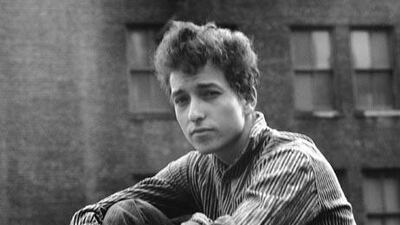
  • Dylan in his younger years. AFP
    Dylan in his younger years. AFP
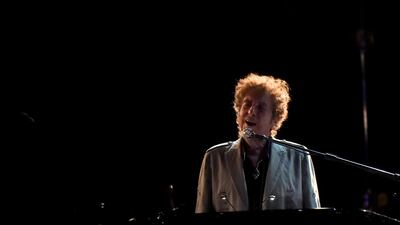
  • The musician performs during the Firefly Music Festival in Dover, Delaware, US on June 17, 2017. Reuters
    The musician performs during the Firefly Music Festival in Dover, Delaware, US on June 17, 2017. Reuters
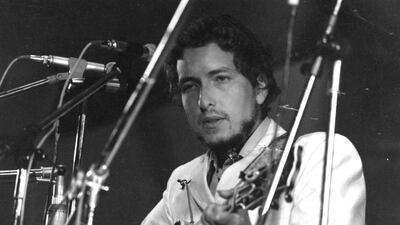
  • The pop culture figure performed at the Isle of Wight Festival in 1969, instead of at Woodstock. Getty Images
    The pop culture figure performed at the Isle of Wight Festival in 1969, instead of at Woodstock. Getty Images
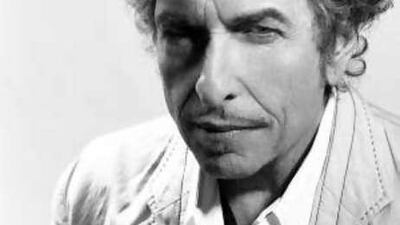
  • The singer embraces his own mortality with a compelling sense of dread. AP
    The singer embraces his own mortality with a compelling sense of dread. AP
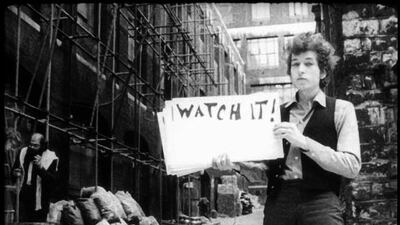
  • Dylan in the 1967 film Don't Look Back. Photo: Pennebaker Films
    Dylan in the 1967 film Don't Look Back. Photo: Pennebaker Films
  • Dylan appears on stage at the Ullevi Stadium in Gothenburg, Sweden, on June 9, 1984. AFP
    Dylan appears on stage at the Ullevi Stadium in Gothenburg, Sweden, on June 9, 1984. AFP

Like many American heroes, Dylan exemplifies the archetype of self-reinvention, except that he, along with a few others, has adopted it as a continuous process. Just when you think you have him figured out, “the carpet too is moving under you”, as he explained in his key 1965 song It’s All Over Now, Baby Blue.

Dylan’s most startling metamorphosis came in the late 1970s, when he horrified much of his established audience by re-emerging as a fundamentalist, literalist and apocalyptic born-again Christian.

Initially, he even refused to perform his earlier works and harangued stunned audiences with fire-and-brimstone sermons about an immanent day of judgement and the agonising eternal punishments awaiting infidels. Yet, those concerts, and some of the songs, were among his best, and well-attuned to the era of then president Ronald Reagan, if not his pre-existing fan-base.

These fundamentalist passions appeared to fade, along with record sales, after a few years, and under heavy pressure from his recording company, Columbia. Yet, a strong Biblical pretext was evident in the album John Wesley Harding, and a more overtly Christian legacy has been very slowly re-emerging in Dylan’s more recent releases.

This was unmistakable at the Washington concert. In perfect sync with America today, the show might as well have been entitled “The Sacred and the Profane”, as Dylan carefully oscillated between songs with worldly and identifiably Christian themes. This pattern fits perfectly into the zeitgeist of an America that is torn between politically empowered fundamentalists and a largely moderate and secular public.

Among the more unusual aspects of the concert – not only for Dylan but for any well-established performer – was a striking lack of any classics, hits or golden oldies. The lone exception, perhaps, was Gotta Serve Somebody, one of his best Christian fundamentalist songs, but which was probably included more for thematic than nostalgic purposes.

The set showed Dylan far more upfront about his distinctively Christian sentiments than at any time since the early 1980s, but thankfully without the fundamentalist tones. The ongoing American racial reckoning, religious passions and ambivalence, and the ageing yet often surprisingly robust quality of American society, were all enacted on stage by this now-elderly savant.

In the early 1960s, in many ways Dylan was America. And, decades later and in many other ways, he still is. Sixty years ago, an almost impossibly young Dylan seemingly emerged from “nowhere” – geographically and culturally – to express and define a suddenly transforming national culture. He retains an uncanny ability to channel a reviving, and as he portrays it, dynamic and still potent America.

Dylan’s Washington concert seemed anything but a swansong. Instead, it felt like another new beginning for one old man and the country he still seems able to instinctively express and embody.


MATCH INFO

Uefa Champions League semi-finals, first leg
Liverpool v Roma

When: April 24, 10.45pm kick-off (UAE)
Where: Anfield, Liverpool
Live: BeIN Sports HD
Second leg: May 2, Stadio Olimpico, Rome

COMPANY%20PROFILE
%3Cp%3E%3Cstrong%3EName%3A%20%3C%2Fstrong%3ETelr%3Cbr%3E%3Cstrong%3EBased%3A%20%3C%2Fstrong%3EDubai%2C%20UAE%3Cbr%3E%3Cstrong%3ELaunch%20year%3A%3C%2Fstrong%3E%202014%3Cbr%3E%3Cstrong%3ENumber%20of%20employees%3A%20%3C%2Fstrong%3E65%3Cbr%3E%3Cstrong%3ESector%3A%20%3C%2Fstrong%3EFinTech%20and%20payments%3Cbr%3E%3Cstrong%3EFunding%3A%20%3C%2Fstrong%3Enearly%20%2430%20million%20so%20far%3C%2Fp%3E%0A
Ten tax points to be aware of in 2026

1. Domestic VAT refund amendments: request your refund within five years

If a business does not apply for the refund on time, they lose their credit.

2. E-invoicing in the UAE

Businesses should continue preparing for the implementation of e-invoicing in the UAE, with 2026 a preparation and transition period ahead of phased mandatory adoption. 

3. More tax audits

Tax authorities are increasingly using data already available across multiple filings to identify audit risks. 

4. More beneficial VAT and excise tax penalty regime

Tax disputes are expected to become more frequent and more structured, with clearer administrative objection and appeal processes. The UAE has adopted a new penalty regime for VAT and excise disputes, which now mirrors the penalty regime for corporate tax.

5. Greater emphasis on statutory audit

There is a greater need for the accuracy of financial statements. The International Financial Reporting Standards standards need to be strictly adhered to and, as a result, the quality of the audits will need to increase.

6. Further transfer pricing enforcement

Transfer pricing enforcement, which refers to the practice of establishing prices for internal transactions between related entities, is expected to broaden in scope. The UAE will shortly open the possibility to negotiate advance pricing agreements, or essentially rulings for transfer pricing purposes. 

7. Limited time periods for audits

Recent amendments also introduce a default five-year limitation period for tax audits and assessments, subject to specific statutory exceptions. While the standard audit and assessment period is five years, this may be extended to up to 15 years in cases involving fraud or tax evasion. 

8. Pillar 2 implementation 

Many multinational groups will begin to feel the practical effect of the Domestic Minimum Top-Up Tax (DMTT), the UAE's implementation of the OECD’s global minimum tax under Pillar 2. While the rules apply for financial years starting on or after January 1, 2025, it is 2026 that marks the transition to an operational phase.

9. Reduced compliance obligations for imported goods and services

Businesses that apply the reverse-charge mechanism for VAT purposes in the UAE may benefit from reduced compliance obligations. 

10. Substance and CbC reporting focus

Tax authorities are expected to continue strengthening the enforcement of economic substance and Country-by-Country (CbC) reporting frameworks. In the UAE, these regimes are increasingly being used as risk-assessment tools, providing tax authorities with a comprehensive view of multinational groups’ global footprints and enabling them to assess whether profits are aligned with real economic activity. 

Contributed by Thomas Vanhee and Hend Rashwan, Aurifer

WITHIN%20SAND
%3Cp%3EDirector%3A%20Moe%20Alatawi%3C%2Fp%3E%0A%3Cp%3EStarring%3A%20Ra%E2%80%99ed%20Alshammari%2C%20Adwa%20Fahd%2C%20Muhand%20Alsaleh%3C%2Fp%3E%0A%3Cp%3ERating%3A%203%2F5%3C%2Fp%3E%0A
Attacks on Egypt’s long rooted Copts

Egypt’s Copts belong to one of the world’s oldest Christian communities, with Mark the Evangelist credited with founding their church around 300 AD. Orthodox Christians account for the overwhelming majority of Christians in Egypt, with the rest mainly made up of Greek Orthodox, Catholics and Anglicans.

The community accounts for some 10 per cent of Egypt’s 100 million people, with the largest concentrations of Christians found in Cairo, Alexandria and the provinces of Minya and Assiut south of Cairo.

Egypt’s Christians have had a somewhat turbulent history in the Muslim majority Arab nation, with the community occasionally suffering outright persecution but generally living in peace with their Muslim compatriots. But radical Muslims who have first emerged in the 1970s have whipped up anti-Christian sentiments, something that has, in turn, led to an upsurge in attacks against their places of worship, church-linked facilities as well as their businesses and homes.

More recently, ISIS has vowed to go after the Christians, claiming responsibility for a series of attacks against churches packed with worshippers starting December 2016.

The discrimination many Christians complain about and the shift towards religious conservatism by many Egyptian Muslims over the last 50 years have forced hundreds of thousands of Christians to migrate, starting new lives in growing communities in places as far afield as Australia, Canada and the United States.

Here is a look at major attacks against Egypt's Coptic Christians in recent years:

November 2: Masked gunmen riding pickup trucks opened fire on three buses carrying pilgrims to the remote desert monastery of St. Samuel the Confessor south of Cairo, killing 7 and wounding about 20. IS claimed responsibility for the attack.

May 26, 2017: Masked militants riding in three all-terrain cars open fire on a bus carrying pilgrims on their way to the Monastery of St. Samuel the Confessor, killing 29 and wounding 22. ISIS claimed responsibility for the attack.

April 2017Twin attacks by suicide bombers hit churches in the coastal city of Alexandria and the Nile Delta city of Tanta. At least 43 people are killed and scores of worshippers injured in the Palm Sunday attack, which narrowly missed a ceremony presided over by Pope Tawadros II, spiritual leader of Egypt Orthodox Copts, in Alexandria's St. Mark's Cathedral. ISIS claimed responsibility for the attacks.

February 2017: Hundreds of Egyptian Christians flee their homes in the northern part of the Sinai Peninsula, fearing attacks by ISIS. The group's North Sinai affiliate had killed at least seven Coptic Christians in the restive peninsula in less than a month.

December 2016A bombing at a chapel adjacent to Egypt's main Coptic Christian cathedral in Cairo kills 30 people and wounds dozens during Sunday Mass in one of the deadliest attacks carried out against the religious minority in recent memory. ISIS claimed responsibility.

July 2016Pope Tawadros II says that since 2013 there were 37 sectarian attacks on Christians in Egypt, nearly one incident a month. A Muslim mob stabs to death a 27-year-old Coptic Christian man, Fam Khalaf, in the central city of Minya over a personal feud.

May 2016: A Muslim mob ransacks and torches seven Christian homes in Minya after rumours spread that a Christian man had an affair with a Muslim woman. The elderly mother of the Christian man was stripped naked and dragged through a street by the mob.

New Year's Eve 2011A bomb explodes in a Coptic Christian church in Alexandria as worshippers leave after a midnight mass, killing more than 20 people.

How to wear a kandura

Dos

  • Wear the right fabric for the right season and occasion 
  • Always ask for the dress code if you don’t know
  • Wear a white kandura, white ghutra / shemagh (headwear) and black shoes for work 
  • Wear 100 per cent cotton under the kandura as most fabrics are polyester

Don’ts 

  • Wear hamdania for work, always wear a ghutra and agal 
  • Buy a kandura only based on how it feels; ask questions about the fabric and understand what you are buying
The five pillars of Islam

1. Fasting 

2. Prayer 

3. Hajj 

4. Shahada 

5. Zakat 

Tamkeen's offering
  • Option 1: 70% in year 1, 50% in year 2, 30% in year 3
  • Option 2: 50% across three years
  • Option 3: 30% across five years 
Diriyah%20project%20at%20a%20glance
%3Cp%3E-%20Diriyah%E2%80%99s%201.9km%20King%20Salman%20Boulevard%2C%20a%20Parisian%20Champs-Elysees-inspired%20avenue%2C%20is%20scheduled%20for%20completion%20in%202028%0D%3Cbr%3E-%20The%20Royal%20Diriyah%20Opera%20House%20is%20expected%20to%20be%20completed%20in%20four%20years%0D%3Cbr%3E-%20Diriyah%E2%80%99s%20first%20of%2042%20hotels%2C%20the%20Bab%20Samhan%20hotel%2C%20will%20open%20in%20the%20first%20quarter%20of%202024%0D%3Cbr%3E-%20On%20completion%20in%202030%2C%20the%20Diriyah%20project%20is%20forecast%20to%20accommodate%20more%20than%20100%2C000%20people%0D%3Cbr%3E-%20The%20%2463.2%20billion%20Diriyah%20project%20will%20contribute%20%247.2%20billion%20to%20the%20kingdom%E2%80%99s%20GDP%0D%3Cbr%3E-%20It%20will%20create%20more%20than%20178%2C000%20jobs%20and%20aims%20to%20attract%20more%20than%2050%20million%20visits%20a%20year%0D%3Cbr%3E-%20About%202%2C000%20people%20work%20for%20the%20Diriyah%20Company%2C%20with%20more%20than%2086%20per%20cent%20being%20Saudi%20citizens%0D%3C%2Fp%3E%0A

Mercer, the investment consulting arm of US services company Marsh & McLennan, expects its wealth division to at least double its assets under management (AUM) in the Middle East as wealth in the region continues to grow despite economic headwinds, a company official said.

Mercer Wealth, which globally has $160 billion in AUM, plans to boost its AUM in the region to $2-$3bn in the next 2-3 years from the present $1bn, said Yasir AbuShaban, a Dubai-based principal with Mercer Wealth.

Within the next two to three years, we are looking at reaching $2 to $3 billion as a conservative estimate and we do see an opportunity to do so,” said Mr AbuShaban.

Mercer does not directly make investments, but allocates clients’ money they have discretion to, to professional asset managers. They also provide advice to clients.

“We have buying power. We can negotiate on their (client’s) behalf with asset managers to provide them lower fees than they otherwise would have to get on their own,” he added.

Mercer Wealth’s clients include sovereign wealth funds, family offices, and insurance companies among others.

From its office in Dubai, Mercer also looks after Africa, India and Turkey, where they also see opportunity for growth.

Wealth creation in Middle East and Africa (MEA) grew 8.5 per cent to $8.1 trillion last year from $7.5tn in 2015, higher than last year’s global average of 6 per cent and the second-highest growth in a region after Asia-Pacific which grew 9.9 per cent, according to consultancy Boston Consulting Group (BCG). In the region, where wealth grew just 1.9 per cent in 2015 compared with 2014, a pickup in oil prices has helped in wealth generation.

BCG is forecasting MEA wealth will rise to $12tn by 2021, growing at an annual average of 8 per cent.

Drivers of wealth generation in the region will be split evenly between new wealth creation and growth of performance of existing assets, according to BCG.

Another general trend in the region is clients’ looking for a comprehensive approach to investing, according to Mr AbuShaban.

“Institutional investors or some of the families are seeing a slowdown in the available capital they have to invest and in that sense they are looking at optimizing the way they manage their portfolios and making sure they are not investing haphazardly and different parts of their investment are working together,” said Mr AbuShaban.

Some clients also have a higher appetite for risk, given the low interest-rate environment that does not provide enough yield for some institutional investors. These clients are keen to invest in illiquid assets, such as private equity and infrastructure.

“What we have seen is a desire for higher returns in what has been a low-return environment specifically in various fixed income or bonds,” he said.

“In this environment, we have seen a de facto increase in the risk that clients are taking in things like illiquid investments, private equity investments, infrastructure and private debt, those kind of investments were higher illiquidity results in incrementally higher returns.”

The Abu Dhabi Investment Authority, one of the largest sovereign wealth funds, said in its 2016 report that has gradually increased its exposure in direct private equity and private credit transactions, mainly in Asian markets and especially in China and India. The authority’s private equity department focused on structured equities owing to “their defensive characteristics.”

Andor
%3Cp%3E%3Cstrong%3ECreator%3A%3C%2Fstrong%3E%20Tony%20Gilroy%3Cbr%3E%3Cstrong%3EStars%3A%20%3C%2Fstrong%3EDiego%20Luna%2C%20Genevieve%20O'Reilly%2C%20Alex%20Ferns%3Cbr%3E%3Cstrong%3ERating%3A%205%3C%2Fstrong%3E%2F5%3C%2Fp%3E%0A
Skoda Superb Specs

Engine: 2-litre TSI petrol

Power: 190hp

Torque: 320Nm

Price: From Dh147,000

Available: Now

CONFIRMED%20LINE-UP
%3Cp%3EElena%20Rybakina%20(Kazakhstan)%3Cbr%3EOns%20Jabeur%20(Tunisia)%3Cbr%3EMaria%20Sakkari%20(Greece)%3Cbr%3EBarbora%20Krej%C4%8D%C3%ADkov%C3%A1%20(Czech%20Republic)%3Cbr%3EBeatriz%20Haddad%20Maia%20(Brazil)%3Cbr%3EJe%C4%BCena%20Ostapenko%20(Latvia)%3Cbr%3ELiudmila%20Samsonova%3Cbr%3EDaria%20Kasatkina%3Cbr%3EVeronika%20Kudermetova%3Cbr%3ECaroline%20Garcia%20(France)%3Cbr%3EMagda%20Linette%20(Poland)%3Cbr%3ESorana%20C%C3%AErstea%20(Romania)%3Cbr%3EAnastasia%20Potapova%3Cbr%3EAnhelina%20Kalinina%20(Ukraine)%3Cbr%3EJasmine%20Paolini%20(Italy)%3Cbr%3EEmma%20Navarro%20(USA)%3Cbr%3ELesia%20Tsurenko%20(Ukraine)%3Cbr%3EEmma%20Raducanu%20(Great%20Britain)%20%E2%80%93%20wildcard%3C%2Fp%3E%0A
European arms

Known EU weapons transfers to Ukraine since the war began: Germany 1,000 anti-tank weapons and 500 Stinger surface-to-air missiles. Luxembourg 100 NLAW anti-tank weapons, jeeps and 15 military tents as well as air transport capacity. Belgium 2,000 machine guns, 3,800 tons of fuel. Netherlands 200 Stinger missiles. Poland 100 mortars, 8 drones, Javelin anti-tank weapons, Grot assault rifles, munitions. Slovakia 12,000 pieces of artillery ammunition, 10 million litres of fuel, 2.4 million litres of aviation fuel and 2 Bozena de-mining systems. Estonia Javelin anti-tank weapons.  Latvia Stinger surface to air missiles. Czech Republic machine guns, assault rifles, other light weapons and ammunition worth $8.57 million.

NBA Finals results

Game 1: Warriors 124, Cavaliers 114
Game 2: Warriors 122, Cavaliers 103
Game 3: Cavaliers 102, Warriors 110
Game 4: In Cleveland, Sunday (Monday morning UAE)

Wonka
%3Cp%3E%3Cstrong%3EDirector%3A%3C%2Fstrong%3E%C2%A0Paul%20King%3C%2Fp%3E%0A%3Cp%3E%3Cstrong%3EStarring%3A%C2%A0%3C%2Fstrong%3ETimothee%20Chalamet%2C%20Olivia%20Colman%2C%20Hugh%20Grant%3C%2Fp%3E%0A%3Cp%3E%3Cstrong%3ERating%3A%3C%2Fstrong%3E%202%2F5%3C%2Fp%3E%0A
Banned items
Dubai Police has also issued a list of banned items at the ground on Sunday. These include:
  • Drones
  • Animals
  • Fireworks/ flares
  • Radios or power banks
  • Laser pointers
  • Glass
  • Selfie sticks/ umbrellas
  • Sharp objects
  • Political flags or banners
  • Bikes, skateboards or scooters
Updated: December 05, 2021, 2:52 PM