


Sudan won its independence in 1956. Since then, the country's military has been a powerful political force for more than 50 years. For the most part, it was not a happy period, culminating in the 29-year rule of Omar Al Bashir, who ran the country into poverty and international isolation. Then, in one of the most important events in the country’s history, the Sudanese people ousted him.
The popular uprising has put political power back in the hands of the people. It was hard won, and will continue to be so. Last week, when citizens and officers loyal to Al Bashir attempted a coup, the country was reminded that supporters of the previous regime continue to desire a central role in politics. . As the episode demonstrated, Al Bashir’s legacy still has the potential to derail progress.
In a recent interview with The National, the country's foreign minister, Mariam Al Mahdi, described the coup attempt as a bid to “dampen the beacon of real democracy flashing in Sudan”. That it failed shows the new Sudan is strong enough to withstand high-level subversion. But the country is not stable yet, and Dr Al Mahdi was clear that it might be entering a period of particularly high political tension as the joint civilian-military Transitional Partners Council confronts the issue of whether it should hand Al Bashir to the International Criminal Court.
-
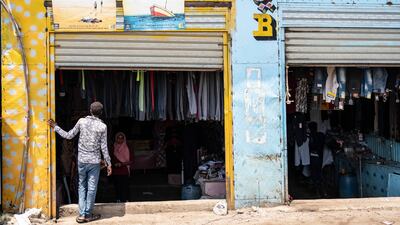
An Eritrean youth peers into a clothes shop in the market at Shagarab refugee camp, which hosts more than 60,000 people, in Sudan. On its walls are signs from the UN warning residents about the dangers of following migration routes through deserts and across seas. Getty -
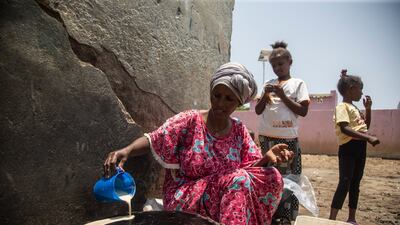
Alem Ande, from Eritrea, bakes bread to sell in the camp. She divorced her violent husband and was living in Hitsats camp in Tigray with her five children until war broke out in November 2020, when they fled to Sudan. Getty -
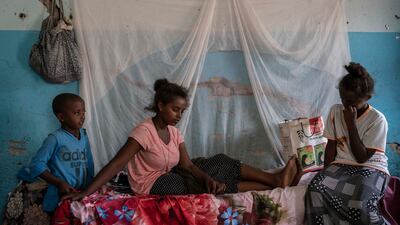
Sabrina, 11, Donat, 13 and Surnk, 7, three of Alem Ande’s five children. Getty -
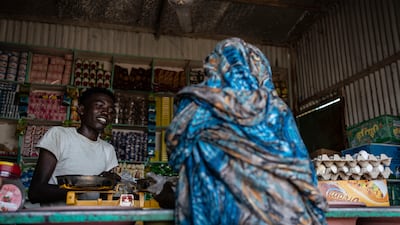
Hassan, 16, works at a market stall in Shagarab. The camp was set up in 1968 and lies about 70 kilometres west of the Eritrean border. Getty -
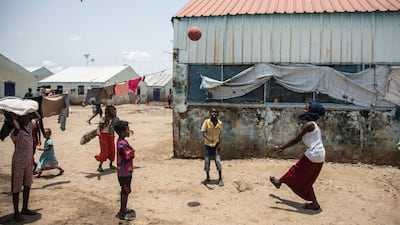
Children play in Shagarab camp, where most of its 60,000 residents arrived from South Sudan, Eritrea, the Central African Republic, Ethiopia and Chad. Sudan hosts one of the largest refugee populations in Africa. Getty -
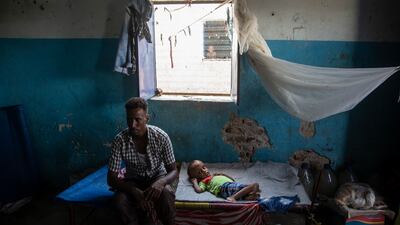
Abdualha, 28, sits in a shelter with his sick son at the camp in Sudan. ‘I left Eritrea last May to come to Sudan, looking for hope of a better life. My son needs an operation on his brain and I'm not able to find a doctor for him until now,’ he says. Getty -
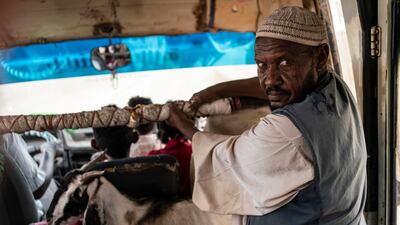
Mohamed, 60, from Eritrea, rides on a bus with a goat to Shagarab refugee camp during the rainy season. More than 50,000 people have poured into Sudan since violence broke out between Ethiopian forces and the Tigray Peoples' Liberation Front in 2020. Getty -
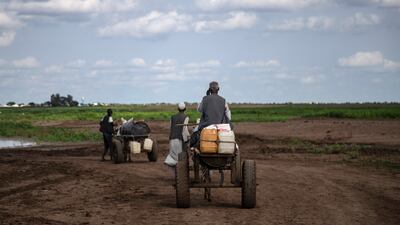
Carts carrying water for refugees at Shagarab camp are drawn by donkeys. Getty -

Khalifa Ibrahim, 33, lives in the camp with his family after fleeing Eritrea and then Hitsats camp in Tigray. ‘On November 22, 2020, the war broke out between the TPLF and the Eritrean forces on the camp. I saw eight people die and 12 were injured, including me,' he says. Getty -
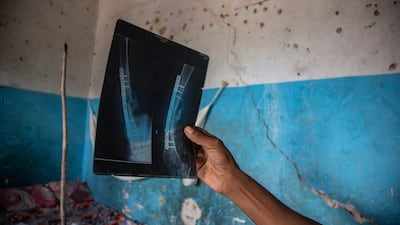
Khalifa Ibrahim shows an image of his X-ray at the camp. Getty -
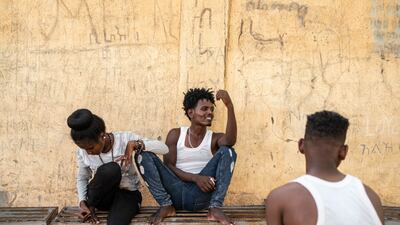
Flmon, left, and Grmaoui wait in a transit centre for new refugee arrivals from Eritrea in Wadsharefy, the oldest camp in eastern Sudan. Flmon says he fled to the country to escape military service. ‘We cannot even breathe," he says. Getty -
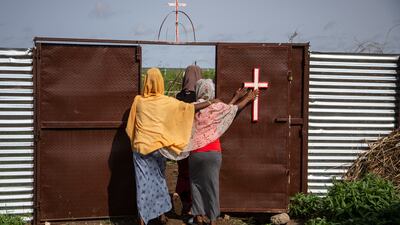
Women leave a Catholic church after prayers at Shagarab camp. Getty -

An Eritrean shepherd takes his goats to the market at Shagarab. Getty -
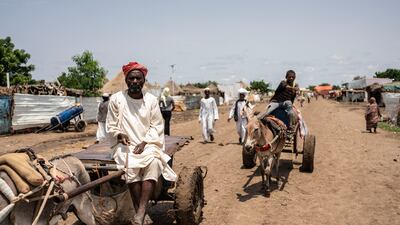
An Eritrean man rides his donkey-drawn cart to the market at the camp. Getty


Al Bashir should see justice to the maximum degree possible. His corruption is well-documented in Sudan and he is wanted by the ICC for a host of charges related to the conflict in Darfur that left more than 300,000 dead and displaced millions.
But in the new, fragile era of Sudanese politics, in which competing interests are often at loggerheads, what is right in an ideal world must be balanced against the risk of putting a shaky new order under stress it cannot handle.
For 29 years, the country's political system was built around the absolute power of one man. It is unrealistic to believe a representative, fully functioning government can emerge so soon after.
Political wrangling, therefore, should be expected and worked through. What must at all costs be avoided is a return to violence. Last week saw a narrow escape from such an outcome.
In her interview Dr Al Mahdi was confident enough to claim that the new Sudan is coup-proof. This is bold, but encouraging, particularly from a politician whose own democratically elected father was ousted by Al Bashir in 1989.
And while the current situation might be tense, there is potential to rebuild in almost every area of the country's politics and economy. Sudan has already been taken off the US's state sponsors of terrorism list. It is currently pursuing membership of the World Trade Organisation, something that is in reach now that it is repairing ties with Israel, ending an era of anti-Semitism and boycotts under Al Bashir.
As work carries on at home, the international community should continue to offer help across Sudan's economy and society. Bumps on the road can remain just that if all parties keep a level head, expect understandable difficulties and completely reject a return to violence.

