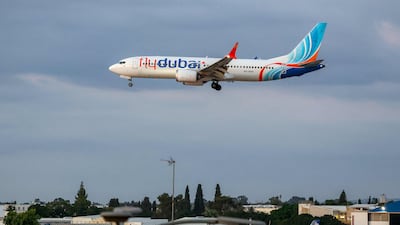
An incident involving a pilot who reportedly stabbed his colleague during a flydubai flight is reviving a decades-old debate over whether commercial aircraft should be equipped with video-recording equipment.
In situations where cockpit altercations or pilot actions are part of an accident investigation, footage from the cockpit could provide the clearest picture of what happened.
Commercial aircraft are required to be equipped with audio and data-recording devices that capture pilots’ voices and the movement of nearly all switches and controls. Still, there is no similar mandate to record images.

During the flydubai incident, the Boeing 737, travelling from Dubai to Tel Aviv, plummeted more than 14,000 feet in less than 30 seconds and avoided catastrophe only because passengers and crew stormed the cockpit to stop the attacker and stabilise the plane, Israeli Prime Minister Benjamin Netanyahu said.

Images of these events would probably have been invaluable to investigators trying to establish how the incident unfolded.
Investigative bodies such as the US National Transportation Safety Board have pushed for mandates requiring commercial aircraft to be equipped with cockpit video recorders as a backstop to other devices, despite resistance from pilots’ unions that have raised concerns about privacy and potential misuse of that data.
A panel of experts from the US Federal Aviation Administration and the wider aviation industry recommended in August 2025 that the FAA not adopt a mandate for cockpit video recorders in commercial aircraft. In a statement on Wednesday, the agency said it was still reviewing those recommendations.
Last year, the debate resurfaced after the crash of an Air India Boeing 787 Dreamliner in which 260 people were killed and dozens of others injured. The preliminary accident report found that the engine fuel-control switches had been moved from the “run” to “cut-off” positions before the jet struck the ground and one of the pilots had asked the other why he moved them, though the latter denied doing so.
Bloomberg reported in January that crash investigators in India were increasingly homing in on deliberate pilot action as the probable cause of the crash, a scenario many safety experts had long suspected. But video recorders could have offered a clearer picture of what happened.
An Egyptair crash in 1999 was one of the accidents that prompted the NTSB’s pursuit of a mandate for cockpit image recorders. Flight 990 crashed into the Atlantic Ocean off the coast of the US state of Massachusetts after the passenger plane entered an abrupt nosedive, killing all 217 people on board.
The plane's voice and data recorders showed autopilot had been disconnected, thrust levers moved to “idle” and the fuel switches for both engines moved to the “cut-off” position, after the first officer began repeating an Arabic phrase that translates to “I rely on God”.
Despite the potential value of cockpit video recorders, pilots’ unions and some industry experts remain concerned about the risks, including the potential for misuse.
Earlier this year, artificial intelligence was used to reconstruct cockpit audio based on a spectrogram analysis released by the NTSB as part of its investigation into a United Parcel Service MD-11 crash in Louisville, Kentucky in November 2025. The agency temporarily closed public access to its investigative docket system to remove the files.
“The NTSB does not release cockpit audio recordings,” the agency said in a statement at the time. “Federal law prohibits such public release due to the highly sensitive nature of verbal communications inside the cockpit. The NTSB takes these privacy restrictions seriously.”
Disaster averted on Israel flight – in pictures
-

Flydubai flight FZ1073, on its way to Israel from Dubai, was diverted to Saudi Arabia on September 30 after an in-flight security incident that led to the stabbing of its pilot. Photo: Kann Media -
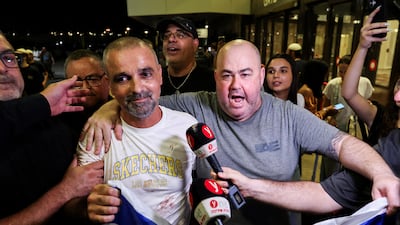
Yaniv Hayun, one of the men who helped incapacitate the attacker, at Ben Gurion Airport in Israel. Reuters -
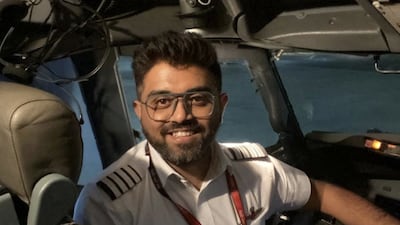
Indian pilot Smit Machchhar has been hailed as a hero for saving passengers despite being stabbed. Reuters -
A second flydubai plane was sent to Saudi Arabia to retrieve the stranded passengers and return them to Israel. Getty Images -

Assaf Regavim, who filmed a video from inside the cabin and helped to overpower the attacker, talks to reporters at Ben Gurion Airport. Getty Images -

A relieved passenger from Flight FZ1073 after landing in Israel. Getty Images -
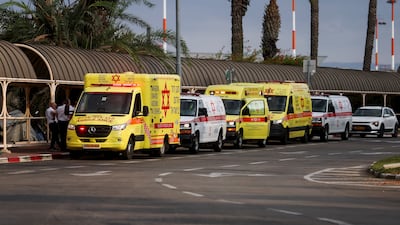
Ambulances are kept at the ready as passengers arrive in Israel on the second flydubai aircraft. Reuters -
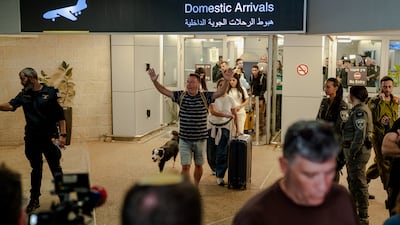
A passenger exits through the domestic arrivals doors with his dog and his luggage at Ben Gurion Airport. Getty Images -

Israeli Prime Minister Benjamin Netanyahu meets Yaniv Hayun, a passenger on the diverted flydubai plane. Reuters



