A leading UAE school bus operator has pledged that parents will not pay the price for rising fuel costs in the new academic year.
Emirates Transport - which will carry about 285,000 public and private sector pupils on 11,000 buses - said it had sought to make routes more efficient and harnessed technology to absorb the impact.
In August, the price of Super 98 increased by 5.88 per cent, Special 95 by 6.08 per cent, E-Plus 91 by 6.23 per cent and diesel by 5.56 per cent.

Disruption to global oil markets due to the prolonged Iran war have led to motorists paying more at the pump in recent months, but the government-owned transport provider said its customers would not be affected.
“The fuel increase was a lesson for us,” said Tariq Al Awadhi, commercial lead for school transport at Emirates Transport
“We needed to learn how to utilise our buses 100 per cent with fuel efficiency and to implement the services that we really need to implement, with 100 per cent route optimisation.”
He said the additional fuel costs had not affected employees or customers. “Once the fuel increased, it didn't affect any of our employees or our customers.”

Transport costs vary between schools and between the emirates, typically ranging between about Dh3,000 and Dh10,000 annually.
Private school transportation fees in Dubai are decided between individual schools and private transport providers.
In Abu Dhabi, they are overseen by the Abu Dhabi Department of Education and Knowledge (Adek), the emirate's private education regulator, Mr Al Awadhi said.
“There is a fixed price that everyone should follow. So whatever the fuel rate, it doesn't affect the parents.”
Complex logistics
As the 2026-2027 academic year begins on Monday, The National was given a behind-the-scenes look at the school bus operations room, where teams monitor buses and their journeys across the UAE in real time.
Mr Al Awadhi is confident in the team's preparations ahead of the first day of classes.
-
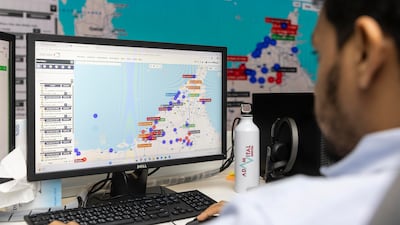
A view of the Emirates Transport control centre. All photos: Antonie Robertson / The National -
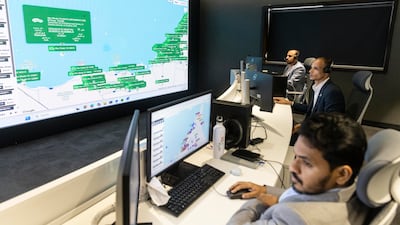
Emirates Transport, a leading UAE school bus operator, will carry about 285,000 public and private sector pupils on 11,000 buses -
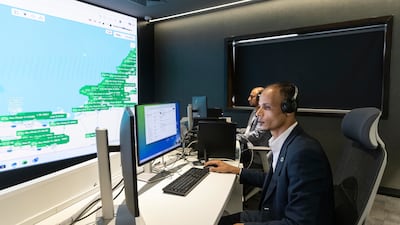
As the new academic year begins on Monday, The National was given a behind-the-scenes look at the school bus operations room, where teams monitor their journeys across the UAE in real time -
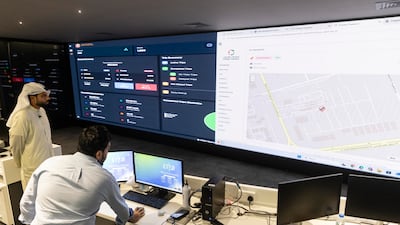
Large screens in the operations room show every bus in the fleet and monitor their journeys live -

Tariq Al Awadhi, commercial lead for school transport at Emirates Transport -
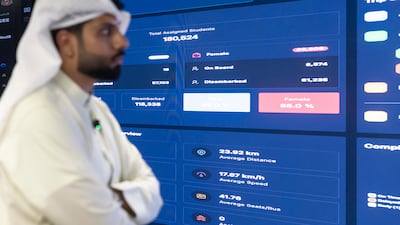
The operator has pledged that parents will not pay the price for rising fuel costs in the new academic year


“We are fully prepared this year. When school stops, everyone thinks that we don't have a job to do, but when it comes to operations, the really hard work starts when our kids are back at home,” he said.
“We need to maintain and ensure that at the beginning of the year our bus fleet is ready to run.”
Large screens in the operations room show every single bus in their fleet across the country and monitor their journeys live. They have a comprehensive oversight system to ensure that all children reach home safely.
Mr Al Awadhi said the operators provide services beyond the urban network, with their yellow buses travelling to remote areas such as Dalma Island and Zirku Island.
Improving safety
Safety remains the major focus, with the operator introducing new internet-of-things devices this year to collect data from buses and help monitor the fleet around the clock.
The company will use the data collected to optimise the fleet and fuel efficiency, and to monitor the buses 24/7.
Panic emergencies and motion-sensor alerts are the most pressing issues. Recent regulations require rigorous safety checks to ensure that no student is left on the bus. Multiple layers of checks ensure that any issue can be dealt with as quickly as possible.
“The security and all these measures were the main factor because at the end of the day we are taking our kids. Our kids are our responsibility, in the same way that I want my kids to be treated and taken to school,” he said.
Cabinet Resolution No 56 of 2020 increased safety measures for school buses, requiring methods to ensure that no student is left behind on a bus. Cameras and motion sensors are among the monitoring systems.
The transport chief credits this year's increase in pupil numbers to parents feeling more comfortable sending their children on school buses.
“This year we have a big growth that wasn't expected. Even new schools are onboarded; big growth in schools. So many people are registering their kids to use the services."