

A biobank of cellular material to be housed at the Museum of the Future aims to help safeguard the future of endangered animals across the UAE.
US start-up Colossal Biosciences has explored the use of gene editing to “de-extinct” species that disappeared long ago, including the woolly mammoth, dodo, Tasmanian tiger and dire wolf.
That ambition has been met with widespread scepticism within the scientific community, with many researchers arguing that resurrecting extinct species is not possible.

Preserving genetic material from living species that are under threat, however, is widely seen as a more realistic application of advancing gene-editing technologies.
Using similar techniques, Colossal is working to reintroduce genetic diversity into wild populations, including the red wolf in North America.
The company says similar efforts could one day be applied in the UAE, targeting threatened regional species such as the Arabian leopard, hawksbill turtle, Arabian tahr, striped hyena, Asiatic cheetah and Arabian sand gazelle.
-

Arabian leopard. Reuters -
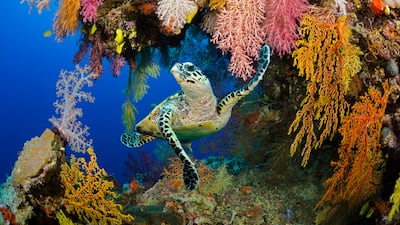
Hawksbill turtle. AFP -
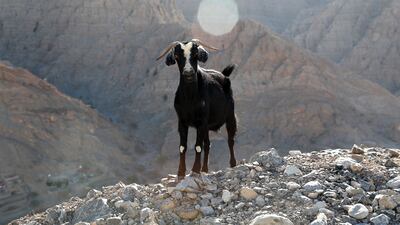
Arabian tahr. Pawan Singh / The National -

Asiatic cheetah. Reuters -
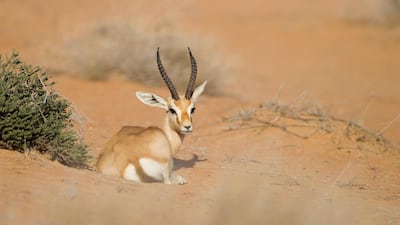
Arabian sand gazelle. Sarah Dea / The National -
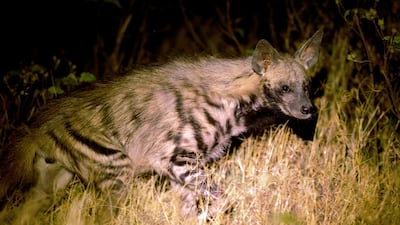
Striped hyena. AFP


Announced during the World Governments Summit in Dubai, the Museum of the Future will host the Life and Biodiversity Laboratory in collaboration with the Colossal Foundation.
A biobank of genetic material will form part of a public display showcasing innovations aimed at expanding understanding of the natural world. The exhibition is expected to open later this year.
“Most people think about just de-extinction, but we actually do de-extinction and species preservation,” Ben Lamm, chief executive and co-founder of Colossal Biosciences told The National.
“We have more species preservation projects going on than de-extinction projects. There isn't an international backup or network of biovaults that are protecting species, so we need to back up these species before we lose them.”
The Dallas-based genetic engineering company aims to re-create a mammoth-like animal and reintroduce it to the Arctic tundra by 2028.
The project, developed in partnership with Harvard geneticist George Church, uses CRISPR gene-editing tools to modify Asian elephant DNA to produce a cold-resistant hybrid.
While not an exact replica of the woolly mammoths that once roamed the Arctic, the animal is expected to share traits such as long hair, smaller ears and other characteristics inferred from preserved DNA.
About 45 scientists are working on the mammoth project, one of four large de-extinction efforts under way at Colossal.
The initiative is expected to cost more than $200 million and has attracted funding from US socialites, celebrities and media figures, including Paris Hilton, filmmaker Peter Jackson and former American football player Tom Brady.
Within the mammoth programme, researchers are exploring traditional surrogacy using elephants as well as the development of artificial wombs grown in laboratories.
Colossal says reintroducing large herbivores to Arctic ecosystems could deliver environmental benefits, with grazing animals helping convert moss into grassland, stabilise permafrost and reduce greenhouse gas emissions.
“It's not possible to clone an extinct species, that’s why the biovault is so important,” Mr Lamm said. “Rebuilding extinct species using genetic engineering is very expensive, and very hard.
“For our extinct species that we're rebuilding, we do want to reintroduce them back into their natural habitats, obviously that's a very long process.
“It involves indigenous people groups, private landowners, governments, and the public at large. These two projects, both de-extinction and species preservation, go hand in hand.
“If we can backup cells and tissue samples from living animals then we can freeze them down, keep some of them alive and they are immortalised.
“I don't think there could have been a better museum than the Museum of the Future with its educational and content experiences. We’re going to lose up to 50 per cent of all biodiversity in the next 25 years, so we have to act now.”
By next year, the Museum of the Future plans to open a permanent laboratory staffed by leading scientists, according to Majed Al Mansoori, executive director at the museum.
“In its first year, the initiative will focus on fieldwork and DNA research across multiple species, laying the groundwork for long-term conservation,” he said.
“This underscores the museum’s enduring commitment to environmental stewardship and its role in shaping the future of life on Earth.”

