

The UAE provided 1,000 tonnes of humanitarian aid to Chad − including 30,000 food packages and 20,000 blankets − between December 25 and January 15, state news agency Wam reported on Thursday.
This initiative, which followed the directives of President Sheikh Mohamed, was carried out to support people affected by the conflict in neighbouring Sudan and by flooding last summer, while enhancing food security in worst-hit areas.
The aid has helped more than 150,000 people, particularly in rural and remote areas, said officials. Severe flooding in August and September left 550 people dead and affected about 1.9 million others, according to the UN.
The UN's Office for the Co-ordination of Humanitarian Affairs said flooding had affected all of the country's 23 provinces, citing government data that said 210,000 houses had been destroyed, 72,000 cattle lost and 432,000 hectares of fields ruined.
“We are working, in collaboration with local partners, to ensure the distribution of aid to affected people,” said Rashid Al Shamsi, UAE ambassador to Chad.
“This initiative exemplifies the UAE’s dedication to humanitarian and developmental endeavours on a global scale, which aligns with the country’s steadfast approach, established by the late Founding Father Sheikh Zayed bin Sultan Al Nahyan, and the directives of the wise leadership to provide continuous support and a prompt response to countries and individuals during crises and disasters.”
Severely affected
Chad has been severely affected by the war in Sudan. Last April, the UAE pledged $100 million at a donors' conference in Paris, with 70 per cent directed to international humanitarian organisations and the remainder to support Sudanese refugees in neighbouring countries, such as Chad, Uganda, South Sudan and Ethiopia.
Chad has registered more than 630,700 Sudanese refugees since war began there − 83 per cent of whom are women and children. War broke out in April 2023 between the Sudanese army and the Rapid Support Forces paramilitary group, rival factions in the country's military government.
“These efforts consolidate the values of humanitarian solidarity and fulfil the goals of sustainable development, which contribute to enhancing the lives of impacted communities worldwide,” Mr Al Shamsi added.
The war in Sudan – in pictures
-

Rapid Support Forces commander Gen Mohamed Dagalo, then deputy head of Sudan's sovereign council, gives a media briefing in Khartoum in February last year. Reuters -
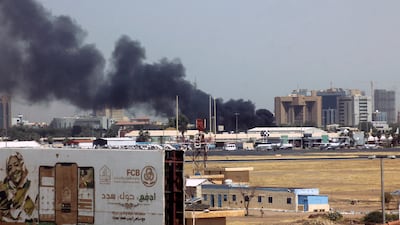
Smoke rises after blasts in Khartoum amid clashes between the Sudanese Army and the Rapid Support Forces paramilitary on April 15 last year. AFP -
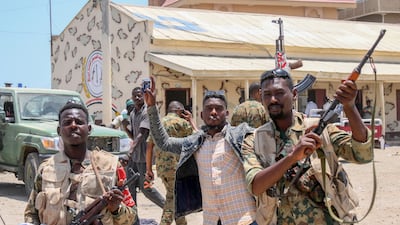
Sudanese Army soldiers at the Rapid Support Forces base in Port Sudan on April 16 last year. AFP -

Black smoke covers the sky over Khartoum as clashes continued on April 19. AFP -
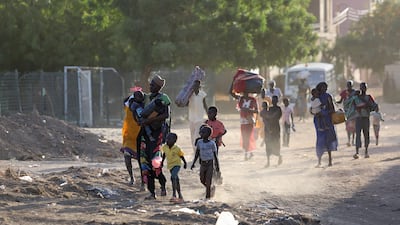
Displaced Khartoum residents flee the city after a 24-hour truce collapsed on April 19. AFP -
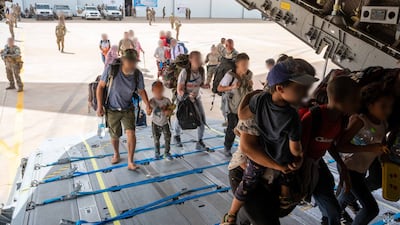
Foreign citizens board a plane at a French military air base in Khartoum to leave Sudan on April 23. AFP -
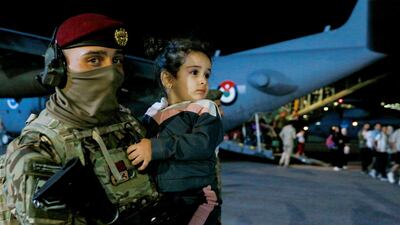
A soldier carries a child as people evacuated from Sudan disembark from a plain at a military airport in Amman on April 24. AFP -

Evacuees from Sudan sit in a military plane as they wait to be processed by Kenyan troops in Nairobi on April 24. Reuters -

Sudanese refugees gather to receive humanitarian aid in Koufroun, Chad, on April 30. AFP -
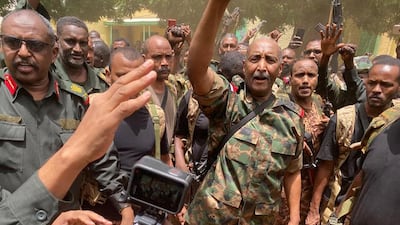
Sudanese Army chief Gen Abdel Fattah Al Burhan visits troop positions in Khartoum on May 30. AFP -
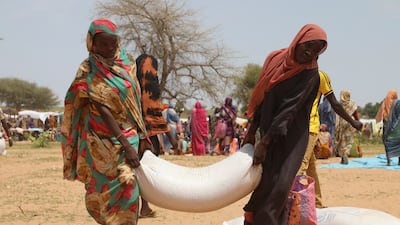
Sudanese refugees at the Zabout camp in Goz Beida, Chad, on July 1. AP -

Smoke rises from a fire at a lumber warehouse in southern Khartoum on June 7. AFP -
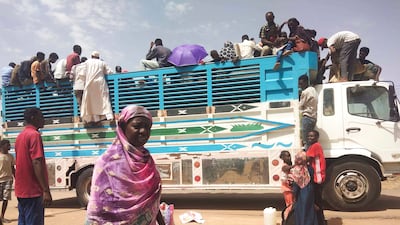
People prepare to leave Khartoum during a ceasefire on June 19. AP -

People sit on top of a lorry carrying furniture on the road between Khartoum and Wad Madani, Al Gezirah state, on July 18. AFP -
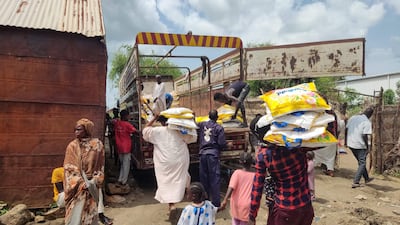
Men load goods from Ethiopia on to a lorry in the border town of Gallabat on August 2. AFP -
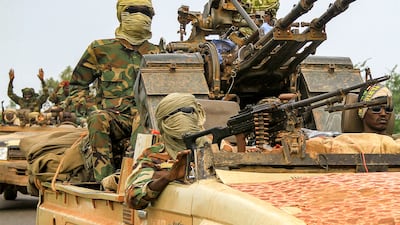
Sudanese Army troops ride in a military convoy accompanying the governor of Darfur State in the eastern city of Gedaref on August 30. AFP -
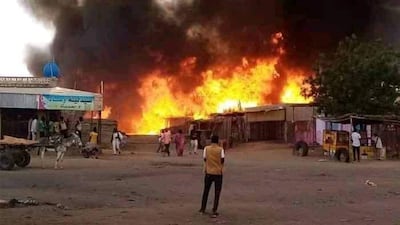
A fire rages at a livestock market after RSF bombardment in Al Fasher, the capital of North Darfur state, on September 1. AFP -

People cook on a campfire at a school that has been turned into a shelter for displaced Sudanese in the northern border town of Wadi Halfa, near Egypt, on September 11. AFP -
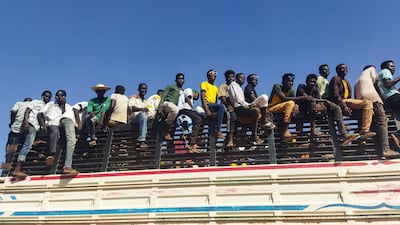
Displaced Sudanese ride on top of a lorry in Wad Madani on December 16. AFP -
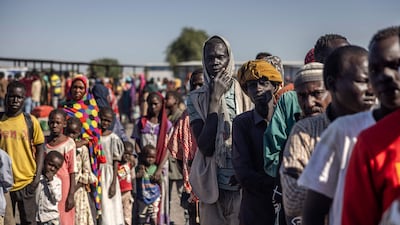
Sudanese refugees queue to board a lorry to go to a transit centre after crossing the border into South Sudan on February 14. AFP -
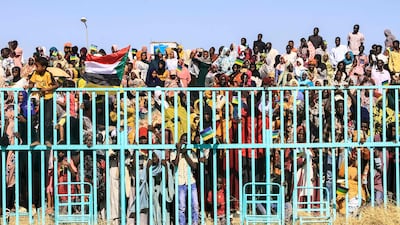
People watch as fighters from the army-aligned Sudan Liberation Movement attend a graduation ceremony in the south-eastern Gedaref state on March 28. AFP -

Fighters from the SLM attend a graduation ceremony in Gedaref state on March 28. AFP



