

For someone in the UK, the riots in France are all too familiar. The sight of mostly young, masked, hooded people kicking in shopfronts, rampaging and looting shelves, and attacks on the police and emergency services – they occur with regular frequency across the Channel.
French authorities admitted they lost control in certain major flashpoints in cities such as Paris, Marseille and Lyon. The following day they were locked in crisis talks with online reseller sites, including Vinted, over tools to crackdown on a sudden flood of items from looted premises. On Tuesday, prime minister Sebastien Lecornu said localised curfews had stemmed the tide of protest overnight.
No one, though, is under any illusion that what we witnessed in Paris could not spread to other major cities in Europe. In 2011 the UK experienced similar scenes and there have been repeated, sporadic flare-ups since then. This summer in London, gangs of youths trashed supermarkets and stores. At weekends, mobs descend periodically on a selected target, drawn by social media, then proceed to force their entry, threaten staff and customers and ransack the contents. It would not take much to spark something bigger and broader, as France is experiencing. The powder keg is waiting to be lit.

-

Tear gas rises in the Republic Square as anti-riot police clash with protesters during demonstrations against the cost of living, in Paris. Reuters -

Police officers take cover behind their shields during clashes in the city of Nantes. Reuters -

Protesters climb fences in Nantes. Reuters -

A woman jogs past shells of cars burnt during the unrest in Paris. Reuters -

A McDonald's restaurant after its windows were damaged, in Paris. Reuters -
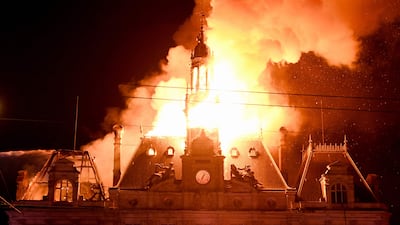
The city hall on fire in Limoges, central France. AFP -
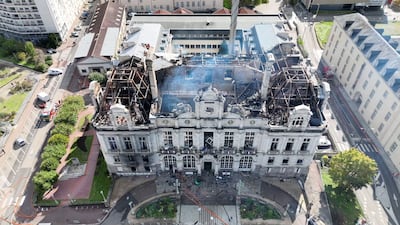
The destroyed Limoges city hall after it was set on fire. AFP -

Heavy smoke around the statue in the Republic Square, in Paris. AFP -
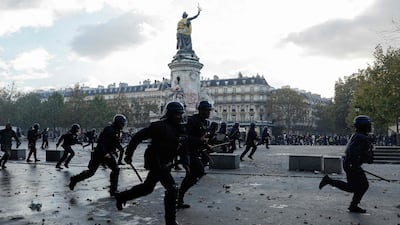
Police officers charge against protesters. AFP -
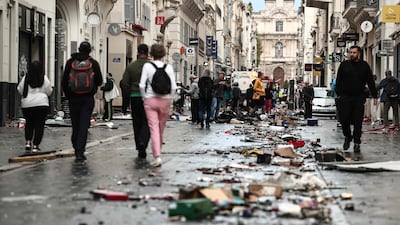
The violence degenerated into looting and burning nationwide. AFP -
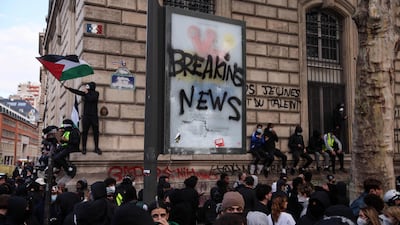
A protester waves a Palestinian flag, in Paris AFP -

A bicycle rack smashed against a window at the Hotel de Nesmond, the state's official residence in Gironde, in Bordeaux. AFP -

People enter a ransacked Franprix store, in central Paris. AFP -

Protesters and students from art and culture schools block the entrance to the Louvre Museum. Reuters


The French rioting arose from a student campaign against poor state schooling. Others joined in, venting their anger at the rising cost of living.
In Spain, Portugal and Italy, there have been mass demonstrations at increased rents and foreign investment funds buying up property. In Albania, there were marches against the government, focusing on corruption, absence of jobs and declining education standards.
In all these places, the pattern is familiar, of peaceful opposition soon giving way to violent uprising and thuggishness. Always, the young are to the fore.
It cannot be coincidence that in France, between 1.4 million and 1.5 million people aged 18-29 are classified as "Neets" – not in education, employment or training. In the UK, the term is officially used for 18-24s, where the total is one million and climbing. The percentages of Neets in both countries and in the EU are similar: 13 per cent in France and the UK, 11 per cent in the EU. That is an awful lot of young folks with nothing to do, little to deter them, no money, few prospects and a disregard for officialdom that has ignored them.

Those are nationwide figures. In some locations, in the most disadvantaged neighbourhoods, the proportion of Neets is far higher. It should not be a surprise, then, that the outlets they hit are typically designer and clothing outlets. They want what the rest are having.
Alan Milburn, the former Labour Health Secretary who has written a landmark report in the UK highlighting the depth of the growing crisis, calls it a "youth detachment" problem. Mr Milburn says that 60 per cent of the UK Neets have never had any form of job.
UK Prime Minister Andy Burnham has warned of the "economic catastrophe and moral failure" facing society. He said two years of Covid lockdowns, social media that erodes "confidence and sense of belonging", an education system that prioritises the "university route", job markets with "too few opportunities" and policies of previous governments have all contributed to the bulging Neets bubble.

Mr Burnham is pushing for his administration, as he puts it, to "invest in the success of our young people" rather than "pay for failure through the benefits system".
Writing in The Times, he said: "Benefits will become the backstop, not the starting point." He is following up with plans aimed at giving thousands of young people job opportunities.
Mr Burnham quotes the latest data from the Office for National Statistics, showing that of the one million Neets, about 39 per cent are unemployed while the remaining 61 per cent are economically inactive, meaning they are not seeking work.
There are 331,000 18 to 24-year-olds claiming unemployment-related benefits, almost double the level in 2016.
The UK government will spend £353 billion ($469.59 billion) on welfare next year, just under half of which will go on the state pension; while the remainder is absorbed by benefits such as health, disability and unemployment payments. Mr Burnham wrote that this reflected a "generation being denied its chance to get on in life".

